
Alma del Campo is a small, quiet Rioja DOCa winery shaped around Tempranillo and still red wine rather than tasting-room theatre. Its strongest signal is a Reserva reference point: the 2009 Alma del Campo Rioja received 90 points from Falstaff, placing the estate in a grounded, accessibly priced corner of La Rioja’s cellar culture.

Pearl is the En Primeur Club membership app — saves, bookings, and concierge access live there. Same editors, same standards.
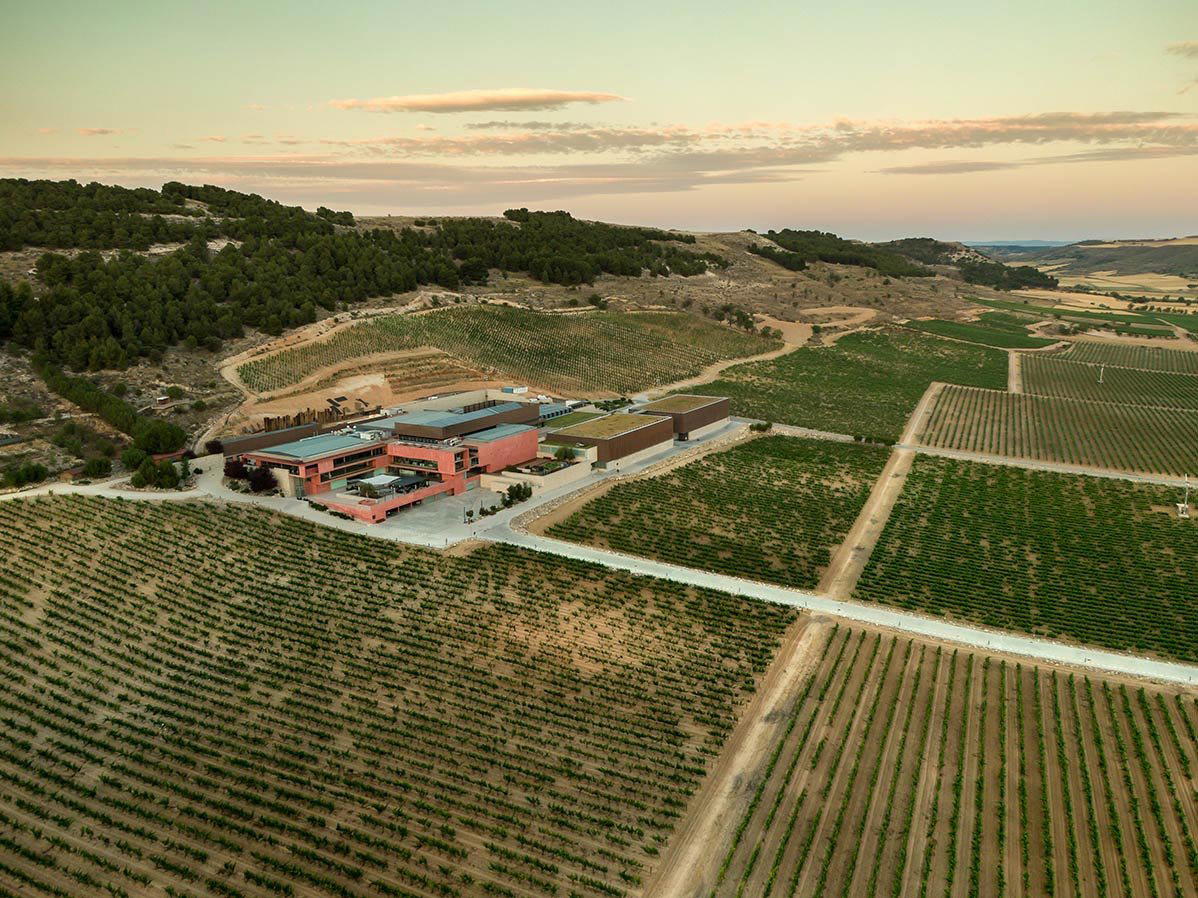
La Rioja rewards patience before it rewards spectacle. The region’s wine country is a study in dry light, disciplined rows of vine, and cellar traditions built around Tempranillo’s ability to carry both fruit and time. Alma del Campo belongs to that quieter side of the appellation: small in scale, focused on still red wine, and better understood through Reserva structure than through hospitality gloss.
In a region where visitor attention often clusters around grand bodegas and architectural statements, the more useful question is what the glass says about place. Rioja DOCa is not a single mood. Atlantic influence, Mediterranean warmth, altitude shifts, and calcareous-clay soils can pull Tempranillo in different directions, from red-fruited lift to firmer, darker, more oak-framed expressions. Alma del Campo’s public identity sits within that traditional red-wine lane, with Tempranillo at the center and a Reserva reference that gives the estate its clearest critical marker.
Tempranillo, Reserva structure, and the quieter grammar of Rioja
Rioja’s hierarchy can be misunderstood by travelers who read Crianza, Reserva, and Gran Reserva as simple quality ladders. They are better read as time signatures. Reserva, in particular, points toward wines shaped by aging requirements and cellar patience, where fruit, oak, tannin, and acidity are expected to settle into a more composed register before release. For a small producer, that format can be revealing: there is less room to hide behind volume, visitor programming, or a broad portfolio.
The clearest public benchmark here is the 2009 Alma del Campo Rioja, a Tempranillo-based Reserva rated 90 points by Falstaff. That matters less as a trophy than as a positioning signal. A 90-point outside assessment gives the wine a reference point for readers trying to sort small Rioja addresses from the mass of labels across the DOCa. It also places attention on the core regional question: how Tempranillo handles maturity, oak, and Rioja’s dry inland climate when the producer is working at a compact scale.
That compactness is part of the appeal. Large Rioja houses can be compelling for history and breadth, but smaller cellars often sharpen the visitor’s attention on fewer variables: vintage conditions, élevage choices, and how much power the wine carries before it starts to lose regional line. The winery opened in 2014, so its story is not one of centuries-old institutional weight. It sits instead in the modern layer of Rioja producers working inside a deeply codified appellation, where the challenge is not invention for its own sake but legibility within an established red-wine tradition.
A small-cellar stop for travelers reading La Rioja through wine, not spectacle
The experience is best framed as a low-key cellar stop rather than a production staged around large groups. The listed style is quiet, the capacity tier is small, and the visit format is walk-in friendly. Those details point to a useful kind of Rioja itinerary: less about locking every hour around formal appointments, more about leaving space between villages, vineyard roads, and tastings that do not require a theatrical arc.
That does not make the stop casual in the sense of careless. Rioja rewards drinkers who arrive with a working understanding of the region’s categories. Tempranillo is the anchor, still red wine is the focus, and the Reserva reference gives the visit a clear lens. Travelers chasing experimental white-wine programs, elaborate pairings, or group-oriented hospitality will find a narrower proposition here. Travelers interested in how a small Rioja DOCa producer presents Tempranillo through a conventional production frame will have a more useful reason to pay attention.
La Rioja planning works well when wine addresses are treated as part of a broader regional circuit rather than isolated pins. For more cellar context across the area, use Our full La Rioja wineries guide, then balance tastings with meals from Our full La Rioja restaurants guide, overnight pacing from Our full La Rioja hotels guide, drinking-room context from Our full La Rioja bars guide, and regional programming from Our full La Rioja experiences guide.
Readers building a wider wine map can also compare how small and mid-scale producers are presented across the EP Club cellar archive, including Bodega Chañarmuyo, Bodegas El Meson, Bodegas Riovinsa, 3 Ases Bodegas y Viñedos in Quintanilla De Arriba, 4Kilos Vinícola in Felanitx, Aalto Bodegas y Vinedos in Quintanilla De Onesimo Valladolid, Abadia de Aribayos in Moraleja Del Vino, Abadía Retuerta in Sardón de Duero, »der Steiner« Hans Steiner in Podersdorf am See, and & Handwein in Mannheim.
The editorial case for the winery is narrow and useful: a small Rioja DOCa winery, opened in 2014, centered on Tempranillo-based still red wine, with an accessibly priced profile and a Falstaff-rated Reserva as its strongest public marker. In La Rioja, that is enough to define a stop for travelers who care less about spectacle and more about how an appellation’s rules, climate, and cellar time shape what ends up in the glass.
Recognition history
Dated appearances from independent guides and award organizations, with the underlying list record or original source where available.
Falstaff Winery - 1 Stars
Falstaff
Continue exploring
More in La Rioja
Wineries in La Rioja
Browse all →

Restaurants in La Rioja
Browse all →
At a Glance
- Quiet
- Rioja Doca
- Tempranillo
- Still Red