
Abbazia Monte Oliveto is a monastic wine stop in Asciano where the Crete Senesi’s clay hills, Benedictine rhythm, and small-scale farm production matter as much as the glass. The draw is not a polished tasting-room circuit but a working abbey culture: cellar tastings, still reds and whites, olive oil, honey, and a quiet setting shaped by centuries of agricultural discipline.

Pearl is the En Primeur Club membership app — saves, bookings, and concierge access live there. Same editors, same standards.
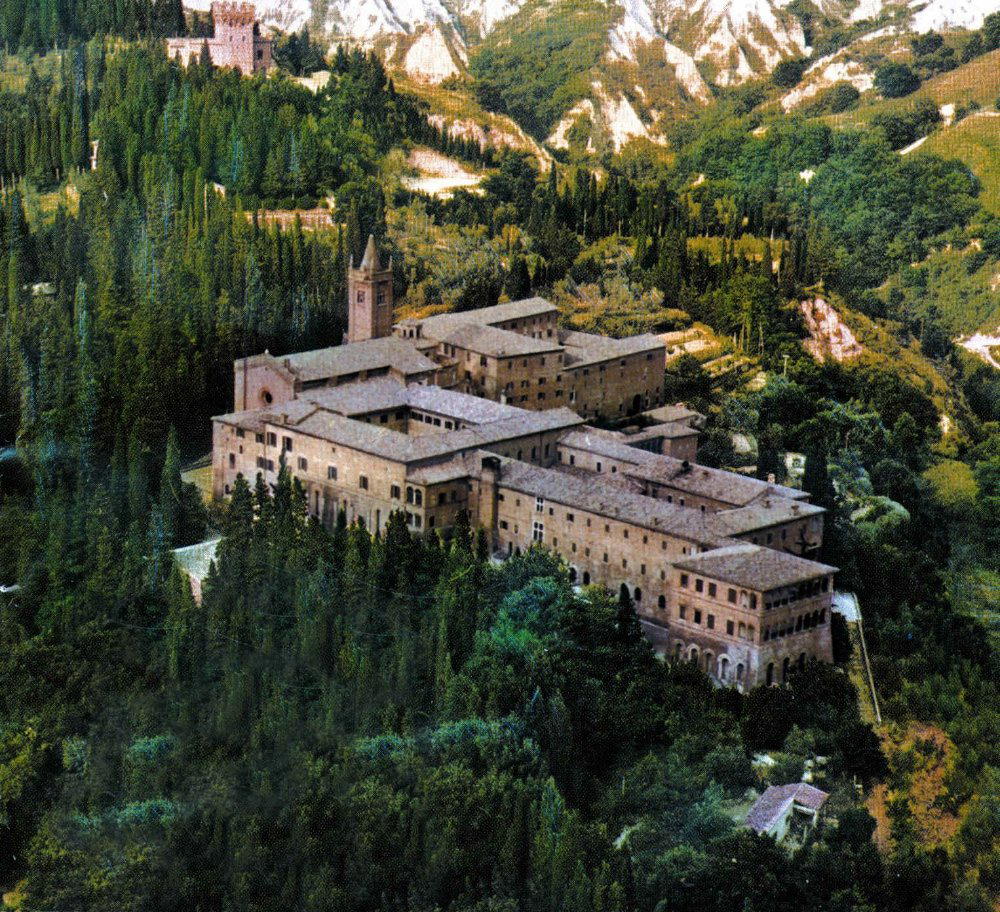
Abbazia Monte Oliveto in Asciano is best understood through its setting rather than through a long list of service details. The confirmed picture is a historic Benedictine abbey environment with quiet, contemplative spaces, Gregorian chant in the church, and a traditional cellar that feels austere yet welcoming and rooted in monastic life. That is enough to set the tone: this is a scenic, classic, rustic, well-known, and elegant place where the atmosphere is a central part of the appeal.
For planning, treat Abbazia Monte Oliveto as an Asciano venue whose strongest confirmed qualities are its Benedictine character, its contemplative church setting, and its traditional cellar atmosphere. Other dining and visiting options in Asciano are best considered separately and generically, rather than treated as part of the abbey’s confirmed offering.
Crete Senesi clay, Benedictine order, and wines that read as place
A reliable way to frame Abbazia Monte Oliveto is not by inventing a detailed production story, but by staying close to what: a historic Benedictine abbey setting in Asciano with quiet spaces, Gregorian chant in the church, and a traditional cellar. Those details point to a place where restraint, silence, and ritual matter. The mood is not casual in the ordinary sense, but it is described as welcoming; the austerity is part of the character rather than a barrier.
The price level is $$, which places the venue in a moderate bracket. Visitors should approach the abbey with flexible expectations: the confirmed draw is the Benedictine setting and the atmosphere around the church and cellar, not a documented restaurant-style or winery-style program.
This also means the setting carries much of the editorial weight. “Scenic,” “classic,” “rustic,” “well-known,” and “elegant” are all grounded descriptors for the venue. Together they suggest an experience shaped by architecture, monastic quiet, and the visual language of an abbey in Asciano. The page should not overstate what is offered, but it can confidently say that winery is compelling for visitors who value place, stillness, and historic atmosphere.
The cellar is part of the abbey experience, not a showroom
The traditional cellar is one of the features, but the available facts do not support describing a specific tasting structure, counter service, appointment process, food pairing, tour duration, language, or beverage program. A more accurate reading is simpler: the cellar contributes to the abbey’s austere yet welcoming character. It should be understood as part of the monastic setting, not as a confirmed modern hospitality showroom.
The church is another important part of the atmosphere. Gregorian chant is specifically noted, and that detail changes the way the venue should be presented. The draw is not only visual; it is also acoustic and contemplative. The abbey’s spaces are quiet, and the experience is rooted in Benedictine life. For visitors who prefer lively dining rooms, detailed service rituals, or a heavily programmed visit, the confirmed information does not justify promising that kind of experience. For those seeking a slower, more reflective stop in Asciano, the description is strong.
It is also important not to add art-historical, agricultural, or operational specifics. No founding date, artist attribution, estate-production list, parking note, payment method, shipping option, language policy, or visit length is confirmed in the supplied facts. Keeping those claims out makes the guide more useful: it signals what is known and prevents a reader from planning around details that may not be reliable.
How to plan the visit without overcomplicating it
Plan around the confirmed essentials: the winery is in Asciano, the price level is $$, and the atmosphere is historic, Benedictine, quiet, contemplative, scenic, rustic, well-known, classic, and elegant. The church with Gregorian chant and the traditional cellar are the clearest anchors. Those are the points worth building a visit around.
What should not be assumed is just as important. If any of those practical details matter, confirm them directly before making plans.
The editorial case for the winery is therefore precise and restrained. Its appeal comes from a Benedictine abbey atmosphere, quiet spaces, Gregorian chant in the church, and a traditional cellar that feels both austere and welcoming. That is a narrower claim than many venue guides make, but it is the grounded one.
Recognition history
Dated appearances from independent guides and award organizations, with the underlying list record or original source where available.
Falstaff Winery - Listed
Falstaff
At a Glance
- Scenic
- Classic
- Rustic
- Well Known
- Elegant
- Romantic Getaway
- Group Outing
- Solo Exploration
- Wine Education
- Special Occasion
- Estate Grounds
- Historic Building
- Panoramic View
- Sustainable
- Vineyard
- Garden
- Mountain
- Toscana IGT
- Sangiovese
- Merlot
- Cabernet Sauvignon
- Vermentino
- Grechetto
- Malvasia
- Still Red
- Still White
- Still Rosé
- Dessert
- Cellar Tasting
- Counter Tasting
Historic Benedictine abbey setting with quiet, contemplative spaces, Gregorian chant in the church, and a traditional cellar that feels austere yet welcoming and rooted in monastic life.