
Tabelog 100 #80
Our verdict
Yakitori Kouun is a compact Kagoshima yakitori counter with 16 seats, counter seating, private room availability for six, and selection in Tabelog’s Yakitori WEST 100 in 2024 and 2025. The draw is not ceremony for its own sake, but the Kyushu grammar of charcoal, chicken, vegetables, shochu, and a room scaled for close attention.

Pearl is the En Primeur Club membership app, where members save venues, book tables and use the concierge.
The menu
What to order
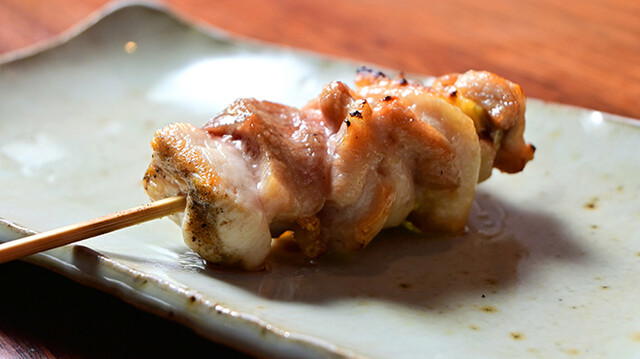
- Charcoal-grilled yakitori
- Chicken sashimi
- Grilled brand chicken skewers
Grilled chicken changes a room’s tempo. In Kagoshima, where drinking culture has long leaned toward shochu rather than wine-page theatre, yakitori carries practical intelligence: smoke, salt, heat control, and restraint that keeps the evening moving. Yakitori Kouun belongs to that lineage, not the high-gloss counter culture of larger Japanese dining capitals. The format is focused, and the appeal lies between everyday skewers and the discipline that makes them worth seeking out.
Kagoshima’s dining identity is often read through kurobuta pork, Satsuma-age, market seafood, and sweet-potato shochu, but chicken has local resonance in southern Kyushu. Grilling suits the region’s appetite for direct flavors: fewer sauces, more attention to cut, doneness, heat, and pacing. A yakitori room here need not mimic Tokyo’s trophy-seat model. It can be judged by whether the grill anchors the meal, the drinks make sense for the food, and focus produces concentration rather than preciousness.
Grilled chicken in a city that drinks seriously
Yakitori’s cultural value lies in how much technique hides inside a casual form. The skewer looks simple; the work is in butchery, spacing, seasoning, and heat. The genre is unforgiving. A kitchen can dress up a tasting menu with tableware and narrative, but yakitori has fewer places to hide. The better rooms make repetition purposeful: chicken, vegetable, smoke, drink, conversation, then another skewer before the pace slackens.
That is the frame for Yakitori Kouun. Its 2025 recognition from Tabelog’s Hyakumeiten source places it in a regional conversation beyond Kagoshima, while its Tabelog score of 3.78 gives a public benchmark in a category where regulars and traveling diners overlap. The listing identifies the category clearly as yakitori, or grilled chicken skewers, which is useful because this is a restaurant whose case rests on focus rather than a wide-ranging menu identity.
The drinks context matters. Kagoshima is shochu country, and yakitori is a format where shochu makes immediate sense: it cuts through fat, tolerates smoke, and does not demand formal pairing hush. Even without turning the meal into a pairing exercise, the city’s shochu backbone remains part of the rhythm. The best way to read the room is as a focused yakitori stop whose appeal is still grounded in local drinking culture.
A focused yakitori room, not a destination spectacle
Focus is the operative idea. Yakitori restaurants work because the grill is not background equipment; it is the organising element. When the meal is built around skewers, timing and sequence matter, and a contained format can keep the evening intimate without making the restaurant a banquet venue. For travelers, the practical signal is not spectacle but whether grill work, pacing, and conversation stay in balance.
Within Kagoshima, the comparison set is varied. Torisen Ippo, Yakitori Senmyou, and Karen Kagoshima ten each frame different ways of reading a night out around Japanese dining, while BAR STINGER, though not a restaurant peer, is relevant to how Kagoshima evenings continue after dinner: cocktails and spirits rather than another full meal. That spread defines Kouun’s lane. It is not a luxury set-piece, but a focused yakitori address where recognition depends on execution rather than scale.
For a broader read on the city, compare it with other Kagoshima dining rooms for pork culture, other grilled-chicken spots for another angle on the grill, grilled fish and rice specialists, and everyday cooking rooted in local appetite. Together, they show a city less interested in imported luxury codes than in heat, rice, pork, fish, chicken, and drink culture handled confidently.
How to place it in a Kagoshima itinerary
Use Yakitori Kouun as a focused dinner rather than a symbolic splurge. Its public price band, listed at JPY 5,000 - JPY 5,999, makes the proposition clear: this is a meal to plan around, but not one that needs to perform as a once-in-a-trip luxury statement. Its Kagoshima setting also makes it workable for a night with a bar stop afterward, especially for travelers keeping dinner within the city rather than making the evening about transit.
Reservations should be considered the practical move for a recognized yakitori room, especially when a dinner depends on timing and the grill’s rhythm. Read the category plainly: yakitori rewards arriving ready to eat in sequence, not drifting in expecting a sprawling menu. For planning, the most reliable anchor is the stated dinner budget of JPY 5,000 - JPY 5,999, with lunch not listed.
Travelers building a fuller Kagoshima plan can start with Our full Kagoshima restaurants guide, then branch into Our full Kagoshima bars guide, Our full Kagoshima hotels guide, Our full Kagoshima experiences guide, and Our full Kagoshima wineries guide. For contrast beyond Kagoshima, EP Club’s Japan and international restaurant coverage shows how tightly Japanese dining formats can travel, adapt, and keep identity when the premise is clear. Those references are not direct peers; they are a reminder that a focused format often communicates better than a broad one.
The editorial case for Kouun is specific: a Kagoshima yakitori room with credible 2025 recognition, a clear public price band, and a format that keeps grilled chicken central. In a city where dinner can default to pork, seafood, or izakaya grazing, this is the grilled-chicken address to prioritise when the night calls for focus rather than variety for its own sake.
Frequently asked questions
Is Yakitori Kouun suitable for children?
Yakitori Kouun is best read as a focused yakitori dinner in Kagoshima. Travelers with children should confirm directly with the restaurant before planning around it.
What is the atmosphere like at Yakitori Kouun?
Expect a focused yakitori setting in Kagoshima, built around grilled chicken skewers rather than a sprawling night out.
Is Yakitori Kouun more mid-range or high-end?
Pricing at Yakitori Kouun is listed as JPY 5,000 - JPY 5,999.
Where is Yakitori Kouun in Kagoshima?
Kagoshima.
Is Yakitori Kouun reservation-only?
The provided listing information does not establish Yakitori Kouun as reservation-only. Planning ahead is sensible for a recognized yakitori dinner in Kagoshima.
Price Lens
Comparable venues by cuisine and price in the same metro.
| Venue | Cuisine | Price | Awards | Notes |
|---|---|---|---|---|
| Yakitori KouunThis venue (the venue you are viewing) | Yakitori | $30–50 | Tabelog 100 #80 | Not listed |
| Ichinii San Tenmonkan ten | Kagoshima kurobuta shabu-shabu & regional dishes | $30–50 | Tabelog 100 #23 | Tenmonkan, Kagoshima kurobuta shabu-shabu & regional dishes |
| Sushi Dokoro Kimiya | Edomae Sushi Omakase Counter | $50–100 | Tabelog 100 #70 | Not listed |
| Tonkatsu Kawakyu | Chuocho, Kagoshima Black Pork Tonkatsu | Not listed | Not listed | Not listed |
| Maruman Ganso Yakitori | Traditional Kagoshima Yakitori (Satsuma Chicken) | $30–50 | Tabelog 100 #71 | Tenmonkan / Tenmonkandori, Traditional Kagoshima Yakitori (Satsuma Chicken) |
| shirokuma cafe | Not listed | $10–20 | Tabelog 100 #12 | Tenmonkan, Traditional Kagoshima shaved ice & dessert cafe |
Recognition history
Dated appearances from independent guides and award organizations, with the underlying list record or original source where available.
Tabelog 100 #80 · No. 80
Tabelog · Tabelog 100 - Yakitori - WEST - 2025
Continue exploring
More in Kagoshima
Restaurants in Kagoshima
All restaurants in Kagoshima →
Hotels in Kagoshima
All hotels in Kagoshima →
Wineries in Kagoshima
All wineries in Kagoshima →
Details
- Intimate
- Cozy
- Classic
- Date Night
- Group Dining
- Solo
- Special Occasion
- Late Night
- Chefs Counter
- Standalone
- Sake Program
- Beer Program
- Craft Cocktails
- Local Sourcing
- A La Carte
- Counter Dining
- Shochu
- Sake
- Wine
- Cocktails
- Vegetarian Friendly
Dimly lit, relaxed, and calm, with counter seating, table seating, and tatami mat areas that suit dates and unhurried dinners.