
Tabelog Bronze #281
Our verdict
Yabusoba Miyamoto is a Shizuoka soba room where buckwheat is treated with the composure usually associated with kaiseki: sequence, restraint, and attention to form. Its Tabelog Award 2026 Bronze recognition and repeated Tabelog 100 Soba selections place it in Japan’s serious handmade-noodle conversation rather than the casual station-side soba category.

Pearl is the En Primeur Club membership app, where members save venues, book tables and use the concierge.
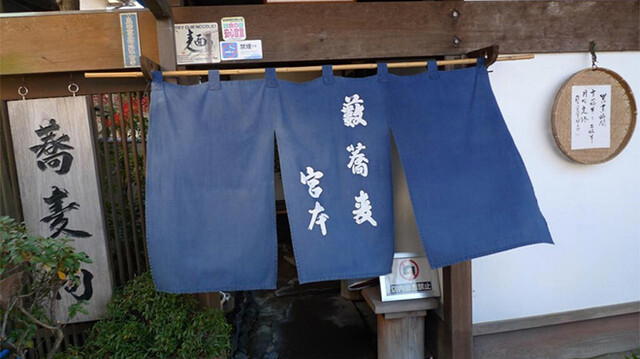
The approach to a rural soba house in Shimada changes the expectations before the first tray arrives. This is not the urban noodle-counter rhythm of quick turnover and train-station efficiency; the setting points toward a quieter Japanese dining grammar, where buckwheat becomes the axis for a meal built around order, pacing, and restraint. In Shizuoka, a prefecture more often discussed through tea, seafood, and ryokan culture, that makes soba feel less like a snack and more like a measured expression of place.
Yabusoba Miyamoto belongs to that more serious register. The public recognition is unusually consistent for a specialist soba restaurant: The Tabelog Award 2026 Bronze, a Tabelog score of 4.32, and repeated selection for Tabelog 100 Soba, including the 2025 EAST list. Those signals matter because soba is a deceptively unforgiving category. The ingredients are plain, the structure is exposed, and technical weakness has little cover. At this level, reputation rests on discipline rather than spectacle.
Soba read through the logic of kaiseki
The strongest way to understand this table is through kaiseki philosophy, not because the cooking becomes ornate, but because the experience relies on sequence and proportion. Kaiseki, at its core, is a system of restraint: seasonal awareness, controlled pacing, and a preference for clarity over excess. Applied to soba, that logic turns buckwheat noodles into the center of a wider meal rather than a single bowl consumed in haste.
That distinction matters for travelers used to ramen, udon, or tempura as Japan’s more legible comfort categories. Soba at a high level is quieter. It asks the diner to pay attention to texture, temperature, aroma, dipping rhythm, and the way supporting dishes frame the noodles without overwhelming them. The format also explains why a soba specialist can sit comfortably beside Shizuoka’s more formal Japanese dining culture. For readers mapping the prefecture’s broader table, Asaba (Kaiseki) shows the ryokan-kaiseki side of the region, while Yabusoba Miyamoto demonstrates how similar aesthetic principles can be compressed into a soba-focused meal.
The kaiseki connection should not be overstated into ceremony for ceremony’s sake. Soba remains direct food: buckwheat, water, knife work, broth, and timing. But the serious houses in Japan treat that directness as a discipline. They do not need a long list of luxury ingredients to justify attention. The editorial interest here is precisely that restraint: a rural Shizuoka soba room earning national recognition in a category where small differences carry large consequences.
Why Shizuoka makes sense for this kind of meal
Shizuoka dining rewards travelers who look beyond a single city center. The prefecture’s food culture is distributed: coastal fish markets, tea districts, mountain towns, ryokan dining rooms, and specialist restaurants that sit outside the obvious tourist path. That geography suits soba. Buckwheat has long belonged to regional Japan as much as to Tokyo’s old soba neighborhoods, and the form travels well into rural settings where pace and setting are part of the meal’s logic.
For a broader reading of the prefecture, Our full Shizuoka restaurants guide places soba alongside Japanese, Chinese, and contemporary dining rooms. Nearby editorial threads include Aozora, Blue Label, Chabo, and Chinese Muramatsu, which together show how Shizuoka’s dining identity is not confined to one cuisine or one neighborhood. Visitors building a fuller trip can also use Our full Shizuoka hotels guide, Our full Shizuoka bars guide, Our full Shizuoka wineries guide, and Our full Shizuoka experiences guide to connect the meal with the region’s wider hospitality map.
The appeal is not convenience-driven. This is a 24-seat house restaurant with tatami seating, no private rooms, and a no-smoking policy. That scale shapes the experience: it keeps the room closer to a specialist workshop than a large restaurant operation. It also sets expectations correctly. This is not a place to treat as a flexible add-on between sightseeing stops; it belongs in an itinerary as the meal around which the day is arranged.
The planning logic: small room, serious awards, old-school rules
The practical character is as important as the awards. Soba and seating reservations are not available, while certain preparations require advance arrangement, including sobagaki and sobazushi by the previous day, and soba kaiseki for groups of three to six with several days’ notice. Sundays and public holidays carry restrictions for those advance formats. Payment is old-school as well: credit cards, electronic money, and QR-code payments are not accepted. The restaurant also prohibits photography inside, a policy that reinforces the difference between a meal experienced at the table and a meal collected for the feed.
That combination gives the restaurant its editorial shape. The Bronze award and Tabelog 100 Soba selections signal a serious destination for soba; the operating rules keep it closer to a Japanese specialist house than an internationally smoothed fine-dining room. For travelers, that is a trade worth understanding. The reward is not luxury choreography, but access to a disciplined buckwheat tradition in a region where the strongest meals often sit outside the obvious urban grid.
Within a Japan itinerary, this is a different proposition from destination dining built around spectacle or long tasting-menu theater. It is closer to the appeal of precise regional forms: sukiyaki in Kamakura at -Grilled beef Sukiyaki- KAMAKURA TANUKIAN 鎌倉 たぬき庵 in Kamakura, seafood-and-grill formats such as. 鮪と炭火焼き うお炭 秋葉原店 in Tokyo, or compact specialist addresses including.cafe in Osaka.know in Kumamoto, (Shoku) Vietnam in Kawasaki, and [Curry Senmon Ten] Maruyama Kyoju. in Sapporo. Outside Japan, the same traveler instinct might lead toward category-specific rooms such as Jōdo Saké Bar in Los Angeles or Onigiri Time in Pasadena, where narrow focus is the point.
The critical read is simple: Yabusoba Miyamoto is for diners who value Japanese restraint when it is expressed through craft rather than luxury signals. The meal’s interest lies in how much weight a modest form can carry when the room, awards history, and kaiseki-adjacent pacing all point in the same direction.
Frequently asked questions
Can I bring kids to Yabusoba Miyamoto?
Yes. the public record marks Yabusoba Miyamoto as children welcome, and its 24-seat tatami-room setting in Shizuoka makes it workable for family meals. Reservations are unavailable for soba and seating, so timing matters. Check the venue's official channels for the latest details.
Is Yabusoba Miyamoto formal or casual?
It reads as casual rather than formal. The house-restaurant format, tatami room, and lunch-only hours on Tue to Sun fit an easy daytime soba stop, not a dressy dining room. Tabelog Bronze awards and repeated Tabelog 100 selections keep it firmly in the serious category, even if the setting is relaxed.
What's the cuisine at Yabusoba Miyamoto?
Yabusoba Miyamoto serves Soba (Buckwheat noodles) cuisine.
What is Yabusoba Miyamoto known for?
Yabusoba Miyamoto is primarily known for Soba (Buckwheat noodles) in Shizuoka.
Reputation & Price
Comparable venues nearby, for context on price, style, and recognition.
| Venue | Cuisine | Price | Awards | Notes |
|---|---|---|---|---|
| Yabusoba MiyamotoThis venue (the venue you are viewing) | Japanese Soba | Not listed | Tabelog Bronze #281 | Not listed |
| Sabai Deal | Casual Thai Restaurant | $10–20 | Tabelog 100 #25 | Not listed |
| Oomura | Shizuoka chicken wings & oden izakaya | $20–30 | Tabelog 100 #76 | Aoi-ku, Shizuoka chicken wings & oden izakaya |
| 台湾味 | Taiwanese | $10–20 | Not listed | Shizuoka Station area, Taiwanese |
| Seki Beya | Traditional Japanese wagashi & Abekawa mochi | $1–10 | Tabelog 100 #47 | Aoi-ku, Traditional Japanese wagashi & Abekawa mochi |
| カワサキ | French Gastronomy with Game & Seasonal Vegetables | $100–150 | Tabelog 100 #30 | Aoi-ku, French Gastronomy with Game & Seasonal Vegetables |
Recognition history
Dated appearances from independent guides and award organizations, with the underlying list record or original source where available.
Tabelog Bronze #281
Tabelog
Full recognition history (2 entries)
Tabelog 100 #78 · No. 78
Tabelog · Tabelog 100 - Soba - EAST - 2025
Continue exploring
More in Shizuoka
Restaurants in Shizuoka
All restaurants in Shizuoka →
Hotels in Shizuoka
All hotels in Shizuoka →
Wineries in Shizuoka
All wineries in Shizuoka →
Details
- Classic
- Solo
- Casual Hangout
- Standalone
Current opening hours
- Monday
- Closed
- Tuesday
- 11:30 AM–2 PM
- Wednesday
- 11:30 AM–2 PM
- Thursday
- 11:30 AM–2 PM
- Friday
- 11:30 AM–2 PM
- Saturday
- 11:30 AM–2 PM
- Sunday
- 11:30 AM–2 PM
Hours can change for holidays and private events. Hours as of .
Restrained and refined, with a composed, kaiseki-like attention to sequence and form.