Weinkeller Postmeister von Hinüber occupies a cellar address on Zöllnerstraße in Celle's well-preserved old town, positioning it among the handful of wine-oriented venues in a city where regional cuisine and local sourcing define the dining character. For visitors tracing the area's food and wine traditions, it represents a distinct stop on a circuit that ranges from country cooking to contemporary seasonal menus.
Pearl is the En Primeur Club membership app — saves, bookings, and concierge access live there. Same editors, same standards.
- Address
- Zöllnerstraße 25, 29221 Celle, Germany
- Phone
- +4949514128444
- Website
- weinkeller-celle.de
- Directions
- Get directions
 Saves & bookings on Pearl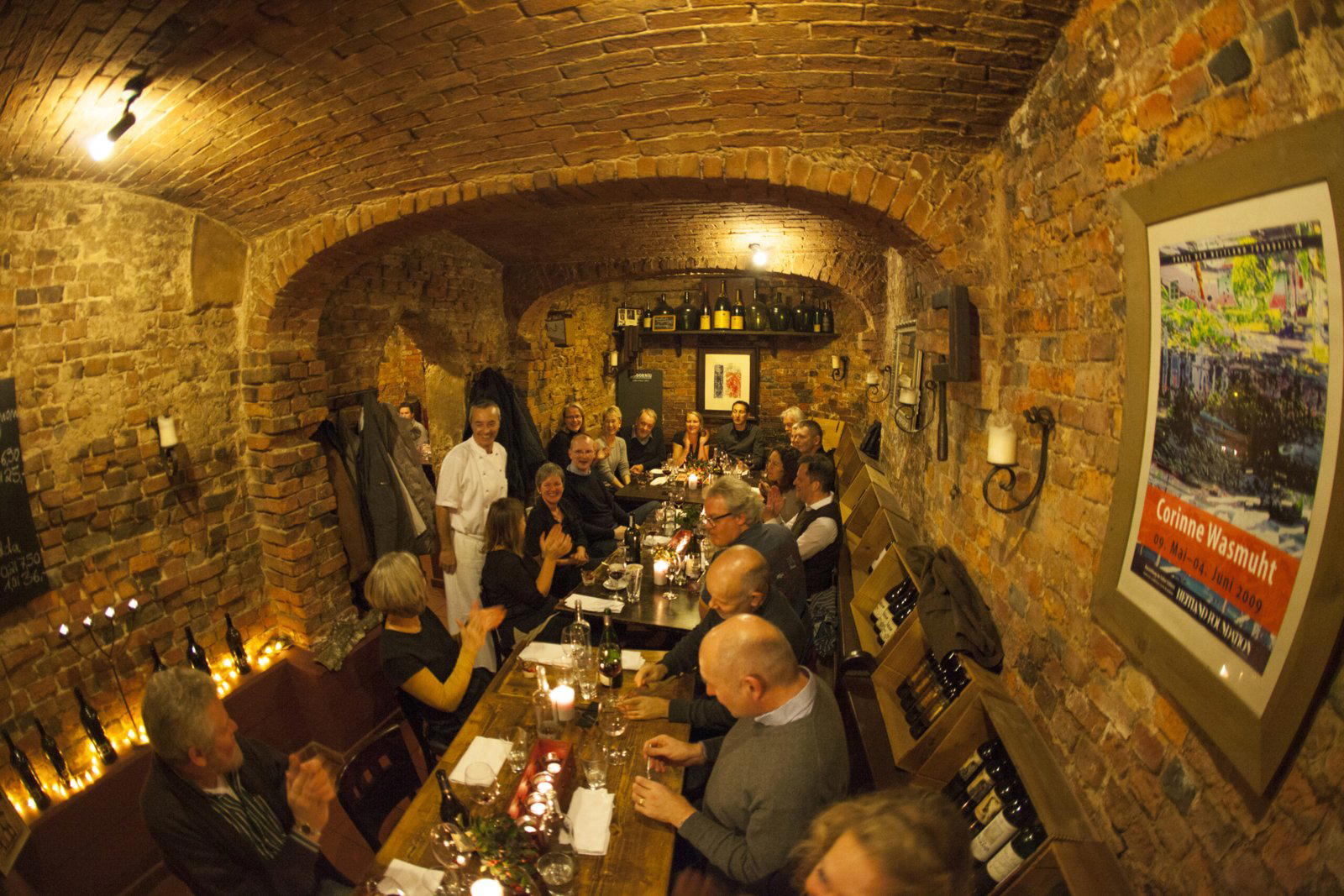
Celle's Cellar Tradition and Where Wine Fits In
Germany's smaller historic towns have long maintained a category of venue that sits between wine merchant and dining room: the weinkeller. In cities like Rothenburg, Goslar, and Lüneburg, these cellar-level spaces developed as practical expressions of a trading culture, where merchants stored, poured, and sold from the same vaulted address. Celle, whose half-timbered Altstadt survived the Second World War largely intact, preserves that structural logic in its streets. Weinkeller Postmeister von Hinüber, on Zöllnerstraße 25, occupies a position within that tradition, drawing on the physical and cultural grammar of a town where the built environment itself is an argument for continuity.
Approaching from the Altstadt's main pedestrian grid, Zöllnerstraße reads as residential and quiet by the standards of Celle's more touristed lanes. The address places the venue away from the concentrated restaurant cluster around the market square, which means the visit carries a degree of intentionality. Guests arrive because they have sought it out, not because they wandered past. That self-selection shapes the room's character: the audience tends toward the wine-curious rather than the casually hungry.
Sourcing and the Weinkeller Model
The weinkeller format has historically organised itself around provenance in a way that conventional restaurant wine lists do not. Where a restaurant wine list functions as a secondary document to a food menu, the cellar-format venue treats wine origin as the primary editorial argument. Regional Germany has particular logic here: the country's wine regions, from the Mosel and Rheingau to Franken and the Pfalz, produce wines that differ substantially by geography, and a well-run weinkeller functions as a kind of sourcing map, illustrating those differences through selection rather than description.
For a visitor already familiar with, say, the restrained Rieslings that come off slate soils in the Mosel, or the fuller-bodied expressions from loess-heavy sites in the Pfalz, tasting through a curated cellar selection anchors those abstractions in the glass. The ingredient-sourcing angle that defines this category of venue is less about farm-to-table produce chains and more about vineyard-to-glass traceability: which grower, which site, which year, and what that combination means in terms of flavour and context. In a city like Celle, where the dominant dining mode runs toward regional North German cooking, a venue organised around wine origin offers a different kind of education.
Celle's broader dining circuit reflects that regionality strongly. Schapers, operating at the €€€ tier with a farm-to-table orientation, makes provenance central to its food sourcing. Köllner's Landhaus anchors its menu in seasonal Lüneburg Heath produce. der allerKrug works the country cooking register with similar regional loyalty. The weinkeller format fits logically into that ecosystem as the sourcing-led wine counterpart to what those kitchens do with food.
Positioning Within Germany's Fine Dining Geography
Celle does not occupy the same position in Germany's fine dining geography as Hamburg, Munich, or the Rhineland. The city's restaurants compete at a neighbourhood and regional-tourist level rather than at the destination-dining tier occupied by venues like Restaurant Haerlin in Hamburg or Aqua in Wolfsburg, the latter less than an hour's drive away. That context matters for calibrating expectations. Germany's highest-recognition wine and dining addresses, from Schwarzwaldstube in Baiersbronn to Vendôme in Bergisch Gladbach, operate with Michelin recognition and national-level wine programs. Weinkeller Postmeister von Hinüber occupies a different register: it is a regional specialist address in a mid-sized Lower Saxon city, valued for what it offers within that context rather than measured against the country's destination tier.
That is not a diminishment. Regional specialist venues often carry a fidelity to place that more ambitious programs lose when they optimise for international audiences. The sourcing discipline that defines a well-run weinkeller, the commitment to particular producers and regions over a diversified crowd-pleasing list, tends to survive better at this scale than in higher-volume operations. At venues like Das Esszimmer and Taverna and Trattoria Palio, the wine list serves the food. At a weinkeller, that relationship inverts.
Planning a Visit
Zöllnerstraße 25 is within walking distance of Celle's old town centre, making the venue accessible on foot from the main tourist and hotel cluster. Given the cellar format and the general character of this category of venue in Germany, visits tend to work better mid-week or as a deliberate evening stop rather than a casual drop-in. Specific opening hours and booking arrangements should be verified directly before planning around the address. Celle is served by regional rail from Hanover, approximately 35 minutes on direct services, which makes a day or evening trip from the state capital practical without requiring a car.
For those using Celle as a base to explore Lower Saxony's dining options more broadly, the region connects to several notable addresses worth considering. JAN in Munich, ES:SENZ in Grassau, and CODA Dessert Dining in Berlin represent the kind of high-recognition German dining that rewards advance planning for visitors assembling a broader itinerary. For internationally minded comparisons, Le Bernardin in New York City and Atomix in New York City illustrate how sourcing-led programs operate at the highest recognition tier. Schanz in Piesport and Victor's Fine Dining by Christian Bau in Perl bring wine-region context from Germany's own Mosel corridor. Waldhotel Sonnora in Dreis rounds out the comparison set for those interested in how regional German venues operate at the upper end of their respective markets.
At-a-Glance Comparison
Comparable venues nearby, for context on price, style, and recognition.
| Venue | Cuisine | Price | Awards | Notes |
|---|---|---|---|---|
| Weinkeller Postmeister von HinüberThis venue — the venue you are viewing | Modern German with International Influences | $$$ | Not listed | Not listed |
| der allerKrug | German Country Cuisine | $$$ | Michelin Plate | Celle |
| Köllner's Landhaus | Regional German with Mediterranean Influences | $$$ | Michelin Plate | Celle-Boye |
| Schapers | Classic German | $$ | Michelin Plate | Neustadt |
| Taverna & Trattoria Palio | Italian Trattoria | $$$ | Michelin Plate | Celle |
| Das Esszimmer | Modern European Fine Dining | $$$$ | Michelin Plate | Celle |
Continue exploring
More in Celle
Restaurants in Celle
Browse all →
Bars in Celle
Browse all →
Hotels in Celle
Browse all →
Wineries in Celle
Browse all →
At a Glance
- Romantic
- Cozy
- Classic
- Intimate
- Elegant
- Date Night
- Special Occasion
- Business Dinner
- Wine Cellar
- Historic Building
- Courtyard
- Standalone
- Extensive Wine List
- Sommelier Led
- Local Sourcing
- Farm To Table
Current opening hours
- Monday
- Closed
- Tuesday
- 6–10:30 PM
- Wednesday
- 6–10:30 PM
- Thursday
- 6–10:30 PM
- Friday
- 6–10:30 PM
- Saturday
- 12–2 PM, 6–10:30 PM
- Sunday
- Closed
Hours can change for holidays and private events. Last verified .
Intimate and atmospheric with original old vault architecture, warm lighting, and a cozy European wine cellar ambiance that feels both historic and refined.