
Tabelog 100 #68
Our verdict
Washoku Tei belongs to Kagoshima’s everyday washoku tier rather than its ceremony-driven dining tier: a small Chuocho counter-and-table room where cafeteria cooking, seafood, shochu, and set-meal logic carry the argument. Its Tabelog 100 - Diner - 2026 selection and JPY 1,000 - JPY 1,999 budget place it in a category where value depends on sourcing discipline, not luxury cues.

Pearl is the En Primeur Club membership app, where members save venues, book tables and use the concierge.
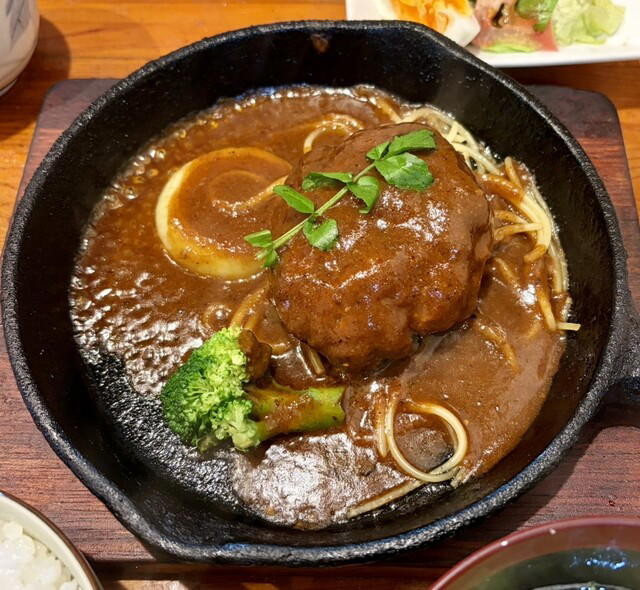
Approaching Washoku Tei in Kagoshima, the appeal is not spectacle but everyday usefulness: the kind of local Japanese dining address where regular meals matter more than ceremony. Kagoshima rewards this format. The city’s serious eating is not confined to formal rooms or high-ticket counters; it also lives in cafeteria culture, where seafood and straightforward meal structures can turn an everyday stop into a useful regional reference.
That is the useful frame for Washoku Tei. The restaurant is categorized as cafeteria and seafood, selected for Tabelog 100 - Diner - 2026, and rated 3.57 on Tabelog. Those signals matter because diner recognition in Japan often captures places that do not behave like destination restaurants: accessible budgets, repeat local use, and cooking that depends on reliability rather than theatrical plating. In Kagoshima, that usually means paying attention to the everyday relationship between seafood, set-meal habits, and casual dining.
Seafood, shokudo logic, and the Kagoshima pantry
Kagoshima’s food identity is shaped by its regional setting and everyday dining habits. A casual restaurant here does not need to announce a grand philosophy. It needs to make familiar meals feel dependable enough that lunch can function as a practical stop and dinner can remain relaxed. That duality is central to the shokudo form: it is democratic, but not careless.
Washoku Tei sits in that lane rather than the city’s more formal or higher-budget brackets. Among Kagoshima comparables, Aji no Tonkatsu Maruichi, Karen Kagoshima ten, Toriya Yamaguchi, Torisen Ippo, and Tenmonkan Mujaki Amyu puraza ten help show how broad the city’s casual-to-special-occasion map can be. The comparison clarifies the point: this is not where diners come to measure luxury. It is where category fit, everyday confidence, and price discipline do the work.
The seafood designation is especially relevant in a city where fish can appear in casual rooms without losing seriousness. Kagoshima’s better everyday restaurants often succeed by keeping the meal structure legible: a clear main idea, an approachable budget, and a format that can work for repeat visits rather than only for special occasions. Read that way, Washoku Tei belongs inside a local pattern rather than a generic casual-dining template.
For readers mapping the city by genre, the useful contrast is not only expensive versus inexpensive. It is one dining format versus another: tonkatsu, chicken-focused cooking, seafood-led meals, sweets stops, and other casual Kagoshima dining. Nearby editorial context includes Aji no Tonkatsu Maruichi and other unnamed Kagoshima dining rooms for grilled dishes, rice-led meals, and shokudo logic.
A casual format with diner-level recognition
The experience is closer to an everyday local dining stop than a highly staged restaurant performance. That distinction matters in Japanese everyday restaurants because the appeal often comes from reliability, category clarity, and the ability to serve practical meals without turning them into ceremony. The format favors dining that can be useful, sociable, and repeatable.
The Tabelog 100 - Diner - 2026 selection gives this modest category a sharper editorial reading. Japan’s restaurant culture often separates prestige from comfort, but the diner list cuts across that division by recognizing places where regular use and quality control coexist. A 3.57 Tabelog score in this context does not imply luxury; it suggests a restaurant that has earned enough diner confidence to rise above anonymous convenience.
That Kagoshima context is important. Washoku Tei belongs to the city’s practical eating map rather than a detour-driven luxury circuit. For a wider read on the city, use Our full Kagoshima restaurants guide, then split the trip by category with Our full Kagoshima bars guide, Our full Kagoshima hotels guide, Our full Kagoshima wineries guide, and Our full Kagoshima experiences guide.
How to read it against Japan's casual dining map
Washoku Tei is strongest as a lens on Japanese everyday cooking: not anonymous cafeteria food, not tasting-menu washoku, but the middle space where category, pricing, and repeatability matter. Kagoshima’s casual dining culture adds another layer. It is part of the table’s grammar, especially when seafood and straightforward meals support a relaxed visit rather than a formal occasion.
Travelers comparing this with other Japanese casual formats should look for the same structural clues: category, price band, service style, and occasion. In Kagoshima, named peers such as Aji no Tonkatsu Maruichi, Karen Kagoshima ten, Tenmonkan Mujaki Amyu puraza ten, Torisen Ippo, and Toriya Yamaguchi signal different meal architectures and occasions. Beyond those, other dining in Kagoshima can be read generically by format: set-meal rooms, seafood counters, chicken specialists, sweets stops, and casual places where one tightly defined idea carries the identity.
The editorial case for Washoku Tei is therefore specific: it belongs on a Kagoshima itinerary when the goal is to understand how the city eats between seafood, convenience, and daily Japanese dining. The price tier keeps expectations grounded; the 2026 Tabelog diner recognition supplies the trust signal; the cafeteria-and-seafood frame explains why this restaurant has relevance beyond a simple meal stop.
Frequently asked questions
What should I budget for a meal at Washoku Tei?
Pricing at Washoku Tei is listed as JPY 1,000 - JPY 1,999 for dinner and JPY 1,000 - JPY 1,999 for lunch.
What's the address for Washoku Tei?
Kagoshima.
Is Washoku Tei reservation-only?
Check the venue's official channels for the latest details.
What's Washoku Tei best at?
Washoku Tei is strongest as a Kagoshima stop for cafeteria and seafood dining at JPY 1,000–JPY 1,999. The Tabelog 100 Diner 2026 selection signals everyday dining with local credibility, not a formal tasting-menu room.
Quick Comparison
Nearby venues at a similar price tier for orientation.
| Venue | Cuisine | Price | Awards | Notes |
|---|---|---|---|---|
| Washoku TeiThis venue (the venue you are viewing) | Japanese Set-Meal Restaurant | $10–20 | Tabelog 100 #68 | Not listed |
| Tonkatsu Kawakyu | Kagoshima Black Pork Tonkatsu | Not listed | Not listed | Chuocho |
| Maruman Ganso Yakitori | Traditional Kagoshima Yakitori (Satsuma Chicken) | $30–50 | Tabelog 100 #71 | Tenmonkan / Tenmonkandori |
| Tenjin Boumarushin | Traditional handmade soba | $20–30 | Tabelog 100 #6 | Tenmonkan / Tenmonkandori |
| Kumasotei | Traditional Satsuma Cuisine | Not listed | Not listed | Higashi Sengoku-cho |
| Yakitori Kouun | Yakitori | $30–50 | Tabelog 100 #80 | Hinohiguchi-cho |
Recognition history
Dated appearances from independent guides and award organizations, with the underlying list record or original source where available.
Tabelog 100 #68 · No. 68
Tabelog · Tabelog 100 - Diner - 2026
Continue exploring
More in Kagoshima
Restaurants in Kagoshima
All restaurants in Kagoshima →
Hotels in Kagoshima
All hotels in Kagoshima →
Wineries in Kagoshima
All wineries in Kagoshima →
Details
- Cozy
- Classic
- Family
- Casual Hangout
- Group Dining
- Solo
- Standalone
- Sake Program
- Local Sourcing
- Street Scene
- Set Menu
- A La Carte
- Sake
- Wine
- Shochu
Casual, family-oriented, and unpretentious, with an emphasis on relaxed everyday dining rather than formal service.