VINCENT CUISINIER DE CAMPAGNE
In the quiet villages strung along the Loire between Saumur and Langeais, a certain style of cooking has always made sense: rooted in the land, shaped by the river, and resistant to metropolitan excess. Vincent Cuisinier de Campagne at 19 Rue de la Galottière in Coteaux-sur-Loire represents that tradition with conviction, drawing on the produce of one of France's most agriculturally coherent river valleys.
Pearl is the En Primeur Club membership app — saves, bookings, and concierge access live there. Same editors, same standards.
- Address
- 19 Rue de la Galottière, 37140 Coteaux-sur-Loire, France
- Phone
- +33247961721
- Directions
- Get directions
 Saves & bookings on Pearl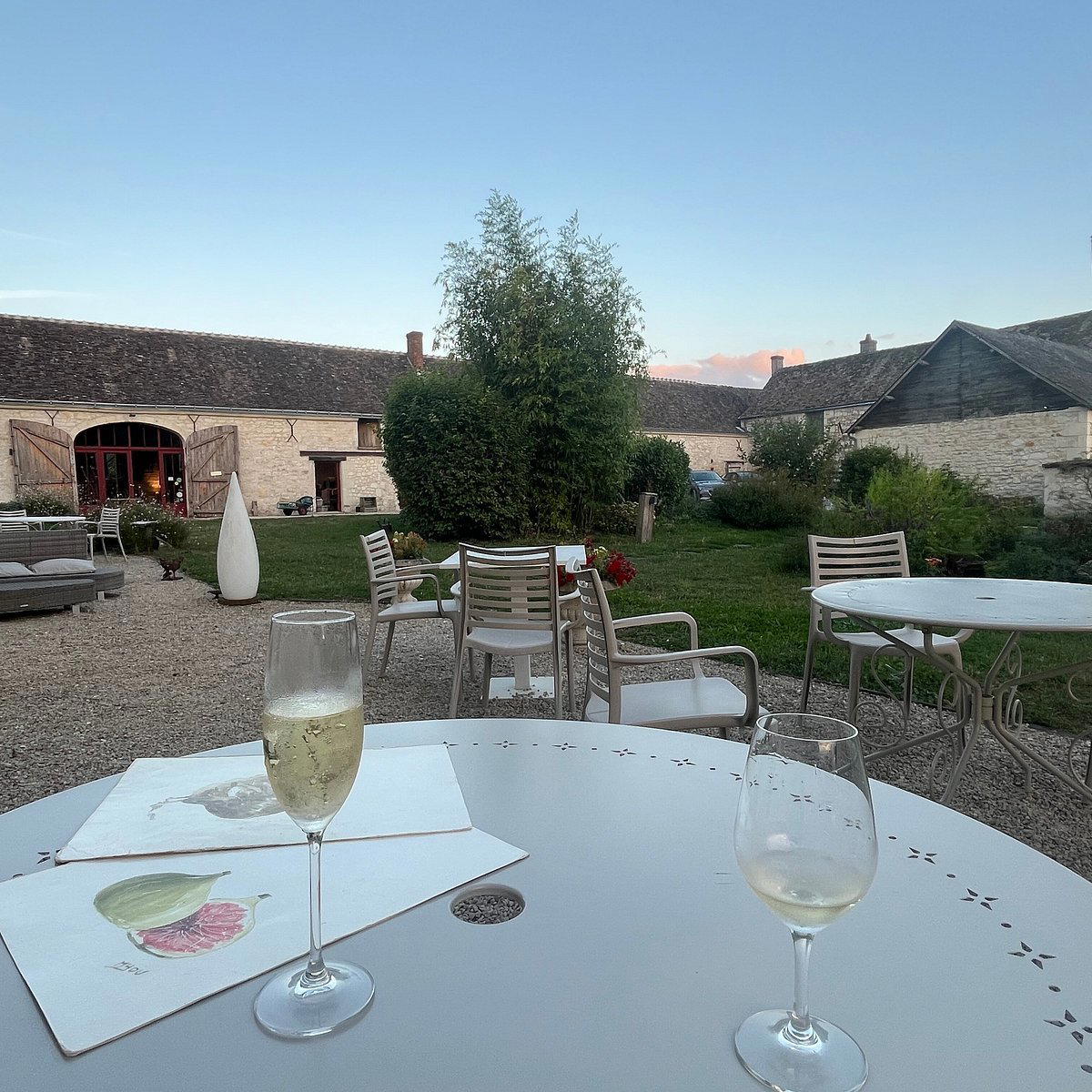
Cooking Where the Land Speaks First
The Loire Valley has always operated by its own logic. Unlike the concentrated urban restaurant scenes of Lyon or Paris, where kitchens compete for critic attention and tables fill on reputation alone, the villages along this stretch of river between Saumur and Langeais maintain a different kind of culinary authority. The produce here, the asparagus, the pike from the river, the mushrooms grown in the tuffeau caves, the goat's cheeses from Touraine, does not need to travel to acquire prestige. It simply needs a kitchen willing to let it speak. Vincent Cuisinier de Campagne, a restaurant in Coteaux-sur-Loire at 19 Rue de la Galottière, positions itself precisely in that tradition: a restaurant whose name announces its philosophy before you open the door.
The phrase cuisinier de campagne carries weight in French culinary culture. It signals a deliberate turn away from the haute cuisine register, with its imported luxuries and architectural plating, toward something more grounded in terroir and season. This is not a minor stylistic choice. In a country where the poles of restaurant culture run from the three-star temples, Alléno Paris au Pavillon Ledoyen in Paris, Mirazur in Menton, Flocons de Sel in Megève, to the neighbourhood bistro, the cuisinier de campagne occupies a specific middle register: serious cooking, local sourcing, and an audience that comes for nourishment rather than spectacle.
The Ingredient Logic of the Loire
Few river valleys in Europe offer a kitchen the range of primary ingredients that the Loire does. The river itself produces freshwater fish, sandre, brochet, silure, that appear on menus throughout the region in preparations that have remained largely consistent for generations. The surrounding flatlands and bocage carry market gardens, orchards, and small-scale livestock operations whose output rarely reaches national distribution, which means that a restaurant working within this ecosystem is necessarily working with produce that a visitor to Paris could not easily replicate. This is the sourcing advantage that a genuinely local kitchen holds, and it is the argument that the cuisinier de campagne format makes most convincingly.
The tuffeau caves cut into the valley's limestone banks have historically served double duty as wine cellars and mushroom growing chambers, producing varieties adapted to the damp, cool conditions underground. The region's goat's cheese tradition, centred on AOC-protected formats like Sainte-Maure-de-Touraine and Selles-sur-Cher, extends across multiple producers within short driving distance. A kitchen in Coteaux-sur-Loire that prioritises local sourcing is not making a compromise for ideological reasons; it is simply accessing what is actually better nearby. Restaurants further afield, even celebrated ones like Bras in Laguiole or Auberge du Vieux Puits in Fontjoncouse, have built their reputations in part on exactly this same logic: proximity to notable primary ingredients that metropolitan kitchens cannot match.
Arriving in Coteaux-sur-Loire
Coteaux-sur-Loire sits in the administrative department of Indre-et-Loire, west of Tours along the D952 river road. The village itself formed from the merger of several smaller communes along the south bank and has the compressed, quiet character of rural Touraine: stone houses, a church, market gardens visible at the edges. The address, 19 Rue de la Galottière, places the restaurant within the village fabric rather than on a tourist route, which is consistent with a kitchen that draws its clientele primarily from the region rather than from passing trade.
Driving is the practical approach for most visitors. Tours, served by TGV from Paris Montparnasse in approximately an hour, is the nearest major rail hub; from there, the drive west along the Loire takes roughly thirty minutes. The river road itself is worth the approach, passing through Villandry and along the valley floor where the landscape confirms everything the menu promises about the density of agricultural production in this corridor. Those combining the visit with wine exploration will find producers across both Bourgueil and Chinon appellations within easy reach on either bank.
For context on what serious regional cooking can achieve along this Loire corridor, see the Coteaux Sur Loire restaurants guide. The broader French countryside restaurant tradition includes Troisgros - Le Bois sans Feuilles in Ouches to Georges Blanc in Vonnas and L'Oustau de Baumanière in Les Baux, each representing a different take on what it means to cook seriously outside a major city.
The Countryside Restaurant in France's Culinary Hierarchy
France's countryside restaurant tradition has never been merely a consolation prize for travellers who could not secure a table in Paris. Some of the country's most consequential cooking has happened in villages: Auberge de l'Ill in Illhaeusern in Alsace, Paul Bocuse - L'Auberge du Pont de Collonges in Collonges-au-Mont-d'Or just outside Lyon, La Marine in Noirmoutier-en-l'île on an Atlantic island. The pattern is consistent: remove a kitchen from the competition pressures of the city and it tends to focus inward, toward the land and sea immediately surrounding it. The results are often more honest, if less photogenic, than their urban counterparts.
Vincent Cuisinier de Campagne operates in this same tradition at a more accessible register. The name positions it explicitly as a countryside cook's restaurant rather than a destination tasting-menu operation, and that framing shapes everything from the likely format of service to the probable approach to the menu. Kitchens in this category, cooking seriously from local ingredients without the infrastructure of a full brigade, require a particular kind of discipline. The comparison set is not AM par Alexandre Mazzia in Marseille or Assiette Champenoise in Reims; it is the network of serious regional tables that French food culture has always relied on to maintain culinary standards outside the capital.
For those whose Loire itinerary extends beyond the table, the valley's wine appellations provide a natural companion to this style of cooking. Bourgueil's Cabernet Franc, Vouvray's Chenin Blanc, and Muscadet from further west all pair naturally with the river fish and farmyard proteins that a cuisinier de campagne format emphasises. The convergence of wine and food sourcing in this corridor is not accidental; it reflects centuries of agricultural alignment between what the land grows and what the table needs.
Planning Your Visit
Vincent Cuisinier de Campagne accepts recommended reservations, and the practical starting point is the address, 19 Rue de la Galottière, 37140 Coteaux-sur-Loire. Advance booking is recommended, particularly for weekend lunch service. Arriving without a reservation on a Saturday or Sunday can carry meaningful risk. Plan accordingly.
Side-by-Side Snapshot
Comparable venues nearby, for context on price, style, and recognition.
| Venue | Cuisine | Price | Notes |
|---|---|---|---|
| VINCENT CUISINIER DE CAMPAGNEThis venue — the venue you are viewing | French Country Farm-to-Table | $$$ | Not listed |
| L'Aubépine | Creative French Bistronomic | $$$ | near Tours Cathedral |
| L'Accalmie | Modern French Gastronomique | $$$ | Place des Halles |
| La Breche | Gastronomic French Bistro | $$$ | Rue Jules Ferry |
| ROS[O] | Modern Seasonal French Bistro | $$$ | Mûrs-Erigné |
| Envol | Modern French Fine Dining | $$$ | Centre Ville |
Continue exploring
More in Coteaux Sur Loire
Restaurants in Coteaux Sur Loire
Browse all →
Bars in Coteaux Sur Loire
Browse all →
Hotels in Coteaux Sur Loire
Browse all →

At a Glance
- Rustic
- Intimate
- Cozy
- Special Occasion
- Date Night
- Standalone
- Farm To Table
- Local Sourcing
- Vineyard
Charming rural farm-restaurant atmosphere in the Bourgueil vineyards, described around warm hospitality and terroir-driven simplicity.