Our verdict
Nassau's dining scene has seen Japanese cuisine evolve from novelty to a credible part of the island's restaurant conversation, and Sushi Rokkan, located at Old Fort Bay Town Centre on Windsor Field Road, sits within that shift. Positioned in one of Nassau's more composed commercial settings, it represents a category of Japanese-leaning dining that the Bahamas has absorbed gradually and on its own terms.

Pearl is the En Primeur Club membership app, where members save venues, book tables and use the concierge.
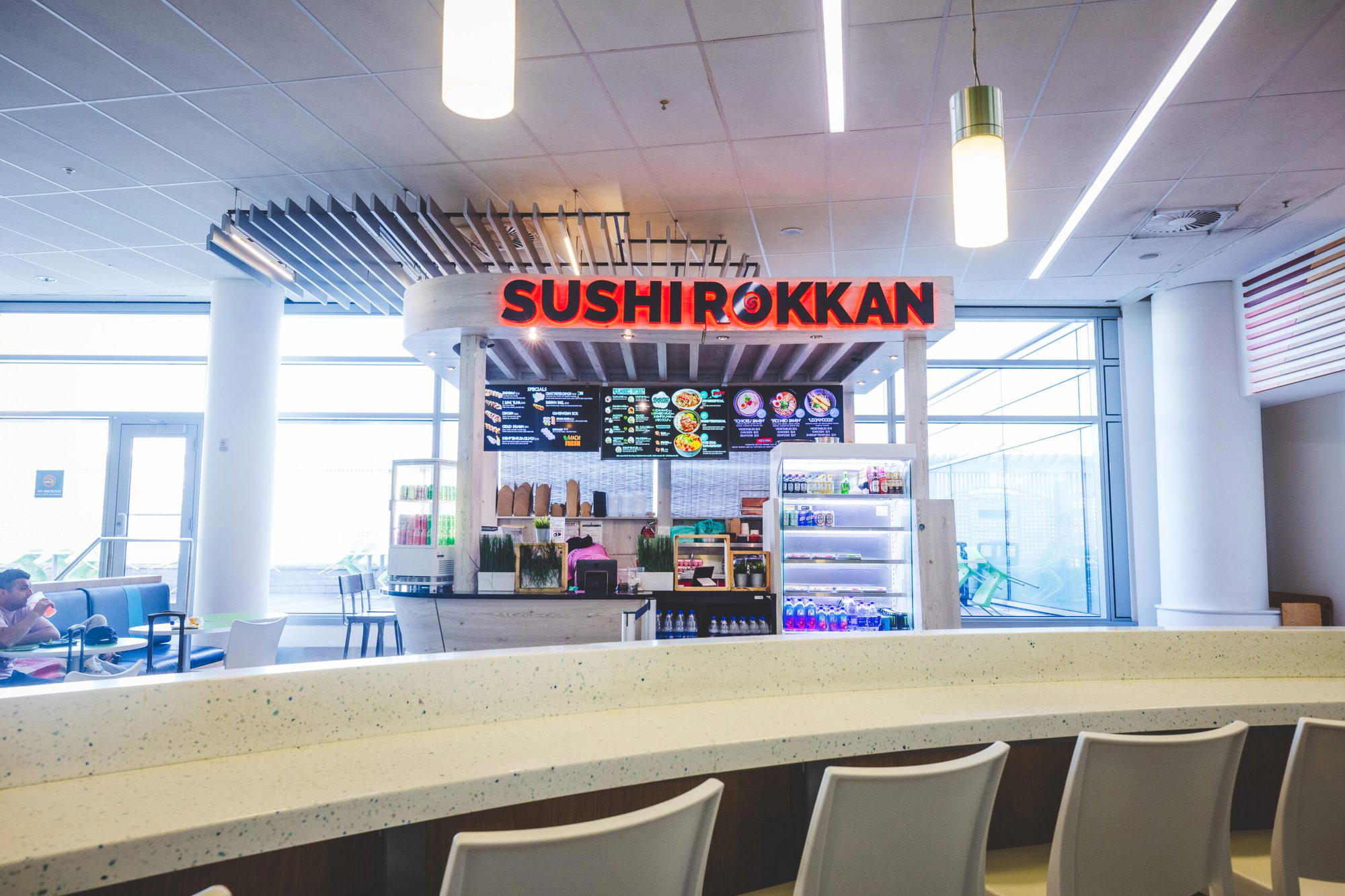
Japanese Dining in the Caribbean: A Category That Took Its Time
The arrival of serious sushi in the Caribbean did not happen overnight. For decades, Nassau's restaurant scene was defined almost entirely by its waterfront fish shacks, resort dining rooms anchored to international hotel groups, and a handful of European-influenced institutions that had held their ground since the mid-twentieth century. Places like Café Martinique and Café Matisse set a tone rooted in continental European cooking, and for a long time, that was the ceiling for fine dining on the island. Japanese cuisine, and sushi specifically, occupied the periphery: a novelty offering attached to resort menus or a secondary dish on eclectic lists.
That changed as Nassau's resident population grew and its appetite for diverse, technically demanding food formats caught up with what you might find in South Florida or the eastern Caribbean. Today, dedicated Japanese operations hold a more defined position in the city's dining map, and Sushi Rokkan, operating out of Old Fort Bay Town Centre on Windsor Field Road, is part of that shift. Its location in a planned commercial setting rather than a beachside resort strip places it firmly in the category of restaurants serving Nassau's local and long-term resident community as much as its transient tourist population.
Old Fort Bay and the Context of Where It Sits
Old Fort Bay is not the Nassau that most visitors encounter first. The area's Town Centre development draws from a residential catchment that skews toward the island's professional and expatriate communities, and the restaurants that have found a footing there tend to reflect that. It is a different dynamic from the Nassau of Cable Beach resort corridors or the Parliament Street stretch near the historic core. Dining here is less about spectacle and more about regularity: the kind of place where you go on a Tuesday evening without a special occasion as justification.
That positioning matters for understanding what Sushi Rokkan is and who it serves. For comparison, Nassau also has operators working the resort-adjacent and tourist-first end of the spectrum, from Cafe Boulud Bahamas with its international brand parentage to Cafe Bombay which occupies a different ethnic-cuisine niche. Sushi Rokkan's Windsor Field Road address puts it in a more utilitarian but arguably more sustainable position: serving a repeating local clientele rather than relying on visitor turnover.
How Sushi Has Evolved in the Bahamas
The broader Bahamian archipelago has absorbed Japanese food formats at varying speeds and with varying degrees of seriousness. In the Out Islands, sushi tends to appear as a concession to visitor expectations rather than a standalone proposition: a few maki rolls on a menu otherwise built around grilled fish and Bahamian stews. Look at something like Freedom Restaurant & Sushi Bar in Gregory Town and you see that even in smaller settlements, there is appetite for the format, though the execution and ambition levels vary considerably.
Nassau, as the country's commercial and population centre, has moved further along that curve. The city now has enough of a resident base and enough crossover with Miami's food culture to sustain Japanese operations that go beyond token sushi rolls. That said, Nassau is not Tokyo, and it is not even Honolulu: the supply chain for premium fish is a genuine constraint, and the price-to-quality calculus that governs omakase counters in major cities operates differently when you factor in import costs and island logistics. What works in Nassau's Japanese dining category is not necessarily what works in the same category in New York or Hong Kong.
The Reinvention Question: Where Sushi Rokkan Sits Now
Any restaurant operating in Nassau over a sustained period has had to adapt. The island's tourism economy is cyclical, its resident dining population is relatively small, and external shocks, whether hurricanes, global travel disruptions, or supply chain pressures, have reshaped what is viable at regular intervals. The Japanese category in Nassau has not been immune to this. Operations that positioned themselves too heavily around tourist spend have found the model precarious; those that built a local loyal base have generally fared better through the disruptions.
Sushi Rokkan's placement in Old Fort Bay suggests a model oriented toward the latter. The Town Centre format, with its mix of retail and food-and-beverage tenants, creates a built-in community of repeat visitors who live and work nearby.
For visitors arriving in Nassau with an interest in how the city's food scene has matured beyond its resort-restaurant defaults, the Japanese category offers a useful lens. The contrast between something like Café Coco and a dedicated sushi operation illustrates how Nassau's dining has broadened without losing its Caribbean specificity. The city's relationship with the sea remains central; what changes is the culinary tradition through which that relationship gets expressed.
Planning a Visit
Sushi Rokkan is located at Old Fort Bay Town Centre, Windsor Field Road, Nassau. The Town Centre sits west of Nassau's downtown core, and access by car is the practical standard for this part of the island. Visitors staying in central Nassau or on Cable Beach should allow for travel time and account for the fact that this is not a walkable destination from most hotel clusters. Current booking arrangements, hours of operation, and pricing are best confirmed directly before visiting, as these details are not available in verifiable form at time of writing. For a broader orientation to Nassau's restaurant options across neighbourhoods and price tiers, the full Nassau restaurants guide provides comparative context.
Those planning a wider Bahamas trip with serious dining intent may also find value in mapping restaurants across the archipelago: Staniel Cay Yacht Club in the Exumas and Pete's Pub and Gallery in Little Harbour represent the Out Islands' distinct dining character, while Haynes Ave in Governor's Harbour offers another point of comparison on Eleuthera. The contrast between Nassau's more developed, format-diverse dining scene and the simpler, locally-sourced offers elsewhere in the archipelago is part of what makes the city's evolution as a food destination worth paying attention to.
Frequently asked questions
Is SUSHI ROKKAN child-friendly?
Sushi restaurants in the Japanese tradition tend to operate at a pace and format that suits older children and adults more naturally than young families. Sushi Rokkan sits within Old Fort Bay Town Centre, a residential-anchored development that draws a local rather than resort crowd, which generally means a quieter, more measured environment.
Is SUSHI ROKKAN better for a quiet night or a lively one?
Old Fort Bay Town Centre is a neighbourhood destination, west of Nassau's downtown core, drawing primarily from its residential catchment rather than tourist foot traffic. That context points toward the quieter end of the spectrum, not a late-night scene venue, but somewhere suited to an unhurried dinner. Those seeking high-energy dining would find Nassau's cable beach or downtown corridors a better fit.
Is Sushi Rokkan one of the few dedicated sushi venues in Nassau?
Nassau's dining scene has historically been built around seafood in the Bahamian tradition and resort-driven international menus, making a standalone Japanese sushi operation at Old Fort Bay Town Centre an uncommon category in the local market. The Bahamas more broadly has absorbed Japanese food formats slowly and unevenly across its islands. Sushi Rokkan's position in a residential town centre rather than a hotel property signals it is targeting the resident dining population, a segment that tends to support more format-specific kitchens.
What should I order at SUSHI ROKKAN?
In a market like Nassau, where Japanese dining has historically been limited in range and seriousness, a kitchen specialising in this format tends to anchor its offer around fish sourcing, so asking what is freshest that day is the most direct strategy.
Recognition Snapshot
Comparable venues nearby, for context on price, style, and recognition.
| Venue | Cuisine | Price | Notes |
|---|---|---|---|
| SUSHI ROKKANThis venue (the venue you are viewing) | Traditional Japanese Sushi | $50–100 | Not listed |
| Social House Sushi & Grill | Japanese Nikkei Fusion | $30–50 | Cable Beach |
| Nobu | Japanese-Peruvian Fusion | $150–200 | Paradise Island |
| Shima | Southeast Asian Fusion with Sushi | Not listed | Lyford Cay |
| Dune | French-Asian Fusion with Bahamian Influences | $50–100 | Paradise Island |
| Sapodilla | Elevated Bahamian & European Fine Dining | $50–100 | West Bay Street |
Continue exploring
More in Nassau
Restaurants in Nassau
All restaurants in Nassau →
Bars in Nassau
All bars in Nassau →
Details
- Cozy
- Elegant
- Intimate
- Date Night
- Business Dinner
- Sake Program
- Sustainable Seafood
- A La Carte
- Sake
- Vegetarian Friendly
- Gluten Free Options
Current opening hours
- Monday
- 11:30 AM–2:50 PM, 5:30–9:30 PM
- Tuesday
- 11:30 AM–2:50 PM, 5:30–9:30 PM
- Wednesday
- 11:30 AM–2:50 PM, 5:30–9:30 PM
- Thursday
- 11:30 AM–2:50 PM, 5:30–9:30 PM
- Friday
- 11:30 AM–2:50 PM, 5:30–9:30 PM
- Saturday
- 11:30 AM–2:50 PM, 5:30–9:30 PM
- Sunday
- Closed
Hours can change for holidays and private events. Hours as of .
Cozy and charming atmosphere with casual elegant dining.