Santa Monica Seafood Market & Cafe
Santa Monica Seafood Market & Cafe on Wilshire Boulevard occupies a particular niche in the Southern California seafood scene: part retail fish market, part casual cafe, where the sourcing logic of a fishmonger informs what ends up on the plate. The format draws a regular crowd of locals who treat it as a weekly provisioning stop as much as a meal destination.
 Discover on Pearl
Pearl is the En Primeur Club membership app — saves, bookings, and concierge access live there. Same editors, same standards.
- Address
- 1000 Wilshire Blvd, Santa Monica, CA 90401
- Phone
- +1 310 393 5244
- Website
- smseafoodmarket.com
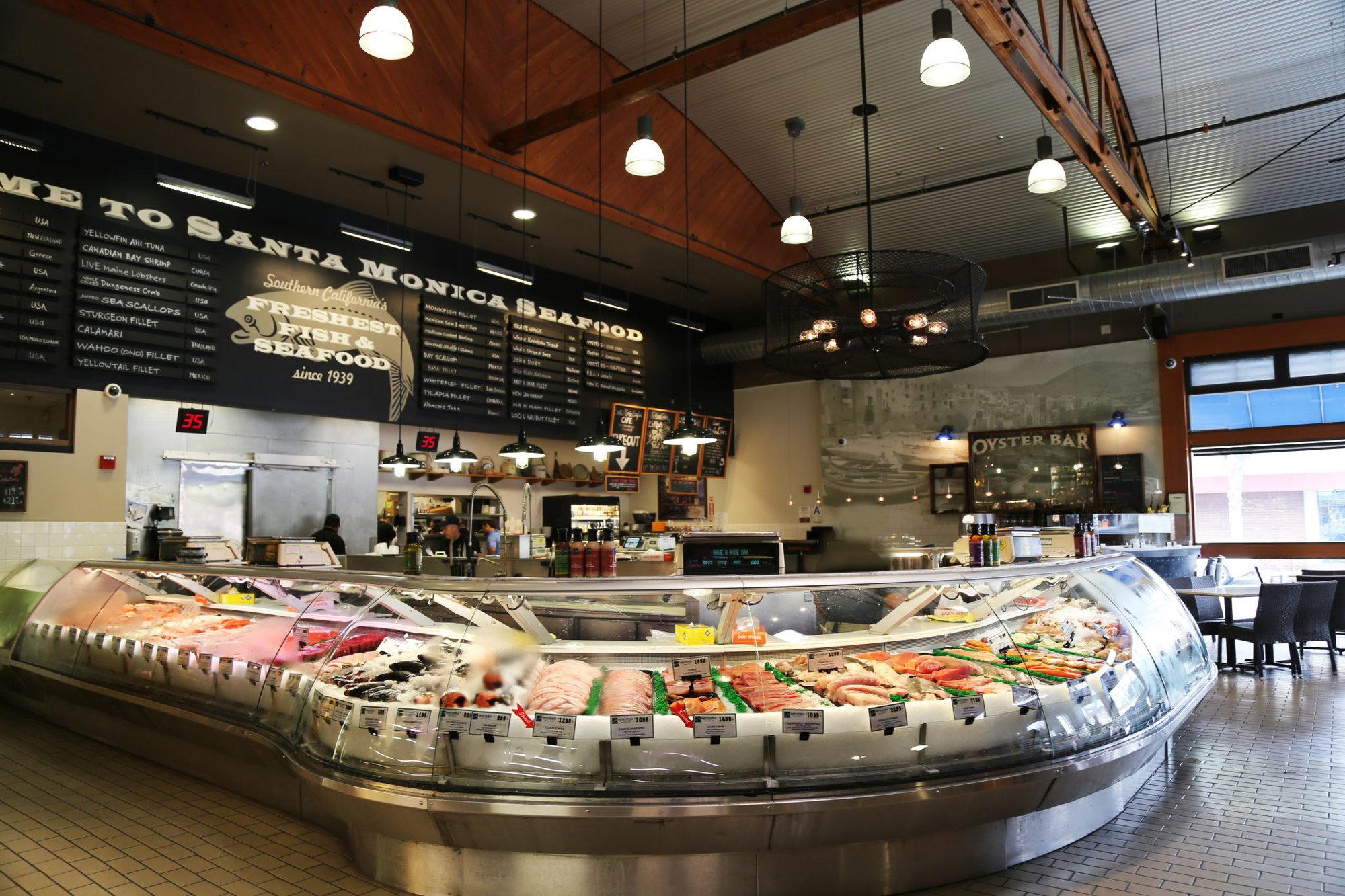
Where the Fish Counter and the Kitchen Share the Same Argument
Along Wilshire Boulevard, where Santa Monica transitions from its beach-facing grid into something more workaday, Santa Monica Seafood Market & Cafe occupies a format that most American coastal cities have largely lost: the working fish market that also feeds you. The refrigerated cases run along the perimeter, packed with whole fish, fillets, shellfish, and prepared items, and the cafe operates as a natural extension of that same supply chain. You are not choosing between a restaurant and a market. You are in both simultaneously, and the logic of one constantly informs the other.
This dual format has precedent in the great port cities of Europe and Japan, where the proximity of the catch to the plate is considered a basic condition of quality rather than a marketing angle. In Southern California, where most seafood passes through multiple distribution nodes before reaching any kitchen, a venue that controls that chain from the case outward occupies a distinct position. The fish counter does the work that a menu usually has to do alone.
The Service Architecture of a Market-Cafe Hybrid
The team dynamic at a market-cafe hybrid differs from a conventional restaurant floor. Counter staff who can speak to provenance, species, and preparation technique serve a function closer to a sommelier than a cashier: they translate the supply side for the guest making a decision in real time. When the front-of-house team understands the product at that level, the gap between the retail experience and the dining experience narrows considerably. You can ask what came in that morning, and the answer has direct consequences for what you order at the cafe counter.
This is the kind of knowledge that takes years to build into a team. The fish market side requires staff who understand seasonality, sourcing geography, and how different species respond to different preparations. The cafe side requires people who can move that same knowledge into food that reads as a meal rather than a demonstration. When the two functions share a floor and, implicitly, a shared standard for what the product should be, the collaboration between those roles shapes every transaction. It is a harder operation to run well than a standard restaurant, and harder to maintain consistently.
For comparison, venues along the Santa Monica waterfront corridor, including Blue Plate Oysterette and 1 Pico, approach seafood from a more conventional restaurant direction: a curated menu, a structured service sequence, a fixed format. Santa Monica Seafood sits at a different coordinate entirely, where the retail and hospitality functions are genuinely integrated rather than adjacent.
The Southern California Seafood Context
Southern California's relationship with its own coastline has always been complicated. The Pacific offers a genuinely diverse catch, from Dungeness crab and local sea urchin to halibut, yellowtail, and seasonal swordfish, but the region's restaurant industry has historically leaned on global sourcing over local supply. The market-cafe format, by grounding its offer in what is available and fresh rather than what fits a fixed menu, is better positioned to represent the California catch than most restaurants with printed menus and locked purchasing contracts.
This matters in a city where the dining conversation has shifted significantly toward sourcing transparency. The same instinct that drives the farmers market culture on the Westside, and that makes Santa Monica's Wednesday and Saturday markets among the most referenced produce sources for local kitchens, applies equally to fish. A retail market that lets the guest see what is available before committing to a plate makes that transparency structural rather than rhetorical.
Other cities have their own versions of this format done well. The beverage programs at places like Kumiko in Chicago and ABV in San Francisco demonstrate how operational discipline and product knowledge, applied consistently across a team, create a guest experience that holds together without requiring a celebrity name on the door. The same principle applies to a fish market cafe: when the sourcing and the service share a coherent point of view, the format carries itself.
What the Wilshire Location Means Practically
The address at 1000 Wilshire puts the venue at a functional crossroads for the Santa Monica residential and commercial grid. It is more accessible by car than the beach-adjacent venues on Ocean Avenue or the Third Street Promenade, and serves a customer who is often running a practical errand alongside a meal. That demographic shapes the room: this is not a destination-dining crowd arriving for a two-hour experience. It is a mix of regulars picking up fish for dinner, families treating the cafe as a direct lunch stop, and visitors who have been told by someone local to go there specifically.
That mix can be read as a virtue. A venue that sustains a regular local base alongside visitor traffic has earned something that a purely tourist-facing operation has not. For visitors with time to explore beyond the immediate beachfront, Birdie G's and Calabra round out a picture of a Santa Monica dining scene that extends well past the waterfront into more specific, less scenographic territory.
For those planning around the market's retail function, the practical calculus is different from planning around a restaurant reservation. Stock shifts with the catch and the week, which means a Tuesday visit and a Saturday visit may present meaningfully different options. That variability is a feature of the format, not a flaw: it is the mechanism by which the market-cafe stays honest.
Planning Your Visit
Santa Monica Seafood Market & Cafe is located at 1000 Wilshire Blvd, Santa Monica, CA 90401. The market-and-cafe format rewards a browse-first approach rather than the focused arrival of a tasting-menu restaurant.
Price Lens
Comparable venues nearby, for context on price, style, and recognition.
| Venue | Cuisine | Price | Awards | Notes |
|---|---|---|---|---|
| Santa Monica Seafood Market & CafeThis venue — the venue you are viewing | Santa Monica Mid-City Neighbors, Dining | $$$ | , | |
| Belcampo- Santa Monica | $$$ | , | Santa Monica Mid-City Neighbors, California Farm-to-Table Steakhouse | |
| Big Sur Grill | $$$ | , | Wilshire Montana, California coastal wood-fired grill | |
| Birdie G's | $$$ | , | Pico Neighborhood Association, Midwestern-Jewish-Californian Comfort Food | |
| Azure | $$$$ | , | Pico Neighborhood Association, Modern Coastal Californian | |
| The Hive Superfood Eats & Organic Cafe - Santa Monica | $$ | , | Pico Neighborhood Association, Superfood Cafe |
Continue exploring
More in Santa Monica
Restaurants in Santa Monica
Browse all →
Bars in Santa Monica
Browse all →

Hotels in Santa Monica
Browse all →
Wineries in Santa Monica
Browse all →
At a Glance
- Casual
- Scenic
- Casual Hangout
- Group Outing
- Date Night
- Waterfront
- Standalone
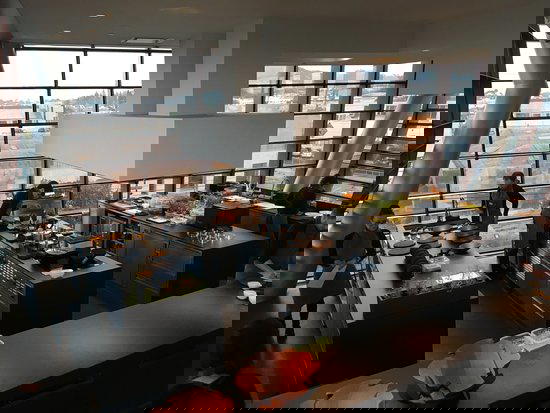
Casual, bright, and welcoming atmosphere with fresh seafood displays and a working market environment that creates an authentic, bustling dining experience.