RICO'S



La Liste Top Restaurants · Falstaff Restaurant - 95 Falstaff Points
Our verdict
A Michelin-starred address on Küsnacht's lake shore, RICO'S runs a tightly focused set menu of three to eight courses drawing on classic technique and Mediterranean influences. The room is colourful and art-filled, the service professionally relaxed, and the wine list leans heavily on Swiss and French producers. La Liste has placed it among the top restaurants globally for two consecutive years.

Pearl is the En Primeur Club membership app — saves, bookings, and concierge access live there. Same editors, same standards.
- Address
- Seestrasse 160, 8700 Küsnacht, Switzerland
- Phone
- +41 44 910 07 15
- Hours
- Mon–Tue ClosedWed–Sat 12–2 PM, 7–10 PMSun 12–2 PM
- Website
- ricozandonella.ch
- Directions
- Get directions
The menu
What to order
- Duck liver ice cream
- Veal trilogy
- Lobster bisque
The Setting: Lake-Shore Küsnacht and What It Signals
The Gold Coast strip of Lake Zurich, running south-east from the city through Küsnacht, Erlenbach, and Herrliberg, is one of Switzerland's most concentrated zones of quiet, residential affluence. Küsnacht itself sits about twelve kilometres from central Zurich, close enough for a dinner from the city and far enough to feel entirely detached from it. Restaurants along Seestrasse operate in a different register than urban Zurich's dining rooms: the clientele is largely local and regular, expectations around service and sourcing are high, and the dining room atmosphere tends toward the considered rather than the performative.
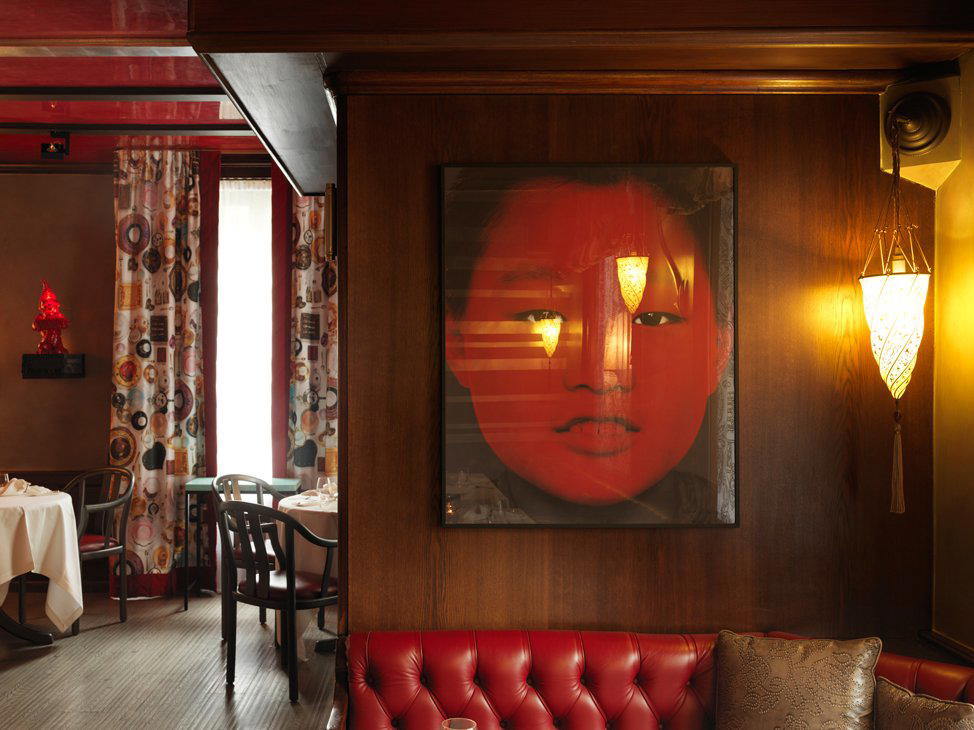
RICO'S occupies a position on Seestrasse 160 that fits precisely into this character. The interior is deliberately personal: colourful, art-filled, with eclectic decorative detail that reads as accumulated rather than styled. That distinction matters in a category where many fine-dining interiors default to neutral luxury. Here, the room has a point of view. In summer, a small garden behind the restaurant adds an outdoor dimension that amplifies the residential, unhurried quality of the neighbourhood.
Where RICO'S Sits in the Swiss Fine-Dining Field
Switzerland's Michelin-starred restaurants cluster around a relatively small number of culinary centres: Zurich, Basel, Geneva, and a handful of destination properties in the alps and countryside. One Michelin star, which RICO'S holds as of 2024, positions it inside the country's recognised cooking tier without placing it at the very best of the national hierarchy. For context, properties like Schloss Schauenstein in Fürstenau and Hotel de Ville Crissier in Crissier operate at the three-star level, while restaurants such as Memories in Bad Ragaz, Cheval Blanc by Peter Knogl in Basel, and focus ATELIER in Vitznau carry two stars. RICO'S one star, combined with sustained La Liste recognition — 85 points in 2025, 82 points in 2026 — places it in the cohort of well-regarded destination restaurants that draw on neighbourhood loyalty as much as national or international tourism.
The La Liste scoring is a useful secondary lens. La Liste aggregates international critical opinion and tends to weight overall experience, including atmosphere and service, alongside the plate. A score in the low-to-mid eighties over two consecutive years reflects a restaurant that performs consistently without the volatility that newer or more experimental kitchens sometimes show. That kind of stability is, in a lake-side residential context, exactly the right signal to send. For comparison, the wider Swiss restaurant scene at the €€€€ price tier includes IGNIV Zürich by Andreas Caminada in Zurich, Einstein Gourmet in Sankt Gallen, and 7132 Silver in Vals, each operating in distinct regional contexts and with distinct culinary orientations.
The Menu Format and What It Tells You About the Kitchen
The structure at RICO'S is a set menu running from three to eight courses, with classic cuisine inflected by Mediterranean influences. That range of course count is itself an editorial statement: it signals a kitchen confident enough in its format to let guests calibrate their own commitment to the meal, rather than insisting on a single extended sequence. Three courses at lunch and eight in the evening represent genuinely different experiences, and a restaurant that can deliver both from the same kitchen is making a claim about range and control.
Classic cuisine with Mediterranean influences, as a descriptor, locates the kitchen in a well-defined European tradition: technique-driven, ingredient-led, with the warmth of southern European produce integrated into a French-leaning structural framework. This is a different mode from the New Nordic or Swiss-creative register of kitchens like focus ATELIER or IGNIV Zürich. The choice to remain within the classic tradition while drawing on Mediterranean sourcing implies a kitchen interested in refinement over disruption.
Sourcing and the Mediterranean Influence
The Mediterranean dimension of RICO'S kitchen is worth examining in geographic terms. Switzerland's position at the centre of Europe gives its kitchens direct access to supply chains running south into Italy and France, north into Germany, and east toward Austria. For a kitchen working with Mediterranean influences, this geography is practically significant: olive oils, citrus, cured fish, legumes, and the stone-fruit and vegetable traditions of the Italian and Provençal south are all within the normal procurement radius of a Swiss restaurant operating at this level.
The wine list's emphasis on Switzerland and France reinforces this sourcing orientation. Swiss wine remains underexposed internationally despite the country producing serious Chasselas, Pinot Noir, and a range of indigenous varieties. A list that prioritises Swiss and French producers is making a considered regional argument rather than reaching for the internationally safe selection of Burgundy, Bordeaux, and Tuscany that fills lists at this price tier globally. For guests less familiar with Swiss wine, this creates an exploratory dimension to the meal that the kitchen's classic-with-Mediterranean framing supports.
Lunch service runs Wednesday through Friday with a set lunch menu, a practical anchor for the midweek business trade from Zurich while also acting as a lower-commitment entry point for first-time guests. Dinner runs Wednesday through Saturday, with Sunday extending to a long afternoon service closing at 4 PM. Monday and Tuesday are closed, a schedule consistent with a tight, owner-operated kitchen rather than a corporate or hotel-backed dining operation.
Atmosphere, Service, and the Art-Filled Room
Among the signals Michelin inspectors typically use to characterise restaurants below the food-only judgement, atmosphere and service quality receive explicit mention in RICO'S case: the room is described as cosy, colourful, and packed with art, with a tastefully eclectic blend of styles and highly individual decorative details. The service is noted as pleasingly laid-back and professional, a combination that is harder to achieve than either extreme. Formal service can project authority while sacrificing ease; casual service can feel attentive without technical grounding. The middle register, professional but without ceremony, suits the Gold Coast residential character of Küsnacht well.
That combination of institutional recognition (Michelin, La Liste) and strong popular reception is more often the exception than the rule at this price tier, where experimental or austere kitchens sometimes generate critical admiration without corresponding guest warmth.
Rico's Privé, the private dining option within the restaurant, is available for event bookings. For guests seeking a contained, high-quality setting for private dinners or small corporate events in the Zurich area, this adds a dimension that purely public restaurants cannot offer. The Küsnacht location, rather than central Zurich, means the journey adds to the occasion rather than folding it into the city's standard operating rhythm. For those planning a wider stay in the area, our full Küsnacht hotels guide covers accommodation options nearby.
Planning Your Visit
RICO'S sits at Seestrasse 160, Küsnacht, reachable from central Zurich in under thirty minutes by S-Bahn (line S6 to Küsnacht station) or by car along the lake road. The restaurant's price positioning at the €€€€ tier places it firmly in the Swiss fine-dining bracket, consistent with a Michelin-starred address. Lunch on Wednesday through Friday offers the set menu format at what is typically a shorter commitment of time and usually a lower price point than the full dinner sequence. Dinner service runs through Saturday, with Sunday lunch running until 4 PM.
Reservations are advisable given the format and kitchen scale. The summer garden seating represents a seasonal advantage worth factoring into timing for visits between May and September. For broader context on dining in this part of the lake, our full Küsnacht restaurants guide maps the wider field, while the Küsnacht bars guide, wineries guide, and experiences guide cover the rest of the area's offer.
Travellers extending into Switzerland's broader dining circuit will find useful reference points at Colonnade in Lucerne, Da Vittorio in St. Moritz, and L'Atelier Robuchon in Geneva. For those tracking the modern cuisine format internationally, Frantzén in Stockholm and FZN by Björn Frantzén in Dubai offer instructive comparisons in how the tasting-menu format operates at the upper end of the global field.
Frequently asked questions
Is RICO'S okay with children?
RICO'S operates at the €€€€ price tier with set menus running three to eight courses across a set lunch and dinner format. The intimate, art-filled room and structured service pace are better suited to adults and older teenagers with patience for multi-course dining. Families with young children would likely find the format a poor fit.
What is the atmosphere like at RICO'S?
Michelin describes the room as cosy, colourful, and packed with art — an eclectic mix of decorative styles that sets it apart from the spare, neutral interiors common at this price point in Switzerland. The service is characterised as laid-back without sacrificing professionalism. In summer, a small garden behind the restaurant provides an alternative to the main dining room.
Is RICO'S Michelin-listed?
RICO'S has received recognition including: La Liste Top Restaurants (2026): 82pts; La Liste Top Restaurants (2025): 85pts; A restaurant with a special atmosphere! Cosy, colourful and packed with art – a tastefully eclectic blend of styles and highly individual decorative details. In….
What's the best thing to order at RICO'S?
RICO'S runs a set menu format — three to eight courses — so the operative choice is how many courses to take rather than which individual dishes to select. The kitchen works in classic cuisine with Mediterranean influences, and the wine list draws particular strength from Swiss and French producers. At lunch Wednesday through Friday, a separate set lunch menu is available.
What's the pricing like at RICO'S?
Pricing at RICO'S is listed as €€€€.
| Venue | Cuisine | Price | Awards |
|---|---|---|---|
| RICO'SThis venue — the venue you are viewing | Modern European Fine Dining | $200–300 | La Liste Top Restaurants · Falstaff Restaurant - 95 Falstaff Points |
| Schloss Schauenstein | Modern European, Creative | Not listed | Michelin 3 Star |
| Memories | Modern Swiss | Not listed | Michelin 3 Star |
| focus ATELIER | Modern Swiss, Creative | Not listed | Michelin 2 Star |
| IGNIV Zürich by Andreas Caminada | Sharing | Not listed | Michelin 2 Star |
| La Table du Lausanne Palace | Modern French | Not listed | Michelin 2 Star |
Recognition history
Dated appearances from independent guides and award organizations, with the underlying list record or original source where available.
La Liste Top Restaurants
La Liste
Falstaff Restaurant - 95 Falstaff Points
Falstaff
Opinionated About Dining Classical in Europe Ranked #130
Opinionated About Dining
Full recognition history (5 entries)
La Liste Top Restaurants
La Liste
Opinionated About Dining Classical in Europe Ranked #129
Opinionated About Dining
Continue exploring
More in Kusnacht
Restaurants in Kusnacht
Browse all →
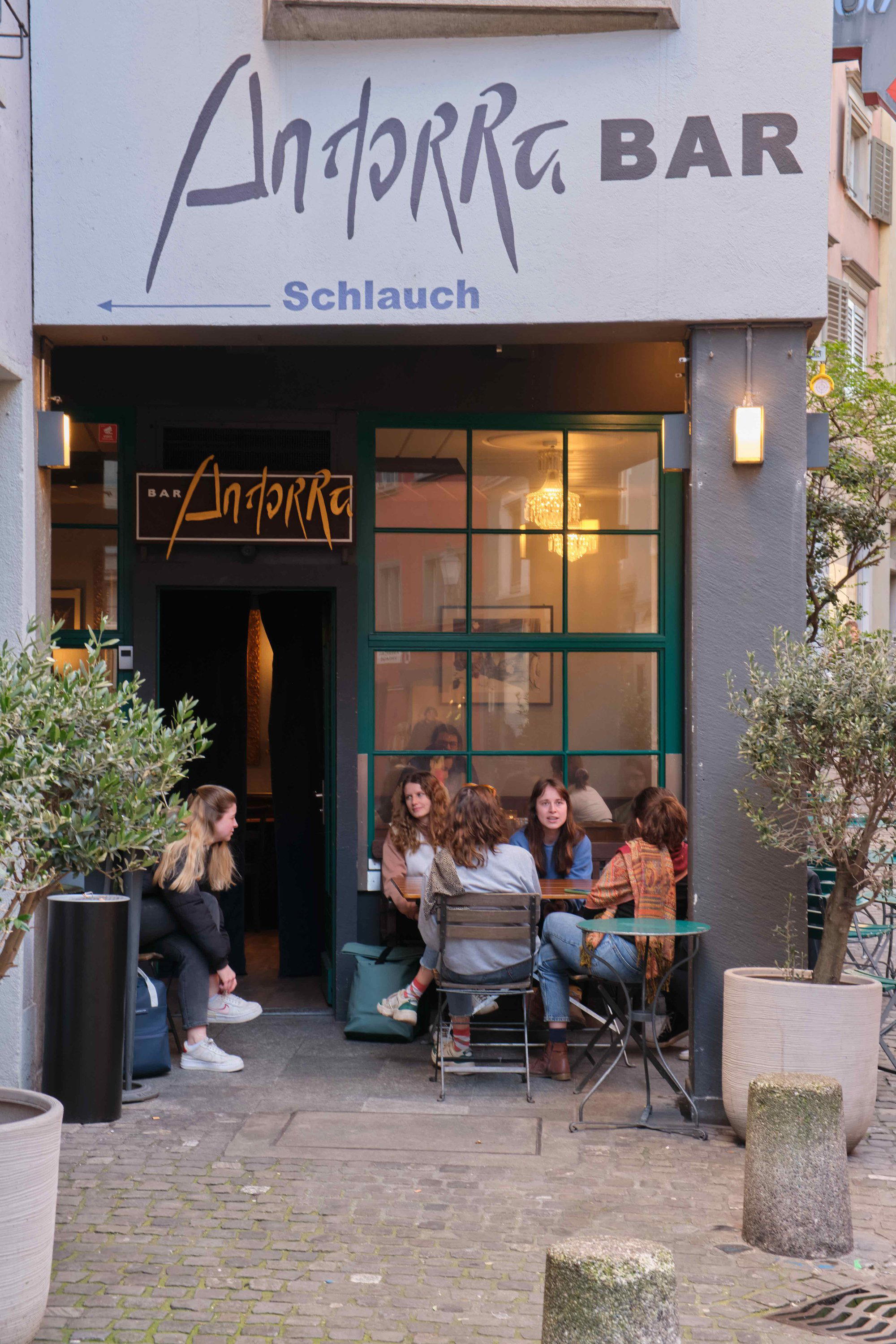
Bars in Kusnacht
Browse all →
Hotels in Kusnacht
Browse all →

Details
- Cozy
- Intimate
- Elegant
- Special Occasion
- Date Night
- Open Kitchen
- Private Dining
- Terrace
- Extensive Wine List
- Waterfront
- Set Menu
- Tasting Menu
- Vegetarian Friendly
- Gluten Free Options
Current opening hours
- Monday
- Closed
- Tuesday
- Closed
- Wednesday
- 12–2 PM, 7–10 PM
- Thursday
- 12–2 PM, 7–10 PM
- Friday
- 12–2 PM, 7–10 PM
- Saturday
- 12–2 PM, 7–10 PM
- Sunday
- 12–2 PM
Hours can change for holidays and private events. Last verified .
Cozy, colorful interior packed with eclectic art and personal touches, complemented by serene lakeside terrace.