Red Shoe Island Bistro
Our verdict
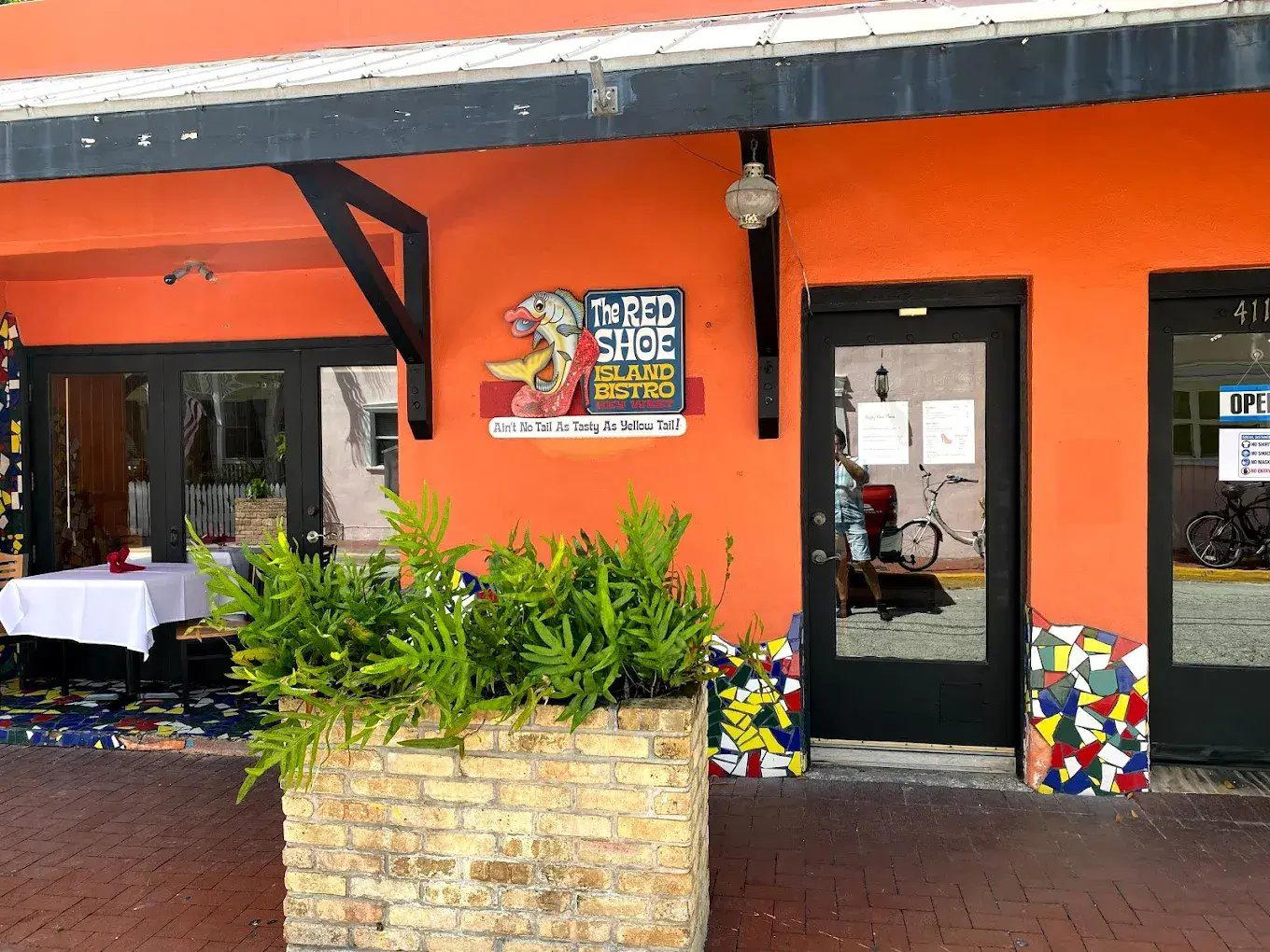
On Petronia Street in Key West's Bahama Village, Red Shoe Island Bistro occupies a spot that speaks to the island's layered culinary identity, where Gulf and Atlantic sourcing traditions meet a neighborhood that has always cooked close to what the water provides. The address alone places it in one of the city's most historically textured blocks, away from the Duval Street circuit.

Pearl is the En Primeur Club membership app, where members save venues, book tables and use the concierge.
The menu
What to order
- Yellowtail Snapper
- Key Lime Pie
- Seafood Medley
- Beef Stroganoff
Petronia Street and the Sourcing Logic of Island Cooking
Key West's relationship with its food supply has always been shaped by geography before culture. Surrounded by the Gulf of Mexico to the north and the Atlantic to the south, the island sits at the end of a 113-mile highway with no agricultural hinterland to speak of. What that means in practice is that the kitchens that take sourcing seriously here are working a fundamentally different problem than their counterparts on the mainland. Proximity to the water is the asset; everything else is a logistical puzzle. Red Shoe Island Bistro, located at 411 Petronia Street in the heart of Bahama Village, sits inside that tradition by geography if nothing else.
Petronia Street is not the Key West that first-time visitors expect. It runs through a neighborhood that predates the tourism economy, where the architecture is Bahamian shotgun vernacular and the streets are narrow enough that a bicycle feels like the appropriate speed. Bahama Village was historically the home of sponge fishermen, cigar rollers, and the Black Bahamian community whose labor built much of the island's early economy. That context matters when thinking about where food comes from in Key West, this is a neighborhood with a long memory of cooking what the sea delivers, not what a supply chain permits.
What the Gulf and Atlantic Put on the Plate
The ingredient sourcing conversation in Key West is inseparable from the regulatory and ecological realities of the Florida Keys fishing industry. Stone crab claws, spiny lobster (not the Maine variety, the Caribbean spiny species has no claws and a different textural register entirely), yellowtail snapper, hogfish, and mahi are the reference proteins of local cooking. The stone crab season runs from October 15 through May 1, and that calendar shapes what serious island kitchens can credibly offer. Any restaurant making strong claims about local sourcing in the summer months is working with a narrower native pantry than its winter counterpart.
Louie's Backyard, one of Key West's longer-established Floribbean addresses, built its reputation on exactly this logic: Caribbean and Gulf ingredients interpreted through a continental technique lens. That hybrid approach, sometimes called Floribbean, has defined the island's culinary identity for decades, a response to the reality that the pantry is abundant in seafood and tropical produce but thin on everything else. Kitchens that understand the island's sourcing constraints tend to produce menus that read as honest responses to place rather than generic tropical signaling.
For readers who want a calibration point beyond Key West, the sourcing-led ethos at play here maps to a broader American movement represented by places like Blue Hill at Stone Barns in Tarrytown and Single Thread Farm in Healdsburg, where the menu is explicitly constructed around what the surrounding land and water can provide at a given moment. The discipline required is the same; the specific ingredients are radically different.
The Bistro Format and What It Signals
The word bistro carries specific weight in a city whose dining options span fish shacks, tourist-facing raw bars, and the occasional fine-dining address. A bistro format typically implies a shorter menu, personal ownership, and cooking that prioritizes daily availability over fixed print. In a sourcing-led context, that format is well-suited to the rhythms of a fishing island: what the boats bring in that morning shapes what appears on the board. Contrast this with the high-volume Duval Street operations, which require supply-chain predictability and cannot absorb the variability that genuinely local sourcing demands.
This positions Red Shoe Island Bistro in a recognizable tier within Key West's dining structure: the neighborhood bistro that operates closer to the island's actual food economy than to its tourist infrastructure. Peers in that tier include 7 Fish, which has built a following precisely because of its small footprint and locally inflected menu, and Azur, which operates in a similar register of personal-scale, ingredient-conscious cooking. B.O.'s Fish Wagon represents the casual end of the same sourcing tradition, while Antonia's and Atlas Izakaya show how the island absorbs diverse culinary influences while remaining tethered to local produce realities. For a complete picture of where Red Shoe fits in the city's broader dining structure, the EP Club Key West restaurants guide maps the full competitive set.
Planning Your Visit
Bahama Village sits west of Duval Street, roughly ten minutes on foot from the main tourist corridor and closer to the working waterfront than most visitors ever reach. The neighborhood rewards unhurried arrival: walk Petronia Street before or after eating, and the architectural and cultural context of the block becomes part of the meal's logic.
For readers comparing Key West's island bistro tier to destination-level seafood cooking on the mainland, anchors like Le Bernardin in New York City, Providence in Los Angeles, and Addison in San Diego represent what seafood-focused sourcing discipline looks like at the three-Michelin-star level. The approaches share a philosophical commitment to ingredient integrity but operate in entirely different economic and logistical registers. Closer in spirit to the island bistro format are places like Emeril's in New Orleans, which built its identity on Gulf sourcing, and Lazy Bear in San Francisco, where the format itself is designed around a specific, ingredient-led point of view. The comparison is useful not because these venues are peers in price or ambition but because they demonstrate that sourcing discipline can be expressed across a wide range of formats and price points. Further afield, The French Laundry in Napa, Alinea in Chicago, The Inn at Little Washington, and Atomix in New York City each represent how rigorous sourcing philosophy scales into the highest tiers of American fine dining, while 8 1/2 Otto e Mezzo Bombana in Hong Kong shows how the same logic translates across culinary cultures entirely.
Frequently asked questions
Where is Red Shoe Island Bistro located?
Red Shoe Island Bistro is located at 411 Petronia St, Key West, FL 33040, Key West.
How does Red Shoe Island Bistro's Bahama Village location compare to Key West's main dining strip?
Bahama Village sits west of Duval Street, roughly ten minutes on foot from Key West's main tourist corridor and distinctly closer to the working waterfront. That separation matters: the neighborhood draws a more local crowd and operates outside the pricing and pacing pressures that shape restaurants directly on Duval. For visitors, the 411 Petronia St address is a deliberate detour rather than a stumbled-upon stop.
What do regulars order at Red Shoe Island Bistro?
The bistro sits on Petronia Street in Bahama Village, a neighborhood shaped more by the working waterfront than by tourist-corridor menus, which points toward Gulf and Atlantic seafood as the natural core of the menu. Key West's fishing industry, subject to both federal catch limits and seasonal fluctuation, means the plate tends to follow what's available rather than a fixed list. Regulars in this kind of address typically anchor their order to whatever the kitchen is sourcing that week rather than a permanent signature item.
Is Red Shoe Island Bistro reservation-only?
The Bahama Village location at 411 Petronia St places it away from the high-footfall Duval Street strip, which in practice means walk-in competition is lower than at tourist-facing addresses. Contacting the venue directly before visiting is the reliable approach.
What's the defining dish or idea at Red Shoe Island Bistro?
The defining idea is geography before menu engineering: Key West is surrounded by the Gulf of Mexico to the north and the Atlantic to the south, and a bistro format in this context means the sourcing logic is built around what those waters produce within Florida Keys regulatory constraints. The Petronia Street address in Bahama Village reinforces that positioning, it is closer to the working waterfront than most dining addresses in the city, which tends to shape what arrives in the kitchen.
Peers Worth Knowing
Comparable venues nearby, for context on price, style, and recognition.
| Venue | Cuisine | Price | Notes |
|---|---|---|---|
| Red Shoe Island BistroThis venue (the venue you are viewing) | Seafood Bistro with European Influences | $50–100 | Not listed |
| Stinkin Crawfish Key West | Cajun Seafood Boil | $20–30 | Duval Street |
| Martin's | German-Caribbean Fusion Fine Dining | $50–100 | Duval Street |
| Conch Republic Seafood Company | Caribbean-Influenced Seafood | $20–30 | Historic Seaport |
| Four Marlins Oceanfront Dining | Oceanfront Seafood | $50–100 | Key West |
| The Stoned Crab | Fresh Local Seafood with Stone Crab Specialty | Not listed | Stock Island |