Red Garden Food Paradise
Among George Town's many open-air hawker options, Red Garden Food Paradise on Lebuh Leith sits within the heritage core of the UNESCO-listed city, where the street food tradition runs deeper than almost anywhere else in Southeast Asia. It draws both local families and visiting food travelers to a format that concentrates multiple Penang hawker disciplines under one roof. For visitors orienting themselves to the breadth of Penang's hawker culture, it functions as a useful anchor point in the historic quarter.
Pearl is the En Primeur Club membership app — saves, bookings, and concierge access live there. Same editors, same standards.
- Address
- 20, Lebuh Leith, George Town, 10000 George Town, Pulau Pinang, Malaysia
- Phone
- +60 19 665 1318
- Website
- redgarden-food.com
- Directions
- Get directions
 Saves & bookings on Pearl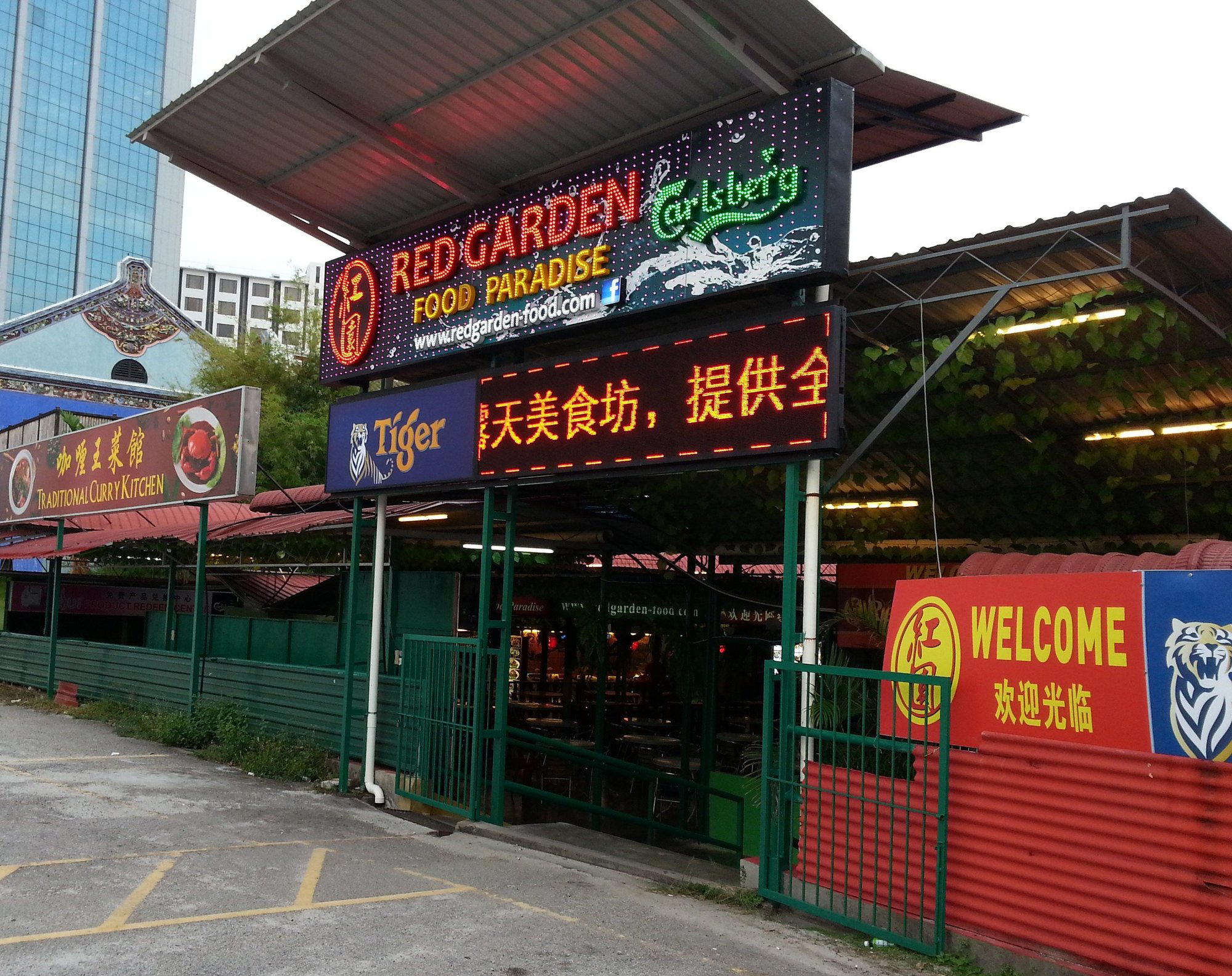
Where Lebuh Leith Places You in George Town's Food Culture
There is a version of Penang that exists inside restaurants, the Peranakan set menus, the European-contemporary tasting counters, the reservation-only dining rooms. And then there is the version that built the city's food reputation in the first place: open-air hawker courts where individual stall operators have spent decades refining a single dish. Red Garden Food Paradise on Lebuh Leith belongs to the second tradition. Its address puts it squarely inside the UNESCO World Heritage buffer zone, a short walk from the colonial shophouse streets that define the historic core of George Town, a neighbourhood where food culture and built heritage are so thoroughly intertwined that it is almost impossible to discuss one without the other.
George Town's hawker scene operates on a different logic than the formal dining tier. The credentials are generational depth and repeat local patronage, not awards or critics' tables. Stalls that have occupied the same spot for twenty or thirty years carry a weight that no certification system fully captures. Red Garden aggregates several of those stalls into a single compound, which matters practically: the format gives visitors access to a range of Penang hawker disciplines, Hokkien mee, char kway teow, cendol, laksa variants, without needing to triangulate across multiple street locations. For those arriving from elsewhere in Malaysia, the format will feel familiar; for international visitors, it offers a direct introduction to a food tradition that is otherwise diffuse and geographically spread.
The Hawker Court as a George Town Institution
Hawker courts of this type emerged in Malaysian cities as a practical consolidation of itinerant street vendors, a model that trades some of the spontaneity of solo street stalls for shelter, seating, and predictable hours. In George Town specifically, the form has evolved alongside the city's position as a food destination. The dining mix here now runs from single-dish street operators like Ah Boy Koay Teow Th'ng and 888 Hokkien Mee on Lebuh Presgrave through to Peranakan specialists like Auntie Gaik Lean's Old School Eatery and Richard Rivalee, and further up the price tier to European-influenced rooms like Au Jardin. Red Garden occupies the accessible, informal end of this range, and that positioning is deliberate. The format serves people who want breadth rather than depth on a given evening.
The neighbourhood context matters beyond the food itself. Lebuh Leith sits in a zone of George Town where late-nineteenth and early-twentieth century architecture is intact enough to register as a physical backdrop rather than a curated heritage exhibit. Arriving at an open-air court in that setting carries a different weight than eating in a purpose-built food hall in a newer part of the city. The street itself has been identified with the legal and administrative history of the colonial port, which means the surroundings carry a layered character that most food-focused visitors only partially read. That texture is part of what gives the location its resonance beyond the food.
Penang's Hawker Tradition in a Regional Frame
Penang's claim as the hawker capital of Malaysia is not arbitrary. The port city's Chinese, Malay, Indian, and Peranakan communities developed distinct culinary traditions that operated in close proximity for generations, producing a density of cross-influence that produced dishes, asam laksa, char kway teow, Hokkien prawn mee, that are strongly identified with the island even when similar dishes exist elsewhere in the country. That identity has been durable enough to position George Town as a reference point not just within Malaysia but across the broader region. Venues like Dewakan in Kuala Lumpur engage with Malaysian culinary heritage from a fine-dining perspective; what George Town's hawker courts represent is the tradition before formal interpretation.
The contrast with resort dining formats elsewhere in the region is useful to hold in mind. The Dining Room at The Datai Langkawi represents one end of the Malaysian hospitality spectrum, curated, controlled, service-intensive. Red Garden is close to the opposite: self-directed, vendor-plural, with the quality distributed unevenly across stalls rather than unified under a single kitchen. The skill in eating at a hawker court is understanding that unevenness and making targeted choices rather than sampling indiscriminately.
Practical Bearings for Visitors
Red Garden Food Paradise is located at 20 Lebuh Leith, within walking distance of most of George Town's heritage accommodation and easily reachable on foot from the main tourist areas of the historic district. The open-air format means the experience is weather-dependent in the way that all alfresco dining in Penang is, the Malaysian heat and periodic rain are part of the texture, not a problem to be solved. Evenings generally bring cooler temperatures and fuller stalls, which is the conventional time to visit a court of this type in the city. Visitors combining George Town's food scene with the wider Penang region will find useful context in our full George Town restaurants guide. For those moving between Penang and the north of the peninsula, Bismillah Cendol in Taiping and BM Cathay Pancake in Seberang Perai show how the hawker tradition shifts across the broader region. Closer to home, Christoph's in Penang represents the island's European-influenced dining tier for those alternating between formats across a longer stay.
Compact Comparison
Comparable venues nearby, for context on price, style, and recognition.
| Venue | Cuisine | Price | Notes |
|---|---|---|---|
| Red Garden Food ParadiseThis venue — the venue you are viewing | George Town, Penang Hawker Food Court | $ | Not listed |
| Nasi Kandar Deen Mutiara (Hutton Lane) | George Town, Penang Nasi Kandar | $ | Not listed |
| Muthu Banana Leaf Restaurant | Not listed | $ | George Town, Authentic South Indian Banana Leaf |
| Restoran Nasi Kandar Line Clear | Not listed | $ | George Town, Traditional Penang Nasi Kandar |
| Du-An (Lebuh Pantai) | George Town, Traditional Malaysian | $$ | Not listed |
| CRC Restaurant (CRC Restaurant (美麗華魚翅海鮮酒家)) | George Town, Cantonese Seafood | $$ | Not listed |
Continue exploring
More in George Town
Restaurants in George Town
Browse all →
Bars in George Town
Browse all →
At a Glance
- Lively
- Energetic
- Well Known
- Casual Hangout
- Group Dining
- Late Night
- Live Music
- Open Kitchen
Current opening hours
- Monday
- 5 PM–12 AM
- Tuesday
- 5 PM–12 AM
- Wednesday
- 5 PM–12 AM
- Thursday
- 5 PM–12 AM
- Friday
- 5 PM–12 AM
- Saturday
- 5 PM–12 AM
- Sunday
- 5 PM–12 AM
Hours can change for holidays and private events. Last verified .
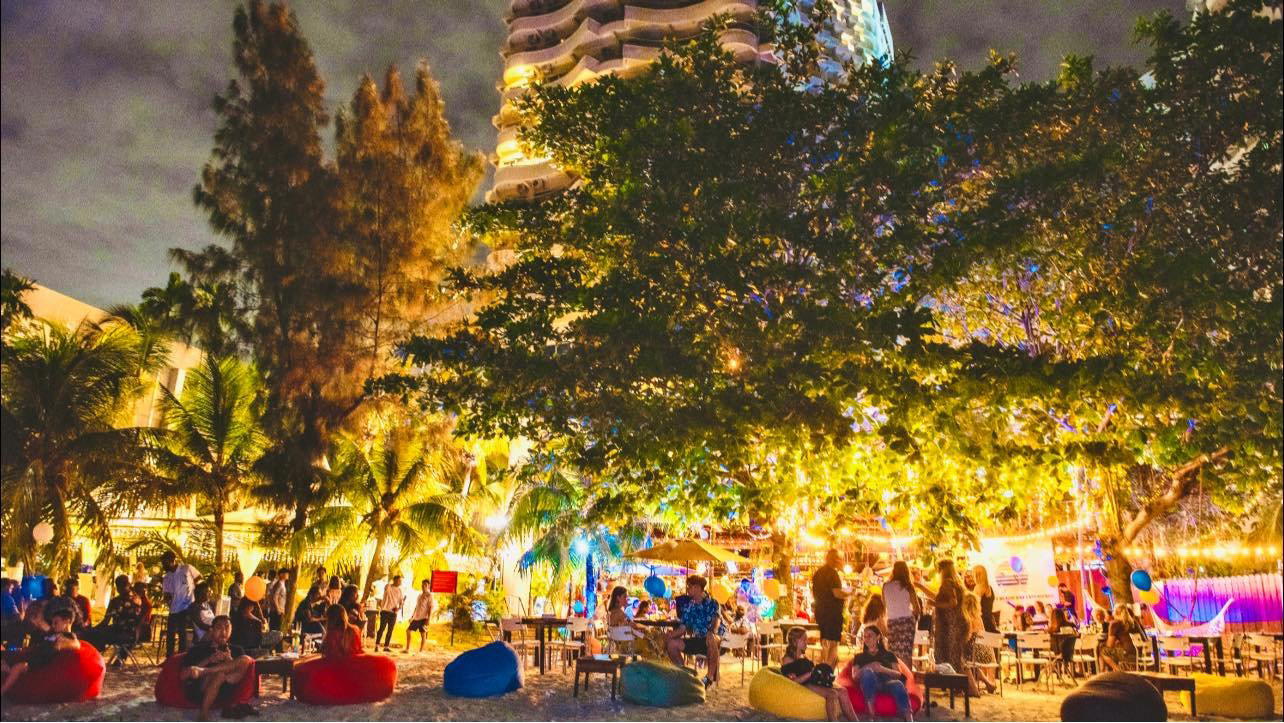
Lively and bustling atmosphere enhanced by live music performances and colorful lights amid numerous independent food stalls.