Ramenya
Our verdict
Ramenya on Gateway Boulevard brings Los Angeles's ramen tradition into focus at a West LA address that draws regulars from across the Westside. The format follows the logic of the Japanese ramen-ya — a focused menu, deliberate bowl construction, and a pace that rewards attention. For a city that has absorbed Japanese culinary influence more deeply than almost any other American metropolis, it is a useful reference point.

Pearl is the En Primeur Club membership app — saves, bookings, and concierge access live there. Same editors, same standards.
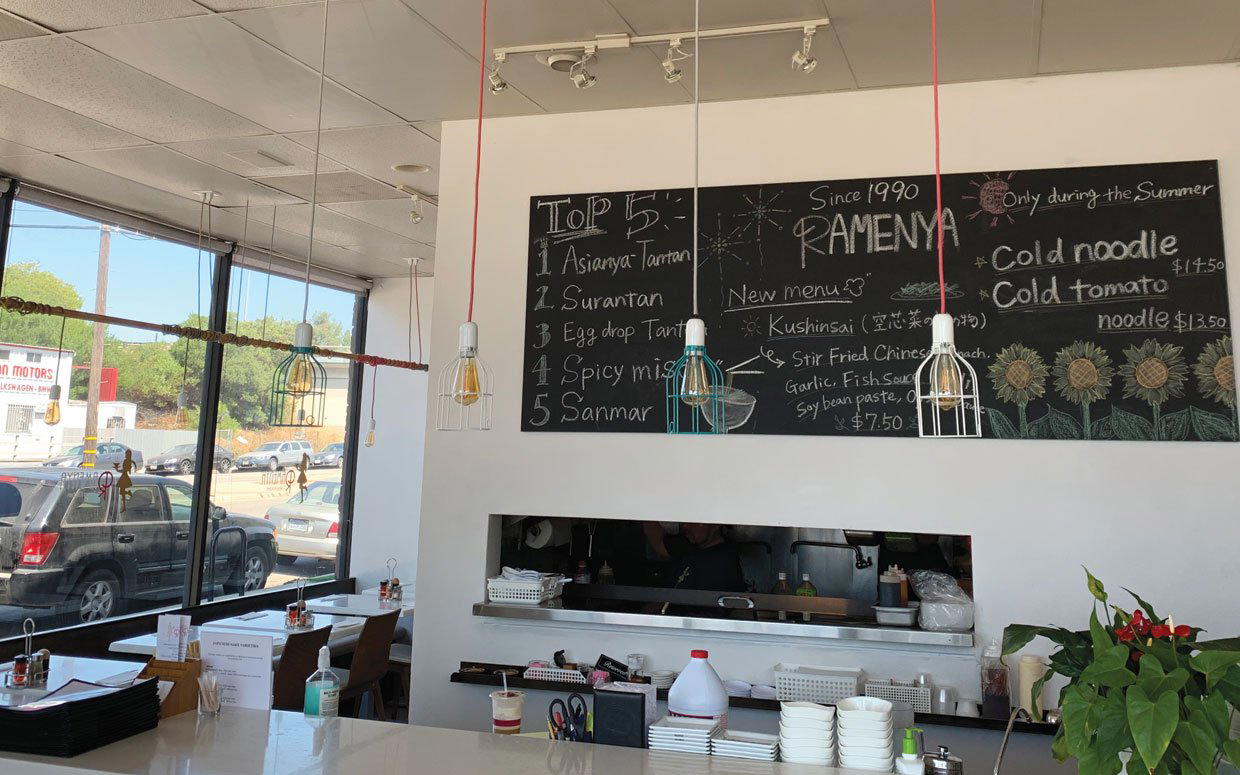
The menu
What to order
- Shoyu Ramen
- Miso Ramen
- Tonkotsu Ramen
- Ajo Ramen
The West LA Ramen Counter in Context
Los Angeles has spent the better part of three decades becoming one of the most seriously Japanese-inflected dining cities in the United States. That process runs in two directions at once: upward into kaiseki formality at places like Hayato, and sideways into the kind of everyday precision that Japanese restaurant culture values as much as its Michelin-tier counterpart. Ramenya, at 11660 Gateway Boulevard in West LA, sits in the second current. The address — a low-key stretch of the Westside between Sawtelle and Culver City — puts it inside a neighbourhood that has quietly accumulated one of the more coherent concentrations of Japanese dining in the city, without the self-promotional noise of a declared dining district.
What the ramen-ya format demands, in any city, is a kind of discipline that Western restaurant culture often undervalues. The menu is narrow by design. The bowl is the argument. There is no tasting menu arc, no sommelier intervention, no tableside theatre. The quality signal is entirely in the broth, the noodle calibration, and the sequencing of toppings, and repeat customers know within two spoonfuls whether the kitchen is holding its standard. In a city where the broader fine-dining conversation runs through places like Providence, Kato, and Somni, the ramen counter operates by a different set of metrics, one where consistency across 200 bowls a day matters more than a single composed plate that takes three hours to produce.
How the Meal Actually Moves
The editorial angle that matters most for a ramen-ya is the progression of the meal itself, because the format compresses a multi-course logic into a single bowl. This is not a metaphor. In the Japanese ramen tradition, a well-constructed bowl is sequenced to change as you eat it: the first spoonfuls of broth arrive at peak temperature and full intensity; the noodles, absorbing liquid and fat as time passes, shift in texture and flavour pickup; the toppings, chashu, egg, menma, nori, are placed not decoratively but strategically, so that each combination the chopsticks assemble delivers a different ratio. The meal has a beginning, a middle, and an end that the kitchen has already choreographed before the bowl leaves the pass.
That architecture is what separates a ramen counter operating at a high standard from one that is simply serving noodles in broth. The broth itself is the longest investment: tonkotsu that has cooked for eighteen hours or more, shio tare balanced to a specific salinity, tare added at the last moment to preserve volatility. The noodle selection, straight or wavy, thin or medium, is matched to broth viscosity, not chosen arbitrarily. These are technical decisions with consequences that arrive in the bowl, and experienced eaters notice them even if they cannot name them.
For context on how seriously Los Angeles takes this category: Sawtelle Japantown, a ten-minute drive from Gateway Boulevard, has functioned as a proving ground for Japanese comfort-food formats since the 1990s. The ramen operations that survive there long-term do so on repeat neighbourhood business, which is a more demanding quality filter than tourist traffic or social media cycles.
Where Ramenya Sits in the West LA Dining Pattern
The Gateway Boulevard address places Ramenya in a part of West LA that does not have the density of Sawtelle or the critical-mass dining reputation of Culver City, but that positioning is part of its logic. Neighbourhood ramen shops in Japan are not located in dining districts; they are located where people live and work, and they earn loyalty through reliability rather than destination status. The West LA cohort of Japanese restaurants, spanning everything from quick-service to the kind of precision kaiseki that Hayato represents, operates across a wide price and formality range, and the ramen-ya occupies the tier where the value proposition is clearest: craft execution at an accessible price point, with no ceremony required.
Compare that positioning to the $$$$ tier that defines much of Los Angeles's most-discussed dining. Kato and Hayato operate in a register where the tasting menu format, prix-fixe pricing, and advance reservations are the baseline expectation. The ramen counter operates without any of those friction points. That is not a lesser category; it is a different category, and one where Japan has arguably produced more consistent excellence per capita than in any other restaurant format.
For readers who want to map the broader American fine-dining reference points, the comparison list is instructive. Le Bernardin in New York City, The French Laundry in Napa, Alinea in Chicago, and Single Thread Farm in Healdsburg all operate in a register where the meal is an extended, high-ceremony event. The ramen counter is the structural opposite: brief, focused, non-negotiable in its format. Both traditions demand technical mastery. They demand it in different containers.
Other American cities have developed serious ramen cultures, New York, San Francisco, Seattle, but Los Angeles's depth of Japanese community, combined with a restaurant-going culture that spans every price tier without prejudice, makes it one of the more complete environments for the format. See our full Los Angeles restaurants guide for broader coverage of where the city's dining sits across categories and price points.
Planning Your Visit
The table below maps Ramenya against comparable LA operations in the high-craft Japanese and neighbourhood-restaurant tier, using available public data.
| Venue | Format | Price Tier | Reservation Required | Neighbourhood |
|---|---|---|---|---|
| Ramenya | Ramen counter | Not published | Not confirmed | West LA (Gateway Blvd) |
| Hayato | Kaiseki, counter | $$$$ | Yes, advance booking required | Downtown LA (Row DTLA) |
| Kato | New Taiwanese tasting menu | $$$$ | Yes | West LA |
| Osteria Mozza | Italian, à la carte and pasta bar | $$$ | Recommended | Hollywood |
Practical note: Gateway Boulevard is accessible by car with street and lot parking typical of the area. Public transit connections exist via the Expo Line corridor, though the address is not a walkable destination from a transit hub.
Frequently asked questions
What is the must-try dish at Ramenya?
Do they take walk-ins at Ramenya?
What is the signature at Ramenya?
Is Ramenya good for vegetarians?
Is Ramenya worth it?
How does Ramenya compare to other Japanese dining options in West LA?
Cuisine and Recognition
Comparable venues nearby, for context on price, style, and recognition.
| Venue | Cuisine | Price | Notes |
|---|---|---|---|
| RamenyaThis venue — the venue you are viewing | Japanese Ramen | $10–20 | Not listed |
| Yuko Kitchen | Japanese Comfort Food | $20–30 | Miracle Mile |
| necco (Omusubi Project By Necco) | Japanese | Not listed | Little Persia |
| Ten Ramen | Japanese Ramen | Not listed | Wilshire Center |
| Azay | Japanese Breakfast and Home Cooking | $20–30 | Little Tokyo |
| Bengara | Modern Japanese Binchotan Grill | $30–50 | Arts District |
Continue exploring
More in Los Angeles
Restaurants in Los Angeles
All restaurants in Los Angeles →
Bars in Los Angeles
All bars in Los Angeles →
Hotels in Los Angeles
All hotels in Los Angeles →

Wineries in Los Angeles
All wineries in Los Angeles →
Details
- Cozy
- Casual Hangout
- Group Dining
- Sake Program
- A La Carte
- Vegetarian Friendly
Current opening hours
- Monday
- Closed
- Tuesday
- 11:30 AM–2:30 PM, 5–9:30 PM
- Wednesday
- 11:30 AM–2:30 PM, 5–9:30 PM
- Thursday
- 11:30 AM–2:30 PM, 5–9:30 PM
- Friday
- 11:30 AM–2:30 PM, 5–9:30 PM
- Saturday
- 11:30 AM–2:30 PM, 5–9:30 PM
- Sunday
- 11:30 AM–2:30 PM, 5–9:30 PM
Hours can change for holidays and private events. Last verified .
Cozy casual spot with focus on comforting noodle bowls in a no-frills setting.