Our verdict
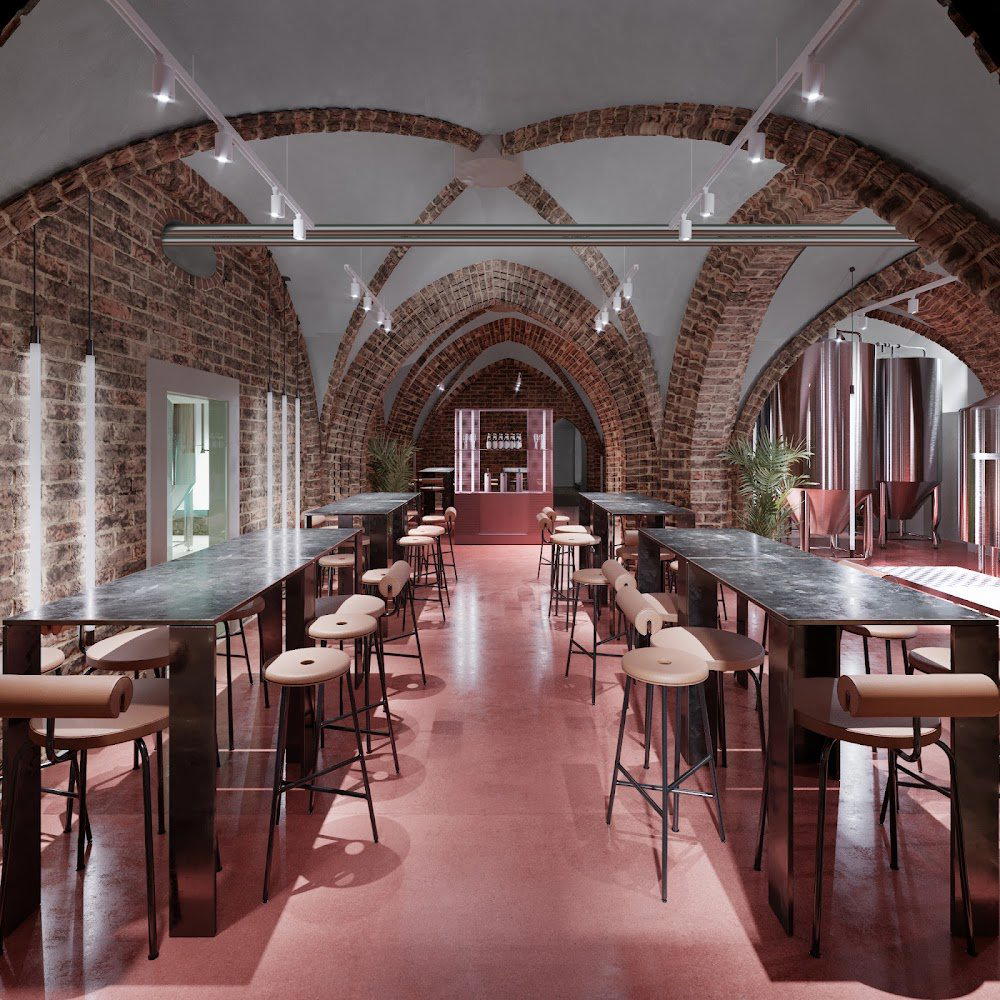
Piwnica Świdnicka occupies the Gothic cellars beneath Wrocław's Town Hall on Rynek Ratusz, making it one of Central Europe's oldest continuously operating dining spaces. The address alone positions it inside Wrocław's most historically significant square, where centuries of civic life have played out above the vaulted stone below. For visitors moving between Wrocław's modern restaurant scene and its deeper past, the cellars offer a different kind of reference point.

Pearl is the En Primeur Club membership app, where members save venues, book tables and use the concierge.
The menu
What to order
- Pierogi
- Pork knuckle
- Sirloin tartare
Stone, Square, and Six Centuries of Wrocław
Rynek Ratusz is not a backdrop. Wrocław's main market square is among the largest medieval squares in Central Europe, ringed by merchant townhouses in varying states of restoration, and anchored at its centre by a Gothic Town Hall that took over a century to complete. The square functions as an orienting device for the entire city: distances are measured from it, evenings tend toward it, and the city's sense of itself gathers there. When a restaurant occupies the cellars beneath the Town Hall itself, at address Rynek Ratusz 1A, the location is not incidental to the experience. It is the experience.
Piwnica Świdnicka sits in that position. The name refers to the Świdnica gate and to the tradition of Świdnica beer, historically traded through Wrocław's cellars during the medieval period when the city was a major commercial hub in Silesia. Beer cellars beneath market squares were common infrastructure across Central European cities in the thirteenth and fourteenth centuries, serving merchants and guilds who used them as storage, transaction spaces, and informal meeting rooms. Very few of those spaces remain operational as hospitality venues. The Wrocław example is among the most documented.
What the Address Means for the Experience
Arriving at Piwnica Świdnicka means crossing Rynek's cobblestones and descending rather than entering at street level. That descent, from a square where modern Wrocław conducts its daily life into vaulted Gothic stonework below, creates a compression of time that no amount of decorative theming can replicate. The architecture is the primary medium here. Stone columns, low arches, and cellars that predate most of what currently stands above ground set a register that shapes everything else: the weight of a beer glass, the sound of conversation, the speed at which the room moves.
This is the central editorial point about venues of this type in Polish cities. Kraków has its equivalents, notably around Rynek Główny, where cellars beneath the Cloth Hall have been repurposed as galleries and bars. Warsaw largely lost its medieval fabric in World War Two, which is why hub.praga in Warsaw draws on post-industrial Praga district character instead. Wrocław's own reconstruction after 1945 was extensive, but the Town Hall and portions of its immediate environs survived. Piwnica Świdnicka is therefore not just a restaurant inside a historic building. It is one of the few places in the city where the built environment has genuine continuity with the pre-war, pre-communist, and even medieval city.
Wrocław's Dining Scene and Where History Fits
The contemporary restaurant scene in Wrocław has developed quickly. A cluster of modern-cuisine addresses has emerged in the city, with venues like Acquario and BABA operating in the modern-cuisine category, while CAMPO Modern Grill anchors the meat-forward tier and Ato Ramen represents the city's growing appetite for Asian formats. Bernard Bistro-Wino sits in the bistro-wine category. Across this range, Piwnica Świdnicka occupies a different tier altogether: a venue where the primary credential is longevity and place, not culinary innovation or chef profile.
That distinction matters for how you approach the booking. Visitors looking for the kind of modern Polish cooking that has earned international attention, of the type associated with Kraków addresses like Bottiglieria 1881 or coastal venues like Arco by Paco Pérez in Gdańsk, will find Piwnica Świdnicka operates in a different register. The cellars are leading understood as a category unto themselves: a civic institution with food and drink, rather than a restaurant with a historical setting.
Across Poland's secondary cities, venues built on historical fabric rather than culinary programme tend to anchor tourist itineraries without necessarily competing for the same tables as contemporary kitchens. Muga in Poznań and Kwestia Czasu in Białystok represent the contemporary end of their respective city scenes. Piwnica Świdnicka fits a different slot: the reference point that puts everything else in temporal context.
Planning Your Visit
The cellars are located directly beneath the central Town Hall building on Rynek Ratusz, which is walkable from all central Wrocław accommodation. The square itself is a pedestrian zone, so access is on foot from the surrounding streets. Because the venue sits at the city's most central tourist intersection, it draws a high volume of visitors during summer evenings and weekend afternoons. Those preferring quieter conditions typically find weekday lunchtimes or early evenings more suitable. For a broader survey of where to eat and drink in the city, EP Club's full Wrocław restaurants guide covers the contemporary scene in more detail.
The wider Polish dining context, for those building a longer itinerary, extends to mountain-adjacent venues like Giewont in Kościelisko and regional anchors like Cudne Manowce in Olsztyn. Internationally, the kind of weight that comes from combining institutional age with a specific urban address has parallels at venues like Le Bernardin in New York City, where decades of operation have produced a different kind of authority than any single award, or at Atomix, where conceptual depth rather than longevity is the credential. Piwnica Świdnicka earns its place on a different basis than either.
Frequently asked questions
Where exactly is Piwnica Świdnicka?
Piwnica Świdnicka is located at Rynek Ratusz 1A, 50-106 Wrocław, Poland, Wrocław.
How old is Piwnica Świdnicka and why does its location beneath the Town Hall matter?
Piwnica Świdnicka is among the oldest continuously operating hospitality venues in Central Europe, with roots traceable to the medieval period when the Town Hall on Rynek Ratusz served as the administrative and commercial heart of Wrocław. Dining in its vaulted cellars means occupying the same subterranean space that once functioned as a wine and beer store for the city's civic building, a layer of historical continuity that no modern restaurant in Wrocław can replicate. The address, Rynek Ratusz 1A, places it at the physical centre of a square that has defined Wrocław's urban life for over seven centuries.
What's the signature dish at Piwnica Świdnicka?
Given the venue's centuries-long presence beneath Wrocław's Town Hall on Rynek Ratusz, the kitchen has historically leaned on Central European traditions, expect preparations rooted in Polish and Silesian cooking rather than contemporary fusion.
Do I need a reservation for Piwnica Świdnicka?
The cellars sit directly beneath the central Town Hall on Rynek Ratusz, one of Wrocław's highest-footfall addresses, particularly during weekend evenings and summer months when the square draws significant visitor numbers. Booking ahead is the practical approach for groups or dinner service. check the venue's official channels for current reservation availability.
What's Piwnica Świdnicka best at?
The venue's defining strength is context: Gothic stone vaulting, a position beneath a 13th-century Town Hall, and an address on one of Central Europe's largest medieval market squares combine to make the setting itself the main event. Few restaurants in Wrocław can place a diner so directly inside the city's layered history. The food offer supports that experience rather than competing with it.
Is Piwnica Świdnicka good for vegetarians?
Traditional Silesian and Polish cooking, the likely culinary reference point for a venue of this character in Wrocław, is meat-forward by convention. Contacting the restaurant directly before visiting is advisable for anyone with dietary requirements.
A Lean Comparison
Comparable venues nearby, for context on price, style, and recognition.
| Venue | Cuisine | Price | Awards | Notes |
|---|---|---|---|---|
| Piwnica ŚwidnickaThis venue (the venue you are viewing) | Traditional Polish with Brewery | $20–30 | Not listed | Not listed |
| Bernard Bistro-Wino | Polish Seasonal Bistro with Natural Wine Focus | $20–30 | Star Wine List | Old Town Square (Rynek), Polish Seasonal Bistro with Natural Wine Focus |
| Ze Smakiem | Traditional Polish Pierogi | $1–10 | Not listed | Old Town (west side), Traditional Polish Pierogi |
| Młoda Polska | Modern Polish Bistro | $20–30 | Michelin Plate · Star Wine List | Plac Solny, Modern Polish Bistro |
| Między Mostami | Modern Polish Brasserie | $30–50 | Michelin Plate | Nadodrza, Modern Polish Brasserie |
| Ato Ramen | Modern Vegan Ramen | $10–20 | Not listed | Stare Miasto, Modern Vegan Ramen |
Continue exploring
More in Wrocław
Restaurants in Wrocław
All restaurants in Wrocław →
Hotels in Wrocław
All hotels in Wrocław →
Wineries in Wrocław
Browse all →
Details
- Historic
- Well Known
- Cozy
- Rustic
- Group Dining
- Casual Hangout
- Celebration
- Historic Building
- Beer Program
- Local Sourcing
- A La Carte
- Beer Program
- Vegetarian Friendly
- Vegan Options
Current opening hours
- Monday
- 12 PM–12 AM
- Tuesday
- 12 PM–12 AM
- Wednesday
- 12 PM–12 AM
- Thursday
- 12 PM–12 AM
- Friday
- 11 AM–12 AM
- Saturday
- 11 AM–12 AM
- Sunday
- 11 AM–12 AM
Hours can change for holidays and private events. Hours as of .
Warm, inviting historic cellar atmosphere with lively energy in the evenings, blending medieval charm with modern design elements.