

1 Michelin Star
Our verdict
A Michelin-starred kaiseki counter in Kyoto's Shimogyo Ward, Godan Miyazawa operates at the measured pace that defines the city's dining tradition. Chef Masato Miyazawa earned consecutive Opinionated About Dining rankings alongside Michelin recognition for work that anchors seasonal vegetables — peas, corn, ginkgo, turnip — inside classical technique while leaving room for considered invention.

Pearl is the En Primeur Club membership app — saves, bookings, and concierge access live there. Same editors, same standards.
- Address
- Japan, 〒600-8402 Kyoto, Shimogyo Ward, Oecho, 557
- Phone
- +81 75-708-6364
- Hours
- Mon 12–2:30 PM, 6–10 PMTue ClosedWed–Sun 12–2:30 PM, 6–10 PM
- Website
- jiki-miyazawa.com
- Directions
- Get directions
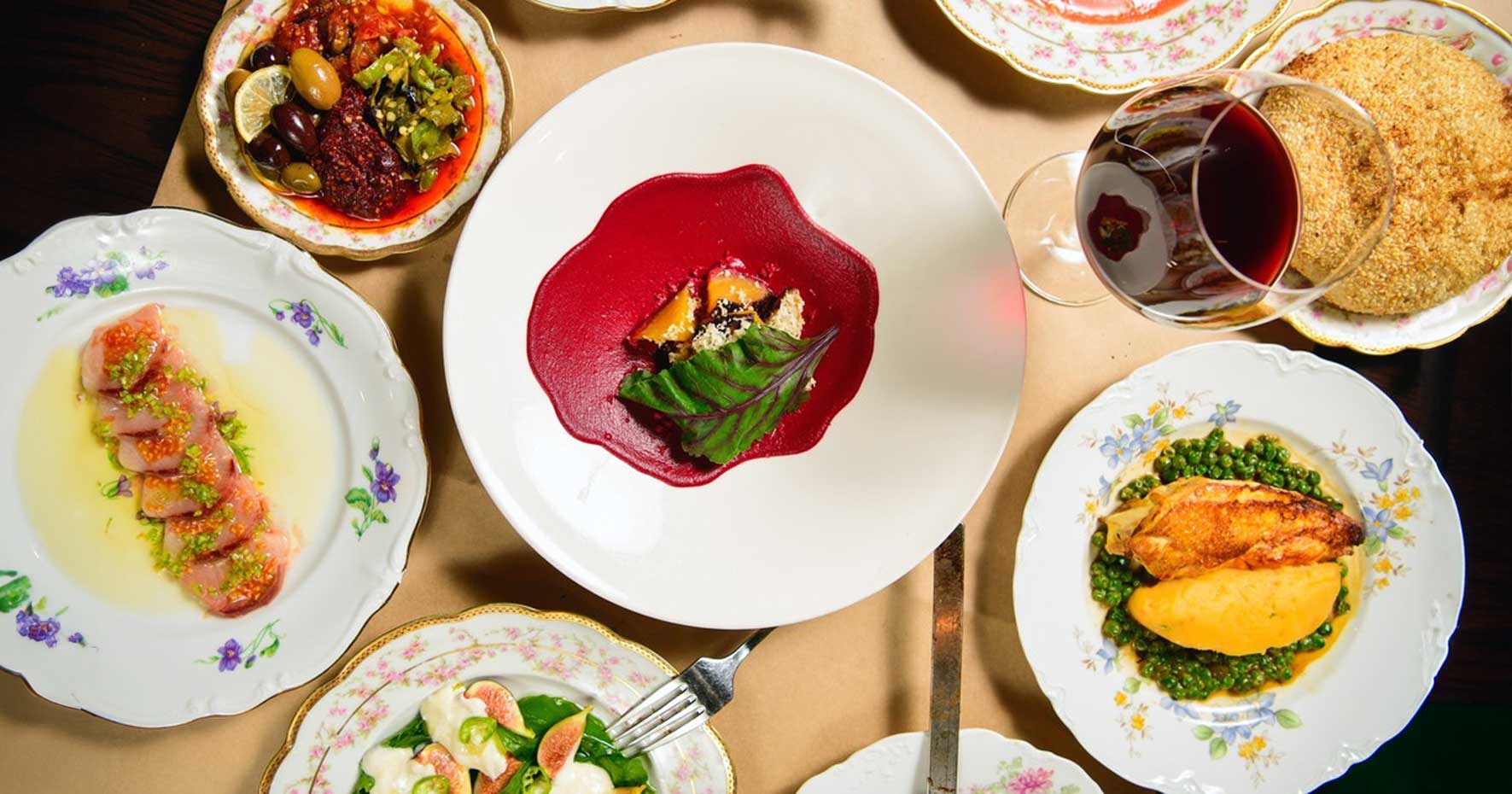
Where Kyoto's Pace Becomes a Discipline
The sharpest way to understand what Godan Miyazawa is doing in Shimogyo Ward is to think about what it is not doing. Tokyo kaiseki — at counters like RyuGin or Kanda — has absorbed the city's appetite for precision-as-spectacle: theatrical plating, ingredient sourcing presented as narrative, service timed to a stopwatch. Kyoto's tradition runs on a different logic. The refinement here is in what goes unannounced. A room in this ward does not signal its ambition through design excess. The season arrives at the table without commentary, and the meal's architecture is legible only to those willing to read slowly.
That contrast is not a criticism of Tokyo, it is simply the metropolitan divide in physical form. Speed rewards novelty; Kyoto rewards patience. In a city where Gion Sasaki operates at three Michelin stars and ¥¥¥¥, and Hyotei carries centuries of institutional weight, Godan Miyazawa occupies a more accessible but still serious position in the local hierarchy.
The Seasonal Logic of the Menu
Kyoto kaiseki is, at its core, an argument about time. The cuisine does not simply use seasonal ingredients, it organises the meal around them as a formal structure, with each course functioning as a kind of announcement that the calendar has moved on. Michelin's own documentation of Godan Miyazawa captures this directly: vegetables including peas, corn, ginkgo nuts, and turnip kneaded into baked sesame tofu serve not as garnish but as the season's opening statement.
That choice of technique, kneading vegetables into tofu rather than serving them separately, reflects a classical Kyoto instinct: the season should be integrated, not displayed. It contrasts with approaches common in Tokyo, where ingredient provenance often becomes an explicit part of the dining experience, narrated by the chef or printed on the menu. At restaurants like Godan Miyazawa, the sourcing is assumed and the technique carries the meaning. Peer Kyoto kaiseki houses such as Kikunoi Honten and Mizai operate within this same grammar, though at higher price tiers and with longer institutional histories.
The broader pattern at kaiseki counters in this city is one of apprenticeship fidelity alongside controlled curiosity. The Michelin citation for Godan Miyazawa notes that the approach stays close to the basics while feeding that curiosity with inventive combinations. This is a meaningful distinction in Kyoto's kaiseki scene, where pure classicism and restless experimentation represent two poles between which most serious houses position themselves. Godan Miyazawa reads as positioned toward the classical end, with invention used as a finishing note rather than a structural element.
Credentials and Competitive Position
The restaurant's recognition arc is worth reading carefully. Godan Miyazawa appeared in the Opinionated About Dining Leading Restaurants in Japan rankings in 2023 (recommended tier), moved to a ranked position of #447 in 2024, and climbed further to #442 in 2025. Taken together, these signals describe a kitchen that has been building recognition consistently rather than arriving fully formed.
Within Kyoto specifically, that trajectory positions Godan Miyazawa in a competitive set that includes one-star kaiseki houses operating at various price levels. At ¥¥¥, it represents a more accessible entry into Michelin-recognised kaiseki than ¥¥¥¥ houses like Ifuki (two stars) or Kyokaiseki Kichisen (two stars). For travellers who have already eaten at the top of the Kyoto kaiseki hierarchy, Godan Miyazawa offers a different proposition: a kitchen mid-climb, with the credentials already in place and the institutional stiffness that can settle into long-established houses largely absent.
Comparisons across Japan's kaiseki and Japanese cuisine circuit are also instructive. HAJIME in Osaka and Goh in Fukuoka represent different regional takes on high-end Japanese cooking, each shaped by their city's character. The Kansai region's kaiseki tradition, centred on Kyoto, tends to treat restraint as the highest form of expression, a posture that distinguishes it from Osaka's more appetite-forward energy and from Tokyo's technical showmanship. Godan Miyazawa reflects that Kansai orientation clearly.
The Next Generation in the Room
One of the more telling details in the Michelin documentation concerns not the food directly but the service model. The citation notes that the next generation of chefs apply themselves diligently to every task from cooking to service, following the proprietor's teaching to always be sincere. In the context of Kyoto kaiseki, this is a structural signal as much as a quality note. The great Kyoto houses have survived through transmission, from senior to junior, with sincerity as the operating principle rather than ambition or self-expression.
This contrasts with the Tokyo model, where young chefs increasingly train across multiple formats, work stints abroad, and build identities around a personal cooking philosophy. The kaiseki tradition in Kyoto treats individuality as something that emerges slowly, if at all, from within the discipline, not something imported from outside it. The way Godan Miyazawa is described in its Michelin entry suggests it is operating within that transmission model, with Chef Masato Miyazawa functioning as a centre of gravity rather than a celebrity figure.
For the diner, this matters in a practical sense: the service at counters shaped by this philosophy tends to be attentive without being performative. The meal proceeds at its own pace. Gion Maruyama and other Kyoto houses in this tradition share that same unhurried register.
Planning a Meal at Godan Miyazawa
Godan Miyazawa is located in Shimogyo Ward at 557 Oecho, a central Kyoto address that places it within reach of the city's main transportation links. The restaurant operates Tuesday through Sunday for both lunch (12:00 to 2:30 pm) and dinner (6:00 to 10:00 pm), with Tuesday as the weekly closure. The lunch service offers a way into the kaiseki format at what is typically a lower price than the evening, a useful entry point for travellers whose schedule or budget makes the full dinner a heavier commitment. Booking in advance is advisable given the Michelin recognition, and the absence of an online booking platform in the publicly available data suggests direct contact is the expected route, standard practice for kaiseki houses of this tier in Kyoto.
Travellers building a broader Kyoto itinerary will find further context in our full Kyoto restaurants guide, alongside our Kyoto hotels guide, bars guide, wineries guide, and experiences guide. For those moving between cities, Harutaka in Tokyo, akordu in Nara, 1000 in Yokohama, and 6 in Okinawa offer reference points across the country's broader fine dining geography.
What to Order at Godan Miyazawa
What should I order at Godan Miyazawa?
Kaiseki is a set format, there is no à la carte selection and no menu decision to make at the table. The kitchen structures the meal around what is seasonal at the time of your visit. Given the Michelin citation's reference to sesame tofu incorporating seasonal vegetables as a course that heralds the arrival of the season, that preparation represents the clearest expression of what Godan Miyazawa does: classical technique used as a vehicle for the calendar. The most useful preparation is not choosing what to order but knowing when to go. The menu's character shifts with the season, so a spring visit will produce a fundamentally different meal than an autumn one, both shaped by the same underlying discipline, but speaking in different registers. If the sesame tofu course is on the menu during your visit, it functions as a reliable signal of where the kitchen's sensibility lies: integrated, restrained, and anchored in Kyoto's seasonal grammar.
Cuisine Lens
| Venue | Cuisine | Price | Awards | Notes |
|---|---|---|---|---|
| Godan MiyazawaThis venue — the venue you are viewing | Michelin-Starred Tea Kaiseki | $150–200 | 1 Michelin Star | Not listed |
| Gion Sasaki | Modern Kaiseki | $300–500 | 3 Michelin Stars · La Liste Top Restaurants | Kaiseki, Japanese |
| cenci | Innovative Italian-Japanese Fusion | $100–150 | 1 Michelin Star · World's 50 Best #76 | Italian |
| Ifuki | Sumibi Kappo Kaiseki | $200–300 | 2 Michelin Stars · La Liste Top Restaurants | Kaiseki |
| Kyokaiseki Kichisen | Kyoto Kaiseki | $200–300 | 2 Michelin Stars · La Liste Top Restaurants | Japanese |
| Kyo Seika | Seasonal Chinese Fine Dining in Kyoto | Not listed | 1 Michelin Star | Chinese |
Recognition history
Dated appearances from independent guides and award organizations, with the underlying list record or original source where available.
Michelin 1 Star
Michelin
Opinionated About Dining Top Restaurants in Japan Recommended
Opinionated About Dining
Full recognition history (6 entries)
Opinionated About Dining Top Restaurants in Japan Ranked #442
Opinionated About Dining
Michelin 1 Star
Michelin
Opinionated About Dining Top Restaurants in Japan Ranked #447
Opinionated About Dining
Opinionated About Dining Top Restaurants in Japan Recommended
Opinionated About Dining
Continue exploring
More in Kyoto
Restaurants in Kyoto
Browse all →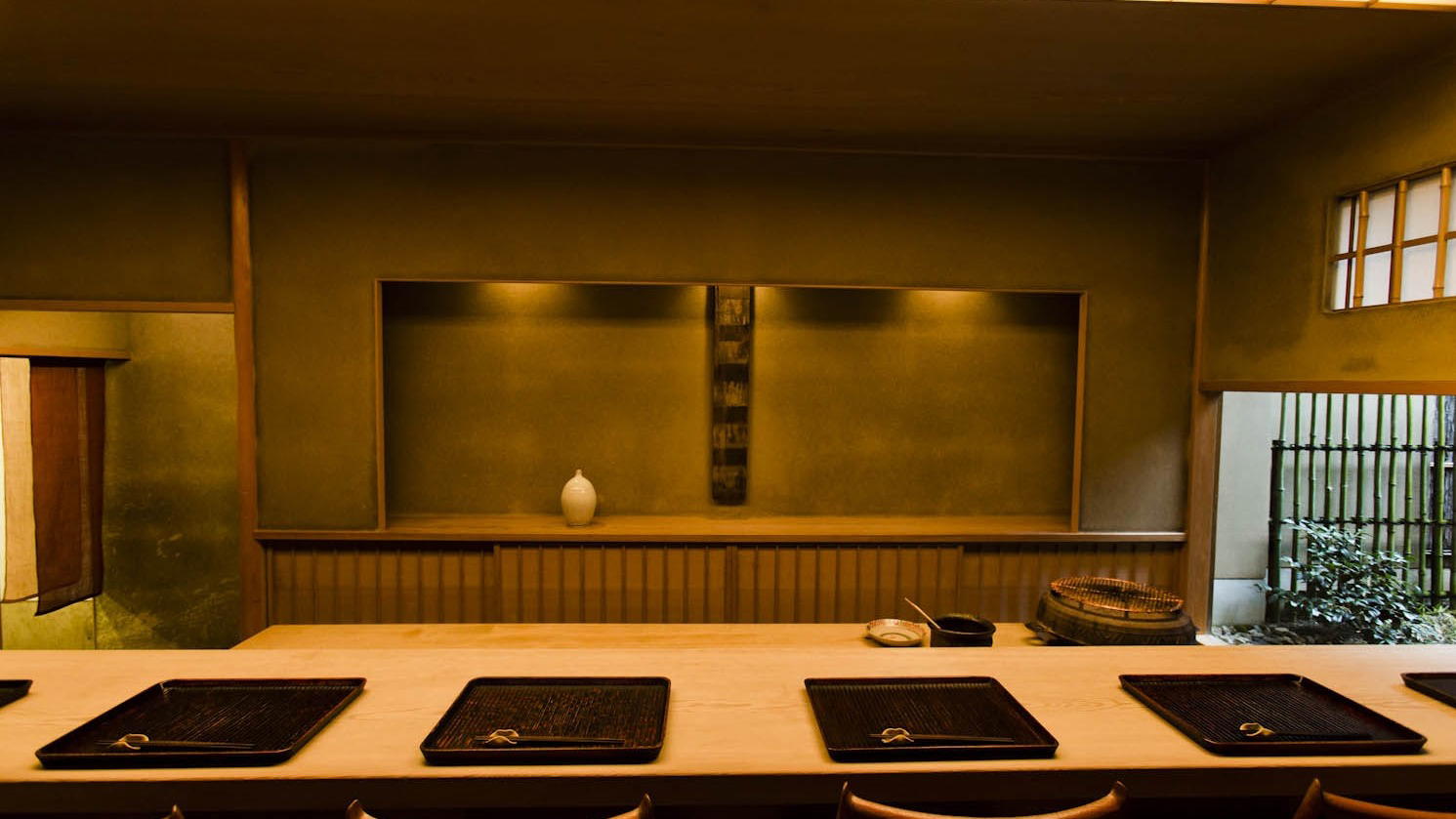
Bars in Kyoto
Browse all →
Hotels in Kyoto
Browse all →

Wineries in Kyoto
Browse all →
Details
- Intimate
- Elegant
- Quiet
- Sophisticated
- Minimalist
- Special Occasion
- Date Night
- Solo
- Chefs Counter
- Historic Building
- Sake Program
- Local Sourcing
- Counter Dining
- Sake
- Vegetarian Friendly
- Pescatarian Friendly
Current opening hours
- Monday
- 12–2:30 PM, 6–10 PM
- Tuesday
- Closed
- Wednesday
- 12–2:30 PM, 6–10 PM
- Thursday
- 12–2:30 PM, 6–10 PM
- Friday
- 12–2:30 PM, 6–10 PM
- Saturday
- 12–2:30 PM, 6–10 PM
- Sunday
- 12–2:30 PM, 6–10 PM
Hours can change for holidays and private events. Last verified .
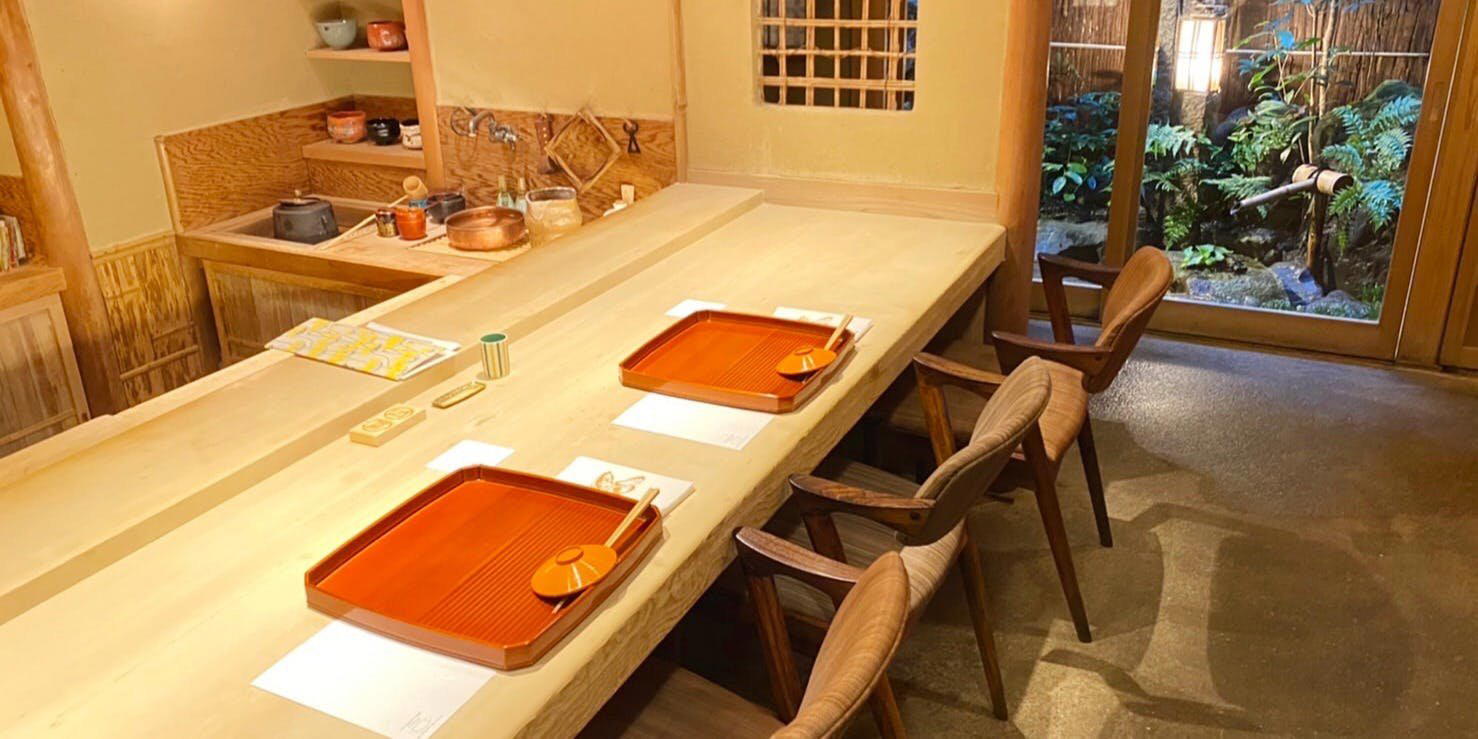
Zen-like, minimalist setting with serene atmosphere, beautiful antique ceramics, and refined simplicity.