
Black Pearl 1 Diamond
Our verdict
NO.1 RESTAURANT holds a Black Pearl 1 Diamond award (2025), placing it among the recognised dining addresses in Wuhan's Jianghan District. The venue represents Wuhan's growing presence on China's formal dining circuit, where provincial cities are producing restaurants that compete credibly with the established fine-dining centres of Beijing and Shanghai. Booking details are best confirmed directly through local channels.

Pearl is the En Primeur Club membership app, where members save venues, book tables and use the concierge.
The menu
What to order
- Supreme Buddha jumped the wall
- Rose stewed silver carp
- Truffle fish and rice
Jianghan District and the Wuhan Fine-Dining Shift
Wuhan sits at the geographic centre of China, a city of eleven million that most international food writing has treated as a transit point between more celebrated culinary destinations. That framing is becoming harder to sustain. Over the past several years, the city's Jianghan District has developed a tier of formally recognised restaurants that hold their own against provincial peers in Chengdu, Hangzhou, and Nanjing. NO.1 RESTAURANT, addressed on the northwestern edge of Jianghan's commercial core, is part of that shift. Its 2025 Black Pearl 1 Diamond recognition places it in a defined competitive set: restaurants across China that the Black Pearl Guide, the country's most closely watched domestic fine-dining index, judges to meet a consistent standard of cuisine and hospitality.
The Black Pearl designation matters as context rather than simply as an accolade. The guide evaluates restaurants across mainland China, Macau, and a handful of overseas Chinese-cuisine addresses, and its one-diamond tier covers a wide range of formats and price points. What it signals reliably is that a restaurant has passed structured assessment rather than relying on local word of mouth alone. In Wuhan, where the fine-dining category is smaller and less internationally documented than in Tier 1 cities, that external validation carries additional weight. For a visitor calibrating expectations, it is the most useful single data point available.
Hubei Cuisine and What It Represents at the Table
Wuhan's culinary identity is built on Hubei cuisine, one of China's less exported regional traditions. Where Sichuan cooking has found global audiences on the back of its spice profile, and Cantonese cuisine has expanded internationally through diaspora communities, Hubei's food culture has remained largely internal. That insularity is not a weakness, it reflects a tradition shaped by the Yangtze River basin's particular geography: freshwater fish, lotus root, and a range of preparations that depend on seasonal and regional produce rather than on spice or technique as primary signals.
The most discussed Hubei dishes draw on this freshwater inheritance. Wuhan's fish preparations, braised, steamed, or presented in broth-based formats, are a reference point for the city's culinary character in the same way that hot dry noodles (re gan mian) define its street-level identity. A restaurant operating at the recognised fine-dining tier in Wuhan is implicitly in dialogue with these traditions, whether it interprets them directly or positions itself in contrast to them. The cultural context at NO.1 RESTAURANT's level is not decorative: Hubei culinary heritage is the material the kitchen is working with or working against.
This places Wuhan's recognised restaurants in an interesting position relative to their counterparts in cities like Shanghai or Beijing, where fine dining has more often meant importing frameworks, French technique, Japanese precision, Cantonese refinement, onto local ingredients. Wuhan's smaller fine-dining cohort is, by necessity, more directly engaged with what the region actually produces. For a broader sense of how this plays out across Wuhan's leading addresses, the full Wuhan restaurants guide covers the current recognised tier in detail.
Within Wuhan's Black Pearl-recognised dining addresses, NO.1 RESTAURANT sits alongside venues that approach the city's culinary identity from different angles. Donghu Club, The Nature Flow, Xi She, and Yuge Restaurant each represent a distinct interpretation of what a serious Wuhan dining room looks like. NO.1 RESTAURANT's Jianghan District address places it in the commercial and historical heart of the city, a neighbourhood with a different character from the lake-adjacent addresses that define some of the city's other formal dining options.
The broader national comparison is useful for calibrating register. Among China's Black Pearl-recognised addresses, the range runs from the tasting-menu formality of venues like Xin Rong Ji (Xinyuan South Road) in Beijing and 102 House in Shanghai to more regionally anchored formats in cities like Ru Yuan in Hangzhou and Xin Rong Ji in Chengdu. Further afield, addresses such as Chef Tam's Seasons in Macau, Imperial Treasure Fine Chinese Cuisine in Guangzhou, and Dai Yuet Heen in Nanjing illustrate how the Black Pearl tier distributes across China's major dining cities. NO.1 RESTAURANT's position in that national distribution is as a Wuhan representative of a category that has been dominated by coastal and Tier 1 city addresses, its inclusion reflects the guide's broadening geographic scope as much as it does Wuhan's own fine-dining development.
For visitors approaching Wuhan from an international fine-dining perspective, the point of comparison is less the precise tier of a Le Bernardin in New York City or an Atomix in New York City and more the question of what serious regional Chinese cooking looks like when it operates outside the cities that attract the most critical attention. The answer, in Wuhan's case, is a food culture with genuine depth that has simply been documented less.
Planning a Visit: What to Know Before You Go
NO.1 RESTAURANT's address in the Jianghan District puts it within reach of the district's main transport connections, accessible from central Wuhan without significant travel time. The 2025 Black Pearl 1 Diamond recognition is the clearest public signal of the restaurant's current standing, and reservations at this tier of Wuhan dining are worth securing in advance, particularly for evening sittings when the city's business dining activity peaks.
For visitors building a broader Wuhan itinerary, the city's hospitality infrastructure is covered in the full Wuhan hotels guide, with further options across bars, wineries, and experiences. Wuhan rewards a multi-day visit from a dining perspective: the city's recognised restaurant tier is small enough to cover deliberately, and the contrast between street-level food culture and formal dining is more compressed here than in Shanghai or Beijing, which makes the sequencing of a Wuhan food itinerary an interesting editorial exercise in itself.
Frequently asked questions
Can I bring kids to NO.1 RESTAURANT?
NO.1 RESTAURANT holds a 2025 Black Pearl 1 Diamond recognition, which typically signals a formal dining environment oriented toward adult guests seeking considered, course-driven meals. Families planning a visit should check the venue's official channels to confirm any arrangements, as no specific policy is documented publicly.
What kind of setting is NO.1 RESTAURANT?
Situated on a side street in the Jianghan District, Wuhan's historic commercial and cultural core, NO.1 RESTAURANT operates at the level of a Black Pearl 1 Diamond-awarded address.
What kind of recognition has NO.1 RESTAURANT received?
NO.1 RESTAURANT has received recognition including: Black Pearl 1 Diamond (2025).
What should I eat at NO.1 RESTAURANT?
The restaurant's Black Pearl 1 Diamond award in 2025 points to a kitchen rooted in Hubei cuisine, one of China's less internationally documented regional traditions, characterised by freshwater fish preparations, fermented and preserved ingredients, and a measured approach to seasoning that differs sharply from neighbouring Sichuan or Cantonese cooking. Specific current dishes are best confirmed with the venue ahead of your visit.
Price Lens
Comparable venues nearby, for context on price, style, and recognition.
| Venue | Cuisine | Price | Awards | Notes |
|---|---|---|---|---|
| NO.1 RESTAURANTThis venue (the venue you are viewing) | Modern Hubei Fine Dining | $100–150 | Black Pearl 1 Diamond | Not listed |
| Chu Yao Xuan | Cantonese with Jingchu Regional Influences | Not listed | Not listed | Hankou, Cantonese with Jingchu Regional Influences |
| Xi She | Modern Chinese Fine Dining | Not listed | Black Pearl 1 Diamond | Wuhan Mixc, Modern Chinese Fine Dining |
| YANXI Fine Dining | Modern Western-leaning Chinese Fine Dining | $50–100 | Black Pearl 1 Diamond | Jianghan District, Modern Western-leaning Chinese Fine Dining |
| Yuge Restaurant | Wuhan, chinese | Not listed | Black Pearl 1 Diamond | Not listed |
| The Nature Flow | Seasonal Contemporary Chinese | Not listed | Black Pearl 1 Diamond | Jianghan Road Pedestrian Street/Hankou Beach, Seasonal Contemporary Chinese |
Recognition history
Dated appearances from independent guides and award organizations, with the underlying list record or original source where available.
Black Pearl 1 Diamond
Black Pearl
Continue exploring
More in Wuhan
Restaurants in Wuhan
All restaurants in Wuhan →
Hotels in Wuhan
All hotels in Wuhan →
Details
- Elegant
- Scenic
- Sophisticated
- Business Dinner
- Special Occasion
- Group Dining
- Private Dining
- Local Sourcing
- Street Scene
- Prix Fixe
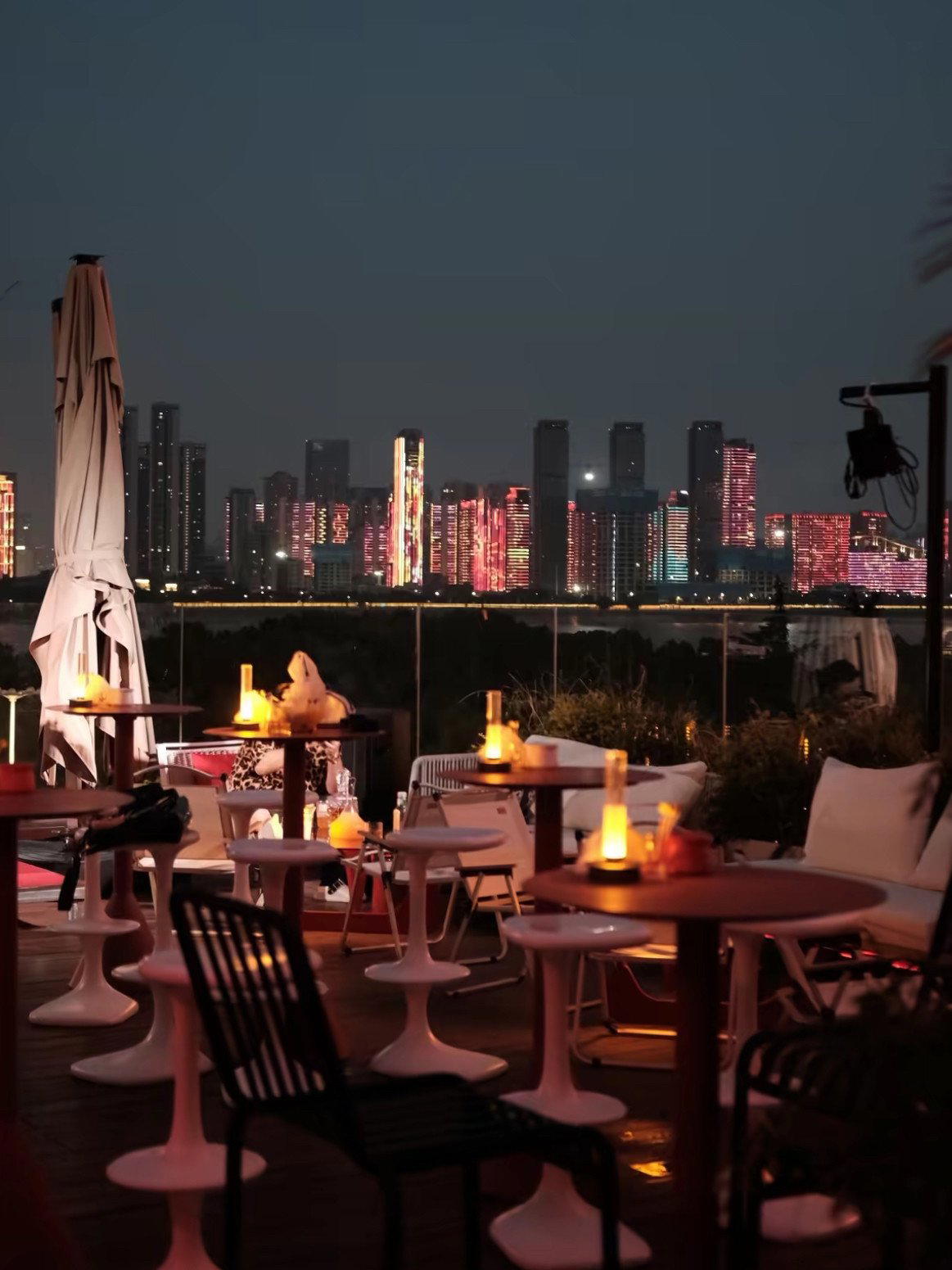
Tasteful decoration with retro elements, pleasant environment, and attentive service creating an elegant dining atmosphere.