Muse at Sentry

Wine Spectator Best of Award of Excellence
Our verdict
Muse at Sentry sits inside Stevens Point's Sentry World complex, positioning itself as central Wisconsin's most considered dining address. The kitchen works within a regional context where sourcing discipline and culinary ambition rarely share the same ZIP code, making it an address worth tracking for anyone passing through the state's interior.

Pearl is the En Primeur Club membership app — saves, bookings, and concierge access live there. Same editors, same standards.
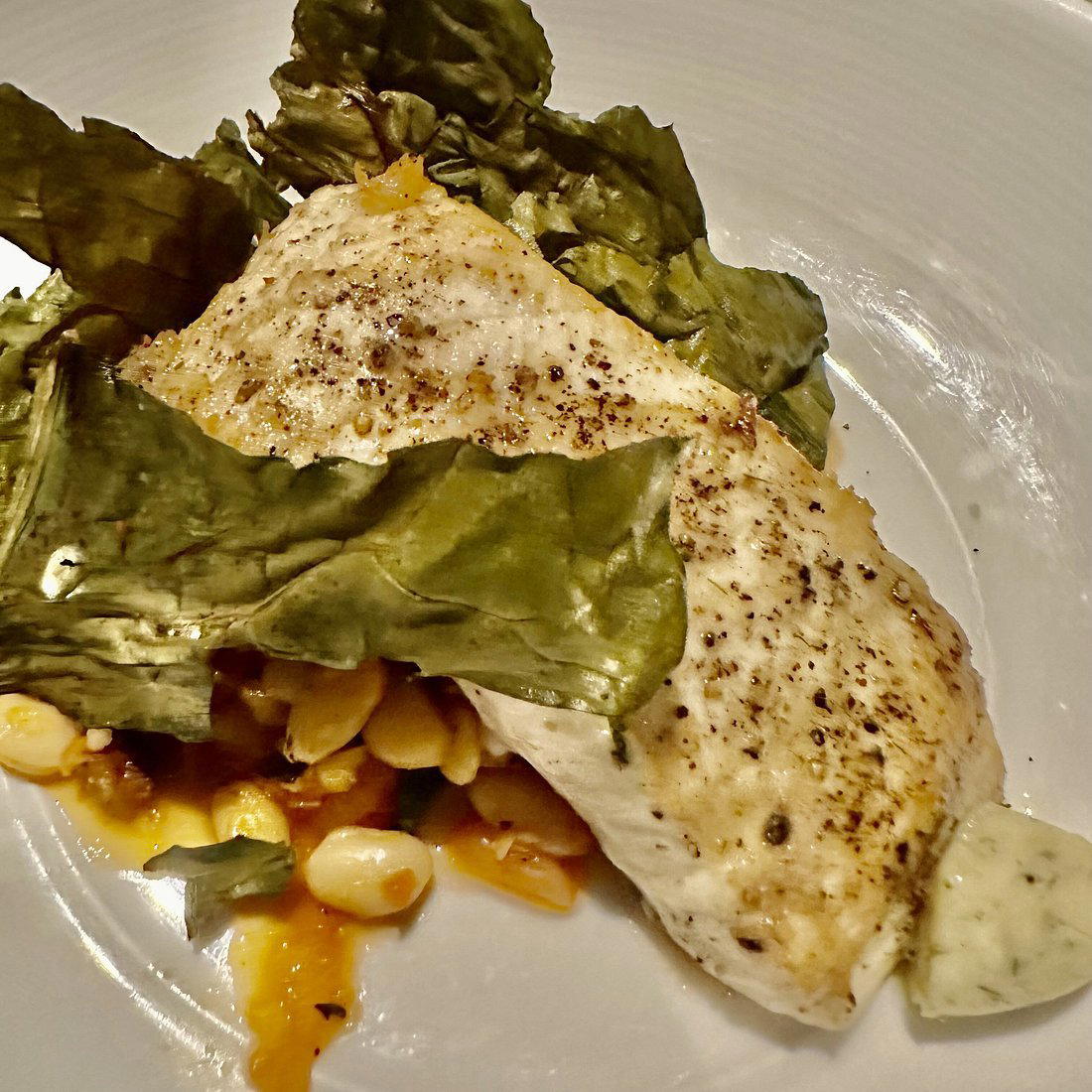
Where Stevens Point Sets Its Dining Standard
Central Wisconsin is not a region that appears often in serious food writing, which makes the dining room at Muse at Sentry — located within the Sentry World complex at 1800 North Point Drive — more interesting as a subject than its geography might suggest. Stevens Point sits roughly equidistant between Milwaukee and Minneapolis, a city of around 27,000 that built its identity around the paper industry and the University of Wisconsin campus. That civic profile has historically produced functional, unpretentious eating: supper clubs, Friday fish fries, locally brewed lagers. Against that backdrop, an address that operates with genuine culinary intent carries a different kind of weight than it would in a major metro. For our full Stevens Point restaurants guide, Muse at Sentry is the property that anchors the upper end of the city's dining conversation.
The Sourcing Frame: Why Provenance Matters Here
American fine dining has spent the last two decades reckoning with a single question: how much of what lands on the plate can be traced to a specific place, grower, or season? The answers from the country's most discussed kitchens have been instructive. Blue Hill at Stone Barns in Tarrytown built its entire identity around on-site farming. Single Thread Farm in Healdsburg operates its own farm as the starting point for an omakase format. The French Laundry in Napa maintains its own garden across the street. These are coastal expressions of a philosophy that has gradually filtered into mid-market and regional dining across the country.
Central Wisconsin has its own case to make on this front. The region sits inside some of the most productive agricultural land in the Midwest: dairy operations, market gardens, river fisheries, and forested areas that support game and foraged goods through the warmer months. A kitchen in Stevens Point that takes sourcing seriously has access to a supply chain that a restaurant in a dense urban environment would envy. The question is always whether kitchen ambition meets that supply chain with discipline, and whether the resulting plate reflects the place rather than simply advertising it.
Muse at Sentry operates within this regional agricultural context, positioned as the dining destination inside a well-established Wisconsin corporate campus complex. The Sentry World site itself includes a golf course and resort infrastructure, which places the restaurant in a hospitality context rather than a standalone dining destination, a distinction that matters when reading the room. Resort-adjacent dining in the United States operates under specific pressure: it must satisfy guests who are already on property and occasionally surprise visitors who sought it out specifically. The strongest versions of this format, from Addison in San Diego to The Inn at Little Washington, treat the captive audience as an opportunity to deliver something more considered, not something more convenient.
Regional Ambition in a National Frame
The broader American dining scene has developed a clear category for restaurants that operate serious culinary programs outside major metropolitan centers. Frasca Food and Wine in Boulder demonstrated early that a college town could sustain a James Beard-recognized program. Bacchanalia in Atlanta held a similar position in the South before Atlanta's dining scene expanded around it. Bruto in Denver represents a newer cohort of regional addresses building reputations through ingredient discipline rather than celebrity chef attachment.
What these kitchens share is a willingness to let sourcing decisions drive menu construction, rather than reverse-engineering ingredient stories onto a menu built around other priorities. At its most coherent, that approach produces cooking that reads as specific to a place and season in a way that urban fine dining, which can source from anywhere, year-round, often does. For a restaurant in Stevens Point, the regional argument is potentially stronger than it would be in Chicago or New York, precisely because the distance from farm to plate is shorter and the agricultural identity of the surrounding region is more defined.
Restaurants operating in comparable positions nationally, including Lazy Bear in San Francisco and Alinea in Chicago, have demonstrated that format and sourcing philosophy can coexist with significant culinary ambition. The former built a communal-dinner format around a hyper-local pantry; the latter pursues technique-led modernism that has little interest in regional specificity. Both approaches produce strong results in their respective frames. Muse at Sentry sits in a different register from either, but the core question is the same: does the cooking reflect a coherent point of view about place and ingredient?
What to Know Before You Go
Muse at Sentry is located within the Sentry World resort and golf complex on the north side of Stevens Point, a property that draws both corporate guests and leisure visitors to the area. For travelers, Stevens Point is accessible via Central Wisconsin Airport in Mosinee, approximately 20 miles south, with connections through Chicago and Minneapolis. Driving from Milwaukee takes roughly two and a half hours on US-51 North; from Madison, the drive is closer to an hour and forty minutes.
Resort-integrated restaurants in this category often handle bookings through the broader property system, so approaching it via the Sentry World front desk or concierge is a reasonable first step. Travelers building a wider Wisconsin itinerary might also cross-reference restaurants in the state's other mid-sized cities, where a similar dynamic of high agricultural access and modest dining infrastructure creates comparable opportunities.
For context on what serious American kitchens in comparable positions are achieving, it is worth tracking addresses like Providence in Los Angeles for its sourcing transparency, Le Bernardin in New York City for its long-form commitment to a single ingredient category, and Causa in Washington, D.C. for a regional-ingredient approach applied to a specific culinary tradition. These are calibration points, not direct comparisons, but they define what sourcing-led ambition looks like when it reaches full expression.
Additional addresses worth knowing in the wider conversation about ingredient-led American dining include Atomix in New York City, ITAMAE in Miami, Emeril's in New Orleans, and 8 1/2 Otto e Mezzo Bombana in Hong Kong, all of which frame ingredient sourcing as central to their editorial identity.
Frequently asked questions
Is Muse at Sentry child-friendly?
Muse at Sentry sits within the Sentry World resort complex at 1800 North Point Dr, a property that hosts corporate guests, golf travelers, and leisure visitors of varying ages. The resort setting means families are not out of place on the property, though the dining room's positioning as Stevens Point's benchmark for serious food suggests a quieter, more adult-oriented pace at the table. Calling ahead to confirm seating arrangements for younger guests is the practical move.
Is Muse at Sentry better for a quiet night or a lively one?
Muse at Sentry occupies the fine-dining anchor of the Sentry World resort, a corporate-and-golf destination that tends toward a composed rather than energetic atmosphere. Expect considered service rhythms and a room calibrated for conversation rather than noise. If you are coming from outside Stevens Point specifically for a high-energy evening, the format here skews toward the former.
Is Muse at Sentry a good choice for a special occasion dinner in central Wisconsin?
For a special occasion dinner within central Wisconsin, Muse at Sentry operates in a category with few direct competitors in the region, anchored within the Sentry World resort complex in Stevens Point. The resort draws a corporate and golf-travel clientele accustomed to a certain standard, which shapes the dining room's expectations around service and setting. Anyone marking a milestone in the Stevens Point area and wanting a structured, attentive dinner will find the Muse the most credentialed address in the immediate region.
What do people recommend at Muse at Sentry?
Specific dish recommendations are best sourced directly from the restaurant, as the menu at this level of regional fine dining shifts with seasonal availability and provenance-driven sourcing decisions. What the broader Stevens Point dining scene consistently points to is Muse's position as the area's highest-register option for a considered, multi-course dinner. Checking with the Sentry World property directly before your visit will surface the current menu focus.
Where do I go for Muse at Sentry?
Muse at Sentry is located at 1800 North Point Dr, Stevens Point, WI 54481, Stevens Point.
Comparison Snapshot
Comparable venues nearby, for context on price, style, and recognition.
| Venue | Cuisine | Price | Awards | Notes |
|---|---|---|---|---|
| Muse at SentryThis venue — the venue you are viewing | Fine Dining New American with Italian and Steakhouse Influences | Not listed | Wine Spectator Best of Award of Excellence | Not listed |
| The Immigrant Restaurant at The American Club | Contemporary American Fine Dining | $150–200 | Forbes 4-Star · Wine Spectator Best of Award of Excellence | Kohler |
| Three Three Five | Seasonal Fine Dining | Not listed | Not listed | Broadway District |
| Graze | Farm-to-Table American Gastropub | $30–50 | Not listed | Capitol Square |
| Mo's...A Place for Steaks | Classic Steakhouse | $50–100 | Not listed | Kilbourn Town |
| River's Bend | Traditional Wisconsin Supper Club Steak & Seafood | Not listed | Not listed | Green Bay |
Recognition history
Dated appearances from independent guides and award organizations, with the underlying list record or original source where available.
Wine Spectator Best of Award of Excellence
Wine Spectator
Muse at Sentry
The wine
Muse at Sentry holds the Wine Spectator Best of Award of Excellence, which Wine Spectator gives to lists of usually 350 or more selections.
- Wine program
- Deep wine list
- Wine Spectator
- Wine Spectator Best of Award of Excellence
- Extensive wine list
- Craft cocktails
Details
- Elegant
- Sophisticated
- Modern
- Date Night
- Special Occasion
- Business Dinner
- Open Kitchen
- Terrace
- Extensive Wine List
- Craft Cocktails
- Local Sourcing
- A La Carte
- Vegetarian Friendly
Current opening hours
- Monday
- Closed
- Tuesday
- 11 AM–1 PM, 4:30–9 PM
- Wednesday
- 11 AM–1 PM, 4:30–9 PM
- Thursday
- 11 AM–1 PM, 4:30–9 PM
- Friday
- 4:30–9 PM
- Saturday
- 4:30–9 PM
- Sunday
- Closed
Hours can change for holidays and private events. Last verified .
Modern and stylish with dazzling works of art, large picture windows offering seasonal views, and an elegant atmosphere blending old school charm with contemporary freshness.