Le Ponant - Cape Verde

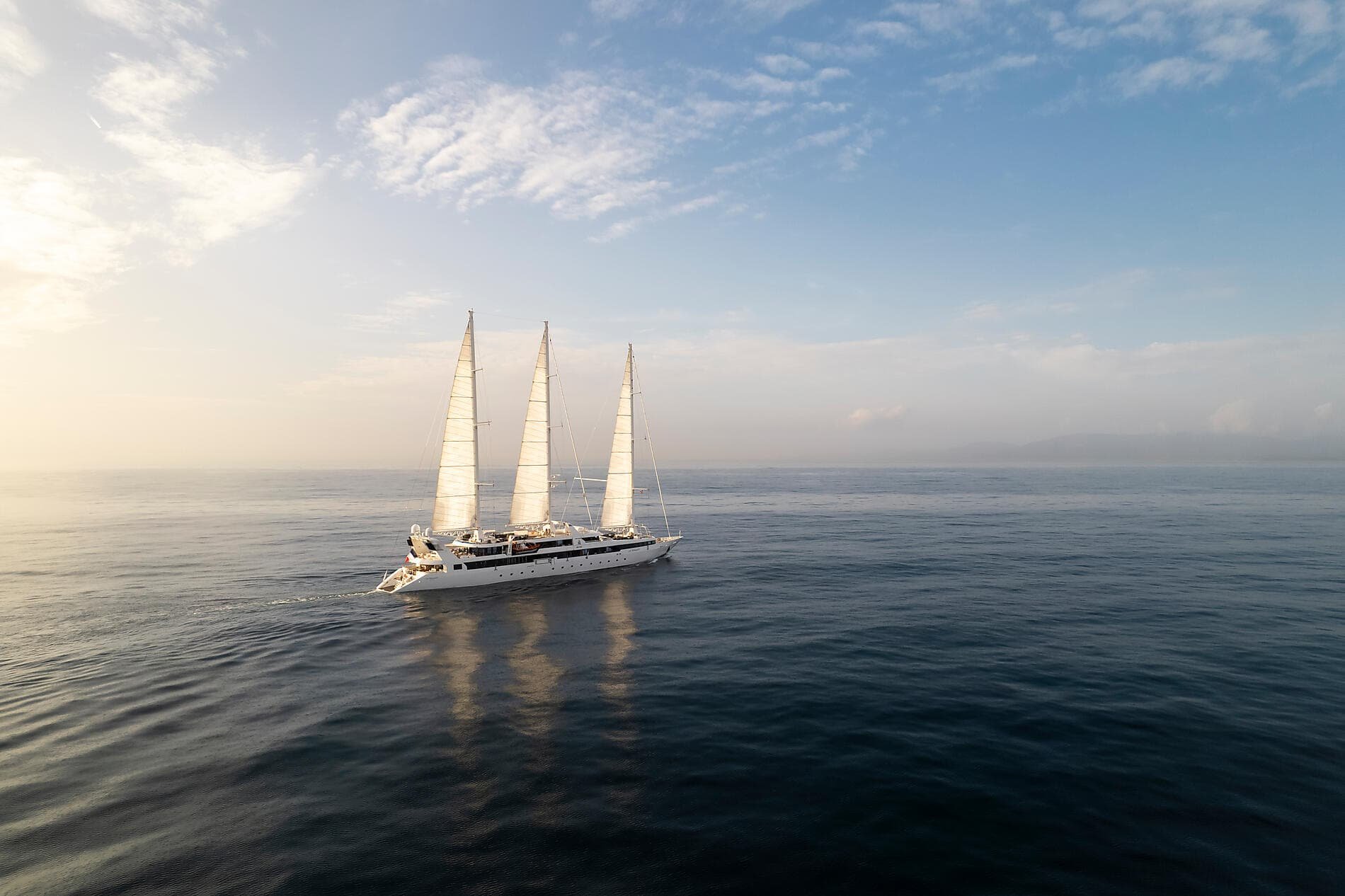
Le Ponant is a three-masted sailing ship operating eco-certified, all-inclusive cruises out of Mindelo, Cape Verde. Positioned at the intimate end of expedition sailing, it offers a format where the Atlantic passage itself is the experience — Cape Verdean waters, island provisioning, and the rhythms of wind-powered travel shaping every aspect of the voyage.
Pearl is the En Primeur Club membership app — saves, bookings, and concierge access live there. Same editors, same standards.
- Address
- de Azevedo, CV, Rua Capitão Heitor, Mindelo 2110, Cape Verde
- Phone
- +238 996 20 20
- Website
- lemetalo.cv
- Directions
- Get directions
 Saves & bookings on Pearl
Mindelo sits on the western shoulder of São Vicente island, a port town with a long history of resupplying Atlantic crossings. The harbour has seen cargo ships, fishing trawlers, and the occasional tall ship for well over a century. When a three-masted sailing vessel like Le Ponant is moored here, it reads less as a novelty and more as a continuation of something the town already understands: the sea as the primary logic of daily life. That context matters, because it shapes what a voyage departing from this specific port actually means. You are not leaving from a manufactured cruise terminal. You are leaving from a working waterfront whose relationship with the Atlantic is older than tourism itself.
What Sail-Based Cruising Means for Food and Sourcing
The ingredient sourcing question on a sailing vessel is fundamentally different from the one you would ask at a land-based restaurant. At a three-starred counter in Paris like Alléno Paris au Pavillon Ledoyen, or at a destination table such as El Celler de Can Roca in Girona, the supply chain flows in from regional farms and markets on a daily schedule. On a ship moving between Atlantic islands, the supply chain is shaped by what each port can offer on the day you arrive. In Cape Verde, that means the catch landed that morning in Mindelo, the goat cheese produced on Santo Antão visible across the channel, and the dried tuna that has been a protein staple in Cabo Verdean cooking for generations.
Cape Verdean cuisine is an Atlantic creole — Portuguese technique applied to West African ingredients, modified by four centuries of island isolation and trade. Fish, specifically tuna, wahoo, and grouper, dominates. Cachupa, the slow-cooked stew of hominy, beans, and whatever protein the household had available, is the dish that appears at every income level and on every island. The cuisine is not showy, but it carries a directness that reflects a place where ingredients were historically scarce and cooking was functional long before it became cultural performance. For a galley operating an all-inclusive format on a small sailing ship, that tradition of working with what is available is not a constraint — it is alignment with how the surrounding food culture was built.
The Eco-Certification and What It Signals
Eco-certified cruising in the Atlantic island context is a category that has grown substantially as small-ship operators position themselves against large-volume cruise lines. The certification signals a commitment to operational standards, waste management, fuel use, minimal port impact, that matter particularly in fragile marine environments like the Cape Verde archipelago, which hosts significant nesting populations of loggerhead sea turtles and some of the Atlantic's cleaner offshore fishing grounds. For a vessel that sources locally at island stops, the certification and the provisioning philosophy reinforce each other: the same reasoning that limits environmental impact at sea pushes the galley toward fresh, local product rather than bulk-imported stores.
This places Le Ponant's Cape Verde itinerary in a different competitive tier than volume-cruise departures from Las Palmas or Dakar.
Mindelo as a Departure Point
Choosing Mindelo over other Cape Verdean ports reflects a practical logic. São Vicente has the deepest natural harbour in the archipelago, the most developed provisioning infrastructure, and the clearest orientation toward maritime arrivals. It is also the cultural capital in the sense that matters for small-group travel: the city has live music, a credible restaurant scene, and a colonial-era architecture that gives arriving guests something to engage with before embarkation. For broader orientation on what Mindelo offers before or after a sailing departure, our full Mindelo restaurants guide, our full Mindelo hotels guide, and our full Mindelo bars guide cover the main options at ground level. The Mindelo experiences guide is particularly relevant for guests extending their stay to include a day crossing to Santo Antão.
The address on Rua Capitão Heitor de Azevedo places the vessel's operations in the working port zone rather than the tourist promenade, which is consistent with the vessel's character. PONANT, the operating group, handles pre- and post-cruise logistics including transfers, accommodation, and excursions, a practical consideration for guests flying into Cesária Évora Airport on São Vicente, where onward connections to European hubs typically route through Lisbon or Amsterdam.
How This Format Compares to Land-Based Alternatives
The all-inclusive, intimate sailing format occupies a space that land-based dining cannot replicate. The closest analogy in terms of the captive-table, multi-day, ingredient-driven format might be something like Lazy Bear in San Francisco, where the communal progression through a single curated experience is the entire point. Or, in the ocean-ingredient context, Aponiente in El Puerto de Santa María, where Chef Ángel León's kitchen treats Atlantic marine ingredients as the primary creative material. The difference is that on Le Ponant, the menu changes because the anchorage changes, not because the kitchen decided to rotate the tasting card.
That variability is the point. Guests at land-based destination restaurants including Le Bernardin in New York or Arzak in San Sebastián choose those tables precisely because the kitchen controls every variable. On a sailing expedition, the trade-off runs the other way: you surrender control of the variable and receive, in exchange, a sourcing story that no fixed kitchen can manufacture.
Planning Your Voyage
PONANT operates Le Ponant's Cape Verde itineraries as a fully packaged experience. The all-inclusive format means food, accommodation, and onboard activities are covered within the voyage cost, with pre- and post-cruise logistics available through the operator. Given the intimate capacity of the vessel, bookings on this itinerary tend to close significantly in advance of departure, interested travellers should treat early inquiry as standard practice rather than optional. The GPS coordinates for Mindelo's port area place the vessel at 16.8776° N, 24.9855° W. For additional context on what the wider archipelago offers from a food and drink perspective, our Mindelo wineries guide covers the local grogue and wine production that frequently appears on island tables.
How Le Ponant - Cape Verde Mindelo Review compares with similar nearby venues.
| Venue | Cuisine | Awards |
|---|---|---|
| Le Ponant - Cape Verde | Cape Verdean | Relais Chateaux Award (2025) |
Recognition history
Dated appearances from independent guides and award organizations, with the underlying list record or original source where available.
Relais Chateaux Award
Relais Chateaux
At a Glance
- Elegant
- Sophisticated
- Scenic
- Special Occasion
- Waterfront
- Standalone
- Waterfront
Current opening hours
- Monday
- Closed
- Tuesday
- 5:30 PM–12 AM
- Wednesday
- 5:30 PM–12 AM
- Thursday
- 5:30 PM–12 AM
- Friday
- 5:30 PM–1 AM
- Saturday
- 5:30 PM–1 AM
- Sunday
- 5:30 PM–12 AM
Hours can change for holidays and private events. Last verified .
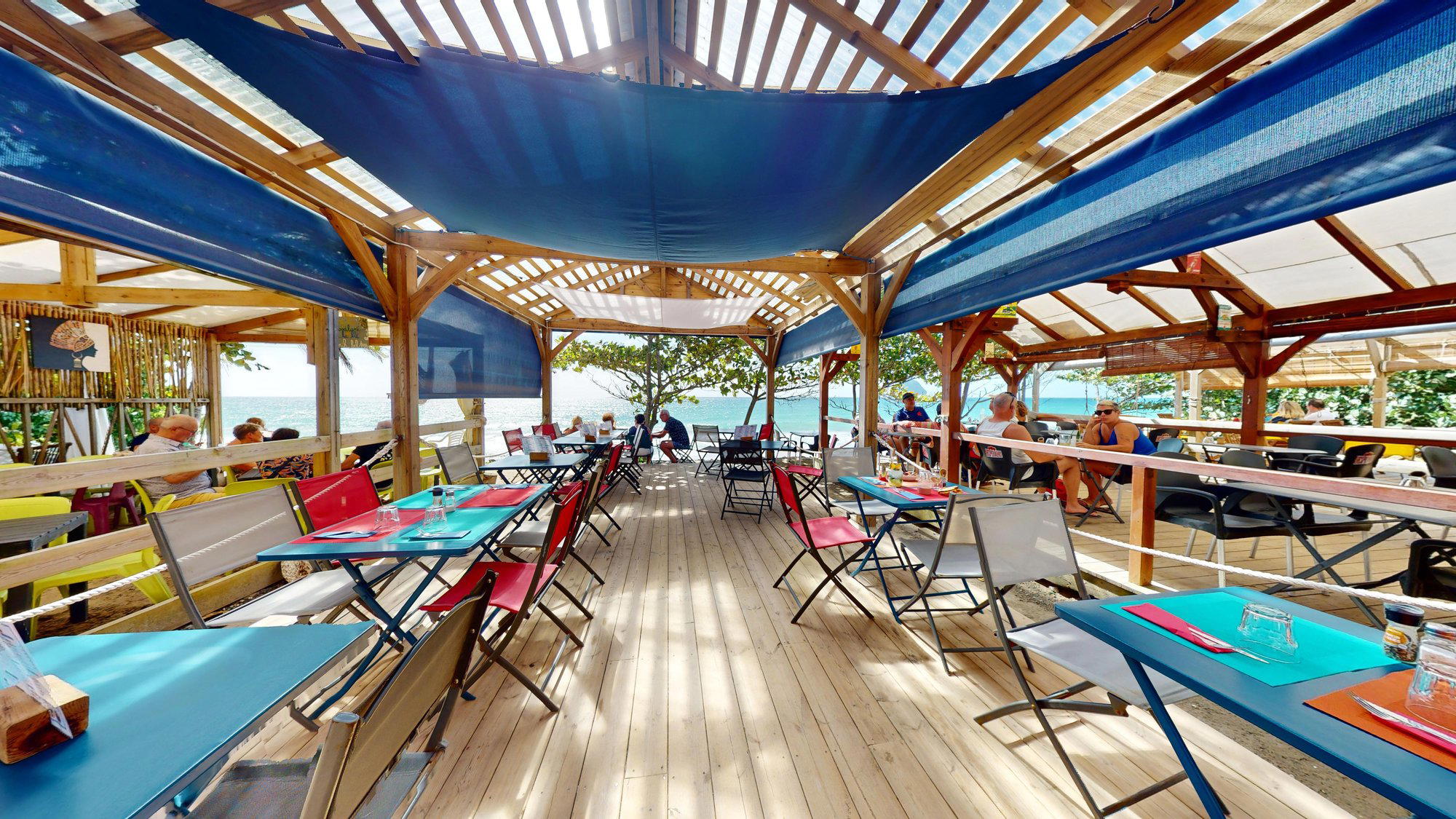
Elegant and airy with modern French design, comfortable deck dining under sail, and a refined, relaxed yacht atmosphere.
Know Before You Go
- Getting there
- de Azevedo, CV, Rua Capitão Heitor, Mindelo 2110, Cape Verde