Our verdict
Le Pilier Agadez sits in the ancient caravan city of Agadez, Niger, where trans-Saharan trade routes once determined what landed on the table. The restaurant operates within a dining tradition shaped by desert proximity, pastoral livestock networks, and West African grain staples, a combination that places it in a category almost entirely absent from international food coverage.

Pearl is the En Primeur Club membership app, where members save venues, book tables and use the concierge.
The menu
What to order
- Wood-fired pizza
- Homemade pasta
- Caprese salad
- Grilled Capitan
Where the Sahara Meets the Plate
Agadez announces itself before you reach its centre. The dust-coloured minaret of the Grand Mosque, one of the tallest mud-brick structures in the world, orients the old city from above, and the streets below it narrow into a labyrinth of earthen walls and shaded doorways that have served merchants, nomads, and pilgrims for the better part of a millennium. Arriving at Le Pilier Agadez, you are arriving into a city that was once the crossroads of trans-Saharan commerce, a place where spices, salt, livestock, and grain moved across routes that connected sub-Saharan West Africa to North African ports. That history is not decorative here. It is functional. It shaped what ingredients came through, which communities settled, and what a kitchen in this part of Niger would logically reach for.
For readers accustomed to the sourcing conversations attached to restaurants like Arpège in Paris or Azurmendi in Larrabetzu, the sourcing context in Agadez operates by entirely different rules. In European fine dining, provenance is often a deliberate programme, a chef's decision to source from a specific farm or region as a statement of values. In Agadez, provenance is structural. The city sits at the edge of the Air Mountains and the Saharan plateau; its food supply has always depended on nomadic Tuareg herders who move livestock across seasonal pasture, Hausa market networks extending south toward Zinder and Maradi, and the agricultural zones that produce millet, sorghum, and cowpea across Niger's farming belt. What arrives at a kitchen here reflects those supply chains, not a procurement list.
The Ingredient Networks Behind Nigerien Cooking
Nigerien cuisine does not receive the international editorial attention that West African food traditions from Senegal, Nigeria, or Ghana have begun to generate. That gap is partly geographic, Agadez is one of the more remote urban centres in the region, with infrastructure that limits both international tourism and foreign press coverage, and partly structural. Niger's food culture is pastoral and grain-centred rather than coastal and seafood-led, which puts it outside the frame of reference that much Western food writing uses as its default. The proteins that define cooking here come from goat, camel, and lamb; the carbohydrate bases are millet-based porridges and flatbreads rather than rice or cassava; and flavouring draws on dried spices and aromatics that move through Saharan trade channels rather than the chilli and fermented condiment traditions more familiar to readers of West African food coverage.
The result is a regional food culture that rewards context before it rewards familiarity. A diner arriving in Agadez expecting the groundnut-heavy stews of Senegalese thiebou yapp or the jollof traditions of Nigeria and Ghana will need to recalibrate quickly. The cooking here is drier, more restrained in its fat content, and more reliant on spice depth than sauce volume, a reflection of desert-adjacent cooking logic that prioritises ingredients which transport, store, and sustain. Those characteristics are not limitations. They are the editorial point. In the same way that restaurants like Aponiente in El Puerto de Santa María made the case for a marine terroir that fine dining had ignored, the cooking traditions of the central Sahel make a case for a food geography that international coverage has largely bypassed.
Le Pilier in Its City Context
Agadez is not a city with a dense restaurant scene in the conventional sense. Unlike Niamey, where a venue like Le Dragon d'Or operates within a capital-city ecosystem that includes embassies, NGOs, and international business traffic, Agadez draws visitors from a much narrower pipeline: overland travellers moving through the central Saharan corridor, researchers and development workers, and a small but consistent flow of adventure tourism routed through the Air and Ténéré Natural Reserves, a UNESCO World Heritage site that surrounds the city. That visitor profile shapes what a restaurant in Agadez needs to be. It cannot operate on the assumptions of a capital-city dining room. It works with what the local supply network provides and serves a clientele that brings a different set of expectations to the table than the metropolitan diner.
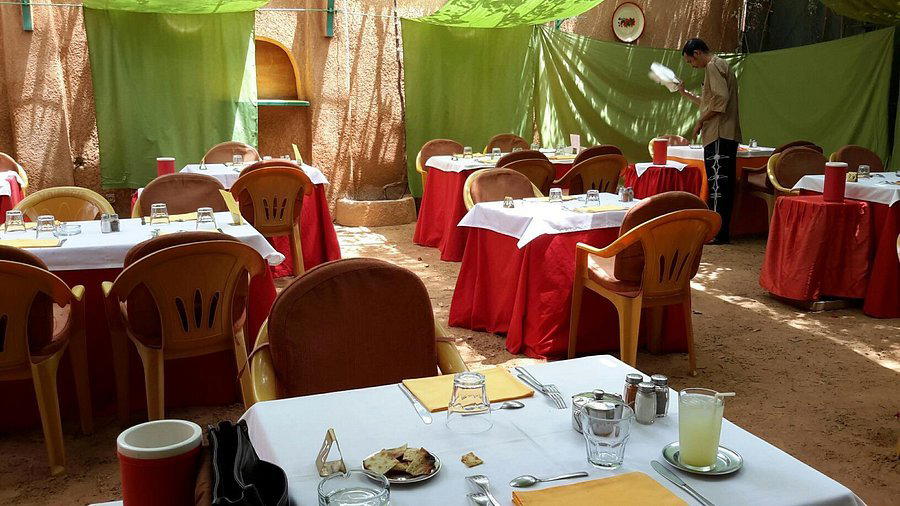
Le Pilier Agadez sits within that context. The venue's address places it inside Agadez proper, in a city where the physical environment, the compressed mud architecture, the open-air market rhythm, the call to prayer that marks time across the old quarter, is inseparable from the experience of eating. Visitors who have benchmarked their dining experiences against technically ambitious kitchens like Alinea in Chicago or Atomix in New York City will find a different register here. The reference points that matter in Agadez are not awards or tasting menus. They are reliability, hospitality within a specific cultural tradition, and the kind of direct access to regional ingredients that more internationally trafficked cities rarely offer.
Planning a Visit
Reaching Agadez requires a commitment that filters the visitor pool significantly. The city is accessible by air from Niamey via domestic connections, or overland from the south on routes that pass through Tahoua. Niger's security context has fluctuated in recent years, and travellers should consult current government travel advisories before planning any itinerary in the region. The Air and Ténéré Natural Reserves, while formally protected, operate under access conditions that change seasonally and logistically. For those already in Agadez for substantive reasons, Le Pilier represents a point of contact with the city's food culture that rewards engagement on local terms rather than international ones. Contact details, hours, and booking arrangements are best confirmed through local accommodation providers or ground operators familiar with the current situation in the city, as publicly available information for the venue is limited. Diners accustomed to pre-booking systems like those that govern access to Lazy Bear in San Francisco or Le Bernardin in New York City should adjust their planning process accordingly.
For a fuller picture of where Le Pilier sits within the city's food options, see our full Agadez restaurants guide.
Frequently asked questions
Would Le Pilier Agadez be comfortable with kids?
Agadez operates at a slower pace than a capital-city restaurant district, which typically means fewer of the noise and crowd pressures that make dining with children difficult. Le Pilier sits on XXFQ+FX4 in central Agadez, a city where family meals are part of everyday social life rather than a special accommodation. No specific children's menu or family policy is documented, so contacting the venue directly before visiting with young children is advisable.
What's the vibe at Le Pilier Agadez?
Agadez is a UNESCO-listed city whose architecture, trade history, and position at the edge of the Sahara give any sit-down dining address a weight that purpose-built restaurant environments rarely carry. Le Pilier occupies that context rather than working against it. Expect the rhythm of a mid-sized Nigerien city rather than a metropolitan dining scene, with a visitor mix that skews toward overland travellers, NGO workers, and those passing through on trans-Saharan routes.
Is Le Pilier Agadez a practical dining option for travellers arriving by air from Niamey?
Agadez is reachable by domestic air connection from Niamey, making Le Pilier one of the few sit-down dining addresses accessible to visitors who fly in rather than arrive overland. Its central Agadez location at XXFQ+FX4 places it within the city's core, which is where most travellers orient on arrival. No price range or hours are formally listed, so confirming availability on the day of arrival is worth building into any itinerary.
What dish is Le Pilier Agadez famous for?
No specific signature dish is formally documented for Le Pilier Agadez. Nigerien cooking in the Agadez region draws on Tuareg and Hausa traditions, with millet-based dishes, grilled meats, and slow-cooked stews forming the backbone of local menus. For an accurate picture of what Le Pilier currently serves, reaching out through local travel contacts in Agadez is the most reliable approach given no website or phone listing is publicly recorded.
What's the address for Le Pilier Agadez?
Le Pilier Agadez is located at XXFQ+FX4, Agadez 1005, Niger, Agadez.
| Venue | Cuisine | Price |
|---|---|---|
| Le Pilier AgadezThis venue (the venue you are viewing) | Italian Pizza & Pasta | $10–20 |
| Le Dragon d'Or | Chinese | $10–20 |
| New York | Nigerien with International Influences | Not listed |
| Zaxi | Asian Fusion Fine Dining | Not listed |
Details
- Rustic
- Classic
- Well Known
- Casual Hangout
- Group Dining
- Terrace
- Historic Building
- Standalone
- A La Carte
- Small Plates
- Beer
- Vegetarian Friendly
- Halal
Beautifully decorated traditional Touareg architecture with pleasant atmosphere; mix of open-air and air-conditioned spaces with flowers and rustic charm.