Our verdict
Positioned directly across from the Grand Hôtel on one of Niamey's more recognisable stretches of road, Le Dragon d'Or occupies a specific niche in the city's dining scene where Chinese-influenced cooking meets West African supply chains. For travellers orienting themselves in Niger's capital, it represents a reference point in a restaurant culture that rewards local knowledge over guidebook certainty.

Pearl is the En Primeur Club membership app, where members save venues, book tables and use the concierge.
The menu
What to order
- Peking duck
- Sweet and sour pork
- Kung Pao Chicken
Where Niamey's Street-Level Dining Gets Specific
Arriving at Le Dragon d'Or, the first orientation is geographic rather than architectural. The address places it directly opposite the Grand Hôtel on Rue du Grand Hôtel, one of Niamey's more trafficked central arteries, and that positioning matters. In a city where restaurant discovery still travels largely by word of mouth and neighbourhood familiarity, a location anchored to a known landmark is itself a form of credibility. You find the place because someone who knows Niamey told you to look for it. That pattern of referral, rather than review aggregators or booking platforms, shapes the dining culture of Niger's capital as much as any menu decision.
Niamey's restaurant scene does not operate on the same axes as dining cities where Michelin coverage or 50 Best adjacency drives foot traffic. The city's eating culture is stratified differently: government quarter establishments, hotel dining rooms, and a smaller tier of independent restaurants that have earned sustained local custom. For context on how this fits the wider city, see our full Niamey restaurants guide.
The Sourcing Logic Behind Chinese Cooking in West Africa
Chinese restaurants in Sahel-region capitals carry a specific sourcing story that separates them from their counterparts in commodity-rich coastal cities. In Niamey, the challenge of supply is structural: Niger is landlocked, its growing seasons shaped by the Sahel climate, and protein and produce availability fluctuates with seasonal patterns that no amount of menu engineering fully smooths out. A restaurant operating under Chinese culinary conventions in this environment cannot rely on the ingredient continuity that defines, say, a Cantonese kitchen in Hong Kong or a Shanghainese establishment in Paris.
What this forces, practically, is a form of market-responsive cooking that is more common in West and Central Africa than in wealthier food economies. The kitchen works with what is available from local suppliers and periodic imports, and the menu reflects that negotiation rather than concealing it. This is not a compromise position; it is a different relationship between a culinary tradition and its geography. Restaurants like Aponiente in El Puerto de Santa María or Arpège in Paris have made ingredient sourcing the editorial centre of their identity; in Niamey, the same logic applies under different economic and logistical conditions, with less fanfare and more necessity.
The Sahel's agricultural calendar centres on millet, sorghum, cowpeas, and seasonal vegetables. Livestock, particularly cattle, goat, and sheep, moves through regional markets and represents the most reliable protein source. A Chinese-style kitchen in this context draws on those inputs and adapts technique accordingly, rather than importing the full pantry of a coastal or temperate Chinese restaurant. The result is a hybrid sourcing model that is more honest about its location than a kitchen that approximates global ingredient lists regardless of what the market actually holds.
Niamey's Dining Tier and Le Dragon d'Or's Place in It
Understanding where Le Dragon d'Or sits requires some mapping of how Niamey's restaurant culture is structured. The city lacks the dense restaurant competition of Lagos, Accra, or Dakar, which means the dynamics of differentiation work differently. There is no neighbourhood with five competing Chinese restaurants driving price or quality pressure. Instead, individual establishments in a given cuisine category hold their position through accumulated familiarity with a regular clientele. In that environment, being the address that a certain cross-section of Niamey residents and resident expatriates returns to is itself a form of market standing.
Peer restaurants in the city that operate in adjacent registers include New York and Zaxi, both of which occupy the city's independent dining tier. Further afield, within the wider Niger context, Le Pilier Agadez in Agadez represents the kind of local institution that sustains itself on regional identity rather than imported prestige signals. Le Dragon d'Or belongs to that same category of place: known by the people who need to know it, sustained by repeat custom rather than discovery tourism.
For comparison with what Chinese cooking looks like at its most resource-advantaged end of the global spectrum, 8 1/2 Otto e Mezzo Bombana in Hong Kong demonstrates what happens when European-Chinese fusion operates with full commodity access and award infrastructure. The contrast with a Sahelian context is instructive: same broad category of international cuisine operating in a different supply environment, with correspondingly different expressions of what a menu can promise.
What the Location Signals
The Rue du Grand Hôtel address is not incidental. In Niamey's spatial logic, proximity to the Grand Hôtel places Le Dragon d'Or within a cluster frequented by government visitors, NGO workers, and the wider international community that rotates through the city. This demographic shapes the restaurant's customer base and, by extension, the expectations the kitchen is calibrated to meet. It is not a neighbourhood local serving the surrounding quartier exclusively; it is positioned to serve a mixed clientele that includes people arriving in Niamey without prior dining knowledge and defaulting to familiar address anchors.
That positioning has parallels in international cities where restaurants cluster near major hotels because the foot traffic sustains them regardless of broader discovery dynamics. The difference in Niamey is that the Grand Hôtel is not one among dozens of competing anchors; it is one of the city's primary hospitality landmarks, and adjacency to it carries more weight than it would in a denser urban environment.
Planning a Visit
Walk-in visits are the practical default given the absence of a documented booking platform. The restaurant's central location makes it reachable from the Grand Hôtel on foot. For travellers building a wider itinerary around serious restaurant dining, the reference points at the higher end of the global scale include Le Bernardin in New York City, Alain Ducasse Louis XV in Monte Carlo, Alinea in Chicago, Atomix in New York City, Lazy Bear in San Francisco, Emeril's in New Orleans, Alléno Paris au Pavillon Ledoyen, Amber in Hong Kong, Aqua in Wolfsburg, Arzak in San Sebastián, and Atelier Crenn in San Francisco. These establish the bandwidth of what international restaurant dining encompasses; Le Dragon d'Or operates at the other end of the infrastructure scale, in a city where that scale is irrelevant to the question of whether the kitchen delivers what the address promises.
Frequently asked questions
How do I find Le Dragon d'Or?
Le Dragon d'Or is located at Rue du Grand Hôtel (Face à l'entrée du Grand Hôtel), Niamey, Niamey.
Is Le Dragon d'Or in Niamey suitable for international visitors unfamiliar with the city?
The Rue du Grand Hôtel address makes orientation straightforward: the restaurant sits directly opposite the Grand Hôtel, one of Niamey's most recognisable reference points and a common base for international visitors, NGO staff, and diplomatic personnel. That positioning places it in one of the city's more navigable dining zones.
Do they take walk-ins at Le Dragon d'Or?
In Niamey, formal reservation infrastructure is sparse even at established addresses, and the restaurant's position directly opposite the Grand Hôtel makes it a practical walk-in target for guests already in that part of the city. Asking at the Grand Hôtel reception for current operating hours is the most reliable pre-visit step.
What do critics highlight about Le Dragon d'Or?
Le Dragon d'Or does not appear in the formal critical record and holds no listed awards from Michelin, the World's 50 Best, or equivalent bodies. That absence reflects Niamey's position outside the major international restaurant review circuits rather than any specific judgement on the restaurant. Its address in the Grand Hôtel cluster, a zone frequented by diplomatic and NGO communities in Niamey, gives it a degree of street-level visibility that most restaurants in the city do not have.
How It Stacks Up
Comparable venues nearby, for context on price, style, and recognition.
| Venue | Cuisine | Price | Notes |
|---|---|---|---|
| Le Dragon d'OrThis venue (the venue you are viewing) | Chinese | $10–20 | Not listed |
| New York | Nigerien with International Influences | Not listed | central Niamey |
| Zaxi | Asian Fusion Fine Dining | Not listed | Plateau |
| Le Pilier Agadez | Italian Pizza & Pasta | $10–20 | Agadez |
Continue exploring
More in Niamey
Restaurants in Niamey
All restaurants in Niamey →
Details
- Quiet
- Cozy
- Casual Hangout
- Family
- Garden
- Terrace
- Garden
- A La Carte
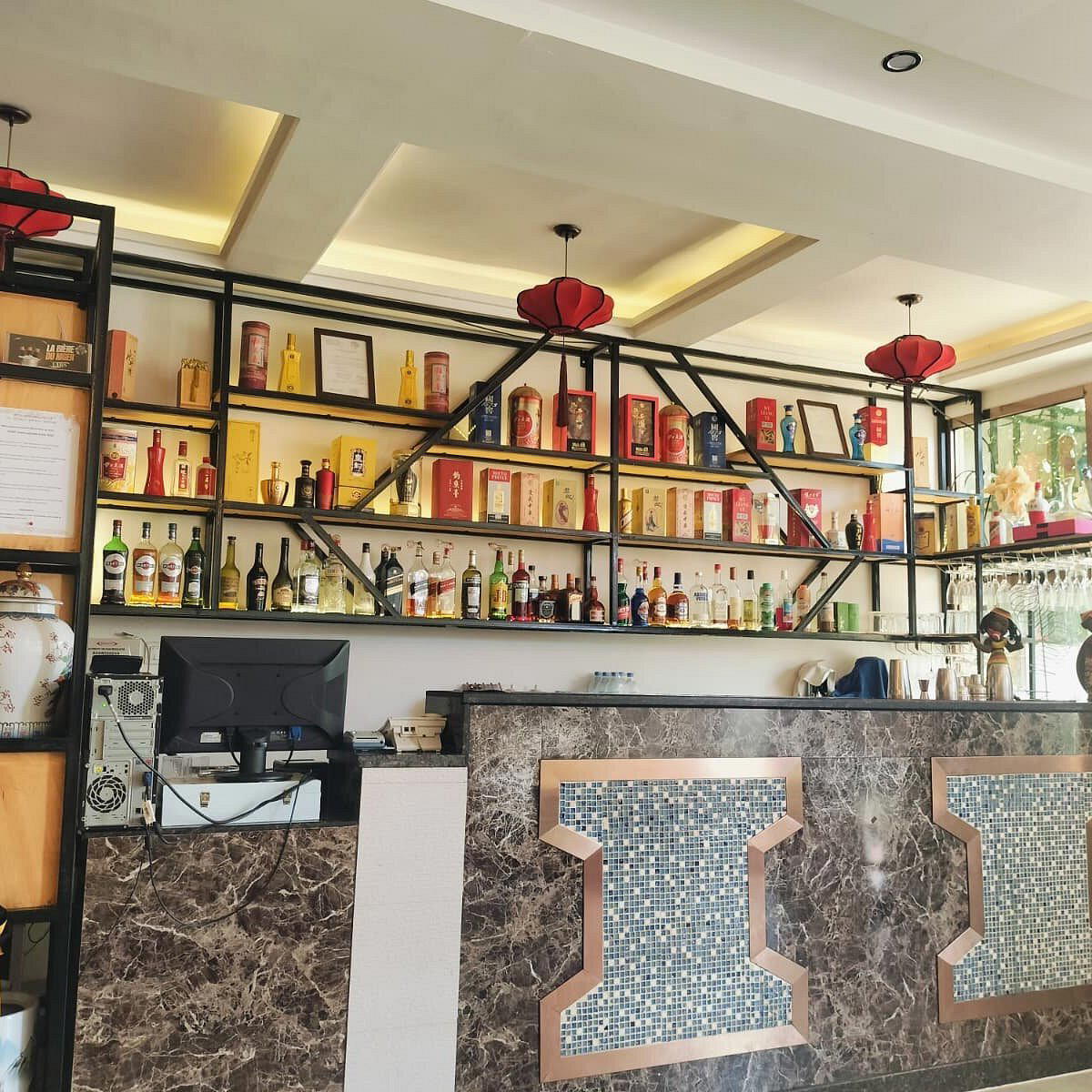
Clean, recently renovated interior with a quiet, tastefully decorated garden providing a peaceful atmosphere.