Lama

A two-storey Taman Ayer Panas address where a father-and-daughter team serves authentic Nyonya home-style cooking surrounded by a private antique collection. Signature pie tee, shared plates, and unlimited pandan lemongrass tea define the experience. One of Kuala Lumpur's more deliberate arguments for peranakan domestic cooking as a serious dining category.
Pearl is the En Primeur Club membership app — saves, bookings, and concierge access live there. Same editors, same standards.
- Address
- 257, Jalan Ayer Jerneh, Taman Ayer Panas, 53200 Kuala Lumpur, Wilayah Persekutuan Kuala Lumpur, Malaysia
- Phone
- +60 19-689 3969
- Website
- letsumai.com
- Directions
- Get directions
 Saves & bookings on Pearl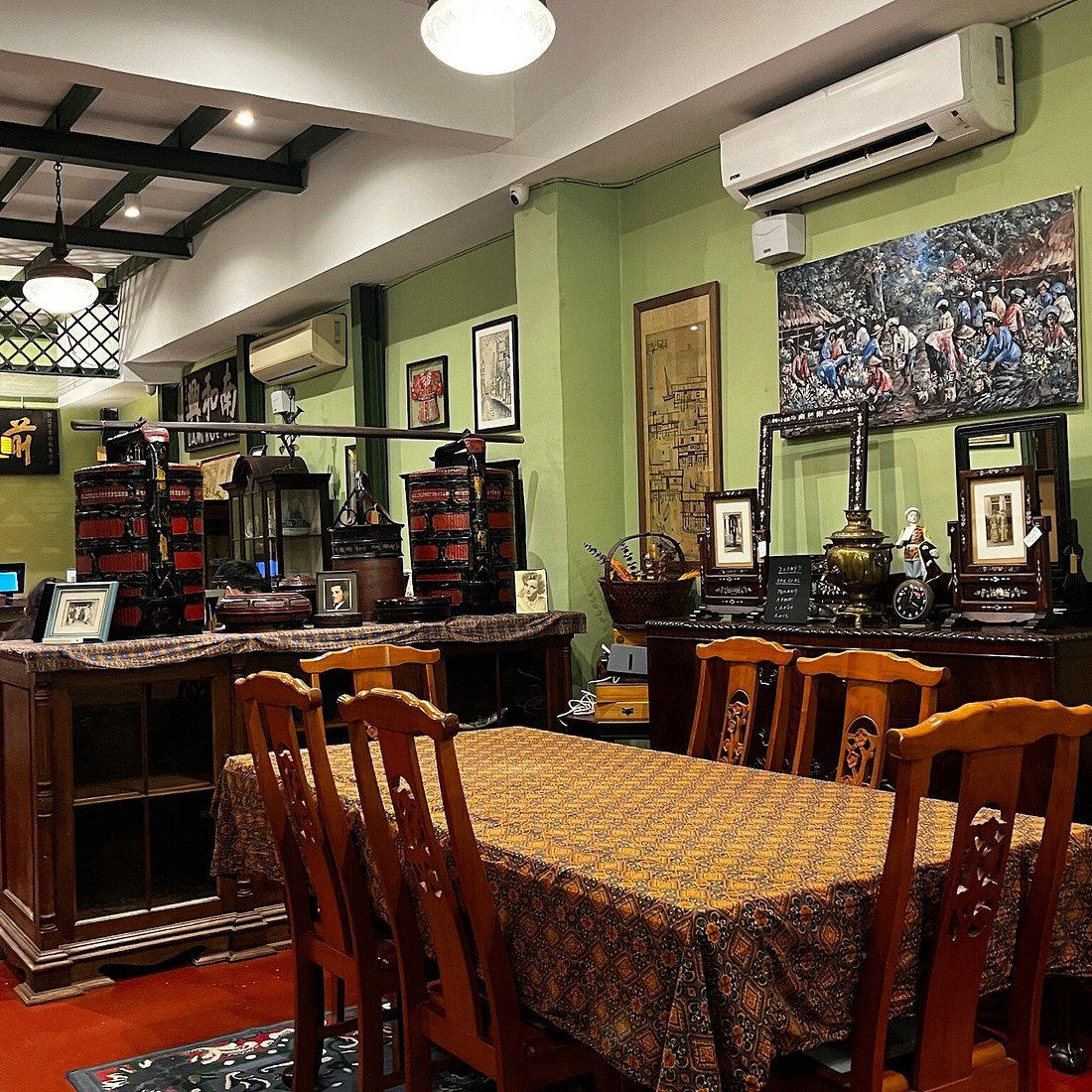
Nyonya Cooking as Domestic Tradition, Not Museum Piece
Peranakan food occupies a complicated position in Malaysian dining. At one end, it appears on hotel buffets as a heritage attraction, simplified and softened for broad appeal. At the other, a smaller number of family-run addresses serve dishes that trace directly back to domestic kitchens, where recipes were passed between generations rather than codified for commercial production. Lama, on Jalan Ayer Jerneh in the residential pocket of Taman Ayer Panas, Kuala Lumpur, belongs firmly to that second category. The cooking here is home-style Nyonya, built around shared plates and the kind of flavour decisions that only make sense if you grew up eating this food.
That domestic logic is visible in the room itself. The two-storey space doubles as a display for the owner's personal antique collection, which means arriving somewhere that reads more like a private residence than a restaurant. The objects are not decorative props selected by an interior consultant; they are a collection accumulated over time, and they give the dining room a strong sense of character. In the context of Kuala Lumpur's food scene, where the gap between atmosphere-as-product and atmosphere-as-lived-reality is often wide, Lama's interior represents something less common.
The Peranakan Table: Sharing, Sequence, and Spice
Nyonya cuisine developed among the Straits Chinese communities of Penang, Malacca, and Singapore, where Hokkien and Teochew cooking traditions absorbed Malay spice knowledge, local aromatics, and Portuguese influences over several centuries. The result is a cuisine defined by complexity rather than heat alone: rempah spice pastes ground fresh, aromatics like galangal, lemongrass, and pandan threaded through both savoury and sweet dishes, and a structural preference for balance across sour, spicy, and rich elements within a single meal.
At Lama, the menu is framed around sharing, which is the format Nyonya cooking was designed for. Dishes arrive to be divided at the table, and the meal builds through contrast rather than progression in the French tasting-menu sense. Portions intended for the table rather than a single diner mean the ordering logic rewards a group dynamic, where a wider spread of dishes communicates the cuisine more accurately than any single plate could alone.
The pie tee is the dish most frequently cited in connection with the restaurant. Crispy pastry cups filled with finely diced vegetables, fried onions, and shrimp, dressed with a homemade chilli sauce, the pie tee is a Nyonya starter that requires both technical precision and a clear view of balance: the shell needs to hold without softening before it reaches the table, and the filling must carry enough seasoning to read through the crunch of the pastry. At its leading, it is a small thing that demonstrates the cook's understanding of timing and proportion. Here, it is cited as something worth ordering specifically.
The pandan lemongrass tea, served with unlimited free refills, is worth noting as a deliberate pairing decision rather than a background beverage. Pandan and lemongrass are both central aromatics in Nyonya cooking; drinking them as a tea alongside dishes that use the same flavour register creates a coherence across the meal. The free-refill policy also fits the restaurant's modest price point.
Where Lama Sits in Kuala Lumpur's Malaysian Food Spectrum
Kuala Lumpur's Malaysian restaurant field spans a wide price and format range. At the upper end, Dewakan (Malaysian) applies research-led technique to indigenous ingredients and operates at the $$$$ tier, while Beta (Malaysian) takes a similar refined approach to local culinary identity at $$$. The contemporary fine-dining conversation in the city also includes DC. by Darren Chin (French Contemporary), Molina (Innovative), and Ling Long (Innovative), all working in the $$$$ bracket.
Lama does not compete in that tier. Its value is different in kind, not just in price. Where those addresses argue for Malaysian cooking through transformation and technique applied in a fine-dining context, Lama argues for Nyonya cooking through faithfulness to domestic form. The two arguments are not in conflict; they address different questions about what Malaysian cuisine is and where it is going. For diners interested in peranakan food specifically, comparisons extend beyond Kuala Lumpur. Auntie Gaik Lean's Old School Eatery in George Town in Penang represents the northern Nyonya tradition, where the spice palette and certain preparations differ meaningfully from the Kuala Lumpur and Malaccan streams. Bee See Heong in Seberang Perai offers another data point for how peranakan cooking traditions are maintained in different parts of the peninsula.
For those building a broader Malaysia itinerary, The Planters at The Danna in Langkawi represents a different hospitality register entirely. Internationally, diners who track family-run restaurants with a distinct identity might draw comparisons with addresses like Lazy Bear in San Francisco, where format and personal investment in the project set the terms of the experience, or with the kind of tightly focused culinary arguments made by Atomix in New York City and Le Bernardin in New York City, though the price and format distances are large. Closer in register, Emeril's in New Orleans and 8 1/2 Otto e Mezzo Bombana (Hong Kong) in Hong Kong represent how personal culinary identity can anchor a restaurant's meaning independent of scale.
Planning a Visit
Lama is located at 257 Jalan Ayer Jerneh in Taman Ayer Panas, a residential area in the 53200 postal district of Kuala Lumpur. The address sits outside the central dining corridors of the city, which means planning transport in advance is sensible; Grab or private car is the practical choice given the neighbourhood's limited public transit options. Phone and website details are not included here. Reservations are recommended. Dress code is informal; the room's antique-collection character sets the tone rather than any formal requirement.
Budget Reality Check
Comparable venues nearby, for context on price, style, and recognition.
| Venue | Cuisine | Price | Awards | Notes |
|---|---|---|---|---|
| LamaThis venue — the venue you are viewing | Not listed | $$ | Bib Gourmand | Not listed |
| Ah Hei Bak Kut Teh | Not listed | $$ | Bib Gourmand | Kampong Dollah, Traditional Herbal Bak Kut Teh |
| Hing Kee Bakuteh (121 Jalan Kepong) | Kepong, Traditional Bak Kut Teh | $$ | Bib Gourmand | Not listed |
| Wong Mei Kee | Bukit Bintang, Cantonese Roast Meats | $ | Bib Gourmand | Not listed |
| Tamarind Hill | Golden Triangle, Dining | Not listed | Michelin Plate | Not listed |
| Sao Nam | Bukit Bintang, Authentic Vietnamese | $$ | Bib Gourmand | Not listed |
Recognition history
Dated appearances from independent guides and award organizations, with the underlying list record or original source where available.
Michelin Bib Gourmand
Michelin
Continue exploring
More in Kuala Lumpur
Restaurants in Kuala Lumpur
Browse all →
Bars in Kuala Lumpur
Browse all →
At a Glance
- Cozy
- Rustic
- Classic
- Intimate
- Family
- Casual Hangout
- Special Occasion
- Historic Building
- Local Sourcing
Current opening hours
- Monday
- Closed
- Tuesday
- 11:30 AM–2:30 PM, 5:30–10 PM
- Wednesday
- 11:30 AM–2:30 PM, 5:30–10 PM
- Thursday
- 11:30 AM–2:30 PM, 5:30–10 PM
- Friday
- 11:30 AM–2:30 PM, 5:30–10 PM
- Saturday
- 11:30 AM–2:30 PM, 5:30–10 PM
- Sunday
- 11:30 AM–2:30 PM, 5:30–10 PM
Hours can change for holidays and private events. Last verified .
Warm, character-filled space with vintage furniture, Peranakan-style decor, stained-glass panels, and heirloom antiques evoking comforting nostalgia.