Michelin Plate
Our verdict
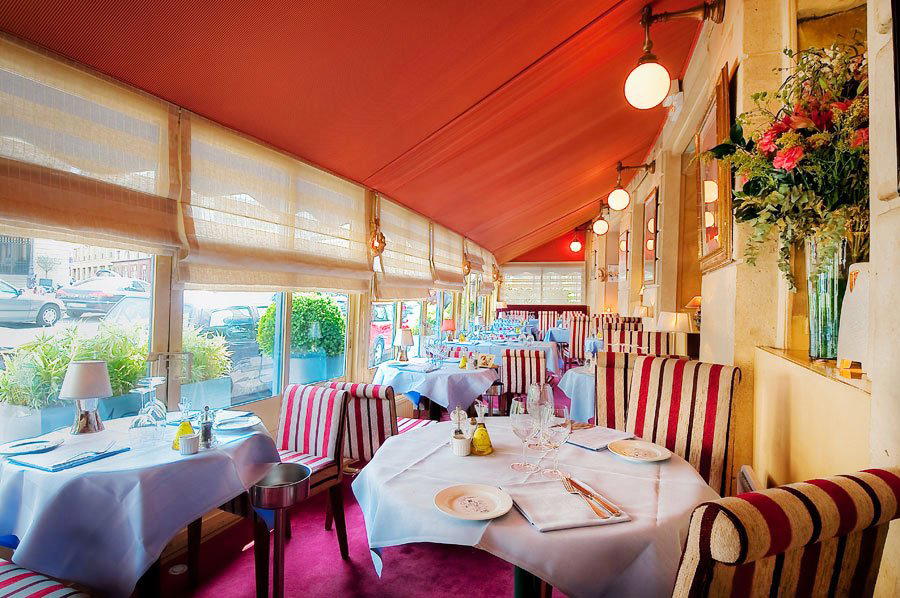
A Michelin Bib Gourmand seafood address on Place de l'Odéon, La Méditerranée has anchored the Left Bank's mid-tier fish dining for decades. Under Chef Pierre Sahut, the kitchen applies a whole-catch approach to Mediterranean species, placing it in a bracket where quality and value coexist without apology.

Pearl is the En Primeur Club membership app — saves, bookings, and concierge access live there. Same editors, same standards.
- Address
- 2 Pl. de l'Odéon, 75006 Paris, France
- Phone
- +33 1 43 26 02 30
- Hours
- Daily 12–2:30 PM, 7:30–11 PM
- Website
- la-mediterranee.com
- Directions
- Get directions
- Booking
- Book on TheFork
The menu
What to order
- Bouillabaisse
- Carpaccio de Bar
- Cabillaud rôti au chorizo
Place de l'Odéon and the Case for Serious Fish at Mid-Range Prices
The sixth arrondissement has always maintained a quieter claim on Paris dining than the more publicised addresses clustered around the Palais Royal or the eighth. Place de l'Odéon, a stone's throw from the Luxembourg Gardens and the Odéon theatre, operates at a particular frequency: literary, unhurried, populated by academics, lawyers, and the kind of regulars who eat out four nights a week without making a production of it. Into that setting, La Méditerranée has for years occupied a corner position that feels less like a discovery than a fixture, a seafood house that the neighbourhood has simply absorbed into its weekly rhythm.
The Michelin Bib Gourmand, awarded in both 2024 and 2025, is the clearest external signal of where the kitchen sits in the Paris fish dining hierarchy. The Bib designation is Michelin's shorthand for cooking that merits attention at a price point that does not demand a special occasion: €€ territory, where the covers are busier, the format less ceremonial, and the food still expected to deliver on ingredient and technique. In a city where seafood at this standard often drifts quickly toward the €€€€ bracket occupied by addresses like Brasserie Lutetia or the haute French kitchens awarded three Michelin stars at Paul Bocuse or Mirazur in Menton, a sustained Bib at a dedicated fish address is not a consolation prize but a specific achievement.
The Whole-Catch Discipline in Mediterranean Seafood
Mediterranean seafood cooking at its most coherent operates on a philosophy that the French and Italian coastal traditions have practised for centuries before it became a marketing concept: you use the whole fish, you let the catch dictate the menu, and you resist the temptation to impose uniform product on a kitchen whose identity depends on seasonal and tidal variation. The rouget, the loup de mer, the dorade, the rascasse that goes into a proper bouillabaisse base — these are not interchangeable proteins. Each requires a different thermal logic, a different approach to skin, bone, and interior fat.
At La Méditerranée, the kitchen operates under Chef Pierre Sahut within that Mediterranean tradition. The address has always leaned toward species associated with the south — Provence, the Languedoc coastline, the Ligurian influences that bleed across the French-Italian border, rather than the cold-water Atlantic fish that anchor Breton-style seafood brasseries. That geographic framing matters. Mediterranean fish tend to be smaller, bolder in flavour per gram, and more demanding of precision in cooking time. A few degrees past optimal temperature and the loup de mer that might have been the evening's centrepiece becomes dry and irrelevant. For comparison of that southern European whole-fish tradition applied with even greater intensity, Gambero Rosso in Marina di Gioiosa Ionica and Alici on the Amalfi Coast represent what that discipline looks like when applied at the highest level further south.
The whole-catch philosophy, applied seriously rather than decoratively, also means that secondary cuts and secondary species receive kitchen attention proportionate to their culinary merit rather than their menu prestige. Heads and frames for stocks and sauces. Roe treated as an ingredient rather than a garnish. The lesser-known species that a squeamish kitchen would skip in favour of reliable crowd-pleasers. Within Paris's dedicated seafood tier, La Cagouille and Le Jour du Poisson represent adjacent points on that same spectrum, each making its own argument about which species and which preparations deserve priority. Clamato and Dessirier approach the category from slightly different angles, with Clamato's no-reservations format skewing younger and more informal, while Dessirier positions itself toward the classic Parisian brasserie register.
The Sixth Arrondissement as Context
Where you eat in Paris inflects how you eat there, and the sixth arrondissement operates differently from the gastronomy-tourist zones further north and east. The crowd at Place de l'Odéon on a Tuesday evening is not one that has flown in for a single meal. These are people who know roughly what they want, who have opinions on sauce reductions, and who will return to a kitchen that earns a second visit. That audience imposes a quiet discipline on a restaurant: you cannot coast on address alone, because the regulars will notice when the fish quality or the kitchen consistency drops.
The Odéon neighbourhood also places La Méditerranée near the Luxembourg Gardens and Saint-Germain's bookshop corridor, which means the pre- and post-dinner infrastructure is relatively self-contained for visitors who want to build an evening around the meal rather than treat the restaurant as a standalone event. For a broader view of what the city offers across all categories, our full Paris restaurants guide maps the range from three-Michelin-star addresses like Flocons de Sel in Megève in the French haute tradition down through this mid-tier bracket. Supplementary planning resources include our full Paris hotels guide, our full Paris bars guide, our full Paris wineries guide, and our full Paris experiences guide. For reference points in the Michelin three-star tier that contextualise what sustained recognition looks like over time, Troisgros in Ouches, Auberge de l'Ill in Illhaeusern, and Bras in Laguiole demonstrate the range of approaches that have earned France's most durable accolades.
Planning Your Visit
Address: 2 Place de l'Odéon, 75006 Paris. Cuisine: Mediterranean seafood, €€ price range. Recognition: Michelin Bib Gourmand 2024 and 2025. Chef: Pierre Sahut. Getting there: Odéon metro station (lines 4 and 10) deposits you directly on the square; the walk from Saint-Germain-des-Prés is approximately five minutes. Reservations: Booking ahead is advisable given the Bib Gourmand recognition; the venue's regular clientele means availability can narrow quickly on weekday evenings. Budget: The €€ designation places this in the mid-range bracket for Paris, where a full meal with wine should fall well below the outlay required at the €€€€ starred addresses in the eighth arrondissement.
Frequently asked questions
Would La Méditerranée be comfortable with kids?
The €€ price point and the neighbourhood character of Place de l'Odéon both point toward a relaxed, unpretentious format. The sixth arrondissement runs on local regulars and theatergoers rather than destination-dining crowds, which tends to produce a tempo that suits families. Nothing in the Michelin Bib Gourmand profile signals a formal or ceremony-heavy service style.
What's the vibe at La Méditerranée?
Place de l'Odéon is one of the calmer squares on the Left Bank, and the restaurant reflects that register. Consecutive Michelin Bib Gourmand recognition in 2024 and 2025 positions this as a place taken seriously by diners who know Paris, without the performance of a grander address. Expect an informed, neighbourhood-regular crowd rather than a tourist-facing room.
Is La Méditerranée award-winning?
La Méditerranée has received recognition including: Michelin Bib Gourmand (2025); Michelin Bib Gourmand (2024).
What do regulars order at La Méditerranée?
The kitchen's focus is Mediterranean seafood, and with two consecutive Michelin Bib Gourmand awards under Chef Pierre Sahut, the whole-catch approach to classic French and coastal Mediterranean species is where the kitchen earns its reputation. Ordering along those lines rather than anything peripheral to the core menu is the reliable approach here.
What's the cuisine at La Méditerranée?
What's the price range at La Méditerranée?
Pricing at La Méditerranée is listed as €€.
Recognition Snapshot
| Venue | Cuisine | Price | Awards | Notes |
|---|---|---|---|---|
| La MéditerranéeThis venue — the venue you are viewing | Classic French Mediterranean Seafood | $50–100 | Michelin Plate | Not listed |
| Alléno Paris au Pavillon Ledoyen | Modern French Fine Dining | $150–200 | 3 Michelin Stars · World's 50 Best #79 | Creative |
| Kei | Modern French with Japanese Influences | $300–500 | 3 Michelin Stars · World's 50 Best #93 | Contemporary French, Modern Cuisine |
| L'Ambroisie | Classic French Haute Cuisine | $300–500 | 2 Michelin Stars · World's 50 Best #23 | French, Classic Cuisine |
| Le Cinq - Four Seasons Hôtel George V | French, Modern Cuisine | Not listed | Michelin 3 Star | Not listed |
| Plénitude | Modern French Sauce-Led Fine Dining | $300–500 | 3 Michelin Stars · World's 50 Best #14 | Contemporary French |
Recognition history
Dated appearances from independent guides and award organizations, with the underlying list record or original source where available.
Michelin Plate
Michelin
Full recognition history (3 entries)
Michelin Bib Gourmand
Michelin
Michelin Bib Gourmand
Michelin