
Tabelog 100 #61
Our verdict
A Sangenjaya bread counter with Tabelog Bread TOKYO 100 selections in 2020 and 2022, Komugi to Kobo Hamada Ya Sangenjaya honten belongs to Tokyo’s everyday bakery culture rather than its reservation dining circuit. The value sits in a takeout format: quick, local, award-recognised, and built for a neighbourhood bread run rather than a long meal.

Pearl is the En Primeur Club membership app, where members save venues, book tables and use the concierge.
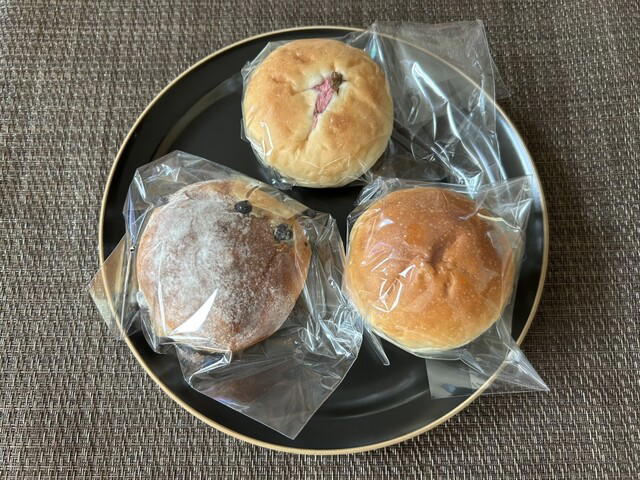
The menu
What to order
- Japanese-style sweet breads
- Sandwich loaves
- Sandwiches using house bread
- Anpan (sweet red bean bun)
Tokyo works on a different rhythm from Ginza counters and hotel dining rooms. Around the city, the pattern tightens into side streets, apartment blocks, commuter foot traffic and small food shops built for daily use. In that setting, a bread shop is not a pause between meals; it is part of the meal-planning infrastructure. Komugi to Kobo Hamada Ya Sangenjaya honten fits that Tokyo pattern: compact, practical, and judged by repeat use rather than spectacle.
Tokyo’s bread culture has long moved beyond a simple French import story. The city has room for laminated pastry, shokupan specialists, curry-pan counters, old-school kissaten toast and bakeries that serve the household table. The local filter is less about polish than usefulness: a strong appetite for places that work on a weekday. Selection for Tabelog Bread TOKYO 100 in 2022 places this shop inside the city’s serious bakery conversation, but the format remains deliberately everyday.
Tokyo bread culture at neighbourhood scale
The value proposition here is not ceremony. It is access to a recognised Tokyo bread shop without the economics or timing of a tasting-menu reservation. In Tokyo, that matters. Nearby dining can climb quickly: Yakitori Tokoshima sits in a different dinner bracket, while Tokyo Gyoza Ro Sangenjaya ten occupies a casual meal tier. A bakery operating at the listed low spend gives travellers another way to read the city, one based on breakfast, train-platform snacks, office provisions and food carried home.
That distinction is useful for visitors who plan Tokyo around restaurants alone. The city’s food intelligence is often clearer in formats that do not ask for a full evening: depachika counters, onigiri shops, kissaten breakfasts, taiyaki stalls and bread counters. Imagawayaki Kashiwaya, another low-spend comparison in Tokyo, shows the same broader logic from a sweets angle. Small-format, single-category shops can tell as much about local demand as a formal dinner room.
For bread, Tabelog’s Hyakumeiten recognition is a meaningful signal because the category is dense and local. Tokyo has enough bakeries that casual praise means little; a place selected for the Bread TOKYO 100 list has cleared a sharper filter. That does not turn a bread shop into a destination restaurant. It means the bakery has earned attention in a city where everyday bread is competitive, technically varied and habit-driven.
Why the spend feels intelligent
At this level, value depends on precision of use. A full restaurant meal asks for time, seating and a larger budget; a bread stop can be folded into a morning, a station transfer, or a Tokyo walk before moving elsewhere in the city. The reward is not the theatre of service. It is the ability to sample a locally respected category without reorganising the day.
That is especially relevant in a city where visitors often overbuild itineraries around omakase, ramen queues and cocktail reservations. Bread gives a quieter but revealing counterpoint. Japan’s bakery culture is highly adapted to local eating habits: soft loaves for home, savoury breads for lunch, sweet breads for portable snacks, and European forms adjusted to Japanese preferences for texture and portion. A shop recognised in the bread category belongs to that practical ecosystem, not to the luxury dining hierarchy.
The comparison also helps calibrate expectations. CAFE Mame-Hico Sangenjaya honten sits in the café bracket, Akaoni represents a drinking-led Tokyo evening, and Tokyo Gyoza Ro Sangenjaya ten works for a casual sit-down meal. Komugi to Kobo Hamada Ya Sangenjaya honten answers a different question: where does a city with serious food habits buy bread when it is not making an occasion of eating out?
For travellers, that is the point. This is not a room to frame as a long service sequence. It is a compact stop that rewards being in Tokyo, especially if the day already includes other casual food stops or a wider city walk. The smarter move is to treat it as part of a Tokyo food day rather than the centrepiece of one.
How to place it in a Tokyo itinerary
Tokyo is useful because it moves easily between residential routines and more photographed dining circuits. It has enough independent food culture to justify a detour, but it works better when paired with other stops than as a single-stop mission. A bread counter in this context gives structure to a morning or late-afternoon walk: quick purchase, street-level observation, then onward movement.
Readers building a wider Tokyo food map can use it as a low-commitment contrast to more formal or specialised meals. For restaurant planning, Our full Tokyo restaurants guide gives the broader city frame, from casual counters to reservation-led dining. For other Tokyo references, consider unnamed dining rooms, casual counters, cafés, bakeries and specialist shops across the city.
Tokyo planning rarely stops at restaurants. The city’s hotel base changes how much neighbourhood eating makes sense, so a full Tokyo hotels guide is useful for choosing where to sleep. Evening planning sits separately in a full Tokyo bars guide, while specialist drinking and producer-led travel can be cross-checked through Tokyo wineries and experiences coverage.
For Japan and Japanese-food context beyond the city, compare the format generically with other low-commitment food stops across Japan. Small shops, snack counters, bakeries and specialist takeaway formats all show how everyday eating can carry as much local information as a formal restaurant. Abroad, Japanese formats shift again when transplanted into American city routines.
The editorial read is simple: this is a value play for travellers who care about Tokyo’s everyday food systems as much as its trophy meals. The Tabelog Bread TOKYO 100 recognition in 2022 supplies the credibility; Tokyo supplies the context; the bread-shop format keeps the commitment low. Used well, it adds a grounded bread stop to an itinerary that might otherwise lean too heavily on reservations and set-piece dining.
Frequently asked questions
What should I expect atmosphere-wise at Komugi to Kobo Hamada Ya Sangenjaya honten?
Expect a focused bread shop rather than a formal dining room. The appeal is speed, clarity and a category-specific stop in Tokyo, with the venue recognised in Tabelog’s Bread TOKYO 100 for 2022.
What are the opening hours for Komugi to Kobo Hamada Ya Sangenjaya honten?
Specific opening hours are not provided here for Komugi to Kobo Hamada Ya Sangenjaya honten; check current local listings before visiting.
What's the price range at Komugi to Kobo Hamada Ya Sangenjaya honten?
Pricing at Komugi to Kobo Hamada Ya Sangenjaya honten is listed as - JPY 999 - JPY 999 View spending breakdown.
What part of town is Komugi to Kobo Hamada Ya Sangenjaya honten in?
Tokyo.
What's the signature at Komugi to Kobo Hamada Ya Sangenjaya honten?
The clearest signal is the bread itself, backed by its selection for Tabelog Bread TOKYO 100 in 2022. The useful way to approach it is as a bread-focused Tokyo stop rather than a formal menu experience.
Can Komugi to Kobo Hamada Ya Sangenjaya honten adjust for dietary needs?
Dietary questions are best handled item by item at the shop, since this is a bread-focused venue in Tokyo rather than a full-service restaurant with detailed dietary information provided here.
Cost and Credentials
Comparable venues at similar price and category levels.
| Venue | Cuisine | Price | Awards | Notes |
|---|---|---|---|---|
| Komugi to Kobo Hamada Ya Sangenjaya hontenThis venue (the venue you are viewing) | Japanese neighborhood bakery | $1–10 | Tabelog 100 #61 | Not listed |
| Plaisir | French-style patisserie & café | Not listed | Tabelog 100 #69 | Setagaya, French-style patisserie & café |
| Shiroichi Shibuya ten | Raw milk soft serve & ice cream shop | $1–10 | Tabelog 100 #34 | Shibuya, Raw milk soft serve & ice cream shop |
| AKHA AMA COFFEE Kagurazaka | Shinjuku, Thai specialty coffee café | $1–10 | Tabelog 100 #71 | Not listed |
| Nata de Cristiano's | Portuguese Pastry Shop | $1–10 | Tabelog 100 #17 | Shibuya, Portuguese Pastry Shop |
| Antica Gelateria Tamagawa ten | Setagaya, Italian gelato shop | $1–10 | Tabelog 100 #79 | Not listed |
Recognition history
Dated appearances from independent guides and award organizations, with the underlying list record or original source where available.
Tabelog 100 #61 · No. 61
Tabelog · Tabelog 100 - Bread - TOKYO - 2022
Continue exploring
More in Tokyo
Restaurants in Tokyo
All restaurants in Tokyo →



Bars in Tokyo
All bars in Tokyo →









Details
- Cozy
- Classic
- Solo
- Family
- Casual Hangout
- After Work
- Standalone
- Local Sourcing
- A La Carte
- Coffee
- Tea
Current opening hours
- Monday
- 8:30 AM–7 PM
- Tuesday
- 8:30 AM–7 PM
- Wednesday
- 8:30 AM–7 PM
- Thursday
- 8:30 AM–7 PM
- Friday
- 8:30 AM–7 PM
- Saturday
- 8:30 AM–7 PM
- Sunday
- 8:30 AM–7 PM
Hours can change for holidays and private events. Hours as of .
A compact, neighborhood bakery with a warm, everyday feel where shelves of Japanese‑style breads and sandwiches create a casual, bustling atmosphere centered on grab‑and‑go purchases rather than lingering dine‑in stays.