
Michelin Plate
Our verdict
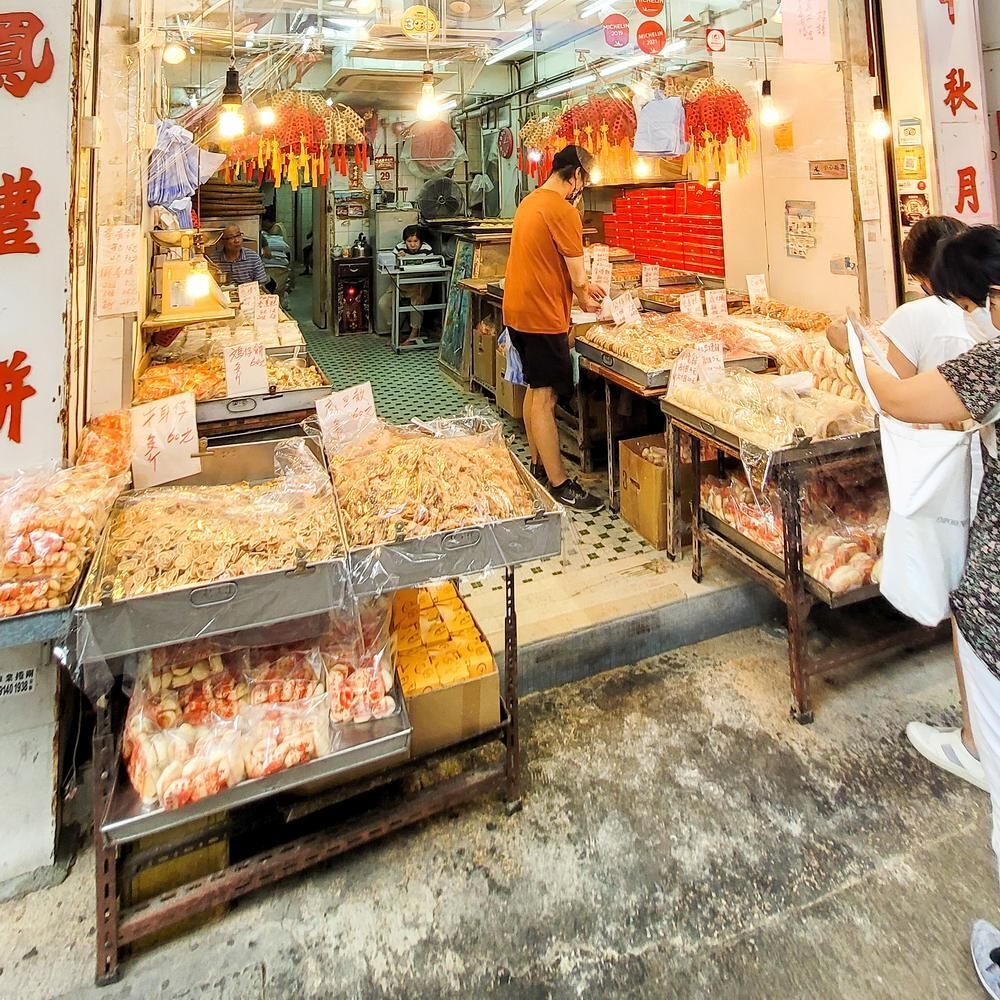
Ki Tsui is a small Mong Kok shop focused on Cantonese traditional puddings and pastries, a category that depends less on chef theatre than on ingredient handling, texture, and daily neighbourhood trade. Its range, including Xiaofeng cake and walnut cookies, places it in Hong Kong’s older snack-shop tradition rather than the city’s tasting-menu economy.

Pearl is the En Primeur Club membership app, where members save venues, book tables and use the concierge.
The menu
What to order
- Xiaofeng cake
- Walnut cookies
- Red bean rice cakes
- Egg tarts
- Wife cakes
Hong Kong has its own rhythm: street-level movement, quick errands, regular customers, and compressed urban energy. Here, Ki Tsui fits a local food map that does not need to behave like an international-style restaurant. The point is not necessarily a long sit-down meal or chef-led narrative, but a focused stop where pace, familiarity, and local demand make the case.
Hong Kong’s everyday dining culture sits close to the city’s ingredient economy and retail habits. Simple items, quick purchases, and repeat custom can create appeal without spectacle: texture, freshness, balance, and restraint matter. Ki Tsui belongs in that broader tradition of local food stops and everyday visits. These places depend on proportion, consistency, and clarity, not excess.
For travellers mapping Hong Kong only through high-end dining, Ki Tsui corrects the scale. The city is dense, transactional, and food-literate, rewarding venues that serve regulars without theatrical explanation. A local stop competes not with luxury dining rooms but with the city’s memory of counters, cases, and specialist operators. For a broader city scan, Our full Hong Kong restaurants guide gives the wider frame, while nearby casual traditions can be read against other Hong Kong dining rooms.
Small-shop sweets and snacks as a Hong Kong street-level tradition
The useful way to read Ki Tsui is through format and context rather than ceremony. A compact local venue can answer several Hong Kong needs at once: a quick stop, a household purchase, a casual visit, or a way to understand regional technique in modest form. Its appeal sits in the everyday lane that travels well through the city’s routines.
Ingredient sourcing here is less about named farms than pantry discipline and consistency. Local food stops live or fail on balance, texture, and freshness. A simple item needs character without heaviness. A softer item needs structure without stiffness. Small-format venues remain culturally important because they preserve habits and techniques at a price and pace formal restaurants cannot easily reproduce.
The comparison set in Hong Kong is broad. Mui Kee Congee, Man Yuen, Twins Liangpi Limited, Eton, and Sun Kwong Nan Café all point to different parts of the city’s casual and local dining map. Ki Tsui occupies another lane: a focused Hong Kong stop that makes sense before or after a larger meal, or as a useful pause for anyone tracing Hong Kong food beyond the most familiar visitor categories.
Why the small-shop format still matters in Hong Kong
Hong Kong’s premium dining scene often draws attention through international markers: tasting menus, polished service, imported wine programs, and hard-reservation counters. Those venues have their place. Other Hong Kong dining rooms sit in another conversation, shaped by luxury dining habits. Ki Tsui returns attention to the counter, the quick decision, and the short visit made in the flow of the city.
That contrast explains the city. Hong Kong eating is not a ladder from cheap to expensive; it is parallel systems. International dining, address-led listings, and experiential formats speak to other parts of the market. A local venue speaks to continuity: repetition, regular demand, and modest elements handled with care.
The quality angle is quietly serious. Texture can fall flat. Balance can blur. Freshness can become obvious only when it is missing. In a small venue, customers read quality through these details, not plating or wine service. That makes Ki Tsui a sharper stop for travellers who know Hong Kong’s restaurant circuit and want a grounded read on how the city eats between larger meals.
How to place it in a Hong Kong itinerary
Ki Tsui works as a city food stop, not necessarily a destination meal. Hong Kong’s density makes it easy to fold into a walk around markets, counters, and casual dining. Its setting places it within the city’s active retail life, so treat the visit as part of a broader street-level survey rather than over-planning it like a formal reservation.
That approach protects the experience from inflated expectations. This is not the setting for long menu analysis or chef biography. It is a compact Hong Kong stop with a local range, valuable for what that range says about the city’s appetite for quick, texture-led eating. Pair it mentally with other casual Hong Kong categories rather than luxury dining rooms. For families, the format can be accessible if the group is comfortable with a quick visit in a crowded city setting.
Readers extending the trip beyond restaurants can place Ki Tsui against other Hong Kong categories through Our full Hong Kong hotels guide, Our full Hong Kong bars guide, Our full Hong Kong wineries guide, and Our full Hong Kong experiences guide. The city’s food map stretches from family dining to regional and migrant food references, from historic dining memory to contemporary counter formats. Even beyond Hong Kong, similar small-format and counter-service ideas show how Asian eating and drinking formats travel differently once removed from home context.
The critical case for Ki Tsui is modest but clear. It gives a readable example of Hong Kong local food culture in a city that still supports fast, specialised food retail. In a place where global luxury often dominates the visitor narrative, that street-level grammar is not secondary; it is one reason Hong Kong remains such a precise place to eat.
Frequently asked questions
Is Ki Tsui a family-friendly restaurant?
Ki Tsui is a local venue in Hong Kong, so it reads more as a casual stop than a formal restaurant. The format can make it easy for families to drop in briefly rather than plan a long sit-down meal.
How would you describe the vibe at Ki Tsui?
The vibe is street-level Hong Kong: compact, practical, and built around a local counter-style visit rather than long meals. Its format signals a busy local stop, not a formal dining room.
What's Ki Tsui known for in terms of accolades?
Ki Tsui is listed in the Michelin Guide with a MICHELIN Plate distinction.
Where exactly is Ki Tsui?
Hong Kong.
Is Ki Tsui reservation-only?
Ki Tsui’s format suggests a casual visit rather than a reservation-led experience. Check the venue's official channels for the latest details.
What's the signature at Ki Tsui?
There is no single named signature item in the provided public record. The defining impression is its local Hong Kong format and range. Check the venue's official channels for the latest details.
Can Ki Tsui handle vegetarian requests?
Some selections may be suitable for vegetarian diners, but the safest approach is to ask directly and choose from what is available on the day rather than expect a fixed vegetarian menu.
How It Stacks Up
Comparable venues to calibrate price, style, and recognition.
| Venue | Cuisine | Price | Awards | Notes |
|---|---|---|---|---|
| Ki Tsui | Traditional Cantonese Pastries | Not listed | Michelin Plate | Not listed |
| Mui Kee Congee | Traditional Cantonese Congee | $1–10 | Not listed | Cantonese |
| Man Yuen | Refined Cantonese | Not listed | Michelin Bib Gourmand | Cantonese |
| Twins Liangpi Limited (Mong Kok) | Sichuan Liangpi Noodles | $1–10 | Michelin Bib Gourmand | Street Food |
| Eton | Traditional Shunde Cantonese Dim Sum | Not listed | Michelin Bib Gourmand | Shun Tak |
Recognition history
Dated appearances from independent guides and award organizations, with the underlying list record or original source where available.
Michelin Plate
Michelin
Continue exploring
More in Hong Kong
Restaurants in Hong Kong
All restaurants in Hong Kong →
Bars in Hong Kong
All bars in Hong Kong →
Hotels in Hong Kong
All hotels in Hong Kong →
Wineries in Hong Kong
All wineries in Hong Kong →
Details
- Lively
- Classic
- Cozy
- Solo
- Casual Hangout
- Late Night
- Standalone
- Street Scene
- Counter Dining
- A La Carte
Current opening hours
- Monday
- 8 AM–7:30 PM
- Tuesday
- 8 AM–7:30 PM
- Wednesday
- 8 AM–7:30 PM
- Thursday
- 8 AM–7:30 PM
- Friday
- 8 AM–7:30 PM
- Saturday
- 8 AM–7:30 PM
- Sunday
- 8 AM–7:30 PM
Hours can change for holidays and private events. Hours as of .
Bustling and old-fashioned, with a compact, no-frills shopfront on a busy street, bright functional lighting, and a takeaway counter atmosphere rather than a sit-down dining room.