
A Michelin Plate-recognised canteen in Phang Nga town, Khanom Jeen Baan Bang Kan serves fermented rice noodles with freshly made curries, steamed fish cakes in banana leaves, and seasonal vegetable accompaniments. Seating is limited, the crowd is predominantly local, and the lunchtime rush arrives early. At the ฿ price tier, it represents one direct expression of Southern Thai noodle tradition in the area.
Pearl is the En Primeur Club membership app — saves, bookings, and concierge access live there. Same editors, same standards.
- Address
- GFX8+9FW, Thung Kha Ngok, Mueang Phang-nga District, Phang Nga 82000, Thailand
- Phone
- +66 89 588 7820
- Directions
- Get directions
 Saves & bookings on Pearl
Where Phang Nga's Noodle Tradition Shows Up Plainly
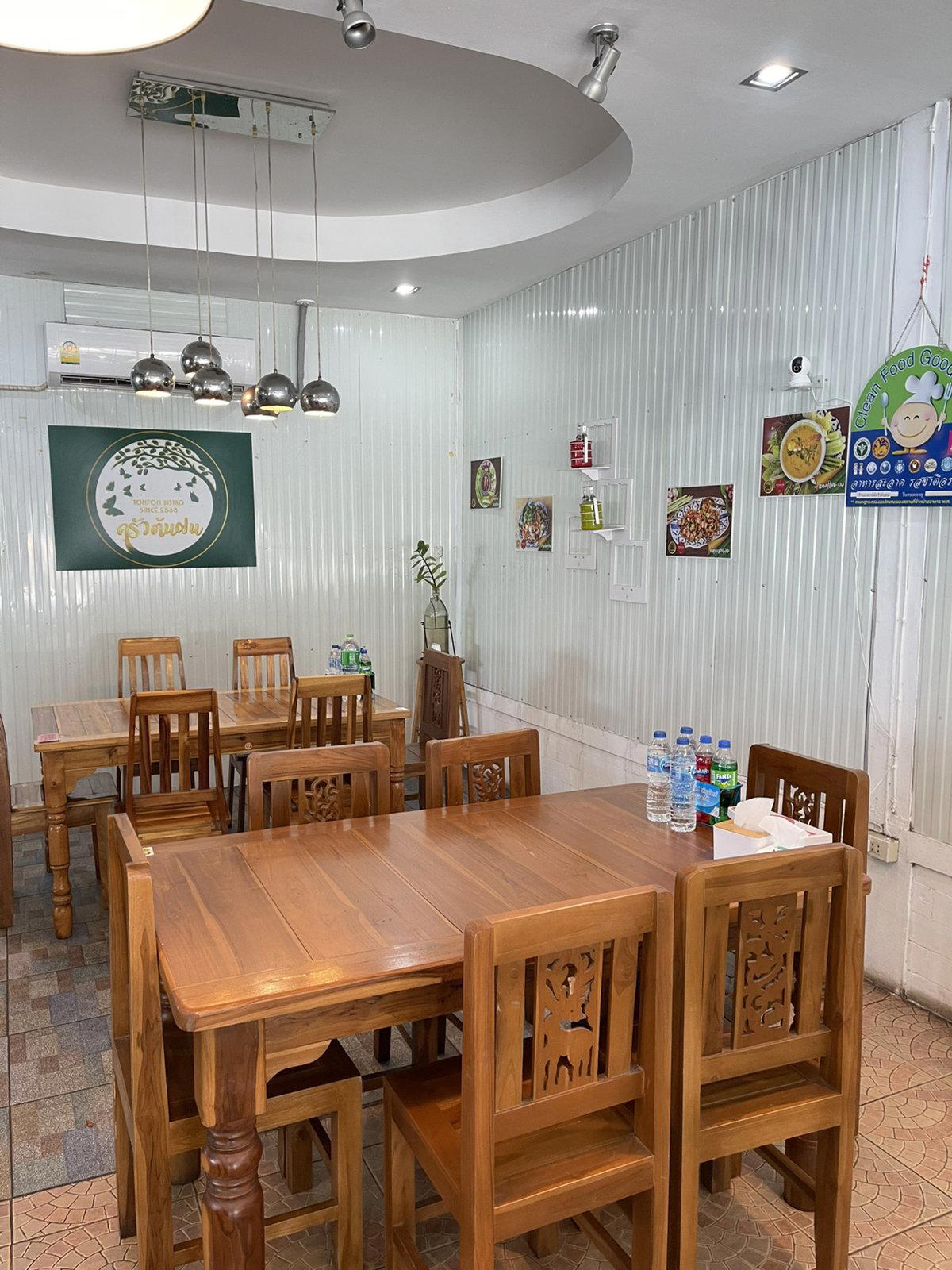
The approach to Khanom Jeen Baan Bang Kan offers no architectural gesture, no signage designed to catch a tourist's eye. What you find instead is a canteen-style room with functional tables, natural light, and a counter where the morning's curries sit in pots, the kind of setting that signals a kitchen focused entirely on the food rather than the frame around it. In Phang Nga's dining context, this physical plainness is meaningful. The town sits between Phuket's tourist infrastructure and Krabi's coastal draw, which means its leading local eating tends to operate without the performance layer that tourist-facing venues elsewhere in the region often add. Baan Bang Kan fits that pattern precisely.
Khanom chin, the fermented rice noodle that anchors the menu here, is one of Southern Thailand's most regionally specific staples. The noodles are made from fermented rice batter, which gives them a slight sourness and a softer, denser texture than egg noodles or fresh wheat-based alternatives. They are almost always served at room temperature or cool, which makes them a natural foil for the warm, aromatic curries ladled over the leading. The tradition is communal and practical, a bowl is assembled quickly, eaten without ceremony, and finished before the heat of the day fully arrives. Its Michelin Plate recognition in 2024 and 2025 places it inside a broader pattern of the guide acknowledging Southern Thai street-level cooking as technically serious, not merely colourful or cheap.
The Format and What It Means for Planning
Seating is limited. The lunchtime crowd is predominantly local, and it arrives with the confidence of routine: regulars know what they want, order quickly, and turn over tables at a pace that keeps the room moving. For a visitor arriving without that familiarity, the window for getting a seat and understanding what's on offer narrows faster than it might at a conventional restaurant.
The practical implication is direct: arrive early. In canteens of this type across Southern Thailand, the optimal window tends to be within the first hour of service. Curries are made fresh each morning, and as the session progresses, popular options sell out rather than being replenished from a prep kitchen. Arriving at the back half of lunch service at a venue like this often means a reduced selection and a crowded room simultaneously, the least favourable combination. The walk-in, counter-service format suits the khanom chin canteen category across the region.
At the ฿ price tier, the lowest bracket in Phang Nga's dining range, the financial commitment of an early visit is negligible, which makes timing the only real variable to manage. Compare that to the planning required for Aulis at the opposite end of the price spectrum, where reservation windows and tasting menu formats require weeks of advance coordination. For Anuwat (Street Food), another ฿-tier option in Phang Nga, the same walk-in logic applies. The cost of getting the timing wrong at Baan Bang Kan is a shorter menu, not a missed reservation.
What's on the Counter and How It Comes Together
The menu at Baan Bang Kan is built around the khanom chin noodle paired with a selection of curries, with vegetables and steamed fish cakes wrapped in banana leaves as accompaniments. The banana leaf preparation is a Southern Thai technique with practical and flavour-related functions: the leaf imparts a faint grassy aroma during steaming, and the wrapping retains moisture in a way that keeps fish cakes from drying out. It is a method found across the region's traditional cooking, but its presence here alongside Michelin recognition signals that the kitchen is executing it with consistency rather than approximation.
In the broader context of Thai noodle traditions, khanom chin occupies a different register from the more internationally familiar pad thai or khao soi. It sits closer to the regional specificity of Southern curries than to the tourist-facing noodle formats that dominate menus in beach-resort towns nearby. For travellers familiar with the noodle canteen traditions in Hangzhou or Taichung, where venues like A Bing Bao Shan Mian and A Kun Mian also operate at the intersection of simplicity and Michelin recognition, the format here will read as familiar in structure, even if the flavour profile is entirely distinct.
Phang Nga's Noodle Canteen Tier
Within Phang Nga's eating options, Baan Bang Kan sits at the base of the price range but near stronger examples from the credentialled local-canteen category. Khanom Chin Pa Son is the immediate peer for comparison, another khanom chin specialist in the same town, and worth considering as a second reference point for understanding how different kitchens interpret the same noodle tradition. Yi-Oui Noodles offers another angle on Phang Nga's noodle culture at a similar price point. Together, these three venues make a case for the town having a more textured noodle scene than its low profile in regional travel writing typically suggests.
For context on where Southern Thai cooking sits at higher price points and more formal formats, Sorn in Bangkok and PRU in Phuket represent a different tier of recognition for the same regional culinary tradition. The distance between those formats and a canteen like Baan Bang Kan is not a quality gap so much as a structural one: different formats serving different dining contexts, with the canteen offering the more direct and less mediated version of the food. At the opposite end of Phang Nga's dining register, Baan Rearn Mai handles seafood at a ฿฿ level, and Aeeen in Chiang Mai provides a useful Northern Thai counterpoint to the Southern traditions on display here.
Planning Your Visit
The canteen format suits the venue. Walk-in only, no reservations. The address places it in Thung Kha Ngok within Mueang Phang-nga District. Arrive ahead of the main lunchtime rush to secure a seat and the widest curry selection. The ฿ price point means a meal here costs a fraction of what comparable Michelin-recognised venues charge elsewhere in the region, the barrier is timing, not budget.
Cuisine-First Comparison
Comparable venues nearby, for context on price, style, and recognition.
| Venue | Cuisine | Price | Awards | Notes |
|---|---|---|---|---|
| Khanom Jeen Baan Bang KanThis venue — the venue you are viewing | Authentic Thai Khanom Jeen | $ | Michelin Plate | Not listed |
| Rock-Un | Southern Thai Small Eats | $ | Michelin Plate | Takua Pa |
| Khrua Nong | Authentic Thai | $$ | Michelin Plate | Takua Pa |
| Thian Leng Bak Kut Teh | Authentic Malaysian Bak Kut Teh | $ | Michelin Plate | Khok Kloi |
| Mon | Southern Thai Seafood | $$ | Bib Gourmand | Lam Kaen |
| Khanom Chin Pa Son | Southern Thai Khanom Chin | $ | Michelin Plate | Thai Chang, Mueang Phang-nga |
Recognition history
Dated appearances from independent guides and award organizations, with the underlying list record or original source where available.
Michelin Plate
Michelin
Michelin Plate
Michelin
Michelin Plate
Michelin
Continue exploring
More in Phang Nga
Restaurants in Phang Nga
Browse all →
Bars in Phang Nga
Browse all →

At a Glance
- Rustic
- Cozy
- Casual Hangout
- Family
- Open Kitchen
- Local Sourcing
Current opening hours
- Monday
- 10 AM–5 PM
- Tuesday
- 10 AM–5 PM
- Wednesday
- 10 AM–5 PM
- Thursday
- Closed
- Friday
- Closed
- Saturday
- 10 AM–5 PM
- Sunday
- 10 AM–5 PM
Hours can change for holidays and private events. Last verified .
Casual welcoming family-friendly atmosphere with self-service buffet in a lively local setting.