
Michelin Plate
Our verdict
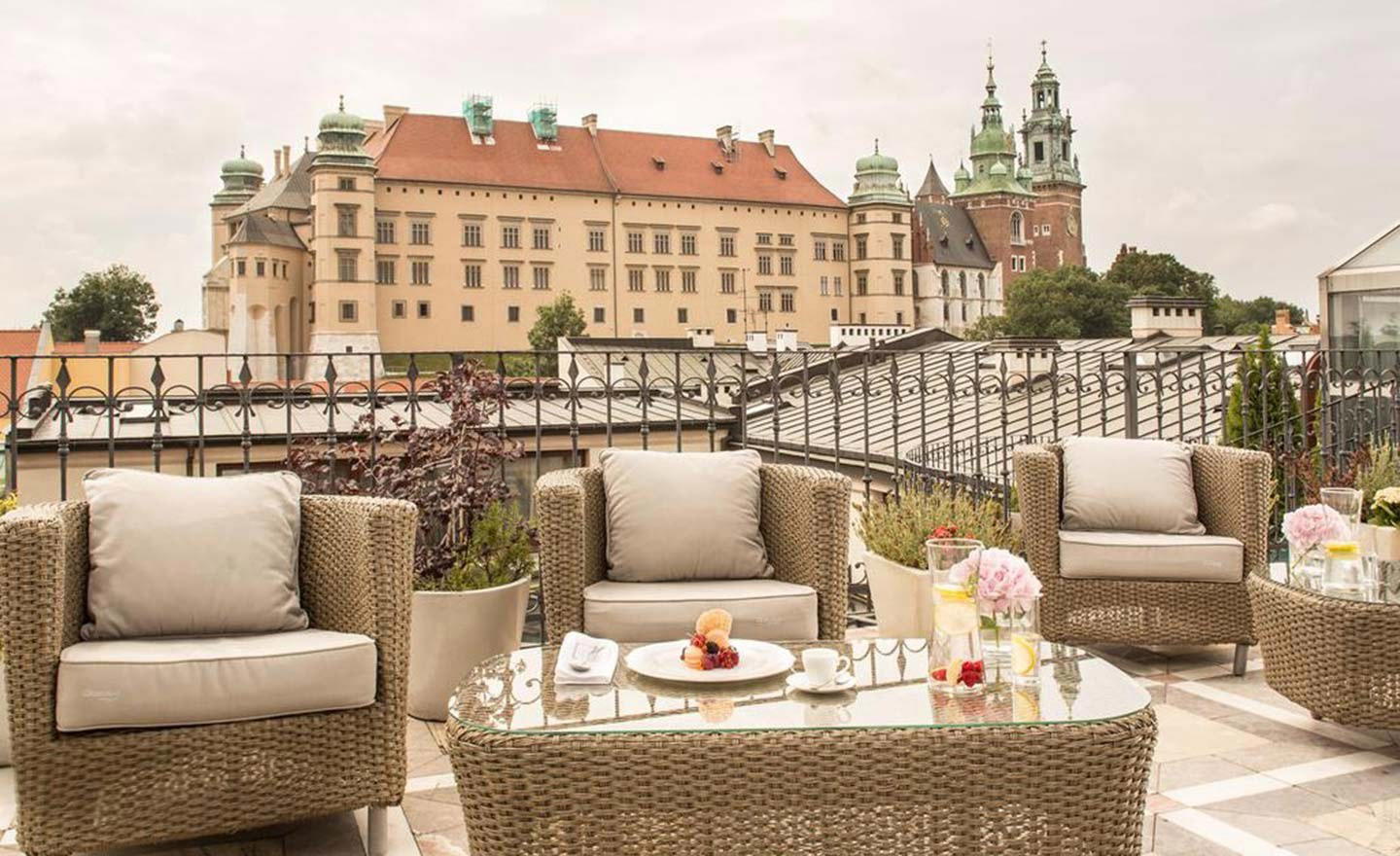
A smartly dressed steakhouse on ulica Grodzka where Argentine parrilla technique meets prime Polish and American cuts. The owners behind Fiorentina and Kogel Mogel run a tightly edited beef menu, grilled over open flame and matched to a deep cellar. Grodzka 44 sits in the Old Town core, a short walk from Wawel Castle.

Pearl is the En Primeur Club membership app, where members save venues, book tables and use the concierge.
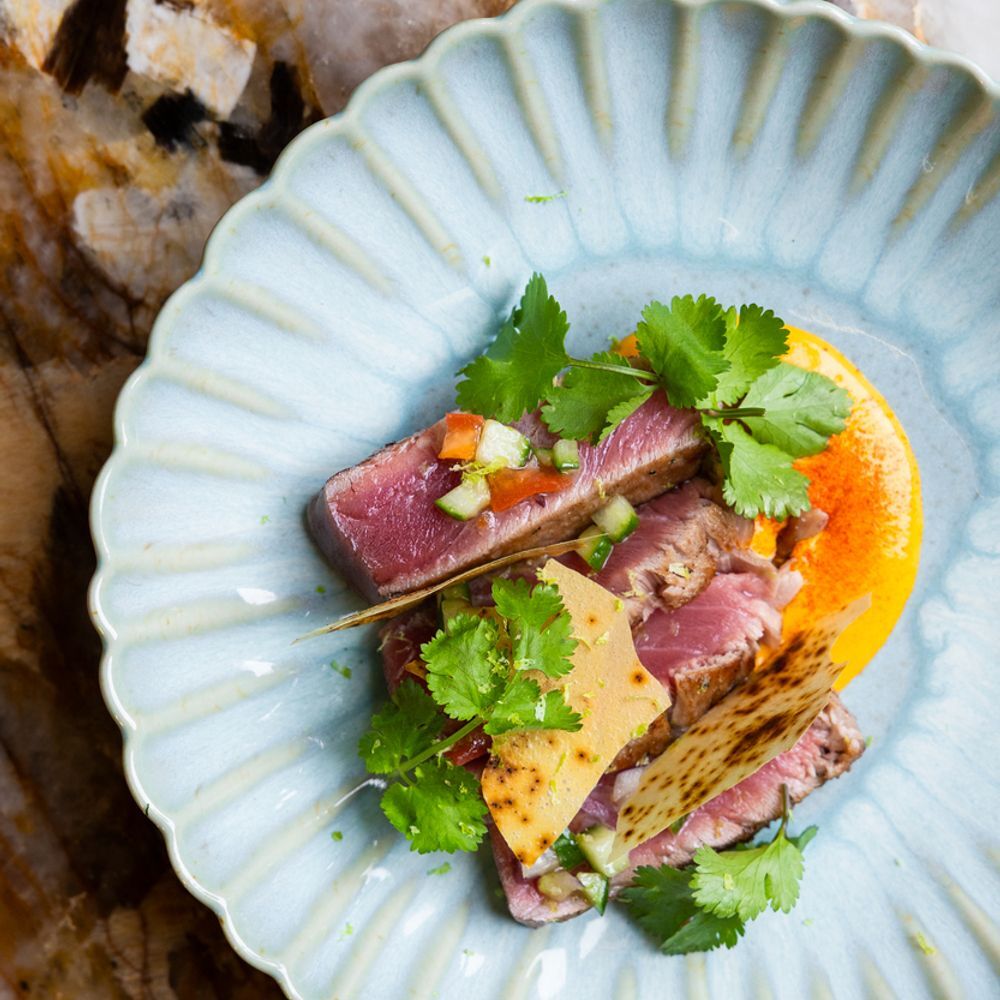
The menu
What to order
- Prime steaks
- Grilled fish
- Grilled vegetables
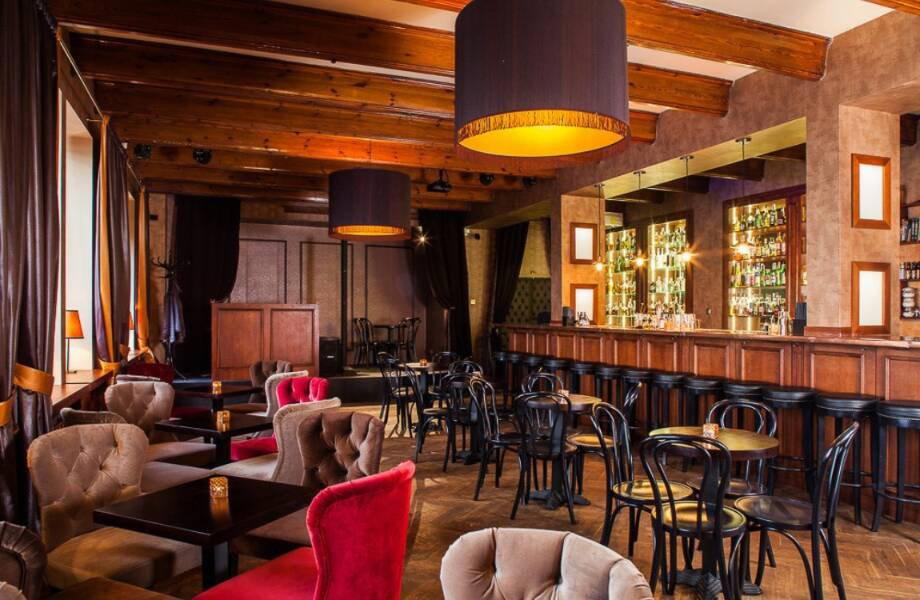
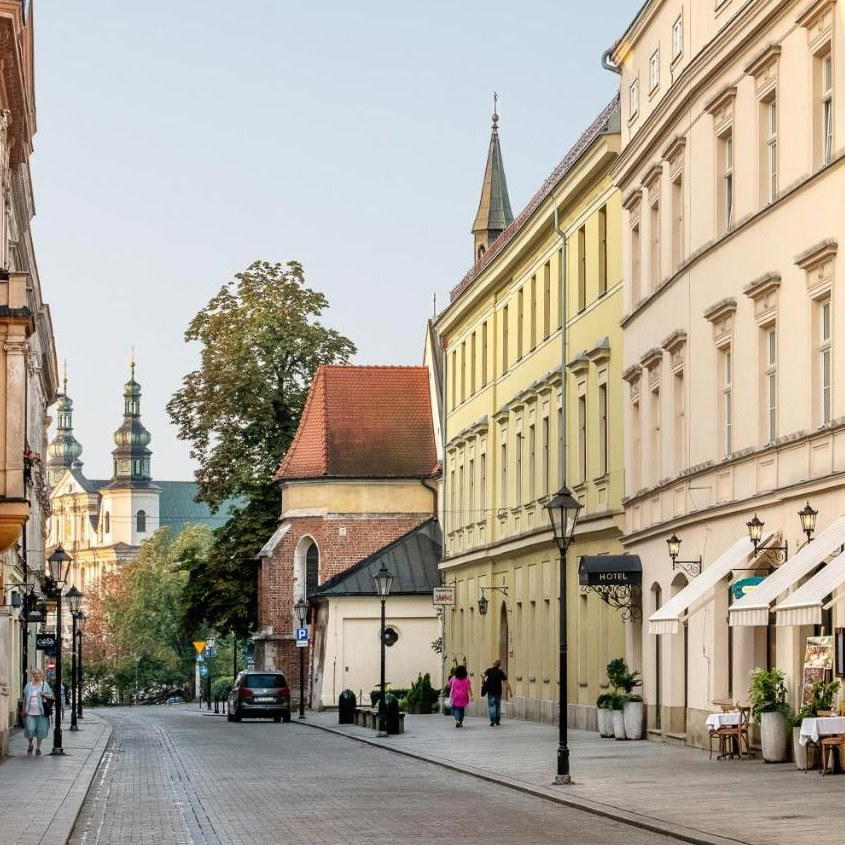
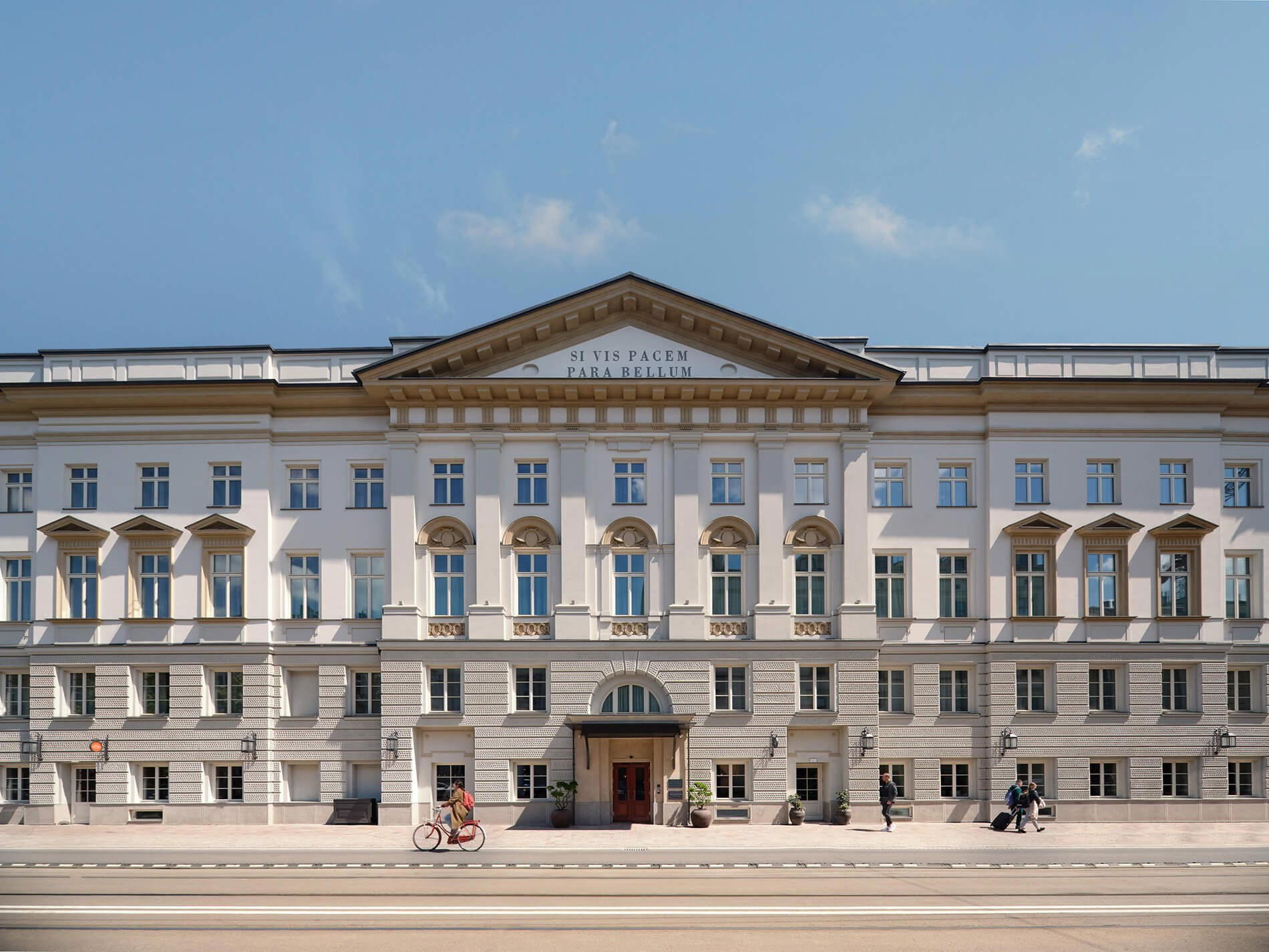
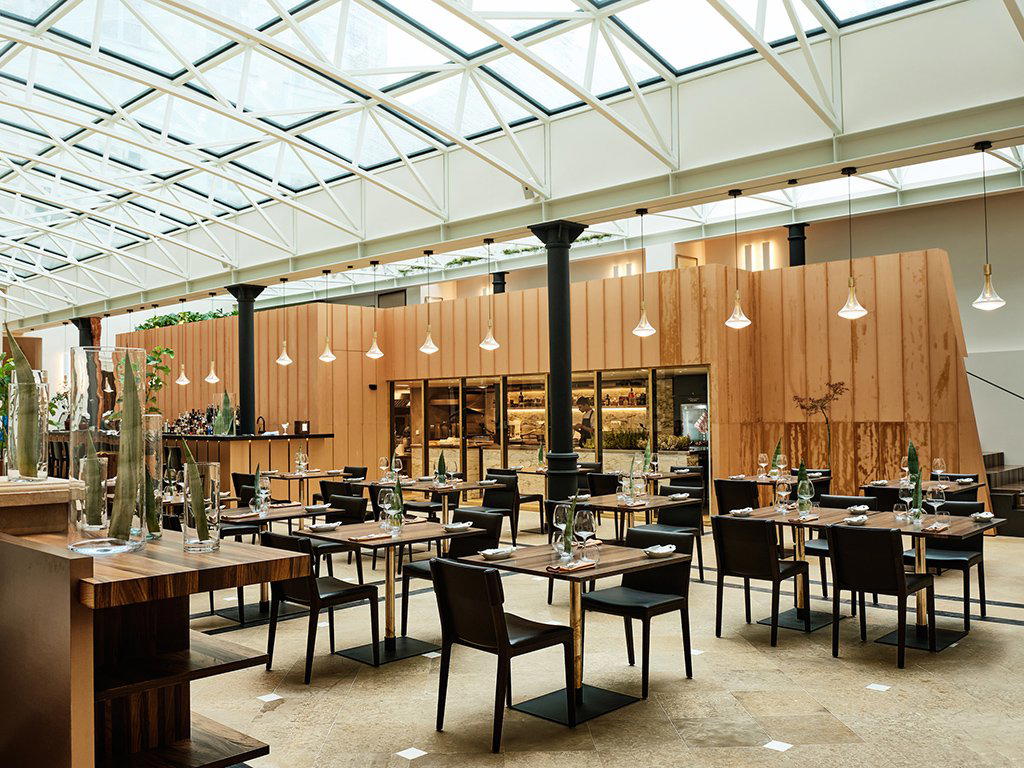
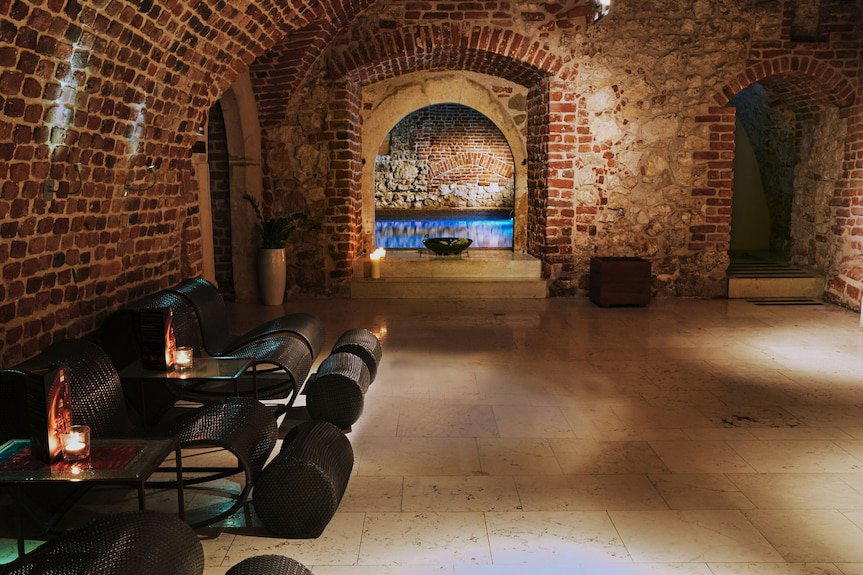
Grodzka 44 occupies a handsome townhouse on one of Kraków's oldest thoroughfares, the cobbled street that links the market square to Wawel Castle. Inside, a large parrilla grill holds the dining room's focal point, an open-hearth Argentine design that burns hardwood and leaves cuts with char and smoke. The room is dressed in dark wood, leather banquettes, and low-slung pendant lights, and the format leans steakhouse rather than grill bar: tables are formally set, staff move with polish, and the wine list runs deep. The same team operates Fiorentina and Kogel Mogel, both in the city, and has trained the service floor to handle beef weight, aging, and provenance questions with calm precision. The cellar carries labels from Bordeaux, Piedmont, Rioja, and a short Polish roster, with bottle depth concentrated in the mid-tier price bracket.
Polish and American Beef, Dry-Aged and Parrilla-Grilled
The menu sources beef from two supply chains: prime Polish cattle, often older-breed stock raised in Podlasie and Wielkopolska, and USDA cuts shipped from the United States. Dry-aging is carried out in-house for select primal cuts, typically 28 to 45 days depending on marbling and bone structure. The parrilla grill runs oak and beech at high heat, with the grate height adjusted by hand to control crust and carry-over. Cuts arrive plated simply: sliced or whole, finished with coarse salt and a drizzle of rendered fat. The menu does not over-extend, ribeye, striploin, tenderloin, and bone-in options rotate depending on aging batch and season, and portion sizes are listed in grams rather than descriptors. This clarity matters: diners can order by weight and provenance, and the kitchen does not obscure origin or grade. The beef pretzel, listed as a starter, functions as the house signal dish, a soft pretzel rolled around thin-sliced beef, served warm with a gherkin-and-caper cream that cuts richness with acid and brine. It operates as a format test: if a kitchen can balance texture, salt, and condiment in a compact starter, the main plates usually follow suit.
Beyond steak, the menu carries a short list of supporting dishes, grilled vegetables, bone marrow, a rotating tartare, and a handful of fish options for non-beef diners. The kitchen does not attempt fusion or reinterpretation; technique stays close to Argentine grill tradition, with seasoning minimal and ingredient quality foregrounded. This approach aligns Huma with the Polish steakhouse tier that emerged in the past decade, alongside Nami Beef and Reef and other grill-led formats that prioritize sourcing and fire over sauce complexity. In Kraków, where traditional Polish restaurants such as Pod Nosem still dominate the tourist circuit, Huma occupies a different segment: higher spend, smaller menu, wine-focused rather than vodka-led. The parrilla grill is visible from most tables, and the open-fire format adds theater without gimmick, smoke, flame, and the sound of fat dripping onto coals anchor the room's rhythm.
Grodzka Location and Service Format
Grodzka runs south from Rynek Główny toward the castle hill, and the street has been a commercial artery since medieval times. Number 44 sits roughly midway, a five-minute walk from the main square and ten minutes from the Vistula embankment. The Old Town designation means foot traffic is high, especially during summer and festival periods, but Huma's entrance is set back from the pavement and marked discreetly. Inside, the dining room seats roughly 40 to 50 covers, with a mix of two-tops, banquettes, and a single communal table near the grill. The space feels warmer and quieter than neighboring addresses, no amplified music, no bar crowd spilling over. Service is paced to a two-hour window for dinner, with staff trained to describe aging, provenance, and recommended pairings without upselling. The wine list is presented as a bound folder rather than a tablet, and staff will pull bottles to the table for label inspection if requested. This level of service discipline, common in Western European steakhouses, remains less standard in Poland's mid-tier dining scene, and Huma's execution marks it as a format outlier within the city. The kitchen does not operate a tasting menu, and the pace is guest-directed rather than chef-sequenced.
For context within Kraków's broader dining map, Huma sits in a price bracket above traditional Polish spots such as Czarna Kaczka but below the fine-dining tier anchored by Copernicus and Amarylis. It competes more directly with grill-focused addresses that have opened since 2020, including Nami Beef and Reef, where Japanese wagyu and Polish beef share menu space. Huma's emphasis on parrilla technique and South American grill culture differentiates it from the Japanese-inflected grills, and the wine program tilts European rather than sake- or shochu-led. For travelers exploring Kraków's full restaurant landscape, Huma functions as a reliable steak option in a city where beef quality and aging discipline have historically lagged behind Western European standards. The grill itself is imported Argentine equipment, and the kitchen's handling of fire and fat suggests training beyond the domestic Polish grill tradition.
The venue does not publish opening hours or reservation details online, which is not unusual for owner-operated restaurants in Poland that rely on word-of-mouth and repeat clientele. Walk-ins are possible during weekday service, but weekend evenings and holiday periods fill early. The dining room atmosphere leans smart-casual, collared shirts and polished footwear are common, but jackets are not required. Families are present at lunch and early evening; later seatings skew toward couples and business groups. The service team's tone is warm rather than formal, and English is spoken fluently by front-of-house staff. For visitors staying near Old Town hotels, Grodzka 44 is a short walk, and the street is well-lit and pedestrianized after dark. Post-dinner options include Kazimierz cocktail bars to the east or the quieter cafés along Kanonicza to the south.
Frequently asked questions
Is Huma okay with children?
The restaurant accommodates families without explicit restrictions. The smartly dressed dining room and parrilla grill operation create an adult-leaning atmosphere, but children are welcome. Tables along Grodzka 44 are accessible, and the menu includes straightforward beef options that appeal to younger diners.
Is Huma formal or casual?
The space is smartly dressed rather than formal. Expect polished tableware and a serious focus on the parrilla grill, but service remains cheery and approachable. Most guests arrive in collared shirts or neat separates; jackets are uncommon.
Does Huma have a Michelin star or similar recognition?
Huma has received recognition including: Steak lovers need look no further than this smartly dressed restaurant from the same owners as Fiorentina and Kogel Mogel. An eye-catching parrilla grill is at the heart of the operation, used with great skill on prime steaks from Poland an….
Where exactly is Huma?
Huma is located at Grodzka 44, Kraków, Lesser Poland, 31-044, POL, Kraków.
Can I walk in to Huma?
Walk-ins are typically accepted, though Grodzka's steady foot traffic means early or late slots offer better odds. The parrilla operation serves a manageable number of covers, so weekend evenings may require a short wait. Booking by phone or in person is straightforward.
What's the defining dish or idea at Huma?
The parrilla grill anchors the menu, with prime Polish and American steaks dry-aged and cooked over open flame. The beef pretzel, topped with gherkin and caper cream, demonstrates technical skill beyond the grill. The wine list leans red and supports the beef-forward repertoire.
In Context: Similar Options
Comparable venues by cuisine and price in the same metro.
| Venue | Cuisine | Price | Awards |
|---|---|---|---|
| HumaThis venue (the venue you are viewing) | Modern Grill / Steakhouse | $50–100 | Michelin Plate |
| Copernicus | Modern Polish Royal Cuisine | $30–50 | Michelin Plate |
| Czarna Kaczka | Traditional Polish | $20–30 | Not listed |
| Fiorentina | Modern Polish Fine Dining | $50–100 | Michelin Plate · Wine Spectator Best of Award of Excellence |
| Pod Nosem | Modern Polish | $50–100 | Michelin Plate |
| Nami Beef and Reef | Modern Japanese Beef and Seafood | $50–100 | Michelin Plate |
Recognition history
Dated appearances from independent guides and award organizations, with the underlying list record or original source where available.
Michelin Plate
Michelin
Continue exploring
More in Kraków
Restaurants in Kraków
All restaurants in Kraków →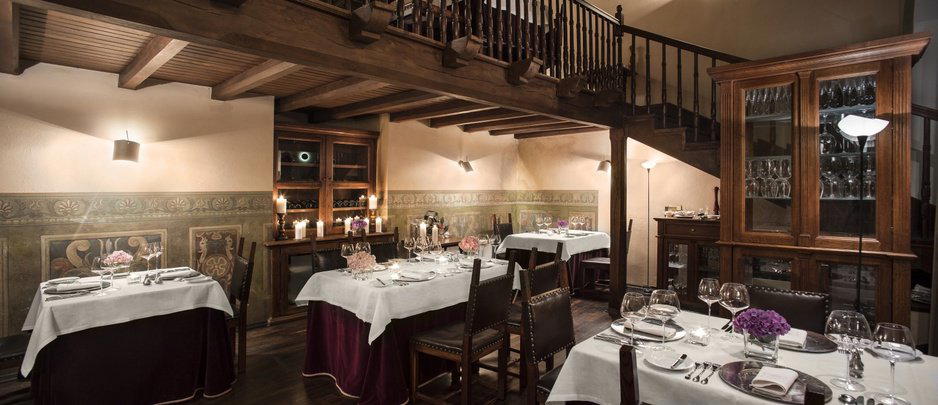
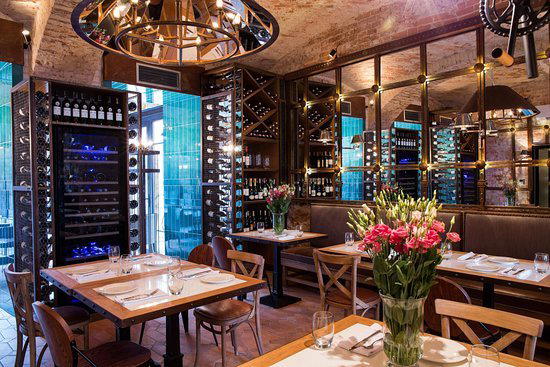
Bars in Kraków
All bars in Kraków →
Details
- Energetic
- Trendy
- Modern
- Sophisticated
- Intimate
- Date Night
- Group Dining
- Celebration
- Private Event
- Special Occasion
- After Work
- Live Music
- Open Kitchen
- Private Dining
- Design Destination
- Standalone
- Craft Cocktails
- Beer Program
- Local Sourcing
- A La Carte
- Small Plates
- Wine
- Cocktails
- Vegetarian Friendly
- Pescatarian Friendly
Current opening hours
- Monday
- 5–10 PM
- Tuesday
- 5–10 PM
- Wednesday
- 5–10 PM
- Thursday
- 5–10 PM
- Friday
- 5–11 PM
- Saturday
- 1–11 PM
- Sunday
- 1–10 PM
Hours can change for holidays and private events. Hours as of .
A lively, design-forward grill restaurant with open-fire aromas, music, and a communal-table energy that feels energetic and social.