
Michelin Plate
Our verdict
A Michelin Plate-recognised street food stall in Ayutthaya's Tha Wasukri district, Hoi Tod Singha Buri has held the distinction in both 2024 and 2025, placing it among a small tier of street vendors in the region acknowledged by the guide. Operating at single-baht price points, it draws locals and visitors to the central Ayutthaya area for hoi tod, the crisp-edged mussel or oyster pancake that defines Central Thai street eating.

Pearl is the En Primeur Club membership app, where members save venues, book tables and use the concierge.
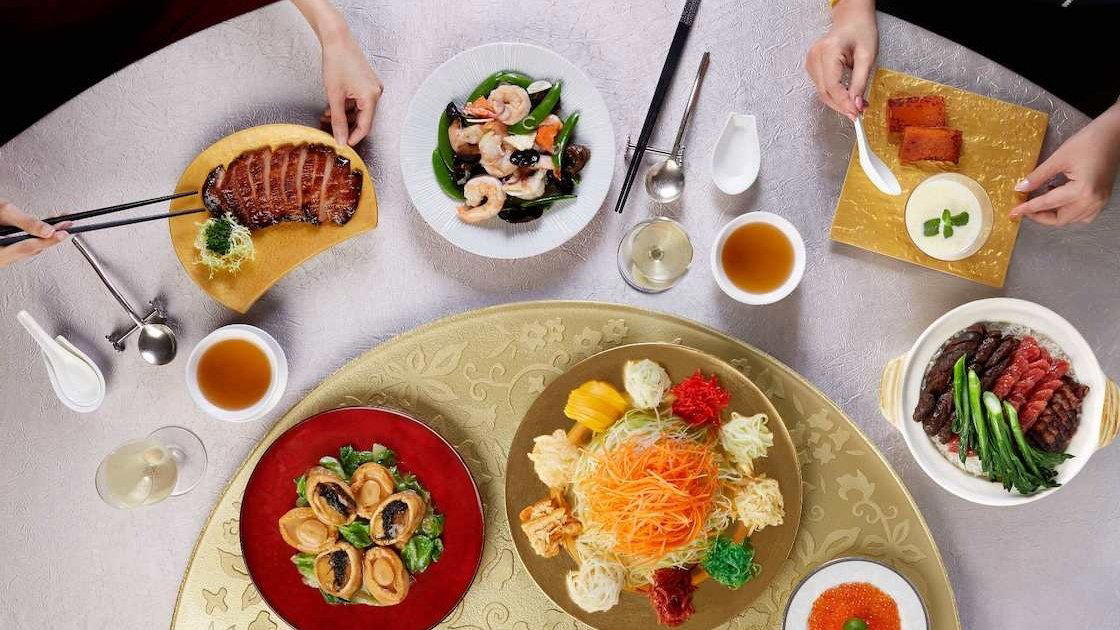
The menu
What to order
- Hoi Tod mussel omelette
- Bean sprout-topped mussel omelette
Street Cooking, Open Air, and the Logic of the Stall
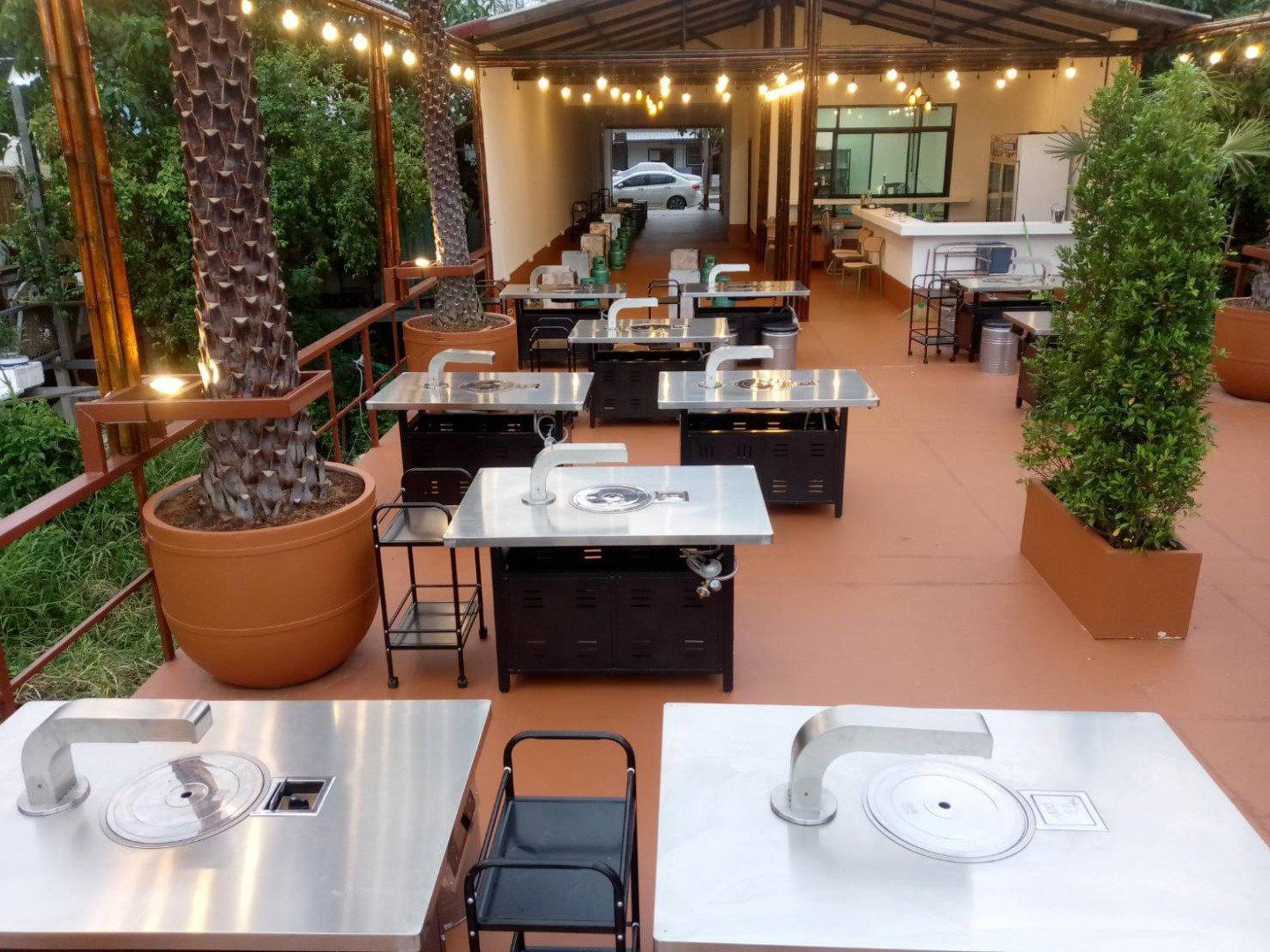
Ayutthaya's street food culture runs on a different rhythm from Bangkok's. Where the capital has formalised many of its hawker traditions into shophouse dining rooms and market halls, Ayutthaya preserves a quieter, more spatially honest version: a wok, a cart, a stall with no architectural ambition beyond functionality. The cook-facing-outward format, where the preparation is the performance and the heat of the wok is the centrepiece, still dominates in the Tha Wasukri district, and Hoi Tod Singha Buri operates squarely within that tradition. The address resolves to a grid coordinate rather than a named shopfront, which tells you something about the physical container: this is not a space designed around arrival, branding, or instagram geometry. It is designed around the pan.
That framing matters, because the Michelin Plate awarded consecutively in 2024 and 2025 is not a restaurant commendation. It is a recognition that the cooking at a stall-format venue merits the attention of a serious guide. That distinction places Hoi Tod Singha Buri in a small peer group regionally: Michelin Plate street vendors outside Bangkok are relatively rare, and in Ayutthaya specifically, the designation carries additional weight given the city's limited representation in the guide relative to its culinary depth. For context on how Thailand's Michelin tier works across price brackets, the contrast with multi-starred Bangkok restaurants like Sorn in Bangkok is instructive: both sit within the same national guide, separated by price, format, and formality, but linked by the same evaluative standard of cooking quality.
Hoi Tod: The Dish and Its Central Thai Context
Hoi tod is one of Central Thailand's most characteristic street preparations. At its core, the dish involves shellfish, typically mussels or oysters, cooked in a loose batter on a very hot, well-seasoned iron pan with lard or oil, producing a crust that is simultaneously crackling and yielding at its edges. The version common in Ayutthaya and the broader central region tends toward a lighter, crispier execution than the wetter, eggy versions that appear in certain southern or Chinese-Thai coastal traditions. The shellfish quality matters: freshness determines whether the interior stays plump through high-heat cooking. The name of this stall, Hoi Tod Singha Buri, references both the dish and the Sing Buri province to the north, which has its own river-sourced shellfish culture, suggesting a regional lineage in the cooking method or sourcing approach, though the specific supply chain is not in the public record.
Street food in this price bracket across Thailand operates at a scale that sits well below what guide recognition usually tracks. A single-baht-sign entry (฿) means the cost per person is among the lowest in any eating category in the country. In Ayutthaya, that benchmark is shared with venues like Here Klae Pork Satay, another single-price-tier street food operation in the city. The Michelin Plate at this price point is a different kind of achievement than the same recognition at a higher bracket: it marks cooking discipline under constraints of volume, simplicity, and margin.
The Physical Setting and How to Approach It
The stall sits in the Tha Wasukri area of central Phra Nakhon Si Ayutthaya, within cycling or tuk-tuk range of the main temple ruins complex. This part of the city handles steady visitor traffic through the day, though street food stalls in the area typically operate on their own timing logic, often opening from mid-morning through afternoon or early evening and closing when product is exhausted rather than at a fixed hour. No website or phone contact is available in the public record, which is consistent with the stall format: this is not a venue you reserve. You go, you arrive during operating hours, and you eat at whatever passing-trade seating is available nearby.
The practical planning implication for visitors is to treat the stop as part of a broader Ayutthaya eating circuit rather than a standalone reservation. The city's street food and casual dining options at the ฿ and ฿฿ tiers extend across Tha Wasukri and adjacent districts, with options covering pork satay, Central Thai rice dishes, and Vietnamese-influenced preparations, some of which you can explore through Angeum (Vietnamese), Ayutthayarom (Thai), and Baan Mai Rim Nahm (Thai). For sweets, the Ayutthaya institution of roti sai mai is close by at Roti Sai Mai Abeedeen-Pranom Sangaroon.
Michelin's Street Food Recognition Across Southeast Asia
Guide's recognition of stall-format cooking is now well-established across Southeast Asia, with Singapore leading the regional precedent: Hill Street Tai Hwa Pork Noodle and 545 Whampoa Prawn Noodles both carry Michelin recognition at street food price points, and Thailand has followed a similar evaluative logic since the Bangkok guide launched. What distinguishes Hoi Tod Singha Buri from the Singapore comparisons is context: Singapore's hawker centres are permanent, regulated, and architecturally formalised; Ayutthaya's stall culture is less institutionalised, which makes the consistency required to hold a Plate recognition across consecutive years more, not less, significant.
For visitors building a broader picture of Michelin-tracked cooking in Thailand beyond Bangkok, the regional spread is worth noting: PRU in Phuket, Aeeen in Chiang Mai, and AKKEE in Pak Kret each represent different points on that regional spectrum. Hoi Tod Singha Buri sits at the informal, open-air end of that range, which is not a lower position: it is a different category of eating entirely.
Planning Your Visit
Hoi Tod Singha Buri is located in the Tha Wasukri area of Phra Nakhon Si Ayutthaya, accessible by tuk-tuk, bicycle, or local taxi from the main heritage sites. No advance booking is possible or expected. The stall operates on a cash economy at single-baht-tier pricing. Visitors arriving midday or in the early afternoon are leading placed to find the stall in operation, though timing can vary; combining the visit with nearby eating options reduces the risk of a wasted trip. For a complete picture of where this stall sits within Ayutthaya's broader food and travel scene, see our full Phra Nakhon Si Ayutthaya restaurants guide, as well as our guides to hotels, bars, wineries, and experiences in the city. For context beyond Ayutthaya, Agave in Ubon Ratchathani represents the kind of regional eating destination that rewards the same exploratory instinct this stall requires.
Frequently asked questions
What price level is Hoi Tod Singha Buri?
Pricing at Hoi Tod Singha Buri is listed as ฿.
How do I find Hoi Tod Singha Buri?
Hoi Tod Singha Buri is located at 9H4C+4CW, Tha Wasukri, Phra Nakhon Si Ayutthaya District, Phra Nakhon Si Ayutthaya 13000, Thailand, Phra Nakhon Si Ayutthaya.
What's Hoi Tod Singha Buri known for in terms of accolades?
Hoi Tod Singha Buri has received recognition including: Michelin Plate (2025); Michelin Plate (2024).
What do people recommend at Hoi Tod Singha Buri?
The stall's focus is hoi tod, the Central Thai preparation of shellfish, mussels or oysters, cooked with egg and batter on a flat iron wok until the edges crisp. That dish is the reason the stall earned Michelin Plate recognition in both 2024 and 2025. At a ฿ price point, portions are ordered directly at the stall and eaten on the spot, so the hoi tod itself is the visit.
Comparable Spots
| Venue | Cuisine | Price | Awards | Notes |
|---|---|---|---|---|
| Hoi Tod Singha BuriThis venue (the venue you are viewing) | Thai Street Food (Hoi Tod Mussel Omelette) | $1–10 | Michelin Plate | Not listed |
| Baan Ta Ko Rai | Authentic Central Thai | $10–20 | Michelin Bib Gourmand | Thai, ฿฿ |
| Pa Lek Boat Noodles | Authentic Thai Boat Noodles | $1–10 | Michelin Bib Gourmand | Noodles, ฿ |
| Angeum | Authentic Vietnamese | $10–20 | Michelin Plate | Vietnamese, ฿฿ |
| Gu Cherng | Authentic Chinese Dim Sum & Peking Duck | Not listed | Michelin Plate | Chinese, ฿฿฿ |
| Here Klae Pork Satay | Thai Pork Satay | $1–10 | Michelin Bib Gourmand | Street Food, ฿ |
Recognition history
Dated appearances from independent guides and award organizations, with the underlying list record or original source where available.
Michelin Plate
Michelin
Full recognition history (2 entries)
Michelin Plate
Michelin
Continue exploring
More in Ayutthaya
Details
- Lively
- Energetic
- Casual Hangout
- Open Kitchen
- A La Carte
Current opening hours
- Monday
- 5–9 PM
- Tuesday
- 5–9 PM
- Wednesday
- 5–9 PM
- Thursday
- 5–9 PM
- Friday
- 5–9 PM
- Saturday
- 5–9 PM
- Sunday
- 5–9 PM
Hours can change for holidays and private events. Hours as of .
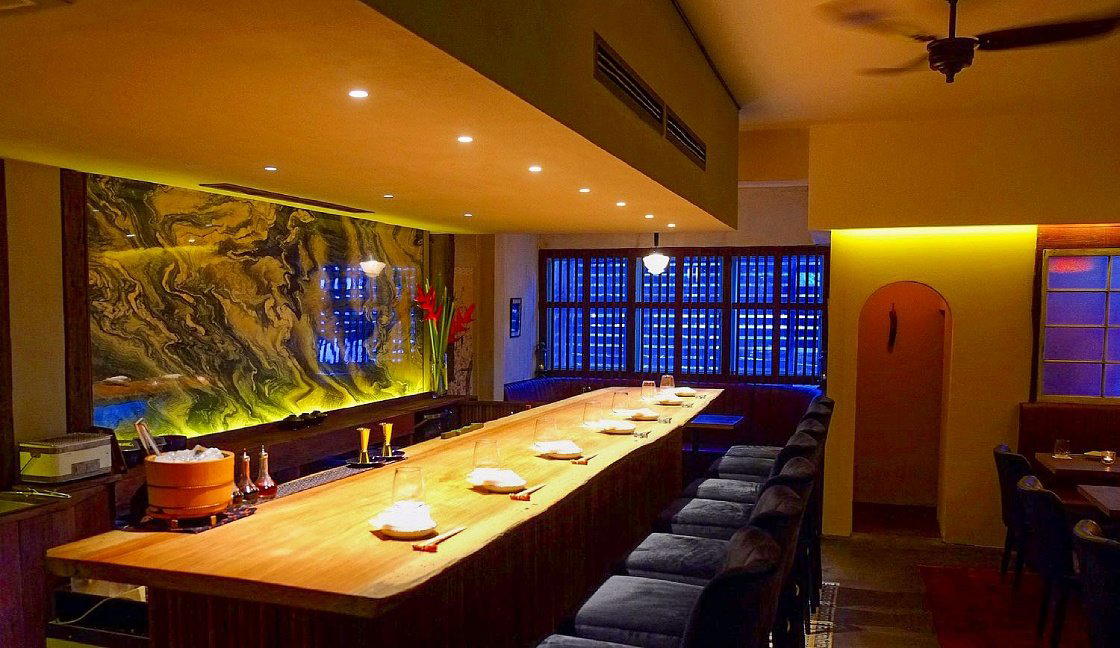
Raw market atmosphere with bustling heat, sizzling griddle under open-air market lamps, and lively social energy.