Haru Sushi Izakaya
Haru Sushi Izakaya brings the dual identity of Japanese dining — precise sushi counter craft alongside the looser, more convivial izakaya format — to Fort Wayne's Coldwater Road corridor. In a city whose restaurant scene has grown more internationally minded over the past decade, the combination of raw bar discipline and shared-plate drinking-house tradition gives Haru a distinct position among the city's Asian dining options.
Pearl is the En Primeur Club membership app — saves, bookings, and concierge access live there. Same editors, same standards.
- Address
- 4036 Coldwater Rd, Fort Wayne, IN 46805
- Phone
- +12607553975
- Website
- harujapaneserestaurant.com
- Directions
- Get directions
 Saves & bookings on Pearl
Izakaya Culture in the American Midwest
The izakaya format has always resisted easy translation. In Japan, it occupies the space between a pub and a restaurant — a place where salarymen linger over skewers and cold beer, where the menu runs wide rather than deep, and where the social contract is built around sharing rather than individual ordering. When that format moves to the American Midwest, it tends to get simplified into a sushi restaurant with a few extra dishes, or it gets absorbed into the broader category of "Japanese-American." Fort Wayne's dining scene, which has grown steadily more internationally oriented over the past decade, offers a useful lens for examining how that translation actually works in a secondary market far from the coasts.
Haru Sushi Izakaya, at 4036 Coldwater Rd, sits in a stretch of Fort Wayne that draws a practical, neighborhood-first dining crowd rather than the destination-dining traffic you'd find in a city-center corridor. That positioning matters. Izakaya culture was always neighborhood culture — rooted in accessibility and regularity rather than occasion dining. A sushi-izakaya hybrid in a walkable commercial strip is, in that sense, more faithful to the original format than a downtown showpiece would be.
What the Format Demands
Running a sushi-izakaya hybrid requires a kitchen to operate across two distinct registers simultaneously. Sushi demands cold precision: temperature-controlled fish, rice at a specific warmth, cuts timed to order. The izakaya side demands heat and speed: grilled items, fried small plates, hot broths, the kind of food that works as drinking accompaniment at 9pm on a Tuesday. Kitchens that manage both well tend to be organized around a clear division of labor between the fish counter and the hot line.
In the broader American market, this dual format has gained traction as diners have become more comfortable with Japanese food beyond the tuna roll. Compared to the hyper-specialized omakase counters you'd find at destination addresses like Atomix in New York City or the rigidly composed tasting structures at venues like Alinea in Chicago, the izakaya model is deliberately permissive, you can eat lightly or heavily, drink seriously or not at all, stay for ninety minutes or three hours. That flexibility is part of the appeal in markets where diners are less likely to commit to a fixed multi-course format.
Fort Wayne's Evolving Asian Dining Context
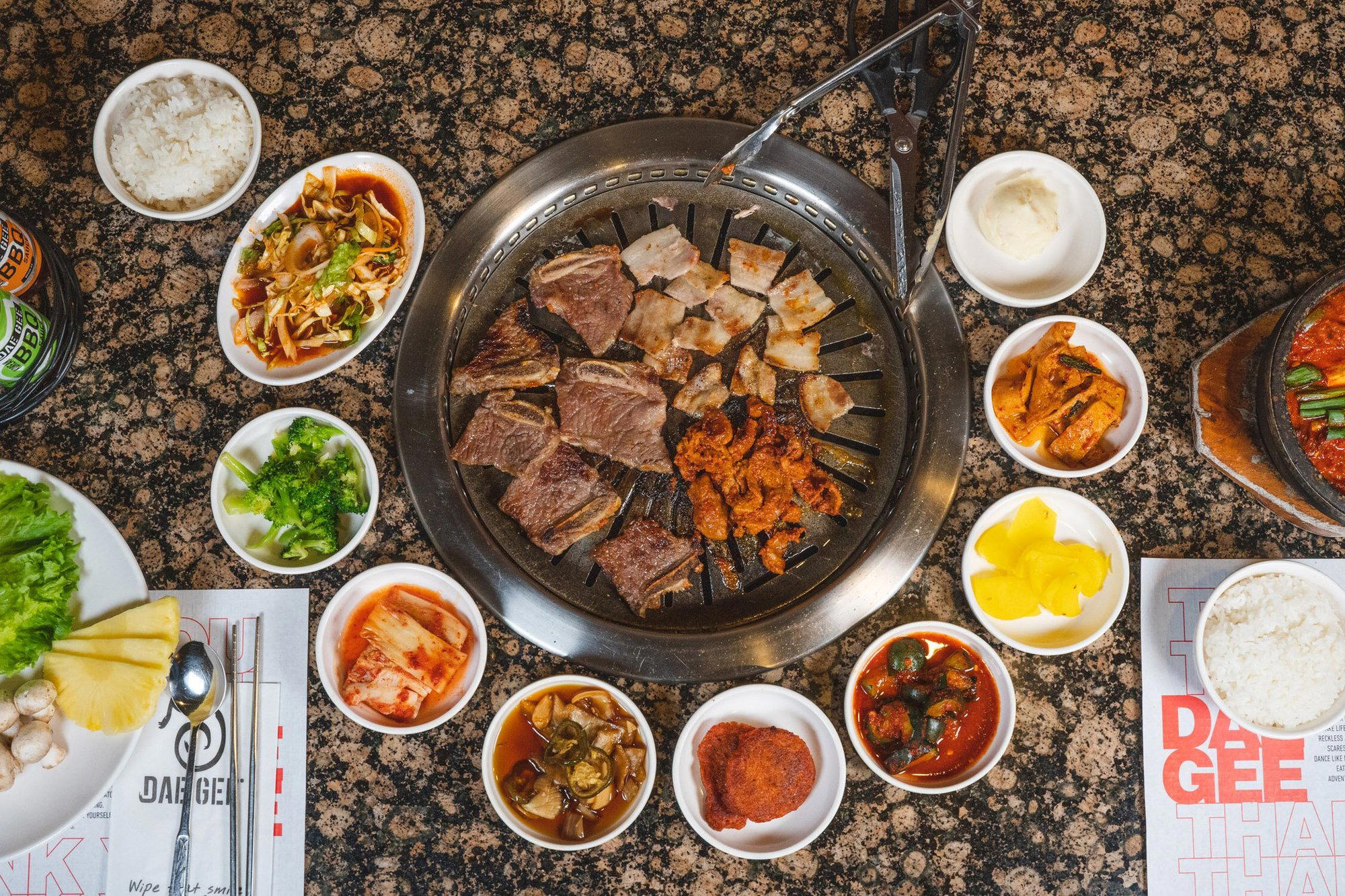
Fort Wayne's restaurant scene has diversified meaningfully in recent years. The city now supports a range of Asian dining concepts that would have been harder to sustain a decade ago. DAE GEE KOREAN BBQ represents the table-grill interactive format that has found national traction, while places like Amay Kitchen point to a broader appetite for Southeast and East Asian cooking in the city. Haru occupies a different niche within that grouping: the sushi-izakaya model is neither the high-ceremony Japanese experience nor the fast-casual roll shop, but something more relaxed and socially oriented.
That middle register is where izakaya culture has historically been most durable. The format survived decades of change in Japan precisely because it was never aspirational, it was practical, affordable, and designed for repeat visits. In American secondary markets, where dining-out budgets tend to be more conservative than in gateway cities, that same practicality gives the format a structural advantage over higher-commitment Japanese concepts. For context on how the highest-commitment dining formats operate at the national level, venues like Le Bernardin in New York City, The French Laundry in Napa, or Blue Hill at Stone Barns in Tarrytown represent a very different dining contract, one built on reservation windows of months and price points that signal occasion dining rather than neighborhood regularity.
Sushi as a Local Standard-Bearer
Within Fort Wayne's broader dining conversation, which includes American steakhouse formats like Cork 'N Cleaver, contemporary grilles like Catablu Grille, and neighborhood mainstays like Paula's On Main, a sushi-forward concept with izakaya ambitions addresses a specific gap. The city's diners are not, as a general pattern, served by the kind of deep Japanese-food infrastructure found in major coastal markets. That means a venue running a credible fish program and a range of cooked Japanese small plates is addressing genuine local demand rather than competing in a saturated category.
The cultural weight of sushi as a food form is worth noting in this context. Sushi in Japan is not one thing, it ranges from the $3 conveyor-belt kaiten format to multi-hour omakase sequences at counters where a reservation requires a personal introduction. The American market has compressed much of that range, but the izakaya model sits closer to the accessible end: it democratizes Japanese fish culture by pairing it with shareable cooked food and a drinking context that lowers the formality threshold. For diners in Fort Wayne, that accessibility is likely as important as the cuisine's technical dimensions.
For a fuller picture of what Fort Wayne's dining scene currently supports across cuisines and price tiers, the full Fort Wayne restaurants guide maps the city's options across categories. Nationally, the range of what serious food cities offer, from Lazy Bear in San Francisco to Providence in Los Angeles to Addison in San Diego to Single Thread Farm in Healdsburg, illustrates how specialized dining has become at the leading end, and why mid-market formats like the sushi-izakaya hybrid remain the most sustainable model for most American cities outside the top tier. Venues like Emeril's in New Orleans, The Inn at Little Washington, and 8 1/2 Otto e Mezzo Bombana in Hong Kong each occupy their respective markets in ways that speak to the specific demands of their cities, Haru operates with different constraints but the same logic of serving its local context.
Planning Your Visit
Haru Sushi Izakaya is located at 4036 Coldwater Rd, Fort Wayne, IN 46805, in a commercial corridor that is direct to reach by car. The izakaya format, by nature, tends to accommodate walk-ins more readily than reservation-only counter concepts, though weekend evenings in any market typically favor calling ahead.
Continue exploring
More in Fort Wayne
Restaurants in Fort Wayne
Browse all →
At a Glance
- Group Dining
- Casual Hangout
- Sake Program
Current opening hours
- Monday
- Closed
- Tuesday
- 11 AM–9 PM
- Wednesday
- 11 AM–9 PM
- Thursday
- 11 AM–9 PM
- Friday
- 11 AM–9:30 PM
- Saturday
- 11 AM–9:30 PM
- Sunday
- 11 AM–8 PM
Hours can change for holidays and private events. Last verified .