
A Swedish manor house hotel and restaurant in Gimo, Uppland, recognised with a White Star on Star Wine List in 2025. The setting, a historic bruk estate roughly 90 kilometres north of Stockholm, frames a dining experience where provenance and regional sourcing carry as much weight as the wine programme. For travellers willing to move beyond the capital's dining circuit, it represents a compelling case for the Swedish countryside table.
Pearl is the En Primeur Club membership app — saves, bookings, and concierge access live there. Same editors, same standards.
- Address
- Bruksgatan 24, 747 44 Gimo, Sweden
- Phone
- +46 173 889 00
- Website
- gimoherrgard.se
- Directions
- Get directions
 Saves & bookings on Pearl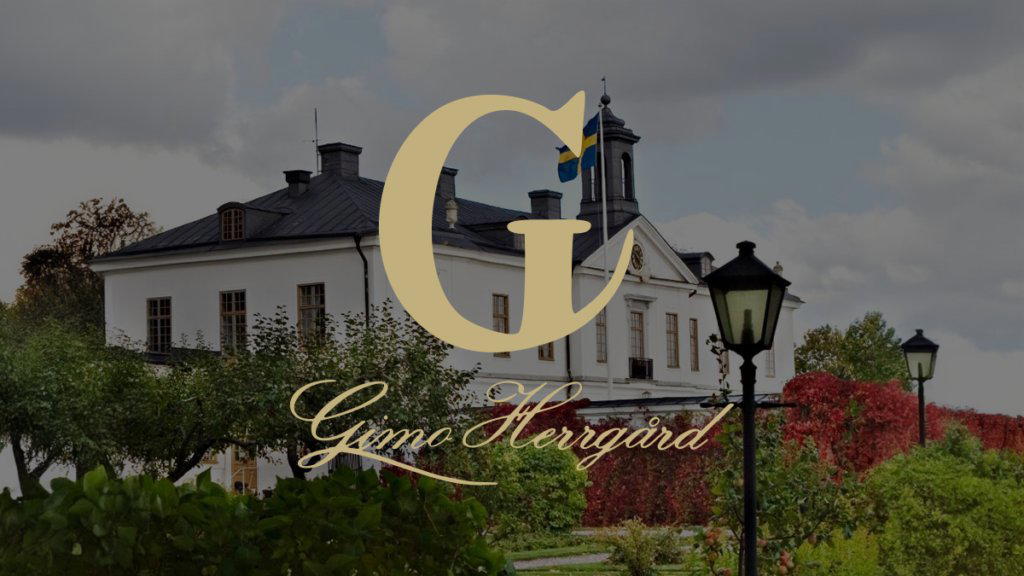
The Uppland Table: Dining Where the Land Provides
Sweden's most discussed restaurant openings tend to cluster in Stockholm, Malmö, and Gothenburg, where critics and reservation platforms converge. But a quieter strand of Swedish hospitality has always existed in the countryside, where manor houses and ironworks estates once fed entire communities from their own land. Gimo Herrgård, set on a historic bruk estate in Uppland roughly 90 kilometres north of Stockholm, belongs to that older tradition, one where the dining room and its surroundings are in direct, practical conversation.
The physical approach matters here. Uppland's agricultural flatlands give way to the managed forests and ironworks architecture of the Gimo estate. The main building carries the formal proportions of Swedish baroque manor design, with the weight and permanence of a structure built to last centuries rather than to impress a passing season. Arriving in the late afternoon, when low Nordic light crosses the façade at an angle, the building reads less like a hotel and more like a working landscape with rooms attached. That framing is not incidental, it conditions how you understand what ends up on the plate.
Sourcing as Architecture
The ingredient-sourcing argument for manor house restaurants in Sweden is direct: estates of this type historically maintained kitchen gardens, forest access, lake fishing, and livestock, making self-sufficiency the norm rather than the aspiration. What modern farm-to-table rhetoric positions as radical is, in this context, simply a return to operational logic. The question worth asking of any estate restaurant is not whether it sources locally, but how directly and with how much discipline.
Uppland itself is productive agricultural territory. The region supplies Stockholm's markets with root vegetables, game, freshwater fish from the network of lakes running north toward Dalarna, and forest produce including mushrooms and berries across the relevant seasons. An estate kitchen operating within that geography has access to ingredients that urban restaurants in the capital must plan months ahead to secure. That proximity to source is, practically speaking, a structural advantage, and it shapes what a menu at this latitude can do between October and April, when the ingredient window narrows and the kitchen must work with preserved, cured, and stored produce alongside what the landscape still yields.
This is the register in which Swedish manor dining differs most sharply from its urban counterparts. Restaurants like Frantzén in Stockholm or Vollmers in Malmö operate at the premium end of New Nordic coding, with supply chains carefully engineered to deliver specific products at peak condition regardless of geography. Estate kitchens work differently, the geography is fixed, and the menu adapts to it. That is a meaningful distinction, not a consolation.
The Wine Programme and the White Star
Gimo Herrgård received a White Star designation from Star Wine List in April 2025. The White Star is awarded to venues with wine programmes considered to offer quality and depth relative to their format and setting, not merely list length or prestige label coverage. For a manor house hotel in a small Uppland town, that recognition signals a wine operation taken seriously: likely structured around European producers, with some depth in Swedish selections and the kind of sommelier engagement that goes beyond standard hotel list management.
The broader wine culture in Sweden is worth noting for context. Swedish wine import regulations and the Systembolaget framework mean that restaurant lists here often reflect careful curation rather than volume, and particularly interesting programmes tend to prioritise grower producers, natural and low-intervention wines, and regional European bottles over trophy-label accumulation. A White Star in this environment is earned on specificity, not scale. For more on where Sweden's wine culture intersects with hospitality, our full Sweden wineries guide covers the domestic and import landscape.
Placing Gimo in the Swedish Country Dining Circuit
The category of Swedish country house dining is smaller than its urban counterpart but coherent as a peer group. Properties like ÄNG in Tvååker and Knystaforsen in Rydöbruk demonstrate that serious cooking and serious wine programmes are not confined to city postcodes, each operates from a rural or semi-rural base and has built recognition through food quality rather than metropolitan proximity. VYN in Simrishamn makes a comparable case from the Österlen coast. Gimo occupies a slightly different position: further north, closer to the historical ironworks culture of Uppland, and oriented as much toward the hotel-and-estate experience as toward destination dining alone.
Other Swedish regional tables worth mapping as comparisons include PM & Vänner in Växjö, Fyr in Halmstad, Hotell Borgholm in Borgholm, and JH Matbar in Ystad, each working with strong regional identity and showing that Swedish dining outside the three main cities has reached a point where the comparison set is peers, not a lesser tier. For bars and experiential programming across the country, our full Sweden bars guide and our full Sweden experiences guide provide additional framing.
For international reference points outside Sweden, the model of cooking seriously in a rural estate setting with a strong wine programme has analogues at restaurants like Signum in Mölnlycke, and in a different register, internationally at venues like Le Bernardin in New York City or Emeril's in New Orleans, both representing the principle that format and setting are part of the dining proposition, not just backdrop.
Planning a Visit
Gimo sits in Tier 3 Uppland, approximately 90 kilometres north of Stockholm by road, a drive of around 90 minutes depending on route. There is no direct rail link to Gimo, so a car or hired transfer is the practical approach from the capital. The estate format means that staying overnight is the natural framing: arriving the evening before and using the following morning to move through the grounds before departure extracts more from the visit than a same-day trip allows. Seasonal timing is worth considering, Uppland summers are long and light, making June through August the period when the estate landscape reads at its fullest, while late autumn and winter visits lean into the darker, more interior character of Nordic estate life, which has its own appeal for guests who want the full contrast of warm rooms and cold outside.
A Quick Peer Check
Comparable venues nearby, for context on price, style, and recognition.
| Venue | Cuisine | Price | Notes |
|---|---|---|---|
| Gimo HerrgårdThis venue — the venue you are viewing | Traditional Swedish Fine Dining | $$$ | Not listed |
| Folii | Wine Bar Small Plates | $$$ | Södermalm |
| Jussi Björlings allé | Scandinavian Café & Brunch | $$ | Norrmalm |
| Restaurang Hantverket | Modern Swedish Cuisine with European Influences | $$$ | Östermalm |
| Meatballs | Traditional Swedish Meatballs | $$ | Södermalm |
| Bistro Mirabelle | French Bistro | $$$ | Vasastan |
Recognition history
Dated appearances from independent guides and award organizations, with the underlying list record or original source where available.
Star Wine List
Star Wine List
At a Glance
- Romantic
- Elegant
- Historic
- Cozy
- Scenic
- Date Night
- Special Occasion
- Historic Building
- Garden
- Extensive Wine List
- Local Sourcing
- Garden
Idyllic countryside manor with restored grandeur dining rooms, cozy lounges, and pleasant spa atmosphere around a frozen or scenic lake.