
Michelin Plate
Our verdict
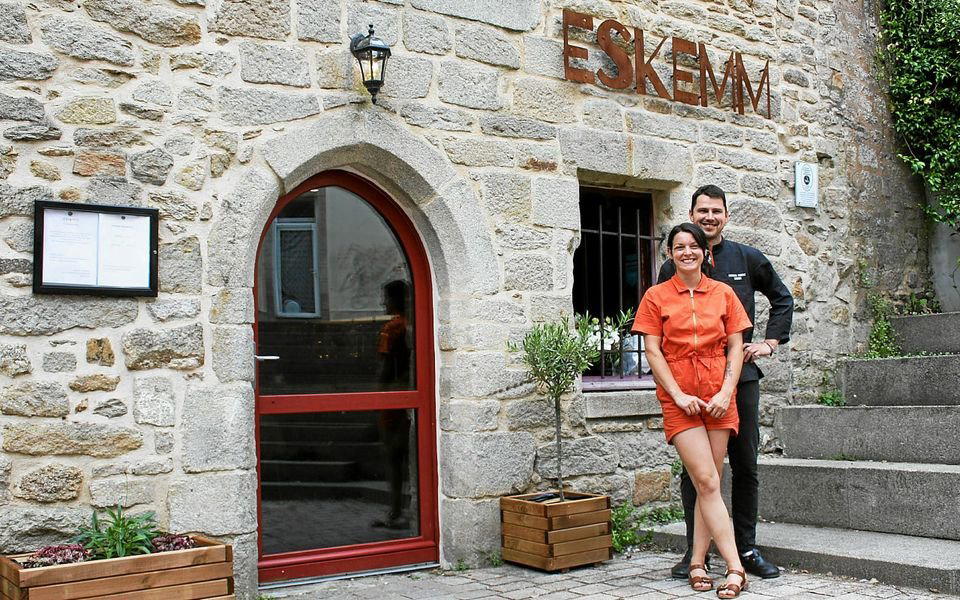
In a stone building a short walk from St Corentin Cathedral, Eskemm occupies an intimate upstairs dining room with just twenty covers, where Breton terroir drives a menu that moves between a daytime à la carte and an ambitious multi-course evening format. The cooking is anchored in local ingredients while allowing room for occasional departures, with combinations like parsnip, ricotta, and pear signalling a precise, considered approach to Finistère produce.

Pearl is the En Primeur Club membership app, where members save venues, book tables and use the concierge.
The menu
What to order
- Hake Ceviche with Lemon Confit and Balsamic
- Roasted Bar Fillet with Herb Emulsion
- Seafood Cassolette
- Kouign-Amann Maison
- Chicken and Chinese Cabbage Stew with Caper Foam
Stone Walls, Twenty Covers, and the Weight of Breton Terroir
Quimper's old town carries its history lightly. The half-timbered facades along the Odet, the Gothic spires of St Corentin Cathedral pressing up against the skyline, the slow rhythm of a provincial capital that has never felt the need to perform, all of this shapes the context in which a restaurant like Eskemm makes sense. At 14 rue Treuz, a stone building with a discreet street presence holds a room of twenty that operates less like a dining destination and more like a deliberate argument for cooking with discipline and place.
That argument has particular force in Finistère, the westernmost département of metropolitan France, where the Atlantic defines both the agriculture and the fishing grounds. Brittany's reputation for premium raw materials, its oysters from the Belon and Cancale, its artichoke and cauliflower fields inland, its coastal lamb, gives any kitchen that pays attention a genuine competitive advantage over peers in regions where terroir is a more constructed idea. In this context, the choice to anchor a menu in Breton produce is not a marketing position but a practical one: the ingredients are close, the seasons are legible, and the supply chains are short.
What the Building Communicates Before You Sit Down
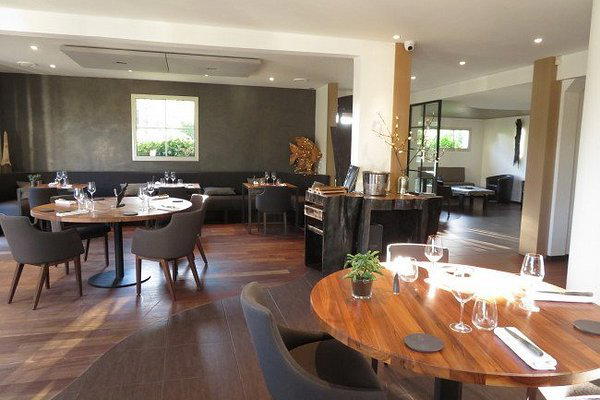
The physical arrangement of Eskemm is worth understanding, because it sets expectations that the cooking then either meets or exceeds. A small ground-floor lounge receives guests before they move through a glass-walled cellar space, a detail that signals wine is taken seriously here without requiring a full sommelier theatre to make the point. The dining room upstairs seats twenty people around a scheme of wood and stone that reads as contemporary without abandoning the material character of its historic shell. In a city where a number of restaurants default to either charmless modernity or preserved-in-amber traditionalism, the balance here places Eskemm in a smaller, more considered tier.
For Quimper dining specifically, this matters. The city's restaurant scene is not large, and the upper bracket is defined by a handful of addresses that treat the surrounding farmland and coastline as genuine larders rather than decorative context. Peers like Allium and Sao occupy the creative tier at €€€, while La Ferme de l'Odet and Nous Restaurant work within modern cuisine at the €€ level. Eskemm's positioning within that map has its own logic: a room this small with a format this focused occupies a niche defined by intimacy and intention rather than volume or versatility. For a broader map of where this fits, our full Quimper restaurants guide covers the current spread.
Sourcing as Structure: Where the Food Comes From
Breton cuisine at its least interesting is a recitation of clichés: buckwheat crêpes, salted caramel, cider. At its most serious, it is one of France's more coherent regional food traditions, built on produce that reflects both the peninsula's Atlantic exposure and its inland agricultural character. Root vegetables, dairy from grass-fed herds, coastal fish, and foraged herbs all contribute to a pantry that rewards restraint more than elaboration.
The combination of creamy parsnip with ricotta and pear that appears in the Michelin record for Eskemm is instructive precisely because it is not an obvious Breton reference. Parsnip is a cool-weather root that grows well in Finistère's damp climate; ricotta introduces a dairy richness that speaks to the region's milk culture without being a literalist Breton reference; pear brings a clean, acidic sweetness that prevents the dish from collapsing into richness. It is the kind of combination that only makes sense when the cook knows which element from each ingredient is doing work and which is decorative. This approach, grounded in local supply but not constrained by regional nostalgia, is precisely where the more compelling expressions of French regional cooking operate in the current decade.
At the scale France's finest tables operate, the relationship between sourcing and ambition is well-established. Houses like Mirazur in Menton and Bras in Laguiole have made the provenance of ingredients a structural element of how menus are constructed, not a footnote. At a smaller and less decorated scale, the logic is the same: when sourcing is doing real work, the menu reflects a geography rather than a chef's individual stylistic preferences. Flocons de Sel in Megève and Auberge de l'Ill in Illhaeusern represent the Alsatian and Alpine versions of the same argument. Eskemm works within a Breton version, at a fraction of the scale and without the same degree of national recognition, but with the same underlying logic.
Format: Daytime Flexibility, Evening Ambition
The structure of service at Eskemm reflects a practical reading of what different visitors need. During the day, a small à la carte allows for lighter meals without the full commitment of a multi-course format, a useful attribute in a city where the Cathedral square and surrounding old town make a midday stop natural. In the evening, the format shifts toward a more ambitious multi-course menu that requires more time and attention from both the kitchen and the guest. This split is common among French addresses that want to hold a serious evening reputation without closing off daytime trade entirely, and when done with discipline it avoids the dilution of identity that comes from trying to be everything at every hour.
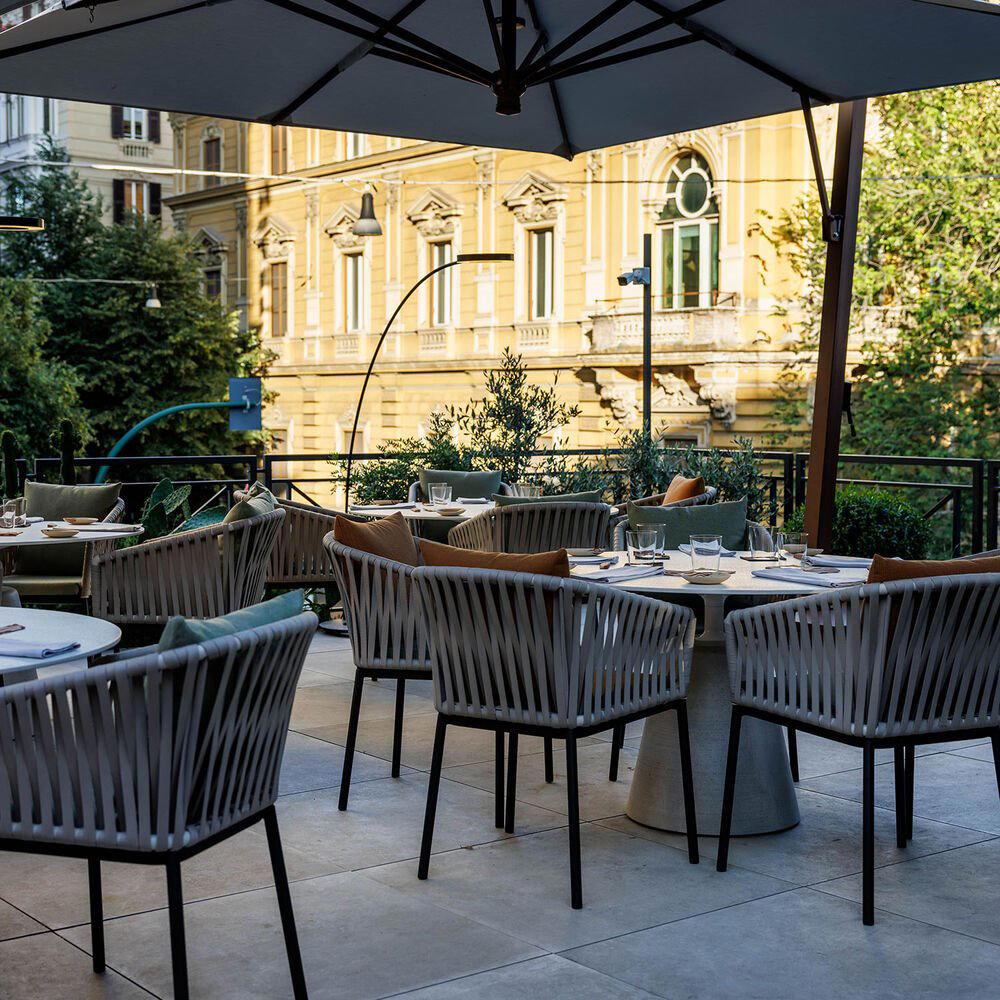
The terrace, available in fine weather, operates as a distinct experience within the same address: sheltered from view and from the ambient noise of the city centre, it offers a different register from the stone-and-wood interior upstairs. In a town as visited as Quimper during the summer months, a terrace that reads as a retreat rather than a pavement extension is a meaningful operational asset. That said, the twenty-cover interior upstairs remains the most considered setting for the evening format, and availability at that scale is predictably limited.
Planning a Visit
Eskemm sits at 14 rue Treuz, within easy walking distance of St Corentin Cathedral and the medieval quarter that draws most visitors to Quimper's centre. For those combining a meal with a wider stay, our full Quimper hotels guide covers the current options across price tiers. The evening multi-course format is the version that leading reflects the kitchen's range and is the logical choice for a dedicated visit; the daytime à la carte suits a shorter stop within a city afternoon. Booking ahead is advisable given the twenty-seat ceiling. For drinks before or after, our full Quimper bars guide maps the options nearby. Those interested in Breton wine and cider producers can find context in our full Quimper wineries guide, and for cultural programming around a stay, our full Quimper experiences guide is the reference point.
For those arriving from outside France or comparing Eskemm against a wider frame of reference, it is worth noting that the intimacy and regional coherence here have more in common with the quieter, produce-driven side of French cooking than with the high-technique spectacle associated with addresses like Alléno Paris au Pavillon Ledoyen or Troisgros - Le Bois sans Feuilles. It is also some distance from the Franco-American registers of Le Bernardin in New York City or Emeril's in New Orleans. What Eskemm does is smaller in scale and specifically Breton in orientation, and that specificity is the point. For those already planning to visit Quimper and looking at how the broader restaurant scene divides, Ti-Coz represents the traditional Breton end of the local spectrum, making for a useful comparison against Eskemm's more contemporary approach.
Frequently asked questions
Can I bring kids to Eskemm?
The twenty-cover room at 14 rue Treuz is oriented toward unhurried adult dining, particularly in the evening when the multi-course set menu runs. The intimate scale means there is little margin for noise or movement without affecting neighbouring tables. Daytime à la carte service is more flexible, but the setting rewards guests who engage with the food rather than manage distractions.
What should I expect atmosphere-wise at Eskemm?
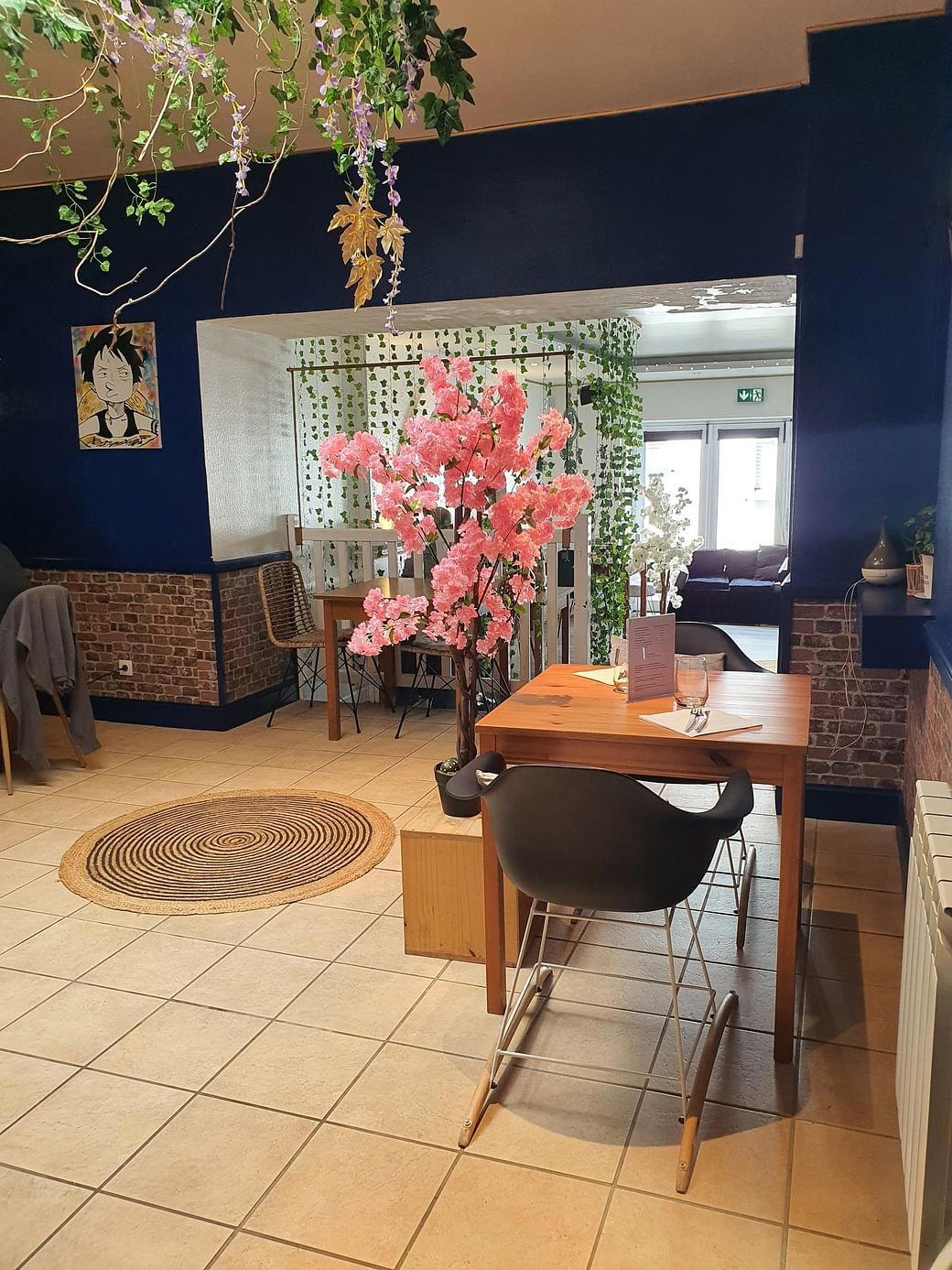
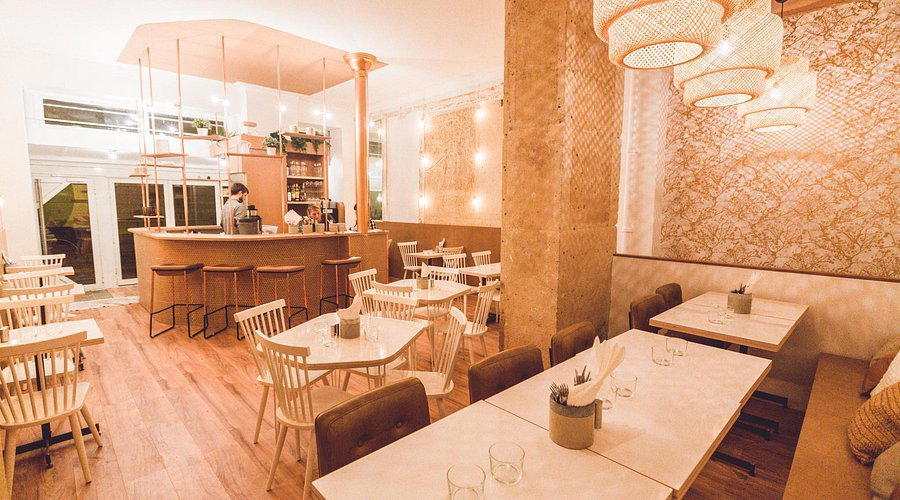
The building is a historic stone structure near St Corentin Cathedral, and the interior leans into that weight: exposed stone and wood finishes, a glass-walled cellar on the ground floor, and an upstairs dining room with twenty covers. Quiet is the operative word. When the weather holds, a sheltered terrace provides an alternative to the enclosed rooms, away from the street noise of the old town.
Has Eskemm won any awards?
Eskemm has received recognition including: Not far from St Corentin Cathedral, this restaurant is housed in a stone building steeped in history. Behind the discreet façade, a small ground-floor lounge, a glass-walled cellar and, upstairs, an intimate dining space seating 20, done ou….
What should I eat at Eskemm?
The evening multi-course set menu is where the kitchen's ambitions are clearest, with combinations such as parsnip with ricotta and pear signalling a sourcing-led approach that occasionally crosses beyond Brittany's own larder. The daytime à la carte suits lighter visits but covers less of the range. If the terrace is open, the sheltered outdoor seats alongside the set menu make a strong case for an evening booking.
What's Eskemm's location?
Eskemm is located at 14 rue Treuz, Quimper.
In Context: Similar Options
Comparable venues nearby, for context on price, style, and recognition.
| Venue | Cuisine | Price | Awards | Notes |
|---|---|---|---|---|
| EskemmThis venue (the venue you are viewing) | Modern Breton Gastronomy | $50–100 | Michelin Plate | Not listed |
| Nous Restaurant | Modern French Tasting | Not listed | Michelin Plate | centre-ville |
| Sao | Gastronomic French-Breton Cuisine with Asian Influences | Not listed | Michelin Plate | Quimper |
| La Ferme de l'Odet | Modern French-Breton Fusion | $50–100 | Michelin Plate | Baie de Kérogan |
| Éclosion | Modern French Bistronomic | $30–50 | Michelin Bib Gourmand | cœur historique |
| An Diskuiz | Traditional Breton Crêperie | $10–20 | Not listed | Quimper historic district |
Recognition history
Dated appearances from independent guides and award organizations, with the underlying list record or original source where available.
Michelin Plate
Michelin
Continue exploring
More in Quimper
Details
- Elegant
- Modern
- Intimate
- Quiet
- Date Night
- Business Dinner
- Special Occasion
- Historic Building
- Open Kitchen
- Sommelier Led
- Local Sourcing
- Farm To Table
- Tasting Menu
- A La Carte
- Prix Fixe
- Wine Pairing
- Local Wines
- Vegetarian Friendly
- Allergy Accommodating
Current opening hours
- Monday
- Closed
- Tuesday
- Closed
- Wednesday
- 12–1:30 PM, 7:30–9 PM
- Thursday
- 12–1:30 PM, 7:30–9 PM
- Friday
- 12–1:30 PM, 7:30–9 PM
- Saturday
- 12–1:30 PM, 7:30–9 PM
- Sunday
- 10 AM–1 PM
Hours can change for holidays and private events. Hours as of .
Elegant and refined with clean modern lines contrasting against polished historic stone walls; warm and welcoming atmosphere with attentive service.