Delmy’s Pupusas

LA Times 101 Best Restaurants #67
Our verdict
Ranked #62 on the LA Times 101 Best Restaurants 2024, Delmy's Pupusas is Ruth Sandoval's farmers market operation built around El Salvador's national dish. Operating across Silver Lake, Atwater Village, Echo Park, and other LA markets since 2007, the stand turns fresh, local masa into griddle-crisped pupusas finished with curtido and red salsa, a disciplined, ingredient-led format that earns serious critical attention.

Pearl is the En Primeur Club membership app, where members save venues, book tables and use the concierge.
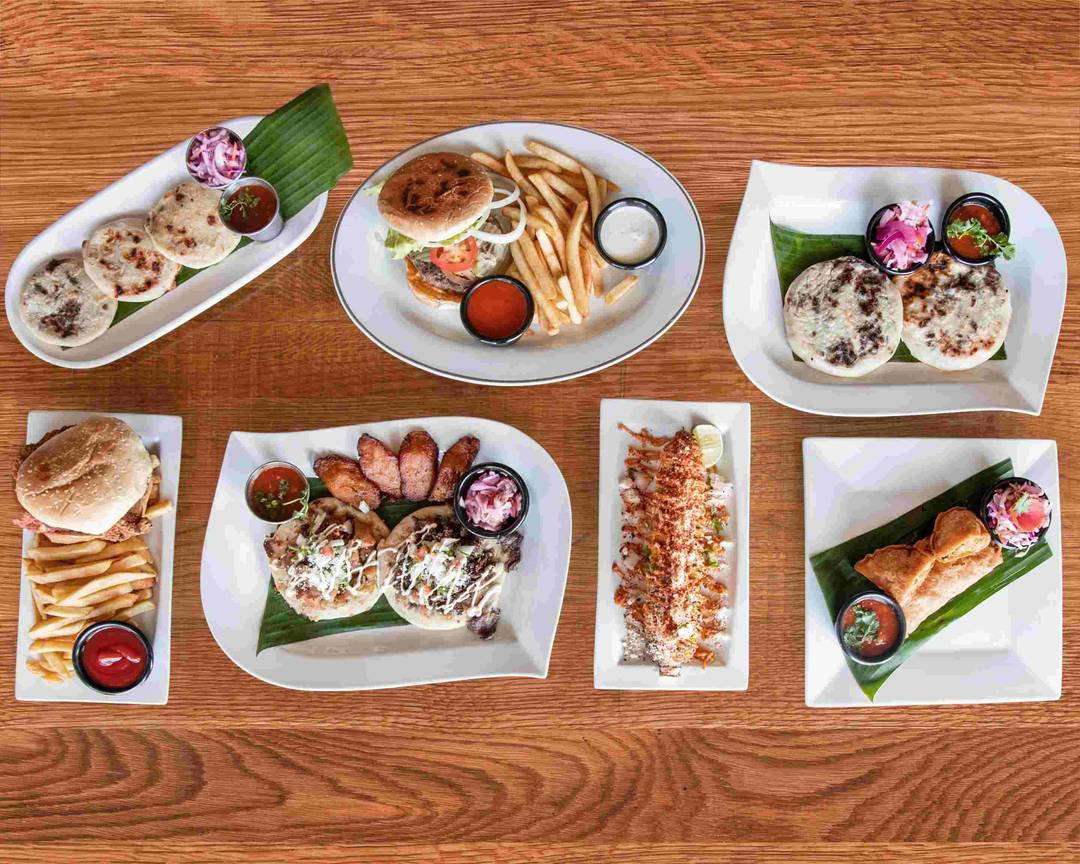
The menu
What to order
- Revuelta Pupusa
- Loroco Flower & Cheese Pupusa
- Vegan Pupusa
Saturday Morning at the Griddle
Before most of Los Angeles has finished its coffee, the smell of masa hitting a hot griddle is already drifting through the Atwater Village Farmers Market. The sound is specific: a low sizzle that builds as the dough takes on color, then the occasional press of a spatula to coax browning into the thicker parts. Delmy's Pupusas, Ruth Sandoval's roving farmers market operation, does not announce itself with signage or spectacle. It announces itself with that smell, and with a line that forms before the griddle is fully up to temperature.
This is the operating reality of LA's most critically recognized pupusa vendor. In a city where fine dining can cost $350 per head at counters like Hayato or Somni, the 2024 LA Times 101 Best Restaurants list placed Delmy's at #62, a ranking that sits alongside tasting-menu rooms and established chef-driven institutions. The placement is a signal about where the critical conversation around Los Angeles food has moved: toward specificity and authenticity of technique, regardless of format or price point.
The Arc of a Pupusa Order
The pupusa format is built for sequence, even when you are eating standing up at a farmers market. Sandoval's menu works through that sequence with discipline, and understanding the progression is the difference between a satisfying order and a great one.
It starts with masa. Sandoval works with harina de maiz, a corn flour that, in her preparation, produces a center that is closer to cake-like than the denser masa found at many pupuserias. The exterior griddles until it develops splotchy, dark-brown patches, the visual cue that the inside is ready to burst. The masa-to-filling ratio, consistently noted by the LA Times, is the structural foundation on which everything else depends.
The canonical order at any Salvadoran pupuseria, and the one that best demonstrates a cook's command of the format, is cheese and loroco. Loroco is a flower bud native to Central America, mildly bitter, with an herbal quality that cuts through the pull of molten cheese. It is the combination that appears on almost every pupusa menu across El Salvador and its diaspora, and it is the one that reveals whether a cook understands balance or is simply filling dough. Sandoval's version uses that bitterness as an active ingredient, not a garnish.
For those who want to see how the format stretches, the ground chicharrón pupusa is the answer. Slow-cooked pork, when handled correctly, takes on a consistency closer to creamy grits than to the chunky preparations common elsewhere, a textural shift that changes the weight and rhythm of the eating experience. More recently, Sandoval has added a blue corn masa plant-based pupusa, stuffed with vegetables sourced from the same farmers markets where she sells, which places her work within the broader LA movement toward ingredient sourcing as a value statement.
The accompaniments complete the structure. Red salsa introduces heat and acidity. Curtido, the fermented cabbage slaw that is to Salvadoran cooking what kimchi is to Korean, adds crunch and brightness. The combination of molten cheese, acid from salsa, and curtido crunch is not an accident of tradition, it is a considered balance that has evolved over generations for exactly this food. After the savory sequence, fried plantains with black bean puree for dipping offer a closing sweetness that is calibrated rather than heavy.
Salvadoran Diaspora Cooking in Los Angeles
Los Angeles has one of the largest Salvadoran communities outside El Salvador, concentrated historically in the Pico-Union and MacArthur Park neighborhoods, with diaspora spread across the broader metro. Pupuserias have been part of the city's eating fabric for decades. What has changed is where that food appears in the critical conversation.
The 2024 LA Times 101 list represents a deliberate editorial decision to place format-agnostic cooking on equal footing with conventional restaurants. Delmy's sits on that list alongside Michelin-recognized rooms, established tasting-menu destinations, and chef-driven projects. The ranking does not require a reader to choose between a pupusa and a kaiseki dinner, it asks them to apply the same standard of craft evaluation to both.
Sandoval founded the stand in 2007, naming it for her mother, who immigrated to the United States during the Salvadoran civil war of the 1980s. That biographical fact is not the story here, but it is context: the cooking comes from a specific generational and cultural knowledge, not from a chef's interpretation of a cuisine they encountered as adults. The difference in authority is audible in how the masa tastes.
For a sense of how LA's broader dining range maps from street-level to formal, our full Los Angeles restaurants guide covers the city's dining across price tiers and cuisines. The contrast between Delmy's and tasting-menu rooms like Kato or Providence is not a hierarchy, it is a demonstration of range. Other major US restaurant cities worth benchmarking include Le Bernardin in New York, Lazy Bear in San Francisco, and Alinea in Chicago, all operating in a very different register but sharing the same underlying commitment to technique.
Planning Your Visit
Delmy's Pupusas operates as a farmers market vendor, not a fixed restaurant. Market locations include Silver Lake, Atwater Village, Echo Park, Torrance, and Hollywood, each on a weekly rotation. Arrival time matters: the line forms early, and the most popular preparations sell out. There is no reservation system, no booking link, and no indoor seating, this is griddle-side eating, and the conditions are part of the format.
| Venue | Format | Booking Required | Recognition |
|---|---|---|---|
| Delmy's Pupusas | Farmers market stand | No reservation, walk-up only | LA Times 101 Best 2024 (#62) |
| Kato | Restaurant, tasting menu | Advance booking required | Michelin 1 Star |
| Hayato | Counter omakase | Advance booking required | Michelin 2 Stars |
| Osteria Mozza | Full-service restaurant | Reservations recommended | Established LA institution |
For the rest of your Los Angeles trip, our Los Angeles hotels guide, bars guide, wineries guide, and experiences guide cover the city across categories. If you are building a broader California itinerary, The French Laundry in Napa and Single Thread Farm in Healdsburg operate at the opposite end of the format and price spectrum.
Frequently asked questions
Is Delmy’s Pupusas Michelin-listed?
Delmy’s Pupusas has received recognition including: A beloved farmers market vendor specializing in authentic Salvadoran pupusas, founded by Ruth Sandoval. Known for using fresh, local, and organic ingredients, the pupusas are described as 'little pockets of love' with a perfect masa-to-fill….
What's the address for Delmy’s Pupusas?
Delmy’s Pupusas is located at 3216 Glendale Blvd, Los Angeles, CA 90039, USA, Los Angeles.
What do critics highlight about Delmy’s Pupusas?
Delmy’s Pupusas is best approached by focusing on the core concept and signature offerings.
Can Delmy’s Pupusas accommodate dietary restrictions?
Dietary accommodations can vary. Flag restrictions in advance via the venue's official channels.
What do people recommend at Delmy's Pupusas?
The cheese and loroco pupusa is the go-to order, pairing bitter Central American flower buds with melted cheese, red salsa, and curtido for the classic combination of fat, acid, and crunch. The harina de maiz variety is noted for a cake-like interior texture, while the ground chicharrón filling takes on a creamy, grits-like consistency on the griddle. A blue corn masa plant-based pupusa stuffed with produce from the surrounding market is also on the menu. Fried plantains with black bean puree serve as a natural finish.
Peers in This Market
| Venue | Cuisine | Price | Awards | Notes |
|---|---|---|---|---|
| Delmy’s PupusasThis venue (the venue you are viewing) | Salvadoran | $10–20 | LA Times 101 Best Restaurants #67 | Not listed |
| Kato | Modern Taiwanese Fine Dining | $300–500 | 2 Michelin Stars · World's 50 Best #49 | New Taiwanese, Asian |
| Hayato | Traditional Japanese Kaiseki | $300–500 | 2 Michelin Stars · La Liste Top Restaurants | Japanese |
| Vespertine | Avant-Garde Tasting Menu | $200–300 | 2 Michelin Stars · La Liste Top Restaurants | Progressive, Contemporary |
| Camphor | Modern French with Southeast Asian influences | $150–200 | Michelin Plate · World Best Burgers World's 101 Best Burgers #15 | French-Asian, French |
| Gwen | Contemporary American Steakhouse | $50–100 | Michelin Plate · Wine Spectator Best of Award of Excellence | New American, Steakhouse |
Recognition history
Dated appearances from independent guides and award organizations, with the underlying list record or original source where available.
LA Times 101 Best Restaurants #67
LA Times
Full recognition history (2 entries)
LA Times 101 Best Restaurants #62
LA Times