
Guía Repsol 1 Sol
Our verdict
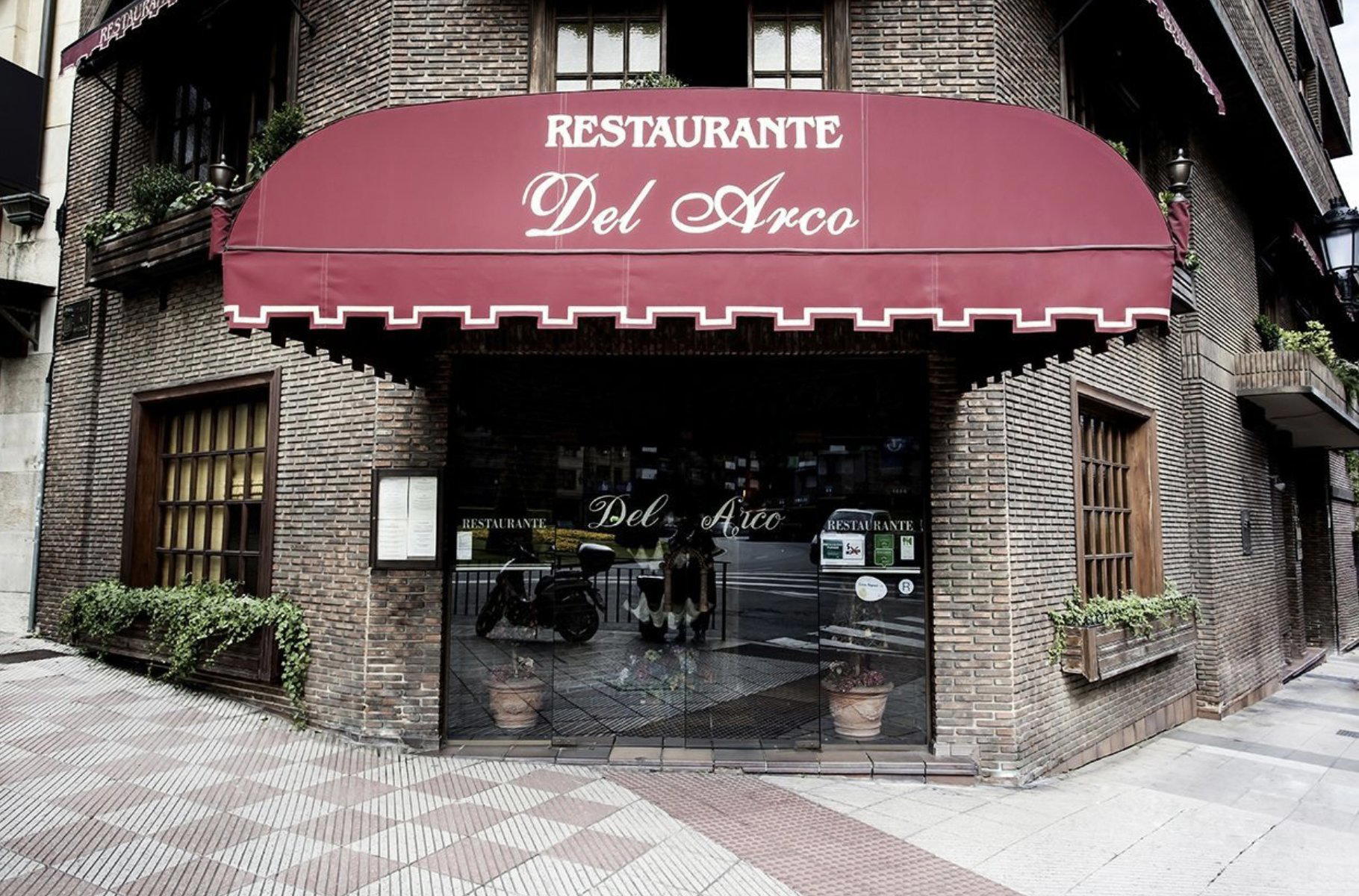
Del Arco belongs to Oviedo’s ingredient-led dining conversation: Asturian produce, city-centre polish, and enough recognition to sit above the casual sidrería circuit. Its 1 Sol in the Guía Repsol 2026 gives it a clear quality marker, while the appeal is less about spectacle than the way Oviedo’s pantry can read in a composed urban restaurant.

Pearl is the En Primeur Club membership app, where members save venues, book tables and use the concierge.
The menu
What to order
- Fabada asturiana
- Cachopo
- Varied market fish from the lonja
- Helado de turrón
Oviedo sits away from easy visitor shorthand, and that matters. The mood around Del Arco is more measured than rowdy: a city restaurant where lunch can carry the weight of a proper meal and dinner does not need to perform for tourists. In Asturias, that distinction is useful. The region’s cooking is often reduced from outside to a few familiar images, but Oviedo’s stronger tables have spent years proving that local dining can support a sharper, more contemporary register.
Del Arco’s place in that register is reinforced by its 1 Sol in the Guía Repsol 2026, a Spanish recognition that helps mark it out within the city’s serious restaurant conversation. For a city of Oviedo’s scale, that signal helps separate more ambitious dining rooms from merely comfortable ones. It does not need to put the restaurant into the tasting-menu arms race associated with larger Spanish capitals; it places it in a more useful category for travellers, the polished city table where the meal remains rooted in place.
Oviedo dining, handled with city discipline
The stronger argument for eating in Oviedo is not novelty, but access. The city gives visitors a way into Asturias through meals that can feel local without relying on postcard shorthand. Restaurants working at Del Arco’s level are judged by how they edit that abundance. The question is not whether a menu sounds regional, but whether the kitchen can keep generosity from becoming weight.
That is where this Oviedo restaurant fits the city’s current dining mood. Oviedo now supports several registers of serious eating: regional rooms such as Gloria, traditional-leaning houses including Cocina Cabal, plus contemporary and international counters such as Kômiwa Restaurante japonés. Del Arco belongs to the part of that map where the restaurant’s Oviedo setting is the foundation rather than a decorative claim.
That positioning also matters because Asturias can be a trap for visitors who confuse portion size with depth. The better urban restaurants do not reject the region’s appetite; they give it structure. In practical terms, that usually means a meal built around local confidence rather than imported luxury shorthand. Without needing to imitate Madrid or Barcelona, Oviedo’s sharper rooms can feel more secure because the surrounding city and region give them enough context.
How it compares in Oviedo's serious dining tier
Oviedo’s dining hierarchy is compact, so comparisons are useful. NM occupies a more creative lane, while Cocina Cabal holds a more classic frame. Gloria makes regional dining accessible in a broader sense. Del Arco sits between those poles: more composed than a simple local tavern, less defined by avant-garde ambition than the city’s most experimental tier. That middle position can be the right one for travellers who want an Oviedo meal interpreted with restraint rather than translated into theatre.
The 1 Sol gives Del Arco a national quality marker, but the smarter reading is local. In Spanish secondary cities, Repsol recognition often identifies restaurants that matter to domestic diners before they become obvious to international visitors. That makes the award especially relevant in Oviedo, where Michelin-style destination planning is not the only lens. A Sol here suggests a dining room operating above neighbourhood convenience.
For readers building a broader Spain itinerary, the distinction is useful. Other Spanish dining rooms may read through different local economies, from coastal formats to historic rooms or wine-country addresses. Del Arco should be understood the same way: not as a generic Spanish fine-dining stop, but as an Oviedo restaurant whose value comes from its place in the city’s dining scene.
Who should put it on an Oviedo itinerary
This is a stronger fit for travellers who plan meals around place and restaurant category than for those chasing a chef biography or a list of named signature dishes. The appeal is the category: a recognised Oviedo restaurant that can be read as part of the city’s composed dining register, without losing the city’s appetite. It pairs well with a longer local survey, especially for readers using Our full Oviedo restaurants guide to balance traditional cooking, regional dining and contemporary formats.
For a city break, the wider context helps. Oviedo rewards travellers who treat food, hotels and evening drinks as part of the same urban rhythm rather than separate errands; the planning layer sits in Our full Oviedo hotels guide, Our full Oviedo bars guide, Our full Oviedo wineries guide and Our full Oviedo experiences guide. Del Arco makes the strongest case as the meal that explains the city’s middle register: neither rustic shorthand nor high-concept performance.
That middle register is also what links it, loosely, to a wider pattern. Serious regional or city-specific dining can hold attention without relying on grand tasting-menu rhetoric, and other formats can depend on clarity rather than local spectacle. Del Arco’s point is different. It gives Oviedo’s restaurant scene a disciplined city setting, and that is enough reason to take it seriously.
Frequently asked questions
Is Del Arco a family-friendly restaurant?
Del Arco is best approached as a proper sit-down restaurant in Oviedo. Families considering it should treat it as a planned meal rather than a casual drop-in stop.
Is Del Arco formal or casual?
It reads as a composed sit-down restaurant rather than a casual drop-in stop, helped by its 1 Sol from Guía Repsol 2026.
What are the opening hours for Del Arco?
Check Del Arco’s current opening hours directly before visiting, as schedules can change.
What's the address for Del Arco?
Oviedo.
What's Del Arco best at?
Del Arco is strongest as a recognised Oviedo dining room, with Guía Repsol recognition confirming that position. Its appeal lies in its place within Oviedo’s serious restaurant tier rather than chef-driven theatrics or a heavily experimental identity.
Fast Comparison
Comparable venues by cuisine and price in the same metro.
| Venue | Cuisine | Price | Awards | Notes |
|---|---|---|---|---|
| Del ArcoThis venue (the venue you are viewing) | Traditional Asturian & Spanish restaurant with tavern | $30–50 | Guía Repsol 1 Sol | Not listed |
| Gloria | Modern Asturian Tapas | Not listed | Michelin Plate · Macarfi 7.6 Food Rating | Regional Cuisine |
| Kômiwa Restaurante japonés | Traditional Japanese Ramen & Sushi | $20–30 | Not listed | Not listed |
| UMAMI | Japanese | Not listed | Macarfi 7.1 Food Rating | Not listed |
| NM | Contemporary Spanish Fine Dining | Not listed | 1 Michelin Star | Creative |
| Cocina Cabal | Modern Mediterranean with Asturian influences | $50–100 | Michelin Plate · Macarfi 8.1 Food Rating | Traditional Cuisine |
Recognition history
Dated appearances from independent guides and award organizations, with the underlying list record or original source where available.
Guía Repsol 1 Sol
Guía Repsol
Continue exploring
More in Oviedo
Restaurants in Oviedo
All restaurants in Oviedo →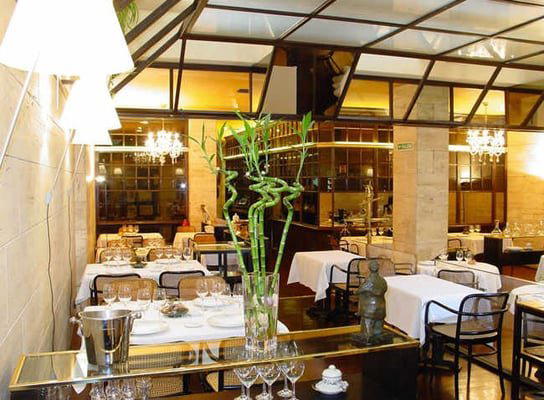

Details
- Elegant
- Cozy
- Classic
- Business Dinner
- Date Night
- Family
- Celebration
- Group Dining
- Casual Hangout
- Special Occasion
- Private Dining
- Terrace
- Standalone
- Extensive Wine List
- Beer Program
- Local Sourcing
- Sustainable Seafood
- A La Carte
- Set Menu
- Wine
- Beer
- Vegetarian Friendly
- Vegan Options
- Gluten Free Options
Current opening hours
- Monday
- Closed
- Tuesday
- 1–3:45 PM
- Wednesday
- 1–11 PM
- Thursday
- 1–11 PM
- Friday
- 1–11 PM
- Saturday
- 1–11 PM
- Sunday
- 1–3:45 PM
Hours can change for holidays and private events. Hours as of .
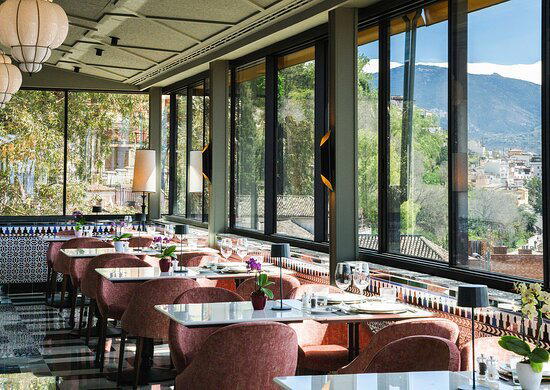
Elegant but welcoming dining rooms with classic decor, white tablecloths and warm lighting, complemented by a more casual tavern and terrace area for relaxed meals and daily menus.