
Michelin Plate
Our verdict
A Michelin Plate-recognised bouchon on the Rue de Créqui, Daniel et Denise Créqui holds its place in the tighter, more residential end of Lyon's 3rd arrondissement dining scene. The kitchen runs a disciplined Lyonnaise canon, quenelles, tablier de sapeur, tête de veau, while the wine list draws from the Rhône Valley and Beaujolais producers that have long defined how this city drinks.

Pearl is the En Primeur Club membership app, where members save venues, book tables and use the concierge.
The menu
What to order
- Pâté en croûte au foie gras de canard et ris de veau
- Quenelle de brochet sauce Nantua
- Rognon de veau rôti en cocotte
- Tête de veau sauce ravigote
- Île flottante à la praline
A Bouchon on Its Own Terms
The bouchon tradition Lyon built over several centuries is now maintained by a shrinking number of kitchens that actually hold to its disciplines. Most visitors encounter it first in the tourist-facing lanes of Vieux-Lyon or along the Presqu'île's main arteries, where the category blends into café territory and the cooking softens accordingly. The 3rd arrondissement offers a different register. Rue de Créqui sits a few blocks east of the Rhône, in a neighbourhood that functions as a working residential district rather than a dining destination, and the bouchons that survive here tend to survive on repeat local custom rather than foot traffic. Daniel et Denise Créqui, at number 156, operates in precisely that context.
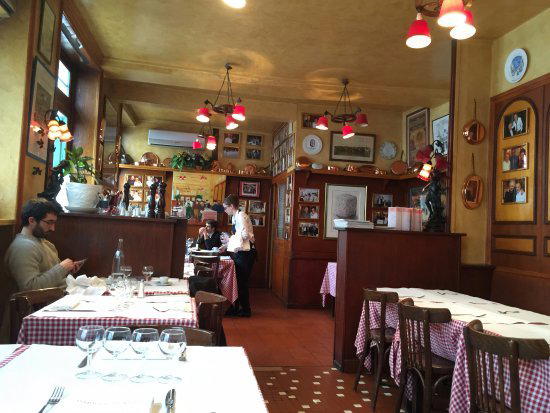
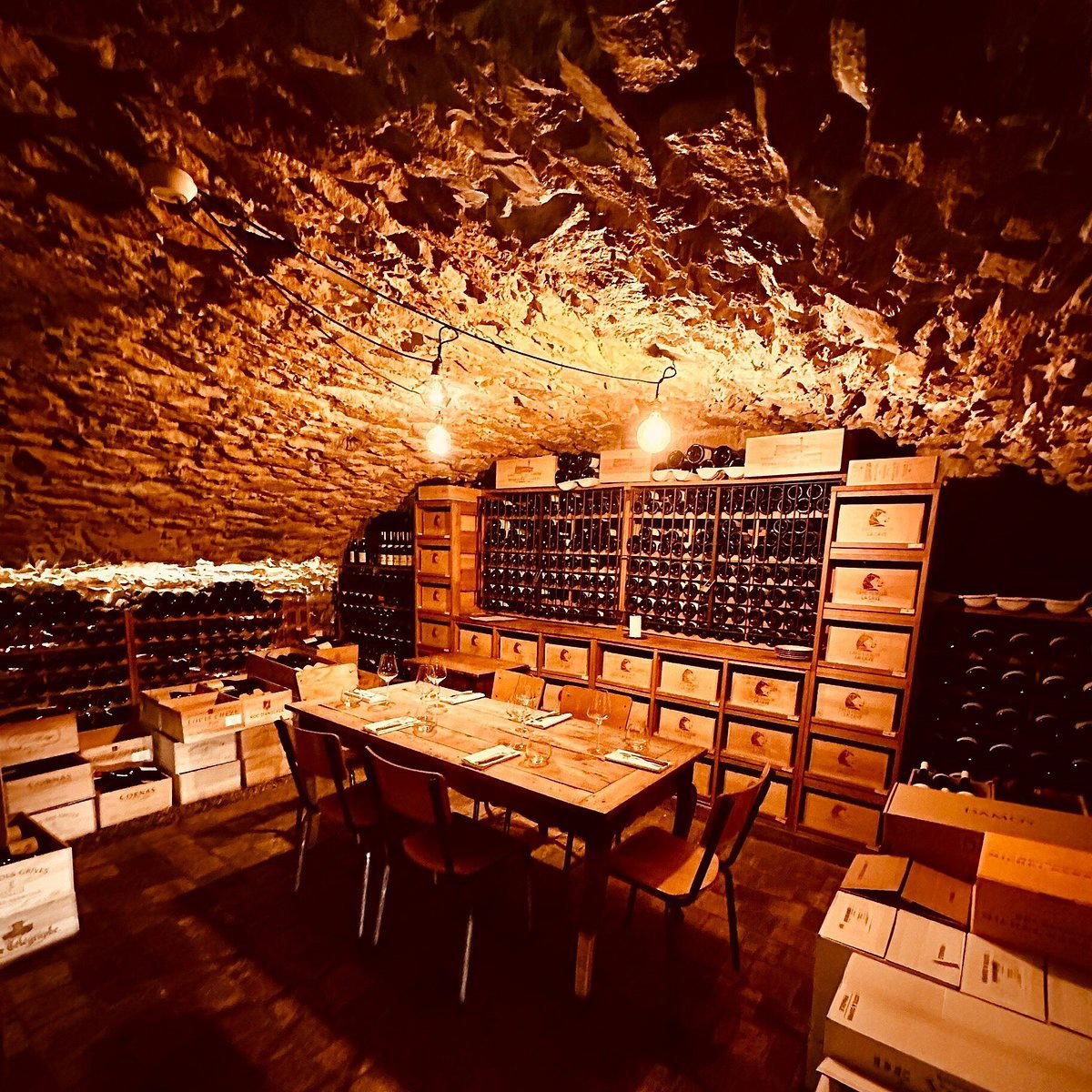
The room itself carries the physical grammar of the classic bouchon: close-set tables, checkered or tiled surfaces, the kind of ambient warmth that builds as the service progresses. There is no architectural statement being made. That restraint is, in a sense, the statement, the space signals that the kitchen is where the attention goes.
What the Michelin Plate Signals in Lyon
Lyon's Michelin map spans a wide range of ambition and price. At one end sit the starred creative tables: Alléno Paris au Pavillon Ledoyen-calibre thinking applied to local produce, at prices that reflect it. Comparison venues in the city's current starred tier include two-star operations such as La Mere Brazier and Le Neuvième Art at €€€€, and one-star addresses such as Burgundy by Matthieu at €€€. Daniel et Denise Créqui holds Michelin Plate recognition in both 2024 and 2025, which places it in a different but legitimate tier: kitchens that the Guide considers worth noting for consistent quality without the creative departure that earns stars. For the bouchon category, a Plate awarded in consecutive years functions as a quality signal that separates a kitchen from the many that use the bouchon name loosely.
The €€ price range puts it well below the starred competition, and well below its two sibling addresses in the same group. Daniel et Denise Saint-Jean in Vieux-Lyon and Daniel et Denise Croix-Rousse operate in higher-profile neighbourhoods and at a marginally different price point. The Créqui address is the most workaday of the three, which makes it, for certain visitors, the most authentic of the three.
The Lyonnaise Canon and How the Kitchen Approaches It
The cooking at a serious bouchon is not improvisational. The Lyonnaise canon is fixed and has been for generations: salade de tablier de sapeur with a sauce gribiche, quenelle de brochet in a Nantua sauce built from crayfish, tête de veau with a vinaigrette that has real bite, andouillette prepared in the AAAAA tradition that defines the category. These dishes are evaluated locally not for originality but for execution, whether the quenelle has the right soufflé-like interior, whether the andouillette carries the funk that it is supposed to carry, whether the sauce Nantua uses sufficient crustacean reduction to hold its depth.
For context on what the Lyonnaise tradition looks like at adjacent tables, Le Garet and Cafe Comptoir Abel represent comparable positions in the bouchon hierarchy, while Brasserie Georges offers a larger-format, brasserie-inflected reading of the same tradition. The Lyonnaise kitchen, exported, shows up in different forms at Aux Lyonnais in Paris and Josephine Bouchon in London, though neither operates with the sourcing advantages of being in the city itself.
The Wine List: Rhône and Beaujolais as the Default Register
Lyon's geography places it at the intersection of three wine regions: the northern Rhône to the south, Beaujolais to the north, and the broader southern Burgundy corridor to the northeast. The city's wine culture has historically defaulted to Beaujolais, specifically the crus, not the Nouveau, and to the northern Rhône appellations of Crozes-Hermitage, Saint-Joseph, and Cornas that offer more grip than their price suggests. A bouchon wine list at the Créqui price tier is typically structured around these regional producers, with a carafe format that allows ordering by the smaller measure, which is how Lyon has always drunk at lunch.
The editorial angle on any bouchon wine list is whether it reaches into the smaller Beaujolais cru producers, Moulin-à-Vent, Morgon, Chénas, or stays at the volume-production level. At this price point, the list is unlikely to carry allocations from the kind of growers that sommeliers in Paris or London pursue. What it should offer is honest representation of the Rhône and Beaujolais appellations that pair against the fat-forward cooking of the Lyonnaise canon: acid, light tannin, no oak interference. The carafe of Côtes du Rhône or Saint-Joseph alongside an andouillette is not a compromise; it is the intended pairing, arrived at over decades of local practice.
For readers interested in the deeper regional wine context, our full Lyon wineries guide covers the broader Rhône and Beaujolais producer landscape. The gastronomic tradition that shapes Lyon's wine pairings also surfaces in very different formats at Troisgros in Ouches, Flocons de Sel in Megève, Mirazur in Menton, Bras in Laguiole, and Auberge de l'Ill in Illhaeusern, all of which represent the broader French regional fine dining tradition that Lyon anchors from its central position.
Planning Your Visit
Daniel et Denise Créqui sits at 156 Rue de Créqui in the 3rd arrondissement, east of the Rhône and accessible from the Part-Dieu transport hub. The €€ pricing makes this a realistic lunch stop as well as a dinner address, and lunch is typically the format through which bouchon cooking is leading understood, the city uses it that way. For hotels near the 3rd arrondissement or across Lyon, our full Lyon hotels guide covers the relevant options. The wider Lyon eating and drinking context is in our full Lyon restaurants guide, our full Lyon bars guide, and our full Lyon experiences guide.
Frequently asked questions
How do I find Daniel et Denise Créqui?
Daniel et Denise Créqui is located at 156 Rue de Créqui, 69003 Lyon, France, Lyon.
How much does it cost to eat at Daniel et Denise Créqui?
Pricing at Daniel et Denise Créqui is listed as €€.
Is Daniel et Denise Créqui award-winning?
Daniel et Denise Créqui has received recognition including: Michelin Plate (2025); Michelin Plate (2024).
What's the must-try dish at Daniel et Denise Créqui?
The Lyonnaise canon at a serious bouchon like Daniel et Denise Créqui runs through dishes that have defined the city's tables for generations: quenelle de brochet, salade de tablier de sapeur, and gratinéed onion preparations are the benchmarks by which bouchons are judged. The kitchen holds a Michelin Plate (2024 and 2025), which signals consistent execution rather than novelty, so ordering from the core Lyonnaise repertoire is the point.
Can I walk in to Daniel et Denise Créqui?
Walk-ins are possible at many Lyon bouchons during off-peak lunch sittings, but Daniel et Denise Créqui draws a regular local following in the 3rd arrondissement, and a Michelin Plate recognition across two consecutive years keeps tables in demand. Booking ahead is the more reliable approach, particularly for dinner or weekend service. Contact details are best confirmed directly via the restaurant at 156 Rue de Créqui, Lyon 69003.
What do critics highlight about Daniel et Denise Créqui?
Michelin has awarded the restaurant a Plate in both 2024 and 2025, the guide's signal for cooking that meets quality standards without reaching starred territory. In Lyon's context, that places Daniel et Denise Créqui among a shrinking number of bouchons that hold to the discipline of the traditional Lyonnaise repertoire rather than drifting toward modernised bistro formats. The €€ price range is consistent with the bouchon model, where the cooking speaks through faithfulness to technique rather than premium pricing.
At-a-Glance Comparison
A quick peer list to put this venue’s basics in context.
| Venue | Cuisine | Price | Awards | Notes |
|---|---|---|---|---|
| Daniel et Denise CréquiThis venue (the venue you are viewing) | Lyonnaise Bouchon Gastronomique | $50–100 | Michelin Plate | Not listed |
| Le Neuvième Art | Modern French Gastronomique | Not listed | 2 Michelin Stars · La Liste Top Restaurants | Contemporary French, Creative |
| Rustique | Contemporary French Peasant Cuisine | Not listed | 1 Michelin Star · Gault & Millau Remarkable Restaurant | Creative |
| La Mere Brazier | Modern Lyonnaise Fine Dining | $50–100 | 2 Michelin Stars · La Liste Top Restaurants | French |
| Burgundy by Matthieu | Modern French Fine Dining | $150–200 | 1 Michelin Star · Gault & Millau Remarkable Restaurant | Modern Cuisine |
| Miraflores | Franco-Peruvian Fine Dining | $150–200 | 1 Michelin Star · Gault & Millau Remarkable Restaurant | Peruvian |
Recognition history
Dated appearances from independent guides and award organizations, with the underlying list record or original source where available.
Michelin Plate
Michelin
Full recognition history (3 entries)
Michelin Plate
Michelin
Michelin Plate
Michelin
Continue exploring
More in Lyon
Restaurants in Lyon
All restaurants in Lyon →
Bars in Lyon
All bars in Lyon →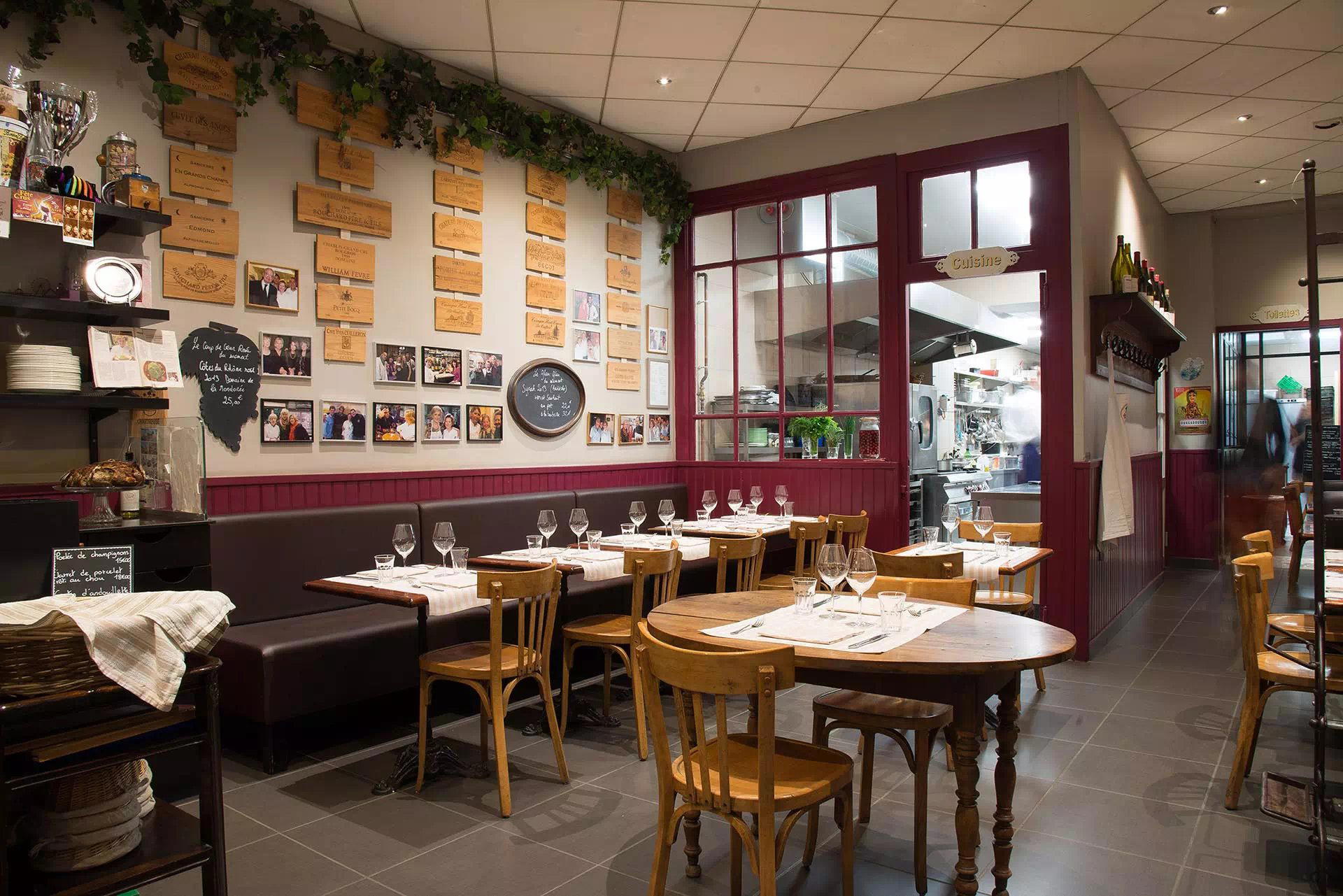

Details
- Classic
- Cozy
- Well Known
- Rustic
- Lively
- Date Night
- Group Dining
- Family
- Celebration
- Special Occasion
- Private Dining
- Historic Building
- Standalone
- Sommelier Led
- Local Sourcing
- Farm To Table
- A La Carte
- Set Menu
- Wine
- Regional French Wines
- Vegetarian Friendly
- Allergy Accommodating
Current opening hours
- Monday
- 12–2 PM, 7–10 PM
- Tuesday
- 12–2 PM, 7–10 PM
- Wednesday
- 12–2 PM, 7–10 PM
- Thursday
- 12–2 PM, 7–10 PM
- Friday
- 12–2 PM, 7–10 PM
- Saturday
- Closed
- Sunday
- Closed
Hours can change for holidays and private events. Hours as of .
Warm, intimate setting with checkered tablespoons, wood tables, copper accents, and vintage photographs on walls; authentic time-worn décor reflecting traditional Lyonnaise bouchon character.