Dancing Fish

Michelin Plate
Our verdict
A Michelin Plate recipient for 2024 and 2025, Dancing Fish on the third floor of Bangsar Shopping Centre is one of Kuala Lumpur's more straightforward cases for classic Malay-Indo cooking done with care. The namesake fried fish, served with sambal and savoury toppings in multiple variations, anchors a menu that extends to coal-cooked whole fish, barbecue chicken, and ribs — all at mid-range prices that sit well below the city's starred tier.

Pearl is the En Primeur Club membership app — saves, bookings, and concierge access live there. Same editors, same standards.
The menu
What to order
- Dancing Fish
- Chicken Satay
- Bebek Goreng Bali
Shopping Mall, Serious Cooking
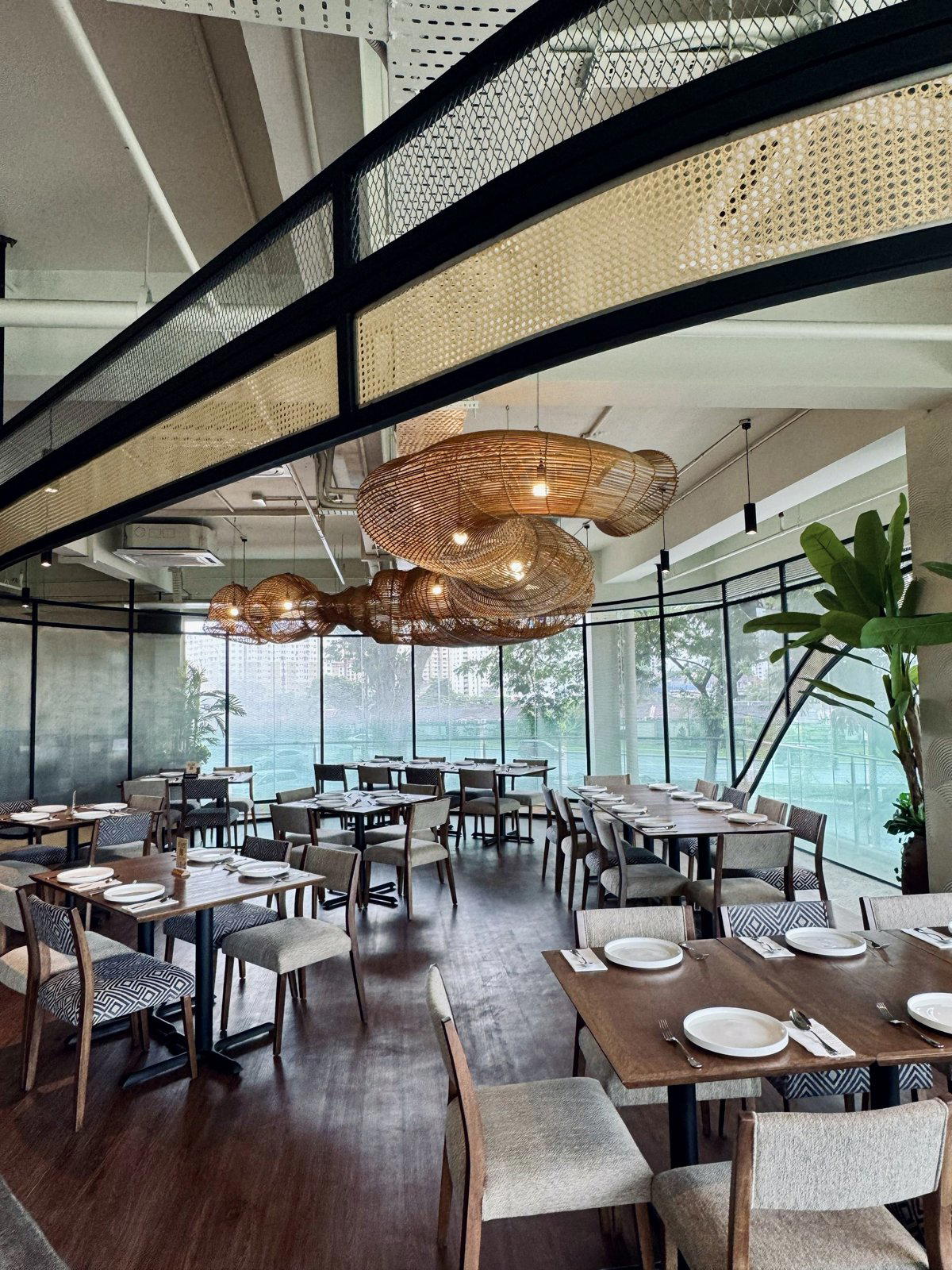
Kuala Lumpur has a particular relationship with mall dining that visitors from other food cities often struggle to process. In the same building where you might browse luxury retail or catch a film, a kitchen can be quietly producing food that earns international recognition. The third floor of Bangsar Shopping Centre, a mid-tier mall on Jalan Maarof in the established Bangsar neighbourhood, is exactly where Dancing Fish has built a two-year consecutive Michelin Plate record — in 2024 and again in 2025. The Michelin Plate designation signals cooking worth a detour in the inspector's framework, not a consolation for missing stardom. In KL's context, where the Plate tier includes a number of serious Malaysian kitchens, that distinction carries weight.
Bangsar itself is one of the city's more settled dining precincts, with a mix of long-standing neighbourhood favourites and newer openings spread across a walkable grid. Dancing Fish's mall address places it in a protected, air-conditioned environment that many KL diners actively prefer for lunch and early dinner, particularly during the city's wet season. For visitors, it also means ease of access: Bangsar Shopping Centre sits close to the Kerinchi and Bangsar LRT stations and has its own parking. The setting lacks the street-food atmosphere that defines, say, a dai pai dong or a kampung warung — but it trades that rawness for consistency of environment and a dining room that accommodates groups comfortably.
The Food: Malay-Indo Flavours With a Clear Focal Point
The menu at Dancing Fish is structured around a proposition that is both obvious from the name and genuinely central to what the kitchen does: fried fish as a carrier for a range of Malay and Indonesian-inflected toppings, sambals, and savoury sauces. This is not a gimmick format. The tradition of deep-frying whole or large-cut fish to achieve a contrast between crackling exterior and moist flesh is embedded across both Malay and Indonesian cooking, and Dancing Fish applies it with enough consistency to earn Michelin attention. The fish arrives in multiple versions, each distinguished by its topping or sauce combination, which allows the kitchen to explore the range of Malay-Indo seasoning: from sweet-spicy sambal to richer, more savoury preparations.
Beyond the namesake dish, the menu extends into territory that reflects broader Malaysian restaurant cooking at this price tier. Whole fish cooked over coals brings a different register, smokier, with the char and fat rendering that open-flame cooking produces. Barbecue chicken and ribs sit alongside these, rounding out a menu that reads as a cross-section of classic Malay flavours without attempting fusion or modernisation. In a city where Dewakan is reinterpreting indigenous Malaysian ingredients through a fine-dining lens, and where Beta applies a one-star approach to Malaysian heritage cooking, Dancing Fish occupies a different position entirely: it is cooking that does not seek to explain or refine its source material, but to execute it at a level that Michelin's inspectors found worth noting.
The price range (mid-tier, marked $$) reflects this: Dancing Fish prices against casual-to-mid Malaysian dining, not against the city's fine-dining tier.
Where Dancing Fish Sits in KL's Malaysian Dining Conversation
Malaysian cuisine's position in the global dining conversation has been shifting noticeably over the past several years. Restaurants like Akar and Anak Baba in KL, and further afield the Peranakan traditions kept alive at Auntie Gaik Lean's Old School Eatery in George Town or the kampung-style cooking at Bee See Heong in Seberang Perai, reflect a broad spectrum of approaches to Malaysian food. Outside Malaysia, that conversation continues at places like Fiz in Singapore, Azalina's in San Francisco, Food Terminal in Atlanta, GaGa in Glasgow, and Communal Table by Gēn in George Town.
Dancing Fish's contribution to that conversation is at the traditional end: Malay-Indo flavours with a local identity that doesn't reach for reinterpretation. For a Malaysian restaurant at the $$ price point, that combination of signals is notable.
Visitors exploring the broader resort end of the country's dining scene can also reference The Planters at The Danna in Langkawi for context on how resort-based Malaysian dining compares in format and ambition to urban mid-tier options like Dancing Fish.
A Note on Drinks
The editorial angle toward wine and beverage curation is, frankly, not where Dancing Fish's identity lies. Malay-Indo cooking at this tier in Kuala Lumpur typically operates within a drinks framework shaped more by local soft drinks, fresh juices, and teh tarik than by a curated wine list. Malaysia's largely Muslim dining majority and the price positioning of Dancing Fish both point toward a beverage program that serves the food rather than competing with it for attention. Visitors seeking cellar depth or sommelier-led pairings will find that conversation happening at the upper tier of KL's restaurant scene. What Dancing Fish offers instead is the opportunity to drink what the cuisine actually asks for: cold, often sweet, and designed to cut through sambal heat and fried batter richness.
Planning Your Visit
Frequently asked questions
What kind of recognition has Dancing Fish received?
Dancing Fish has received recognition including: On the third floor of a shopping mall, Dancing Fish specialises in classic Malay-Indo flavours with a distinct local identity. The nicely fried namesake fish dish boasts tender flesh in crunchy batter. It comes in numerous versions, with di….
What's the must-try dish at Dancing Fish?
The namesake fried fish is the anchor of the menu: crisp batter, tender flesh, and a choice of toppings, sambals, and savoury sauces across multiple versions. It is directly cited in Dancing Fish's consecutive Michelin Plate recognitions (2024 and 2025) as the focal point of the kitchen's Malay-Indo identity. The whole fish cooked over coals and barbecue chicken are the other dishes most closely tied to what the restaurant does.
What does dinner at Dancing Fish typically cost?
Pricing at Dancing Fish is listed as $$.
What part of town is Dancing Fish in?
Dancing Fish is located at Lot T120 &121, 3rd Floor, Bangsar Shopping Centre, Jalan Maarof, 59000 Kuala Lumpur, Malaysia, Kuala Lumpur.
Do I need a reservation for Dancing Fish?
Dancing Fish occupies a sit-down space on the third floor of Bangsar Shopping Centre, a high-footfall address in one of KL's busiest dining corridors. Since receiving back-to-back Michelin Plates in 2024 and 2025, demand has increased noticeably. Booking ahead for weekend meals and peak dining hours is advisable; walk-ins are more workable at off-peak times.
What It’s Closest To
Comparable options at a glance, pulled from our tracked venues.
| Venue | Cuisine | Price | Awards | Notes |
|---|---|---|---|---|
| Dancing FishThis venue — the venue you are viewing | Malay-Indo Cuisine | $10–20 | Michelin Plate | Not listed |
| Dewakan | Modern Malaysian Fine Dining | $150–200 | 2 Michelin Stars · World's 50 Best #62 | Malaysian |
| Beta | Modern Malaysian Fine Dining | $100–150 | 1 Michelin Star · La Liste Top Restaurants | Malaysian |
| Molina | Avant-Garde European Fine Dining | $150–200 | 1 Michelin Star | Innovative |
| DC. by Darren Chin | French Contemporary Fine Dining | Not listed | 1 Michelin Star · La Liste Top Restaurants | French Contemporary |
| Ah Hei Bak Kut Teh | Traditional Herbal Bak Kut Teh | $10–20 | Michelin Bib Gourmand | Malaysian |
Recognition history
Dated appearances from independent guides and award organizations, with the underlying list record or original source where available.
Michelin Plate
Michelin
Full recognition history (3 entries)
Michelin Plate
Michelin
Michelin Plate
Michelin
Continue exploring
More in Kuala Lumpur
Restaurants in Kuala Lumpur
All restaurants in Kuala Lumpur →
Bars in Kuala Lumpur
All bars in Kuala Lumpur →
Details
- Modern
- Cozy
- Elegant
- Date Night
- Group Dining
- Family
- Celebration
- Open Kitchen
- Local Sourcing
- A La Carte
- Set Menu
- Vegetarian Friendly
- Vegan Options
- Gluten Free Options
- Halal
Current opening hours
- Monday
- 11:30 AM–10 PM
- Tuesday
- 11:30 AM–10 PM
- Wednesday
- 11:30 AM–10 PM
- Thursday
- 11:30 AM–10 PM
- Friday
- 11:30 AM–10 PM
- Saturday
- 11:30 AM–10 PM
- Sunday
- 11:30 AM–10 PM
Hours can change for holidays and private events. Last verified .
Modern and refined with jungle-inspired walls, rattan fish trap canopies for cozy private booths, lively yet elegant atmosphere under hanging light globes.