Casa Amaral
Our verdict
Casa Amaral sits in the Jardim São Luiz neighbourhood of Montes Claros, a mid-sized city in northern Minas Gerais that rarely appears on Brazil's fine-dining circuit. The address places it within a regional culinary tradition shaped by sertanejo cattle ranching, small-farm produce, and the dried and fermented pantry that defines Mineiro cooking at its most honest.

Pearl is the En Primeur Club membership app — saves, bookings, and concierge access live there. Same editors, same standards.
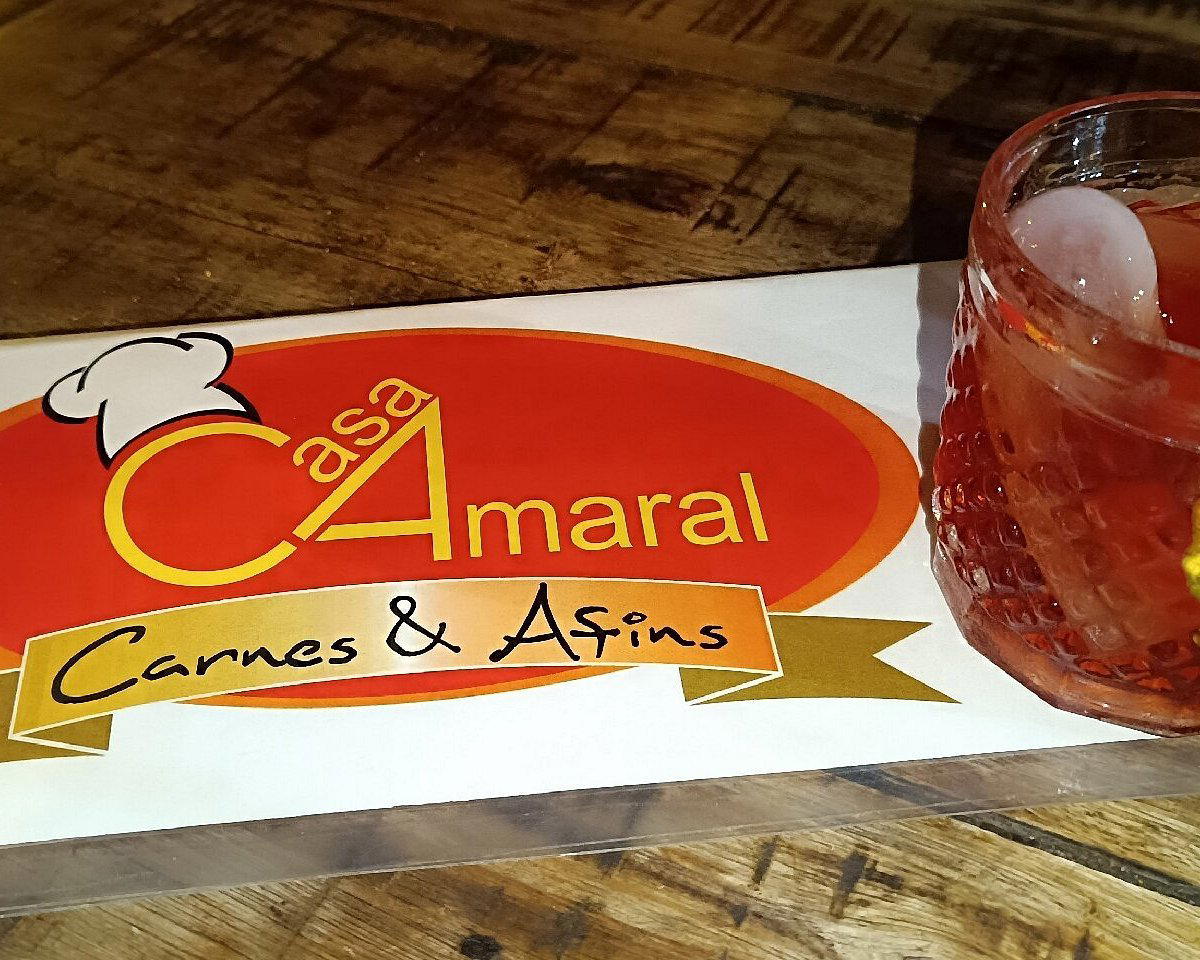
Where Minas Gerais Cooking Finds Its Northern Edge
Montes Claros sits roughly 400 kilometres north of Belo Horizonte, in a zone where the cerrado gives way to semi-arid caatinga and the Mineiro table shifts accordingly. The further north you travel from the state's coffee-growing highlands, the more the cooking leans on sun-dried beef, hand-ground cornmeal, small-batch cachaça, and produce that survives the region's uneven rainfall. This is not the Minas of polished pão de queijo served to São Paulo weekenders. It is older, leaner, and less mediated by culinary tourism. Casa Amaral, addressed on Rua Olímpio Dias de Abreu in the Jardim São Luiz district, operates inside that context. For anyone building a picture of how Mineiro food actually varies across geography, the address matters as much as what arrives at the table.
For the broader sweep of Brazil's premium dining addresses, from Oteque in Rio de Janeiro to D.O.M. in São Paulo, the reference points are metropolitan, internationally networked, and Michelin-adjacent. Casa Amaral operates in a different register entirely: a regional city where the supply chain is local by necessity rather than by chef manifesto, and where the dining culture reflects a population whose relationship with food is functional and rooted before it is aspirational.
Ingredient Sourcing in the Northern Minas Context
Northern Minas Gerais is cattle country. The sertanejo ranching tradition that runs from this latitude into Bahia has shaped a pantry built around carne seca, linguiça, toucinho, and rendered fats that carry flavour across long cooking times. Alongside that protein culture, the region produces significant volumes of fruit adapted to cerrado and caatinga conditions: umbu, mangaba, caju, and pequi, the last of which is so embedded in Minas identity that its consumption is practically a declaration of origin. Small-scale vegetable and grain farming fills in around those anchors, with feijão, mandioca, and milho providing the carbohydrate base of most plates.
What this means practically is that any serious kitchen in Montes Claros draws from a supply web that is geographically concentrated and seasonally honest. The logistics of importing premium produce from São Paulo or the southern states at scale are an obstacle for most operations at this distance from the main freight corridors. That constraint, which in a metropolitan context might be a limitation, functions here as a curatorial mechanism: the pantry is what the region produces, and the cook's job is to work within it intelligently. This dynamic is worth understanding before you arrive, because it sets the interpretive frame for what you eat. Dishes that might seem simple against the creative menus of Birosca S2 in Belo Horizonte or the Bahian-inflected sourcing at Orixás in Itacaré carry a different kind of intelligence when read against their actual supply geography.
The Physical Environment
The Jardim São Luiz district is a residential neighbourhood on the southern fringe of Montes Claros's central grid. The street-level experience is quiet by the standards of Brazilian city centres: lower-rise buildings, less commercial density, the kind of neighbourhood that functions as a destination rather than a passthrough. Approaching Casa Amaral from that context, the address on Rua Olímpio Dias de Abreu reads as a deliberate neighbourhood placement rather than a high-visibility commercial position. Brazilian restaurants in cities of this scale frequently operate on this model, building their audience through word-of-mouth and repeat custom rather than foot traffic or tourist-facing visibility.
The physical atmosphere at this type of address in northern Minas typically reflects the region's domestic eating culture: rooms that feel residential in proportion, service that is attentive without formal distance, and a pace that runs closer to a family lunch rhythm than to the timed-course logic of metropolitan tasting menus. That informality is not a deficit. It is the characteristic register of Mineiro hospitality, which has its own codes and its own warmth, and which visitors from the axis of Rio-São Paulo frequently underestimate.
How Casa Amaral Fits the Wider Brazilian Dining Picture
Brazil's most-discussed tables are concentrated in three or four metropolitan centres. The conversation around Manu in Curitiba, Manga in Salvador, or the alpine European-inflected dining of Primrose in Gramado dominates English-language food media. Beneath that visible tier, Brazil has a much larger ecosystem of regional restaurants that serve local populations with genuine craft and without any expectation of international recognition. Casa Amaral belongs to that ecosystem. It is a signal of where this kind of operation sits in the Brazilian culinary media economy: outside the circuits that generate coverage, and serving a clientele that does not require that coverage to find it.
For context on the range of what the wider state and country offer across different price and format tiers, our full Montes Claros restaurants guide maps the city's dining options with more granularity. For comparison further afield, Mina in Campos do Jordão and Olivetto in Campinas show how regional Brazilian addresses at different price points are building their own editorial profiles outside the Rio-São Paulo axis. Even internationally, the sourcing-first philosophy that defines kitchens in supply-constrained regions finds analogues at places like Lazy Bear in San Francisco, where ingredient provenance is the primary editorial lens, or Le Bernardin in New York City, where product quality above technique has long been the organising principle.
Planning Your Visit
Montes Claros is accessible by air from Belo Horizonte and São Paulo via the Mário Ribeiro dos Santos airport, which operates domestic connections. The city is also on the main BR-135 and BR-365 road corridors, making it reachable by road from the state capital in roughly four hours. Because no booking method, hours, or contact details are available in the public record for Casa Amaral, arriving directly at Rua Olímpio Dias de Abreu, 57 in Jardim São Luiz is the most reliable approach. For restaurants at this scale in Brazilian regional cities, lunchtime on weekdays typically offers the most accessible entry, as the lunch trade often runs more openly than dinner service, which can operate on a more regular-customer basis. Dress expectations in this context are informal: northern Minas dining culture does not apply metropolitan dress codes.
Frequently asked questions
Is Casa Amaral okay with children?
Casa Amaral sits in a residential neighbourhood in Jardim São Luiz, Montes Claros, which tends to set a relaxed, community-oriented tone. That context generally suits families.
What should I expect atmosphere-wise at Casa Amaral?
The address on Rua Olímpio Dias de Abreu places Casa Amaral in a quiet, residential stretch on the southern fringe of Montes Claros rather than in a commercial dining district. That setting typically produces a neighbourhood dining room feel — closer in register to a family-run casa de pasto than to a metropolitan-style restaurant. Expect a low-key, unhurried environment shaped by the pace of northern Minas Gerais rather than by urban hospitality conventions.
Is Casa Amaral in Montes Claros representative of traditional northern Minas Gerais cooking?
Montes Claros sits at a culinary crossroads roughly 400 kilometres north of Belo Horizonte, where classic Mineiro cooking absorbs sertanejo ranching influences and caatinga-zone ingredients that do not appear further south. Casa Amaral's location in this city positions it within that northern Minas tradition rather than the more widely exported Belo Horizonte or São João del-Rei styles. It represents a regional strand of Brazilian cooking that rarely surfaces in the metropolitan dining conversation centred on São Paulo or Rio.
What should I order at Casa Amaral?
Northern Minas Gerais cooking draws heavily on the sertanejo ranching tradition — beef, dried meats, and pantry staples shaped by the cerrado-to-caatinga transition zone that surrounds Montes Claros. Dishes from this regional canon tend to centre on slow-cooked proteins, beans, and farofa-based preparations.
Where exactly is Casa Amaral?
Casa Amaral is located at R. Olímpio Dias de Abreu, 57 - Jardim Sao Luiz, Montes Claros - MG, 39401-049, Brazil, Montes Claros.
Do they take walk-ins at Casa Amaral?
No booking policy is documented for Casa Amaral in Montes Claros.
Quick Comparison
Comparable venues nearby, for context on price, style, and recognition.
| Venue | Cuisine | Price | Awards | Notes |
|---|---|---|---|---|
| Casa AmaralThis venue — the venue you are viewing | Brazilian Steakhouse | Not listed | Not listed | Not listed |
| Koni Store | Japanese Hand Rolls (Konis) | $10–20 | Not listed | Asa Sul |
| Roberta Sudbrack | Modern Brazilian | Not listed | Not listed | Jardim Botânico |
| Maki Sushi | Japanese Sushi Rodízio | Not listed | Not listed | City Center |
| Anella Ristorante | Traditional Italian with Artisanal Pasta | $20–30 | Not listed | Santa Amélia |
| Quintal 333 | Contemporary Italian Pizza | Not listed | 50 Top Pizza Latin America #25 | Governador Valadares |
Details
- Cozy
- Rustic
- Lively
- Group Dining
- Casual Hangout
- Family
- Standalone
- Local Sourcing
- A La Carte
Current opening hours
- Monday
- 6 PM–12 AM
- Tuesday
- 6 PM–12 AM
- Wednesday
- 6 PM–12 AM
- Thursday
- 6 PM–12 AM
- Friday
- 6 PM–12 AM
- Saturday
- 11:30 AM–3 PM, 6 PM–12 AM
- Sunday
- 11:30 AM–3 PM
Hours can change for holidays and private events. Last verified .
Pleasant and comfortable atmosphere with well-prepared food service, creating a relaxed setting ideal for dining with friends and family after exploring the city.