Captain's Tavern
Our verdict
Captain's Tavern on South Dixie Highway has anchored Pinecrest's seafood dining for decades, occupying a specific tier in Miami's broader fish-house tradition where longevity and neighborhood loyalty count for more than tasting-menu ambition. It sits outside the city's contemporary seafood conversation, think the other direction from ITAMAE's Nikkei counter or Le Bernardin's French formalism, and draws a crowd that wants exactly what it has always been.

Pearl is the En Primeur Club membership app, where members save venues, book tables and use the concierge.
The menu
What to order
- Cracked conch
- Oysters Rockefeller
- Admiral's Platter
- Stone crabs
South Florida's Fish-House Tradition and Where Captain's Tavern Fits
Miami's seafood dining operates across a wider spectrum than the city's luxury hotel restaurants or Brickell expense-account tables would suggest. At one end sit counters like ITAMAE in Miami, where Peruvian-Japanese technique reshapes local catch into something closer to the fare at Atomix in New York City, precision-driven, reference-heavy, designed for a specific kind of engaged diner. At the other end sits a quieter but more durable tradition: the neighborhood fish house, where the point is the fish itself, served without ceremony, to people who have been coming for years. Captain's Tavern, at 9625 S Dixie Highway in Pinecrest, has occupied that second position for long enough that its reputation rests less on any single moment of recognition than on accumulated loyalty from a community that keeps returning.
Pinecrest, the suburban municipality just south of Miami proper, has a dining character shaped by its residential density and relative distance from the South Beach and Brickell scenes. Restaurants here earn their audience differently, through consistency and value rather than through opening-night press cycles. Captain's Tavern is a textbook example of that dynamic. It is not positioning itself against Le Bernardin in New York City or Providence in Los Angeles; those rooms operate in an entirely different register of formality, price, and ambition. What it shares with those places is a primary commitment to seafood handled with respect, which in a fish-house context means sourcing that doesn't rely on aggressive seasoning to compensate for mediocre product.
The Physical Environment on S Dixie Highway
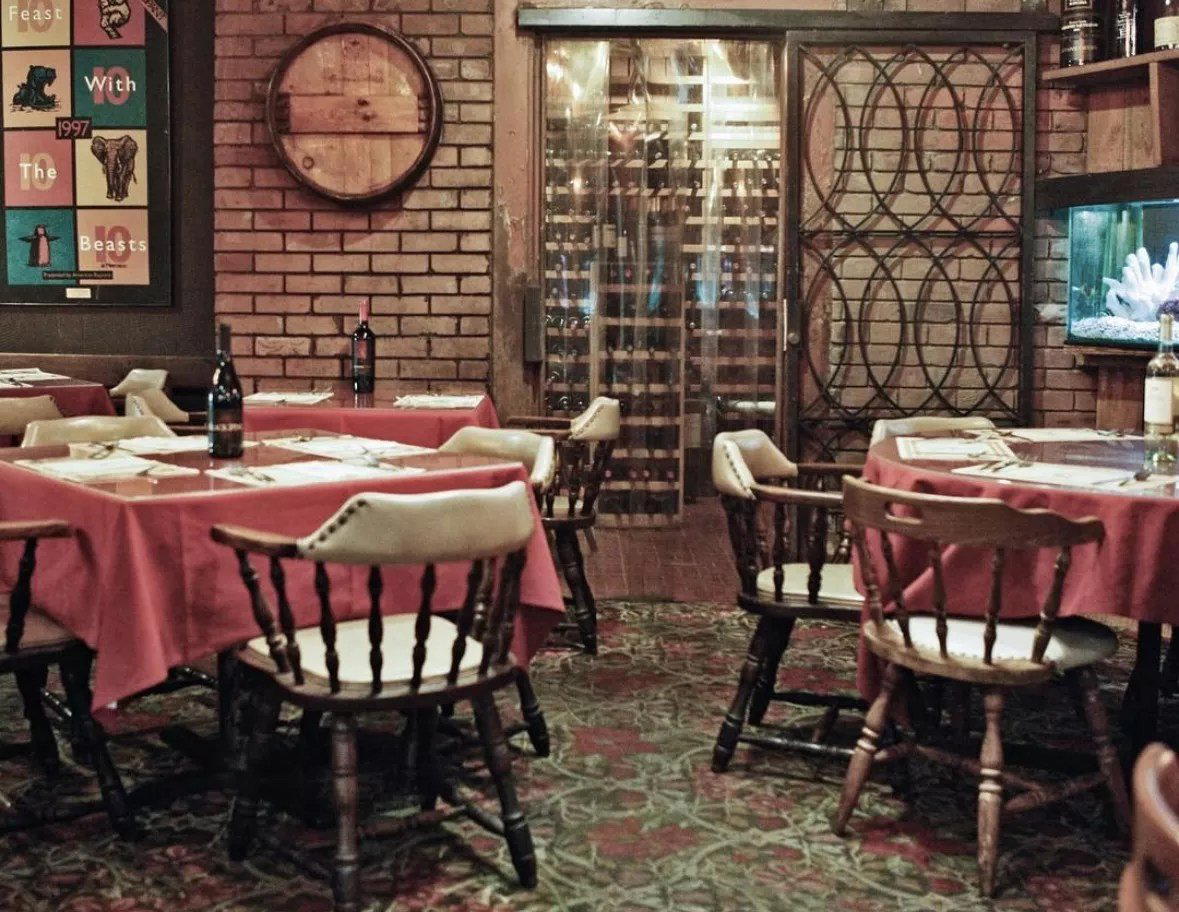
South Dixie Highway through Pinecrest is a long commercial corridor, car-oriented, punctuated by strip malls and standalone buildings that feel more Midwestern suburb than tropical city. Captain's Tavern sits within that environment without apology. The approach doesn't promise architectural drama, and the interior continues in the same register: a working dining room rather than a designed one. In the taxonomy of American fish houses, this places it alongside a particular kind of institution that understands its role is functional hospitality, getting seafood from kitchen to table in good condition, in an environment that doesn't distract from the eating. Compare this to the considered design ambition of rooms like Lazy Bear in San Francisco or Smyth in Chicago, and the contrast clarifies what Captain's Tavern is actually selling: access to a familiar room where the regulars know exactly what they're getting.
That legibility matters. In a dining market as trend-saturated as Greater Miami, a restaurant that has resisted reinvention is making an implicit argument about quality, that the format doesn't need to change because the product holds. The fish-house format across the United States has a long history of this kind of stubborn consistency, from the oyster bars of the Northeast to the Gulf Coast seafood shacks of Louisiana, a tradition that Emeril's in New Orleans drew on even as it pushed toward a more ambitious kitchen register.
Cultural Roots of the American Fish House
The neighborhood seafood restaurant is one of the more durable formats in American dining, rooted in the practical geography of coastal communities where proximity to working harbors made fresh fish the obvious protein. South Florida's version of that tradition pulls from multiple directions: the Cuban-inflected cooking of Miami's oldest neighborhoods, the Caribbean and Latin American currents that shape the city's broader food culture, and the direct New England and Gulf Coast fish-house models that followed mid-century population migration into the Sun Belt. The result, in places like Captain's Tavern, is often a menu that reflects local catch patterns rather than a single culinary nationality. That's a meaningful distinction from the precision-focused tasting formats at, say, Single Thread Farm in Healdsburg or The French Laundry in Napa, where the kitchen's cultural reference point is tightly controlled. A community fish house carries the influence of whoever was cooking and whoever was eating, accumulated over years.
That cultural layering is part of what gives long-running neighborhood seafood restaurants their specific atmosphere. Unlike a new opening working to establish identity, a place like Captain's Tavern has already been assigned one by its community. The dining room's character is partly architectural and partly social, the recognizable faces at adjacent tables, the servers who know what regulars order before they sit down, the menu items that haven't changed because nobody has asked them to. This is a different kind of authority from the chef-credential signals that anchor rooms like Addison in San Diego or The Inn at Little Washington in Washington, but it is authority nonetheless.
Pinecrest Context and the Local Dining Tier
Within Pinecrest specifically, Captain's Tavern occupies a different bracket from the area's more contemporary openings. 1111 Nikkei and Anacapri represent a newer wave of neighborhood dining that brings more explicit culinary ambition to the same residential corridor. Captain's Tavern predates that wave and has watched multiple dining trends move through the market without adjusting its core format. Whether that represents resistance or clarity of purpose depends on what a diner is looking for, but it does mean the restaurant occupies a distinct and largely uncontested position in the local market. For a fuller picture of how these places sit relative to each other, the full Pinecrest restaurants guide maps the broader dining tier. Further afield in the region, places like Frasca Food & Wine in Boulder, The Wolf's Tailor in Denver, and Blue Hill at Stone Barns in Tarrytown illustrate how sharply the American dining scene has bifurcated between tasting-format destination restaurants and the enduring neighborhood institution, a bifurcation that Captain's Tavern, sitting firmly in the second camp, has no apparent interest in resolving. And for those who want a European comparison point for how a kitchen can build a legacy around local ingredients without theatrics, Atelier Moessmer Norbert Niederkofler in Brunico offers an instructive contrast in how deep that commitment can run at the highest level.
Planning Your Visit
Captain's Tavern is on South Dixie Highway at the 9625 address in Pinecrest, accessible by car from central Miami in under thirty minutes on most evenings. Given the restaurant's neighborhood-institution status and its lack of a notable tasting-menu format, walk-ins are generally more feasible here than at the reservation-required counters that dominate Miami's contemporary seafood scene, though weekend evenings at popular fish houses tend to compress wait times. Dress code expectations align with the format: casual, comfortable, with no requirement to dress for a formal room.
Frequently asked questions
Is Captain's Tavern child-friendly?
A neighborhood fish house in a residential Pinecrest suburb operates at a different register than Miami's formal dining rooms or hotel restaurants. The format, accessible seafood in a mid-volume room, generally suits families far more than a tasting-menu counter would. No formal dress code is documented in available data, which further points toward a relaxed environment.
Is Captain's Tavern better for a quiet night or a lively one?
Fish houses along South Dixie Highway tend to run at mid-volume: not library-quiet, but not a scene either. Captain's Tavern at 9625 S Dixie Hwy fits that mold, a working neighborhood dining room where conversation is possible and the room's energy tracks with how full the house is on a given evening.
How long has Captain's Tavern been a fixture on South Dixie Highway in Pinecrest?
Captain's Tavern has maintained a long-standing presence at 9625 S Dixie Hwy in Pinecrest, operating within Miami's fish-house tradition across a period when significant turnover has reshaped the city's broader restaurant scene. That longevity in a competitive South Florida market carries its own signal about the kitchen's consistency.
What should I eat at Captain's Tavern?
The kitchen's orientation is toward seafood, consistent with the fish-house tradition that has defined South Florida coastal dining for decades. Ordering around the catch is the logical approach, the menu's core strength lies in that format rather than in secondary categories.
What part of town is Captain's Tavern in?
Captain's Tavern is located at î9625 S Dixie Hwy, Miami, FL 33156, Pinecrest.
What's the best way to book Captain's Tavern?
No reservation system or phone number is published in current available data for Captain's Tavern. Arriving directly at 9625 S Dixie Hwy and checking wait times on the spot is the most reliable approach for a neighborhood fish house of this format. Weeknight visits generally carry shorter waits than weekend evenings at comparable South Florida fish houses.
What's Captain's Tavern best at?
Captain's Tavern's durable presence on South Dixie Highway in Pinecrest points to a kitchen that has consistently delivered on the fish-house format: straightforward seafood at accessible prices in a neighborhood setting. That consistency over time is itself a credential in Miami's restaurant market, where newer openings turn over quickly. The restaurant occupies a different register than the city's contemporary seafood counters, and that distinction is the point.
Price Lens
| Venue | Cuisine | Price | Awards | Notes |
|---|---|---|---|---|
| Captain's TavernThis venue (the venue you are viewing) | Classic Florida Seafood | $30–50 | Not listed | Not listed |
| Le Bernardin | French Seafood Fine Dining | $300–500 | 3 Michelin Stars · World's 50 Best #13 | French, Seafood |
| Lazy Bear | Modern American Tasting Menu | Not listed | 2 Michelin Stars · World's 50 Best #25 | Progressive American, Contemporary |
| Atomix | Modern Korean Tasting Menu | $300–500 | 2 Michelin Stars · World's 50 Best #7 | Modern Korean, Korean |
| Per Se | French Fine Dining Tasting Menu | $300–500 | 3 Michelin Stars · World's 50 Best #40 | French, Contemporary |
| Masa | Traditional Japanese Omakase | $500+ | 2 Michelin Stars · World's 50 Best #27 | Sushi, Japanese |
Continue exploring
More in Pinecrest
Restaurants in Pinecrest
All restaurants in Pinecrest →
Bars in Pinecrest
Browse all →
Details
- Classic
- Cozy
- Family
- Casual Hangout
- Standalone
- Local Sourcing
- Sustainable Seafood
- A La Carte
- Vegetarian Friendly
- Gluten Free Options
Current opening hours
- Monday
- Closed
- Tuesday
- 4–10 PM
- Wednesday
- 4–10 PM
- Thursday
- 4–10 PM
- Friday
- 4–10 PM
- Saturday
- 4–10 PM
- Sunday
- 4–9 PM
Hours can change for holidays and private events. Hours as of .