
Tabelog 100 #3
Our verdict
Akatsuki puts Kitami into Japan’s serious okonomiyaki conversation, not through spectacle but through a regional reading of griddle cooking. Its 2025 selection for Tabelog’s Okonomiyaki 100 gives the room a national signal, while the format stays grounded in okonomiyaki, monjayaki, and teppanyaki rather than a chef-driven tasting-menu script.

Pearl is the En Primeur Club membership app, where members save venues, book tables and use the concierge.
The menu
What to order
- Okonomiyaki
- Monjayaki
- Yakisoba
- Teppanyaki dishes
In Kitami, a griddle room carries a different weight than it does in Osaka or Hiroshima. The approach is less about tourist theatre and more about heat, batter, cabbage, sauce, timing, and the quiet social contract of eating food that changes minute by minute on iron. Akatsuki belongs to that tradition, with okonomiyaki, monjayaki, and teppanyaki forming a compact language rather than a sprawling menu identity.
That matters in eastern Hokkaido, where ingredient identity is not an abstract selling point. Kitami sits in an agricultural belt known nationally for onions, and the wider region’s cooking often turns on what can be grown, stored, grilled, or folded into casual meals without losing its local character. Okonomiyaki is not native to Hokkaido in the way it is tied to Kansai or Hiroshima, but the form travels well because it absorbs regional habits. A griddle can make a local vegetable feel central without announcing it as a luxury product.
Hokkaido produce meets the okonomiyaki griddle
Japan’s okonomiyaki map is usually drawn around Osaka’s mixed-batter style and Hiroshima’s layered construction. Hokkaido complicates that map. The island’s reputation is built on dairy, wheat, seafood, beef, potatoes, corn, and cold-climate vegetables; the pleasure of griddle cooking here is how those ingredients can enter a format associated with a different region and still make sense. The result is not fusion as a slogan. It is a practical cuisine adapting to what the north does well.
Akatsuki’s selection for Tabelog’s Okonomiyaki 100 in 2025 places it inside a national category where many addresses cluster in larger food cities. That recognition is useful because Kitami is not an obvious stop for okonomiyaki completists. The signal is not that this is a grand dining room; it is that a casual griddle format in a regional Hokkaido city has enough specialist credibility to be judged alongside more expected okonomiyaki destinations.
The presence of monjayaki and teppanyaki alongside okonomiyaki also tells the reader something about the room. This is not a single-dish counter built around ceremonial precision. It belongs to the broad Japanese griddle house family, where texture, heat control, and shared pacing matter more than formal sequencing. In cities such as Tokyo, monjayaki often carries a neighbourhood, group-table energy; in Kitami, that format reads as convivial rather than performative.
A regional room rather than a destination dining script
The smarter way to read Akatsuki is against Kitami’s dining scale, not against Tokyo’s reservation economy. Kitami’s food culture rewards practical formats: places where locals can return, where meals fit around weather, work, and car-based movement, and where the room does not need to explain itself through design language. In that setting, Tabelog recognition carries extra force because it identifies a specialist address without turning the experience into fine-dining theatre.
Compared with サボテン北見店, another Kitami address in the EP Club map, Akatsuki occupies a more category-specific lane: griddle cooking rather than a general restaurant proposition. For travellers building a northern Hokkaido itinerary, that distinction is useful. A meal here speaks to how a regional city interprets a national comfort-food form, while nearby guides such as Our full Kitami restaurants guide, Our full Kitami hotels guide, Our full Kitami bars guide, Our full Kitami wineries guide, and Our full Kitami experiences guide help set the wider route.
Price tier also shapes expectations. The listed lunch and dinner ranges put the restaurant in a casual-to-mid regional bracket rather than the premium omakase economy that dominates much of Japan’s international dining conversation. That is part of the appeal: the evidence points to a specialist griddle address with national recognition, not a luxury room borrowing the aesthetics of informality.
How to place it within a Japan food itinerary
Travellers crossing Japan often over-index on capitals and known food corridors. Akatsuki is a useful corrective because it shows how award signals can surface outside the obvious routes. The broader EP Club Japan index includes places as varied as -Grilled beef Sukiyaki- KAMAKURA TANUKIAN 鎌倉 たぬき庵 in Kamakura, . 鮪と炭火焼き うお炭 秋葉原店 in Tokyo, .cafe in Osaka, .know in Kumamoto, (Shoku) Vietnam in Kawasaki, [Curry Senmon Ten] Maruyama Kyoju. in Sapporo, [ki:] in Kyoto, #肉といえば松田 奈良本店 in Kashihara, 1/3 HAMBURGER FACTORY in Kanazawa, and 1000 in Yokohama. Seen against that spread, Kitami’s contribution is not scale. It is specificity.
For overseas readers, the comparison can extend beyond Japan without forcing equivalence. Jōdo Saké Bar in Los Angeles and Onigiri Time in Pasadena show how Japanese formats gain meaning abroad through curation and context. In Kitami, the same lesson runs in reverse: a nationally familiar dish gains force from regional placement, local eating patterns, and Hokkaido’s ingredient reputation.
The editorial recommendation is clear: treat Akatsuki as a specialist stop for travellers already serious about northern Hokkaido, not as a detour built on hype. The draw is the intersection of griddle tradition, regional produce logic, and a 2025 Tabelog Okonomiyaki 100 selection. That is enough. In a city where food is often approached through practical appetite rather than ceremony, the stronger meal is the one that does not try to over-explain itself.
Also in Kitami: サボテン北見店.
Frequently asked questions
Can I bring kids to Akatsuki?
The listing does not specify a child policy, so the clearest anchor is practical: Akatsuki is in Kitami and serves okonomiyaki, monjyayaki, and teppanyaki. Families planning a visit should factor in the dinner hours, Tuesday to Saturday from 5 PM to 10 PM, with Sunday lunch service until 3 PM.
What kind of setting is Akatsuki?
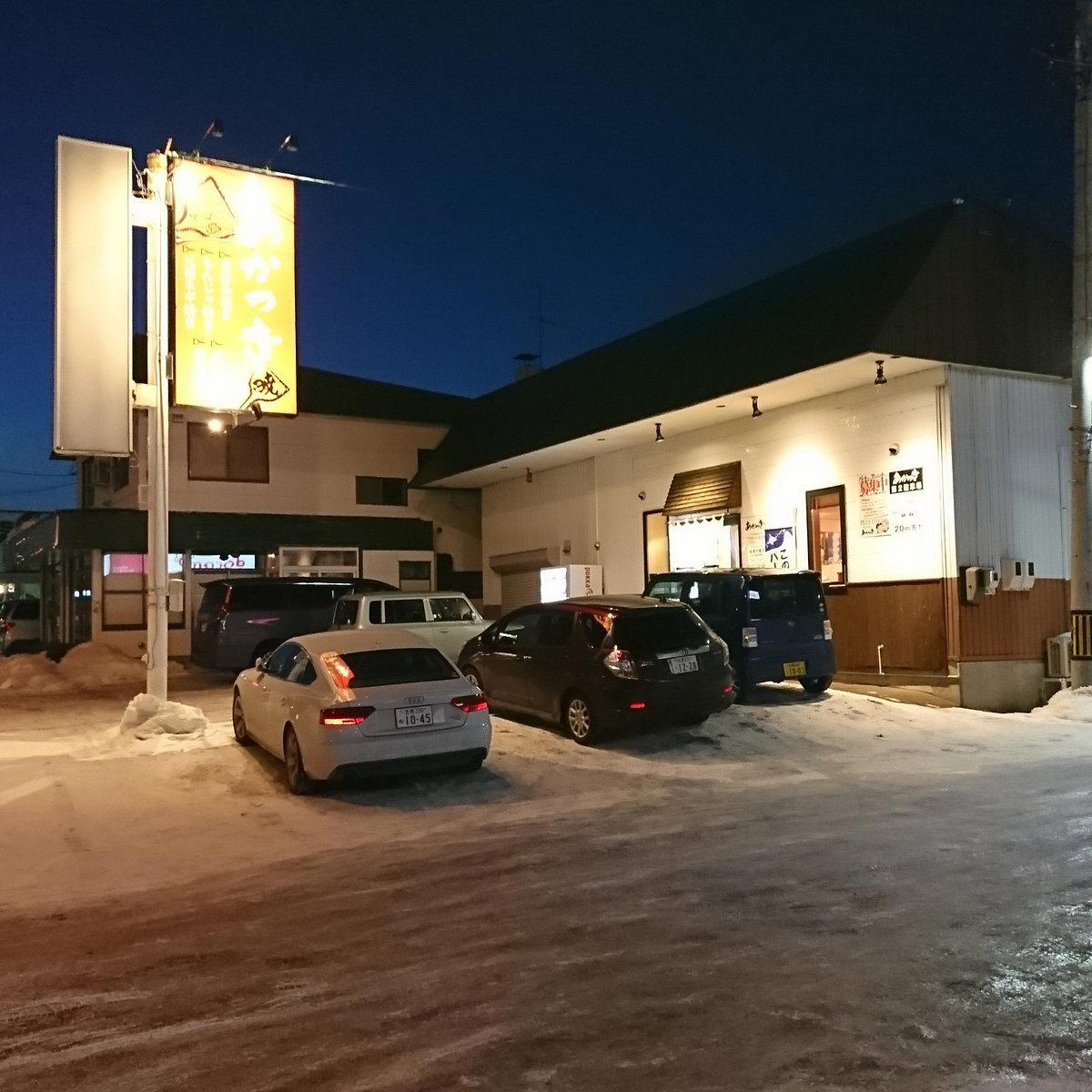
Akatsuki is a non-smoking, reservation-available restaurant on 1 Chome-7-22 Koei Nishimachi in Kitami. The format points to a casual griddle-led room rather than formal dining, with parking on-site and additional spaces 20 metres away.
What price level is Akatsuki?
Pricing at Akatsuki is listed as JPY 6,000 - JPY 7,999 JPY 1,000 - JPY 1,999 View spending breakdown.
What are the opening hours for Akatsuki?
Hours at Akatsuki: Mon: Closed; Tue: 11:30 AM–2 PM, 5–10 PM; Wed: 11:30 AM–2 PM, 5–10 PM; Thu: 11:30 AM–2 PM, 5–10 PM; Fri: 11:30 AM–2 PM, 5–10 PM; Sat: 11:30 AM–2 PM, 5–10 PM; Sun: 11:30 AM–3 PM.
Where is Akatsuki in Kitami?
Akatsuki is located in Kitami.
What's the standout thing about Akatsuki?
Its strongest credential is the Tabelog 100 Okonomiyaki selection for 2025, which places it among the category’s noted addresses in Japan. The price band is also clear, with lunch at JPY 1,000–JPY 1,999 and dinner at JPY 6,000–JPY 7,999.
How It Stacks Up
Comparable venues by cuisine and price in the same metro.
| Venue | Cuisine | Price | Awards | Notes |
|---|---|---|---|---|
| AkatsukiThis venue (the venue you are viewing) | Okonomiyaki, monjayaki & teppan dishes | $10–20 | Tabelog 100 #3 | Not listed |
| サボテン北見店 | Okonomiyaki & Monjayaki Izakaya | $20–30 | Not listed | Kitami (北見市北5条西) |
| Miyazato Soba (宮里そば) | Okinawan Soba | Not listed | Not listed | Miyazato |
| Umaiya Takoyaki | Traditional Osaka Takoyaki | $1–10 | Not listed | Tenma |
| Maki no Udon (牧のうどん 空港店) | Traditional Fukuoka Kamaage Udon | $1–10 | Not listed | Hakata |
| ぎょうざ 湖月 | Traditional Japanese Gyoza | $10–20 | Tabelog 100 #48 | 北浜 |
Recognition history
Dated appearances from independent guides and award organizations, with the underlying list record or original source where available.
Tabelog 100 #3 · No. 3
Tabelog · Tabelog 100 - Okonomiyaki - 2025
Continue exploring
More in Kitami
Restaurants in Kitami
All restaurants in Kitami →
Hotels in Kitami
Browse all →
Details
- Cozy
- Lively
- Casual Hangout
- Family
- Group Dining
- Late Night
- Solo
- Standalone
- Beer Program
- A La Carte
- Small Plates
- Beer
- Sake
- Soft Drinks
Current opening hours
- Monday
- Closed
- Tuesday
- 11:30 AM–2 PM, 5–10 PM
- Wednesday
- 11:30 AM–2 PM, 5–10 PM
- Thursday
- 11:30 AM–2 PM, 5–10 PM
- Friday
- 11:30 AM–2 PM, 5–10 PM
- Saturday
- 11:30 AM–2 PM, 5–10 PM
- Sunday
- 11:30 AM–3 PM
Hours can change for holidays and private events. Hours as of .