Abyssinia
Our verdict
Abyssinia brings Ethiopian cuisine to West Philadelphia's University City corridor, where the neighborhood's density of international students and faculty has long sustained a more adventurous dining culture than the city center. The restaurant operates at 229 S 45th Street, anchoring a stretch of Spruce Hill that runs parallel to Penn and Drexel. For Philadelphia diners seeking East African cooking, it occupies a category with few local peers.

Pearl is the En Primeur Club membership app — saves, bookings, and concierge access live there. Same editors, same standards.
The menu
What to order
- Vegetarian Combination Platter
- Kitfo
- Doro Wot
- Meat Combination
West Philadelphia and the Case for Ethiopian Cooking in a University City Block
There is a particular dining logic to university neighborhoods that differs from the rest of any American city. The customer base skews international, changes frequently, and brings food memories from elsewhere. West Philadelphia, specifically the corridor running along 45th Street through Spruce Hill, has sustained that dynamic for decades. Ethiopian restaurants have found more purchase in neighborhoods like this one than in Center City's more trend-driven dining market, and Abyssinia, at 229 S 45th Street, is part of that pattern. It sits in a block where the foot traffic is student-heavy, where price sensitivity runs alongside genuine cultural curiosity, and where the format of communal eating around injera makes immediate sense to a room full of people used to sharing meals across different traditions.
Ethiopian cuisine in the United States occupies an interesting position relative to other African food cultures. It arrived early and spread widely, partly because the communal format translates well to American restaurant conventions, and partly because the spice architecture, anchored by berbere and mitmita, gave American diners a legible entry point without requiring significant adjustment. Cities like Washington D.C. Los Angeles, and Seattle have dense Ethiopian dining scenes with competitive internal hierarchies. Philadelphia's scene is smaller and less stratified, which means individual addresses carry more weight by default. Abyssinia sits in that context as one of the better-known names in the city for this cuisine.
The Address and What It Signals
University City has shifted considerably over the past fifteen years as Penn and Drexel both expanded their footprints and as the neighborhoods immediately surrounding them gentrified unevenly. The 45th Street stretch where Abyssinia operates retains more of the older neighborhood character than blocks closer to 40th Street, which have been absorbed more thoroughly into the university orbit. That distinction matters for what kind of restaurant survives here. The dining rooms that have lasted on this stretch tend to serve food that has community roots rather than trend momentum, and they tend to build loyalty through consistency rather than through seasonal menu rotation or chef-driven media coverage.
For visitors arriving from Center City, the distance is manageable by subway on the Market-Frankford Line to the 46th Street station, or by cab. The neighborhood context rewards the trip: this is not a restaurant district designed for destination dining in the way that Fishtown or Rittenhouse are, and that distinction changes the experience. You are eating in a working neighborhood rather than a dining quarter, which affects everything from the noise level to the room's composition on a given evening.
Philadelphia's wider dining scene has attracted attention in recent years across a range of formats. New American cooking at places like Fork and Friday Saturday Sunday has driven much of the national coverage. Southeast Asian and Pan-Asian formats, represented by places like Mawn, have added further depth. French-influenced cooking appears at My Loup. What the media conversation about Philadelphia dining sometimes misses is the layer of immigrant-rooted cooking that has operated continuously in neighborhoods like West Philadelphia without needing a press cycle to sustain it. South Philly Barbacoa is another example from a different tradition. Abyssinia fits that same category.
The Format of the Meal
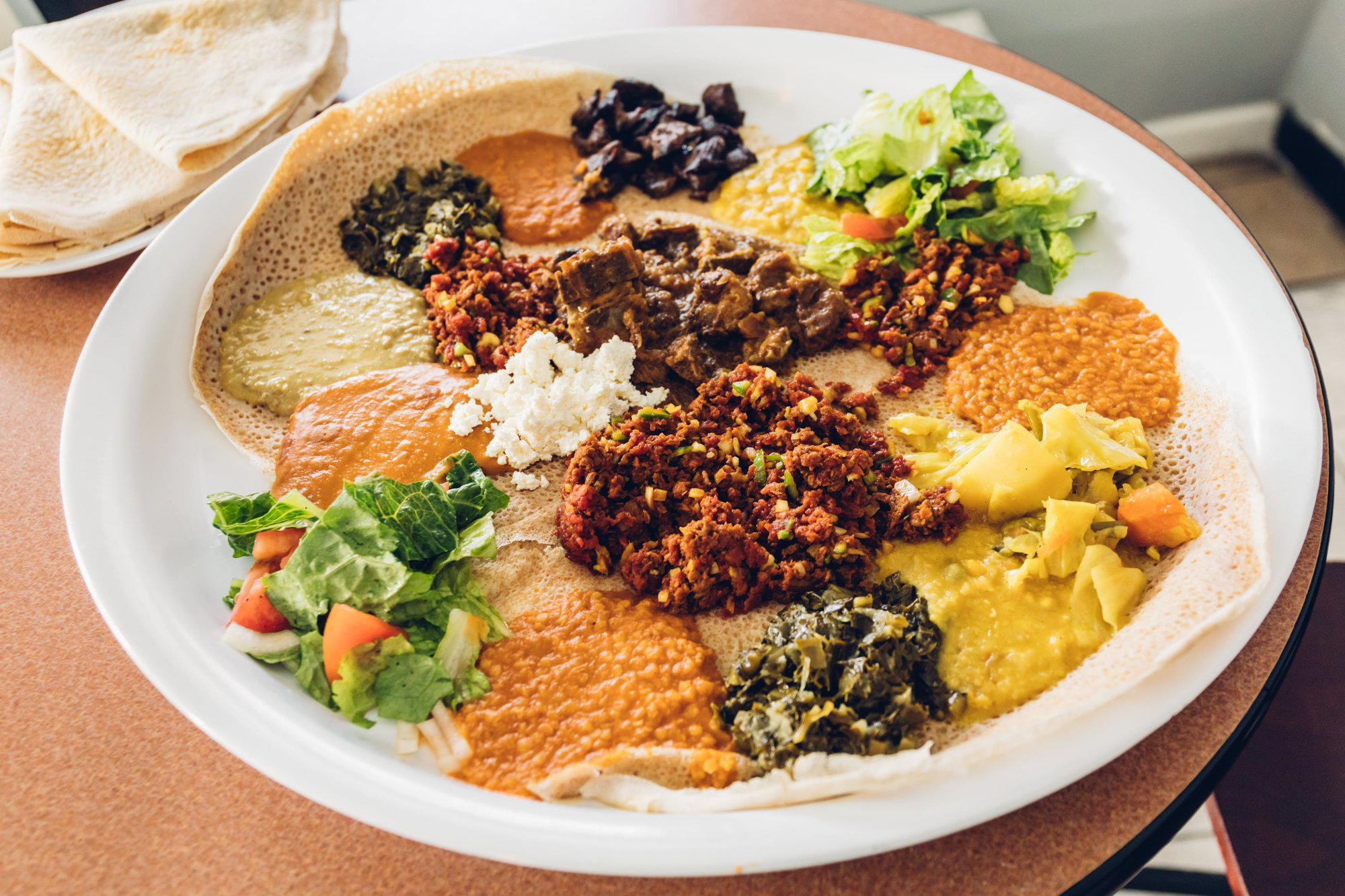
Ethiopian dining has a built-in communal architecture that distinguishes it from most other cuisines represented in Philadelphia's restaurant landscape. The meal arrives on a large round of injera, the spongy sourdough flatbread made from teff flour, with a series of stews, salads, and preparations arranged across the surface. There are no individual plates in the traditional sense; the bread is both vessel and utensil. This format rewards groups over solo dining, and it creates a different social dynamic at the table than the composed-plate model that dominates most American restaurant formats.
The division between meat-based preparations and vegetarian dishes is structurally important in Ethiopian cooking, and it carries weight beyond preference. Fasting traditions in the Ethiopian Orthodox Church mean that vegetarian Ethiopian food has centuries of development behind it. Dishes built around lentils, split peas, collard greens, and spiced clarified butter represent a tradition that stands independently, not as an accommodation for non-meat eaters but as a full culinary category in its own right. A meal that mixes meat dishes with the fasting-day vegetable preparations, called yetsom beyaynetu in the full spread format, reflects how the cuisine actually operates in Ethiopia rather than a simplified version of it.
Positioning Within the City and Beyond
For diners who move between cities and track dining scenes across the country, Ethiopian cooking represents one of the more consistent value propositions in American urban dining. The price-per-person at well-regarded Ethiopian restaurants rarely approaches the levels common in the tasting-menu or high-concept New American categories. That is not a function of quality but of format and market positioning. Comparing Abyssinia against the kind of technically ambitious cooking found at places like Smyth in Chicago or Le Bernardin in New York City tells you little useful. The more relevant comparison set is other Ethiopian addresses in the mid-Atlantic region, where Washington D.C.'s U Street corridor sets the competitive benchmark.
Philadelphia lacks D.C.'s critical mass of Ethiopian restaurants, which means that individual spots carry the category's representation in a way that would not apply in a more saturated market. That creates a different kind of responsibility for a restaurant like Abyssinia, and historically it has held that position with some durability in a neighborhood that turns over establishments at a meaningful rate. For the full range of what Philadelphia's dining scene covers across categories and neighborhoods, the EP Club Philadelphia restaurants guide maps the broader terrain.
Diners planning a trip around American restaurant destinations may find useful context in how other cities handle immigrant-rooted dining traditions. Emeril's in New Orleans, Providence in Los Angeles, and The French Laundry in Napa represent the high-concept end of the American dining spectrum. Blue Hill at Stone Barns in Tarrytown, Addison in San Diego, Lazy Bear in San Francisco, Single Thread Farm in Healdsburg, The Inn at Little Washington, and international addresses like Atomix in New York City and Atelier Moessmer Norbert Niederkofler in Brunico represent a very different category. The point is not comparison but context: understanding the full range of what serious eating looks like in different formats helps calibrate what any given restaurant is trying to do and how well it does it.
Planning Your Visit
Abyssinia is located at 229 S 45th Street in the Spruce Hill section of West Philadelphia, a short walk from the 46th Street station on the Market-Frankford Line. The address is in a residential and light-commercial block rather than a purpose-built dining district, so approach expectations accordingly. Given the limited publicly available information on current hours and reservation policy, contacting the restaurant directly before visiting is the practical approach, particularly for groups larger than two or three who want to ensure the communal format works at the scale they are planning.
Frequently asked questions
Where exactly is Abyssinia?
Abyssinia is located at 229 S 45th St, Philadelphia, PA 19104, Philadelphia.
Is Abyssinia suitable for vegetarians and vegans eating Ethiopian food in Philadelphia?
Ethiopian cuisine is one of the more structurally accommodating traditions for plant-based diners, with a large share of the menu built around lentil, chickpea, and vegetable preparations rooted in Orthodox fasting traditions. At Abyssinia on S 45th Street in West Philadelphia, combination plates can typically be assembled entirely from the vegetarian selections without requiring substitutions or special requests. This makes the restaurant a practical option for mixed groups where dietary needs vary.
What's the best thing to order at Abyssinia?
Ethiopian menus at restaurants like Abyssinia are structured around combination plates rather than single signature dishes, so the strongest approach is a mixed platter that samples across lentil, vegetable, and meat preparations served on injera. Ordering a combination allows the communal format to work as intended — multiple people sharing from a single spread rather than eating individual portions. First-time visitors to Ethiopian cooking will get the fullest picture of the cuisine through this format.
Is Abyssinia reservation-only?
Reservation policies at neighborhood Ethiopian restaurants in university districts like West Philadelphia's Spruce Hill tend to be informal relative to tasting-menu or high-demand destinations. Abyssinia, located at 229 S 45th Street, draws a mixed crowd from the Penn and Drexel communities, which means foot traffic can spike around academic calendars. Calling ahead for larger groups is a practical precaution, but walk-ins are generally accommodated at smaller tables.
The Minimal Set
| Venue | Cuisine | Price | Awards | Notes |
|---|---|---|---|---|
| AbyssiniaThis venue — the venue you are viewing | Authentic Ethiopian | $20–30 | Not listed | Not listed |
| Friday Saturday Sunday | Modern American Tasting Menu | $100–150 | 1 Michelin Star · World's 50 Best #40 | New American |
| Fork | Seasonal New American | Not listed | James Beard Award Outstanding Restaurateur #1 · Wine Spectator Award of Excellence | New American |
| South Philly Barbacoa | Authentic Mexican Barbacoa Taqueria | $10–20 | James Beard Award Best Chef: Mid Atlantic · Chef's Table Featured on Chef's Table | Mexican |
| Jean-Georges Philadelphia | Modern French Fine Dining | $200–300 | La Liste Top Restaurants · Wine Spectator Best of Award of Excellence | French |
| Helm | Seasonal New American Small Plates | $50–100 | Not listed | Filipino |
Continue exploring
More in Philadelphia
Restaurants in Philadelphia
All restaurants in Philadelphia →
Bars in Philadelphia
All bars in Philadelphia →
Details
- Cozy
- Casual
- Group Dining
- Casual Hangout
- Open Kitchen
- A La Carte
- Family Style
- Vegetarian Friendly
Current opening hours
- Monday
- 10 AM–2 AM
- Tuesday
- 10 AM–2 AM
- Wednesday
- 10 AM–2 AM
- Thursday
- 10 AM–2 AM
- Friday
- 10 AM–2 AM
- Saturday
- 10 AM–2 AM
- Sunday
- 10 AM–2 AM
Hours can change for holidays and private events. Last verified .
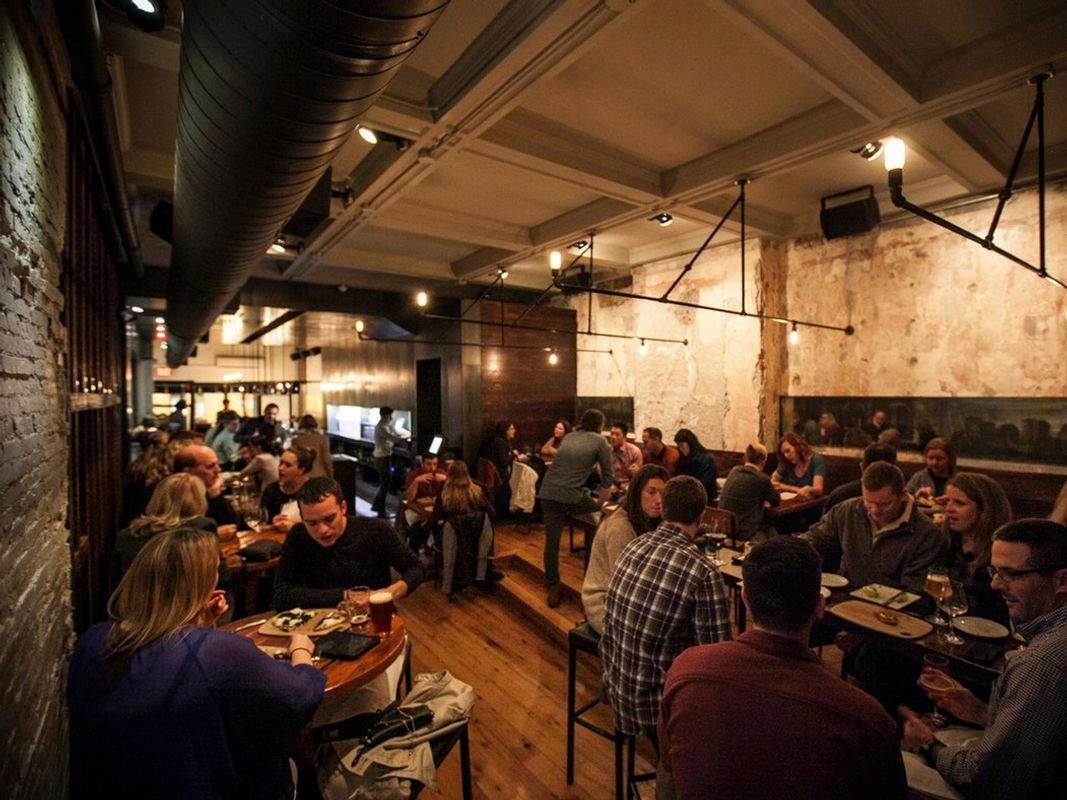
Casual, laid-back hole-in-the-wall with traditional mesob seating and intimate atmosphere.