


Michelin Selected · Design Hotels Member · Mr & Mrs Smith Seal of Approval
A three-villa retreat in the hills above Agios Fokas, Pnoēs Tinos was designed by one of Greece's most celebrated architects and set against the raw terrain of an island better known for its marble-carving tradition than its luxury accommodation. Private pools, organic gardens, and immediate proximity to some of Tinos's quieter beaches place it in the specialist tier of Cycladic stays.

Pearl is the En Primeur Club membership app, where members save venues, book tables and use the concierge.
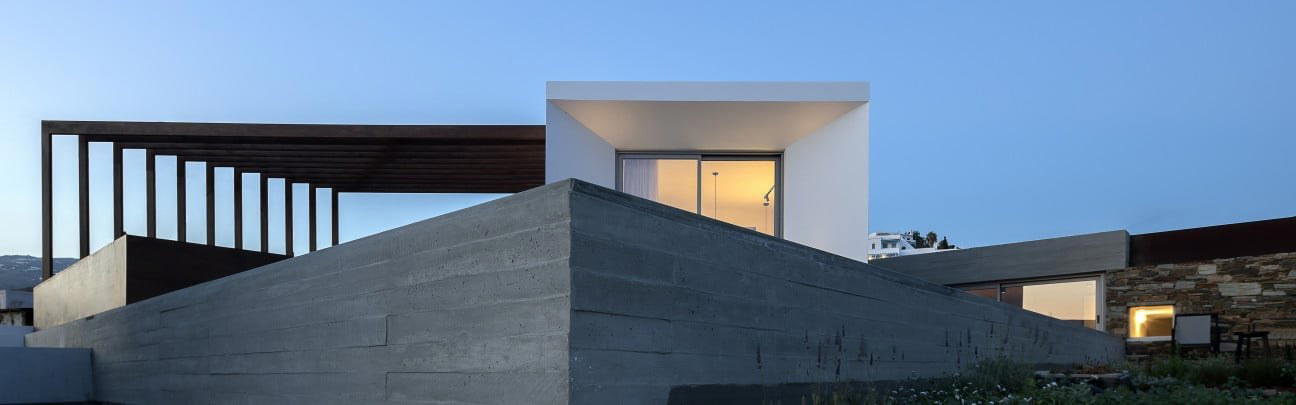
Stone, Air, and the Cycladic Light
The approach to Pnoēs Tinos sets the terms before you arrive. Agios Fokas, on Tinos’s eastern coast, sits well outside the ferry traffic and cafe circuits of the port town, and the address at Lagkades places it further still into the island’s interior grain. Tinos has long occupied a different register from Mykonos and Santorini: less performed, more rooted in agricultural and artisan traditions that date back centuries through its marble carving, dovecote villages, and Catholic-Orthodox coexistence. What arrives in the form of Pnoēs Tinos is a property designed to fit that register, not interrupt it.
The architecture comes from one of Greece’s most recognised names in contemporary design, and that credential matters for what it signals about the structure and logic of the property. At the premium end of Greek island hospitality, architecture has split into two schools: the volume-led resort that deploys Aegean visual cues at scale, and the small-footprint commission that treats landscape integration as a formal design problem. Pnoēs Tinos belongs to the second school, with three villas as the entire inventory. That number is not a constraint; it is a position. It places this property in the same tier as Amanzoe in Porto Heli in terms of format discipline, where low capacity is the product, not a limitation waiting to be scaled.
What Three Villas Actually Means at This Level
Three-villa format has specific implications that a first-time visitor should understand before booking. This is not a hotel with a villa category on leading; it is a villa compound where each unit is, in effect, a private residence for the duration of your stay. Private pools are included, which in the Greek island context is a meaningful distinction: shared pool properties at comparable price points require schedule negotiation and concede the kind of spontaneous morning swim that makes island time feel genuinely unhurried. The organic gardens on site move the property into a category shared by a small group of Greek island stays that treat food sourcing as architecture-adjacent, meaning it is built into the property’s physical structure rather than added as an amenity.
For comparison, properties like Amoudi Villas in Oia operate in a similar small-inventory format, while larger resort footprints such as Four Seasons Astir Palace Hotel Athens and Amirandes, A Grecotel Resort to Live in Heraklion offer breadth of facility at the cost of exactly the privacy that Pnoēs Tinos is structured around. These are different products for different trip logics, and the choice between them is a question of what kind of time you want to keep.
Tinos as a Setting: Why It Matters That This Isn’t Santorini
Greek island hospitality has a gravity problem: the majority of premium accommodation clusters on two or three islands, which compresses the experience into a narrower set of references than the archipelago actually offers. Tinos resists that compression. Its villages, many accessible along well-marked paths through terraced hillsides, carry an authenticity that comes from continued local habitation rather than preservation for tourist purposes. The island’s marble craft tradition, still active in Pyrgos, gives it a visual vocabulary that appears in architecture, chapels, and street furniture in ways that feel earned rather than curated.
The beaches near Agios Fokas extend that character. They are not Santorini’s volcanic drama, but they are less trafficked, and in high summer that practical difference shapes the actual quality of a day. For travellers who have already worked through the canonical Cyclades circuit and want a property where the island context adds to rather than competes with the stay, Tinos and specifically this corner of it make a coherent argument. Other Greek island stays worth considering in this context include Eréma in Milos, Andronis Minois in Paros, and Gundari in Petousis, each of which positions itself against the Santorini mainstream through a combination of setting and format.
Architecture as Editorial Statement
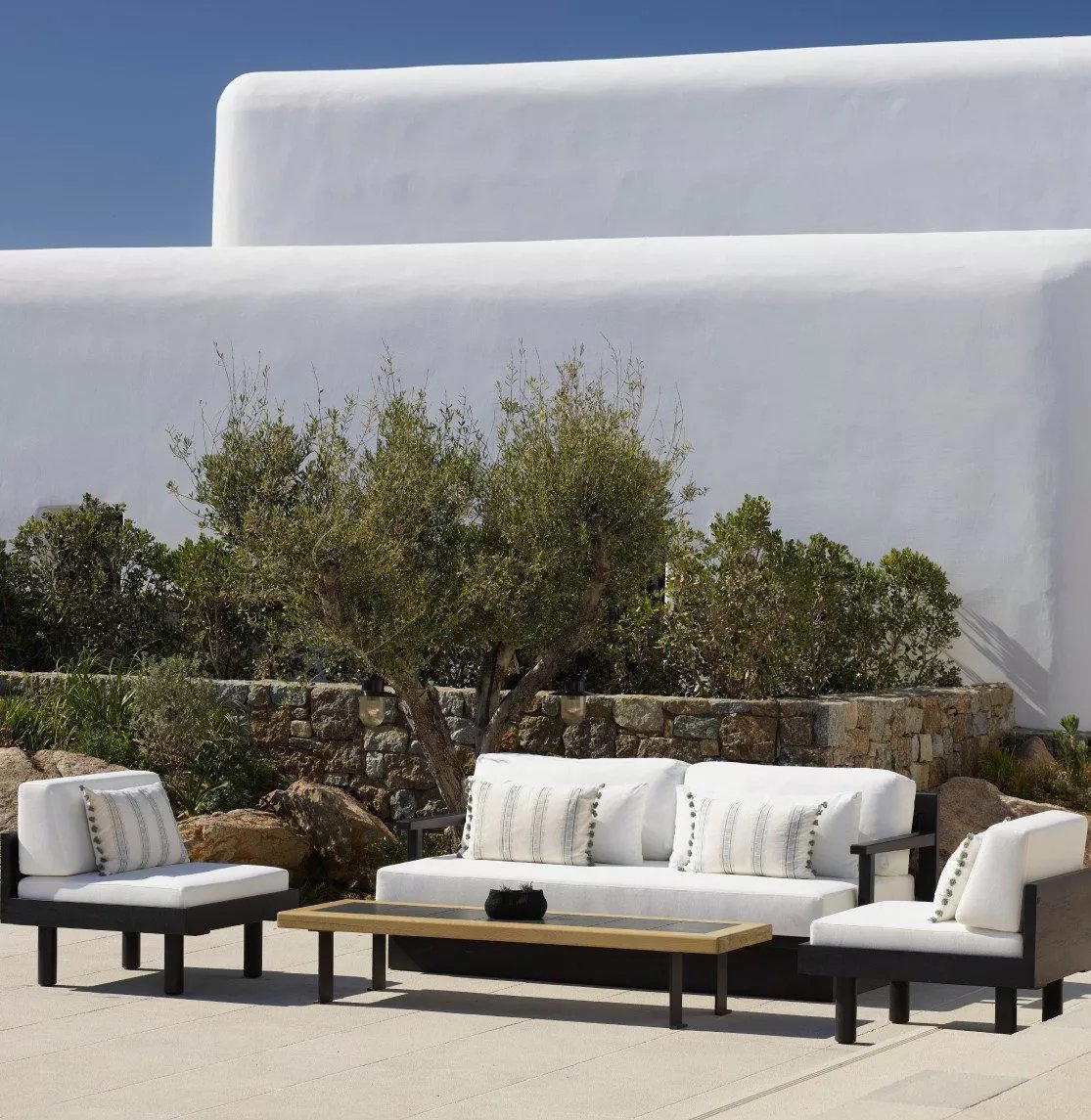
The involvement of a celebrated architect in a three-villa property is not incidental to what Pnoēs Tinos is. At the scale of three units, every spatial decision is visible. There is no large-footprint common infrastructure to absorb choices that might otherwise read as compromises. The organic gardens, the pool configuration, the relationship between the built volume and the land around it: all of these read as arguments, not defaults. This is architecture as editorial statement, and it places the property in conversation with a design tradition in Greek island building that draws on local materials, vernacular massing, and the logic of how Cycladic structures have always managed sun, wind, and view.
Name itself, Pnoēs, meaning breath or breeze in Greek, is a design concept as much as a brand decision. In Cycladic building, natural ventilation is not a supplementary system; it is the primary logic of how rooms are oriented, how thresholds are placed, and how interior and exterior space are treated as a single continuous field. Whether that logic is realised fully here is something that a stay will answer, but the frame is set by the name, the architect, and the format.
Planning Your Stay
Tinos is accessible by ferry from Piraeus and from Mykonos, with journey times that vary considerably by vessel type; the fast ferry from Piraeus runs under three hours, while conventional ferries take longer and are better suited to evening crossings if you are bringing a vehicle. Agios Fokas sits on the eastern side of the island, away from the main port, which means you will want either a rental car or a reliable transfer arranged in advance. The organic garden element and the small inventory suggest that direct contact with the property well ahead of intended dates is the appropriate approach, particularly for the summer season when the island sees its highest demand. Travellers comparing options in the premium Greek island tier might also consider NOS Hotel & Villas, Acro Suites in Agia Pelagia, or Le Méridien Sissi Crete as alternatives with different footprints and island contexts. For the widest view of where Pnoēs Tinos sits within the island’s overall options, see our full Tinos restaurants guide, which covers the dining dimension of a stay here alongside accommodation context.
For travellers whose Greek island circuit extends beyond the Cyclades, the comparison set widens further: Ajul Luxury Hotel & Spa Resort in Halkidiki, Alkyna Lifestyle Beach Resort in Corfu, and Anemos Luxury Grand Resort in Chania each represent different versions of what premium Greek hospitality looks like when it moves away from the Cycladic template. 100 Rizes Seaside Resort in Gytheio and Abaton Island Resort & Spa in Chersonisos round out a picture of how Greek coastal luxury has diversified across geography and format in recent years.
Comparison Snapshot
Comparable venues nearby, for context on price, style, and recognition.
| Venue | Cuisine | Price | Awards | Notes |
|---|---|---|---|---|
| Pnoēs TinosThis venue (the venue you are viewing) | Contemporary Cycladic architecture that listens to and responds to the landscape, blending traditional crafts with modern minimalism. | $500–750 | Michelin Selected · Design Hotels Member | Not listed |
| Ela Tinos | Contemporary boutique resort blending modern luxury with Tinos island nature | $100–200 | Michelin Selected | Arnados |
| Cavo Dago (Etouri) | Contemporary luxury villa on verdant hillside | $1,000–1,500 | World Travel Awards | Chania |
| Palladium Hotel Mykonos | Cycladic-inspired boutique with boho-chic luxury | Not listed | 1 Michelin Key | Mikonos |
| Boheme Hotel | Modern luxury boutique hotel built according to traditional Cycladic architecture principles, positioned as an all-suite adults-only retreat with personalized service. | $300–500 | 1 Michelin Key · Small Luxury Hotels of the World Member | Mikonos |
| Anandes Hotel | Contemporary Cycladic chic redefining luxury hospitality through homage to timeless Greek elegance and vintage Mykonos aesthetics. | $750–1,000 | Michelin Selected | Mykonos Town (Chora) |
Recognition history
Dated appearances from independent guides and award organizations, with the underlying list record or original source where available.
Michelin Selected
Michelin
Design Hotels Member
Design Hotels
Mr & Mrs Smith Seal of Approval
Mr & Mrs Smith
Continue exploring
More in Tinos
Hotels in Tinos
All hotels in Tinos →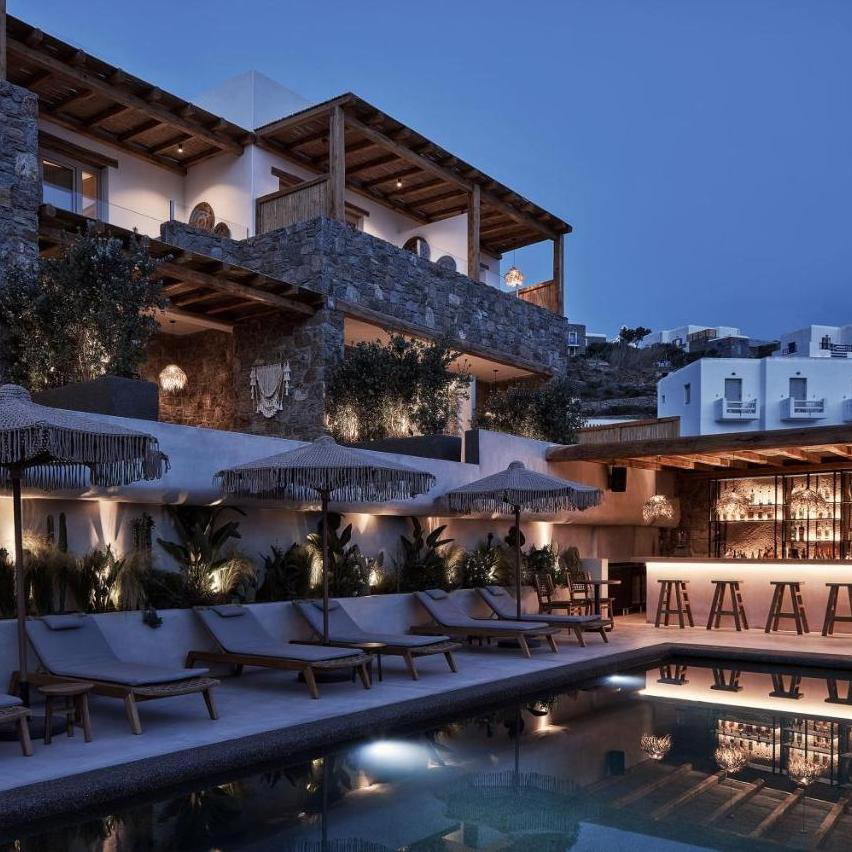
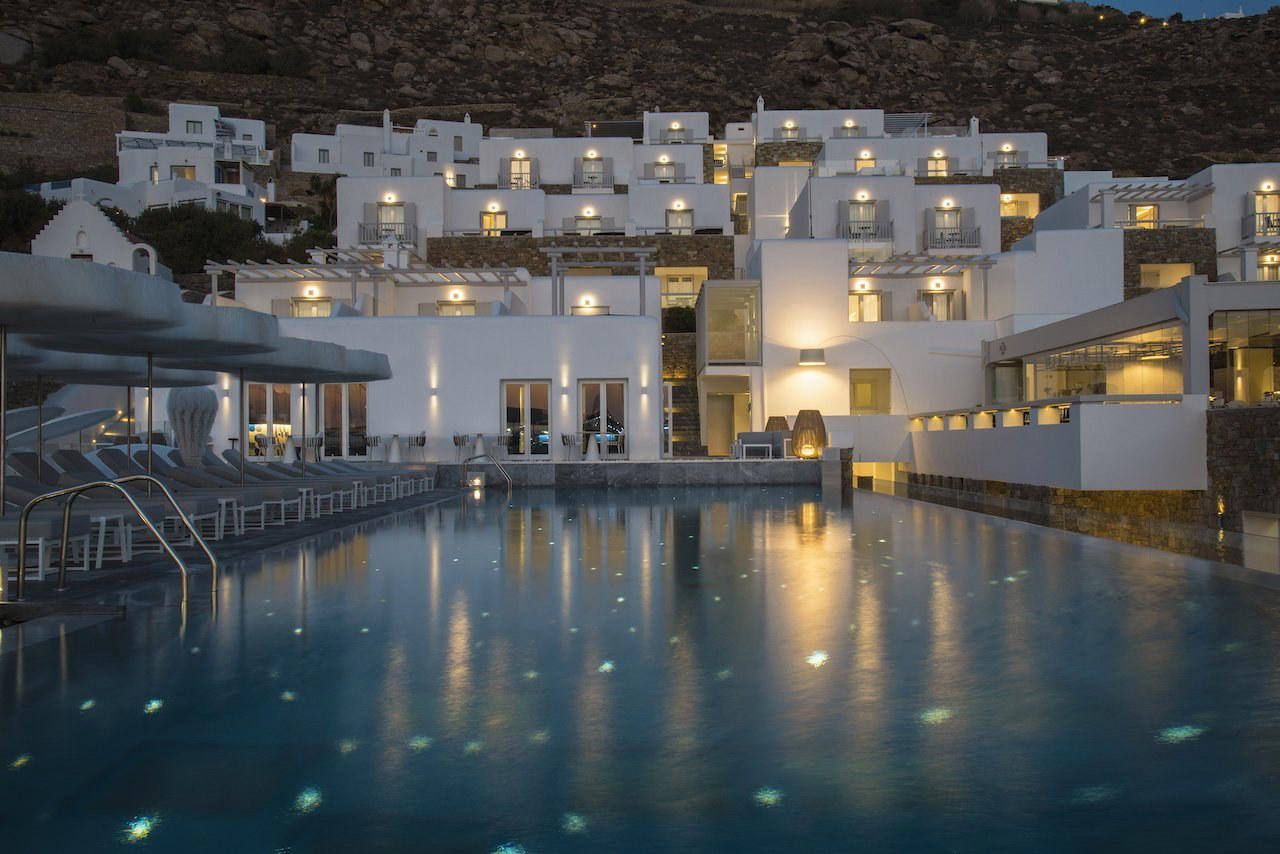
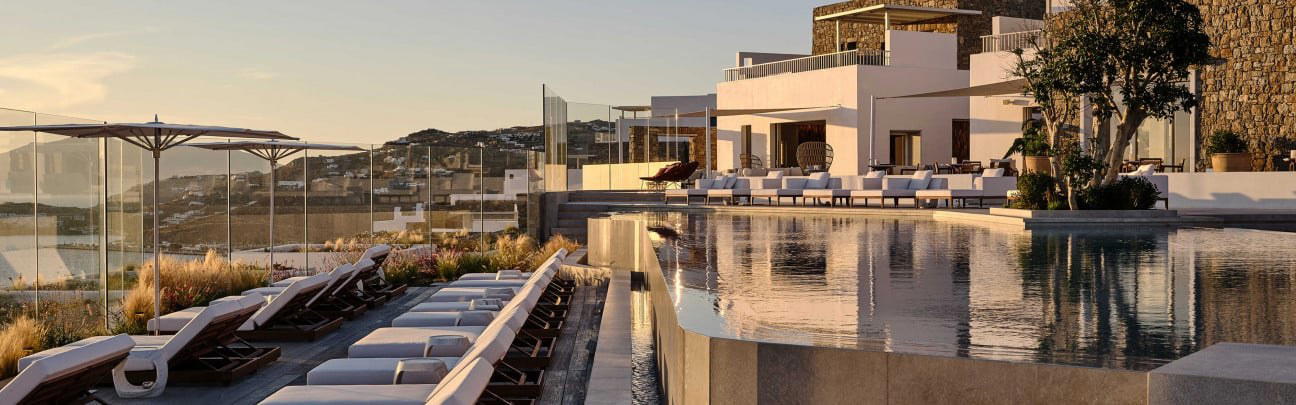
Bars in Tinos
Browse all →
Restaurants in Tinos
Browse all →
Wineries in Tinos
All wineries in Tinos →
Details
- Romantic
- Quiet
- Minimalist
- Elegant
- Intimate
- Scenic
- Honeymoon
- Romantic Getaway
- Wellness Retreat
- Anniversary
- Private Villa
- Garden
- Terrace
- Panoramic View
- Private Dining
- Design Destination
- Pool
- Hot Tub
- Beach Access
- Waterfront
- Garden
Serene and contemplative with soft natural light filtering through airy spaces, warm earth-toned interiors, and seamless indoor-outdoor transitions framed by Aegean views and Mediterranean herb gardens.