Maliba River Lodge
Maliba River Lodge sits in Butha-Buthe, the gateway district to Lesotho's Tsehlanyane National Park, where the Hololo River carves through Afromontane forest at altitude. The lodge represents a specific tier of southern African wilderness hospitality: small-scale, landscape-integrated, and positioned well outside the circuits that connect Johannesburg to the more trafficked game reserves of the subcontinent.

Pearl is the En Primeur Club membership app — saves, bookings, and concierge access live there. Same editors, same standards.
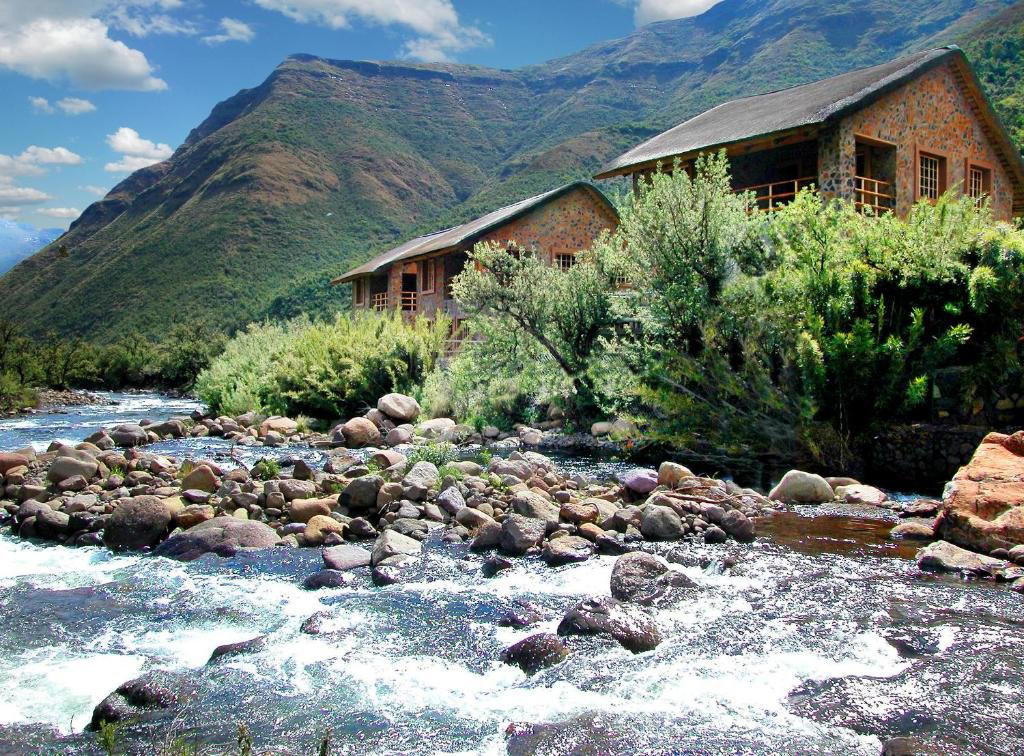
Where the Hololo River Sets the Terms
There is a particular kind of lodge that makes its architectural case through submission rather than assertion. In southern Africa, the most considered wilderness properties tend to read as extensions of their terrain rather than impositions on it — and Maliba River Lodge, positioned inside Lesotho's Tsehlanyane National Park in the Butha-Buthe district, belongs to that tradition. The Hololo River runs through the property, and at this altitude, in a park that protects one of Lesotho's last stands of Afromontane forest, the lodge's relationship to its physical context is the primary fact of the experience. What you hear first, arriving from the valley road that climbs into the highlands, is water.
Butha-Buthe sits in Lesotho's northern district, roughly 35 kilometres from the South African border and the Caledonspoort entry point. The district is historically significant as a refuge territory — it takes its name from the Sesotho phrase for "lying down to hide," referencing King Moshoeshoe I's early retreats into these mountains. That layered geography, part fortress, part ecological refuge, shapes the atmosphere before any lodge architecture enters the picture. For full context on what the district offers beyond this property, see our full Butha-Buthe restaurants guide.
Architecture as Ecological Argument
The design philosophy most common to serious mountain lodges in southern Africa now positions the built structure as a frame for landscape rather than a destination in its own right. At Maliba, this translates to chalets that follow the river contours and sit low against the surrounding forest. The Afromontane belt that Tsehlanyane protects is rare, it includes patches of Widdringtonia (Clanwilliam cedar relatives) and dense riparian woodland that most of highland Lesotho lost to grazing pressure decades ago. Building inside that context without disrupting it requires decisions about materials, footprint, and elevation that define the guest experience as much as any interior choice.
The lodge operates at an altitude that produces genuinely cold nights even in summer months, and the architecture has to account for that. Fireplaces and heavy stone or timber construction are functional requirements in this climate, not aesthetic gestures. That practical constraint produces interiors that feel grounded rather than decorative, a quality that distinguishes highland African lodges from their beach or bushveld counterparts, where lightness and ventilation drive the brief. Properties in comparable mountain positions, Sani Mountain Lodge in Mokhotlong, for instance, on the Drakensberg escarpment, face the same thermal logic, and their architecture reads accordingly. At this altitude and latitude, warmth is not optional.
Broader global category of lodges built to foreground a specific natural system rather than a general luxury proposition includes properties across very different geographies: Amangiri in Canyon Point makes a comparable argument through desert geology; Castello di Reschio in Lisciano Niccone frames its design through agricultural landscape and Umbrian stone vernacular. What connects them is the refusal to operate as a generic luxury hotel that happens to have a view. Maliba fits that cohort by geography and design intent, if not by scale or brand recognition.
The Tsehlanyane Park Context
Tsehlanyane National Park covers approximately 5,600 hectares and was formally protected in 1999 under the Lesotho Highlands Development Authority framework. The park is not a wildlife reserve in the southern African big-five sense, it is a forest and river conservation zone, and the experience it offers is correspondingly different. Hiking trails run through the Afromontane woodland, the Hololo River supports trout fishing, and the surrounding peaks give access to the high Maluti range. Visitors who arrive expecting game drives will be recalibrating; those who understand this is a mountain forest destination will find the ecology genuinely compelling.
That specificity of experience is worth stating plainly. Lesotho's tourism offering is thin compared to its South African neighbours, and Maliba occupies a position in the national park with few direct competitors inside the country's borders. The lodge is the primary accommodation option for anyone wanting to spend time inside Tsehlanyane rather than day-tripping from the South African side. That structural monopoly on location is a different kind of credential than awards or press recognition, it is positional, and it shapes both the booking dynamics and the pricing logic of any stay.
Getting There and Practical Orientation
The most common approach is via Maseru, Lesotho's capital, with the drive north to Butha-Buthe taking approximately three hours on tarred road. The Caledonspoort border crossing from South Africa's Free State is a shorter option for those travelling from the Clarens or Fouriesburg side of the Maluti foothills. Roads into the park require a vehicle with reasonable clearance, particularly after rain, when the highland tracks become unpredictable. Visitors flying internationally will route through OR Tambo International in Johannesburg or King Moshoeshoe I International outside Maseru, then connect by road.
Because Maliba operates as the principal lodge inside Tsehlanyane, booking lead time matters more than it would at a property with room-count competition nearby. Highland Lesotho has a concentrated travel season in the southern hemisphere summer months, roughly October through April, when temperatures at altitude are manageable and the forest is at its densest. Winter visits to this elevation mean sub-zero nights and potential snowfall, which changes the experience substantially but suits a specific kind of traveller who wants the high Maluti landscape in its starkest form.
For comparative reference across the southern Africa mountain lodge category, Sani Mountain Lodge operates at the top of the Sani Pass on the KwaZulu-Natal / Lesotho border and provides a useful benchmark for what altitude hospitality in this region looks and costs like. The two properties share a climate zone and a philosophy of place-led design, but operate in different national contexts with different access logistics.
For those building an itinerary that combines African wilderness with other premium lodge or hotel categories globally, the editorial context shifts considerably: properties like One&Only; Mandarina in Riviera Nayarit, Hotel Esencia in Tulum, or even urban flagship hotels like Aman New York and Cheval Blanc Paris operate in a different register entirely. Maliba's claim on a traveller's itinerary rests not on competing with that tier but on offering something those properties cannot, a specific mountain ecosystem, genuine remoteness, and access to a national park that most international visitors have never considered.
In Context: Similar Options
| Venue | Price |
|---|---|
| Maliba River LodgeThis venue (the venue you are viewing) | $300–500 |
Continue exploring
More in Butha Buthe
Restaurants in Butha Buthe
All restaurants in Butha Buthe →
Wineries in Butha Buthe
Browse all →
Details
- Rustic
- Scenic
- Cozy
- Romantic
- Intimate
- Romantic Getaway
- Family Vacation
- Weekend Escape
- Group Retreat
- Panoramic View
- Waterfront
- Terrace
- Garden
- Pool
- Spa
- Wi Fi
- Restaurant
- Bar
- Kids Club
- Mountain
- Waterfront
Warm and tranquil with open fireplaces, natural earthy tones, and serene mountain and river surroundings.