Eréma occupies a quiet but considered place in Milos's emerging hospitality scene, where design-led properties are beginning to separate from the island's more functional accommodation stock. The property draws visitors who come to Milos specifically for its geology, its light, and its relative remove from the Cycladic mainstream, and expect a base that matches that intentionality.

Pearl is the En Primeur Club membership app — saves, bookings, and concierge access live there. Same editors, same standards.
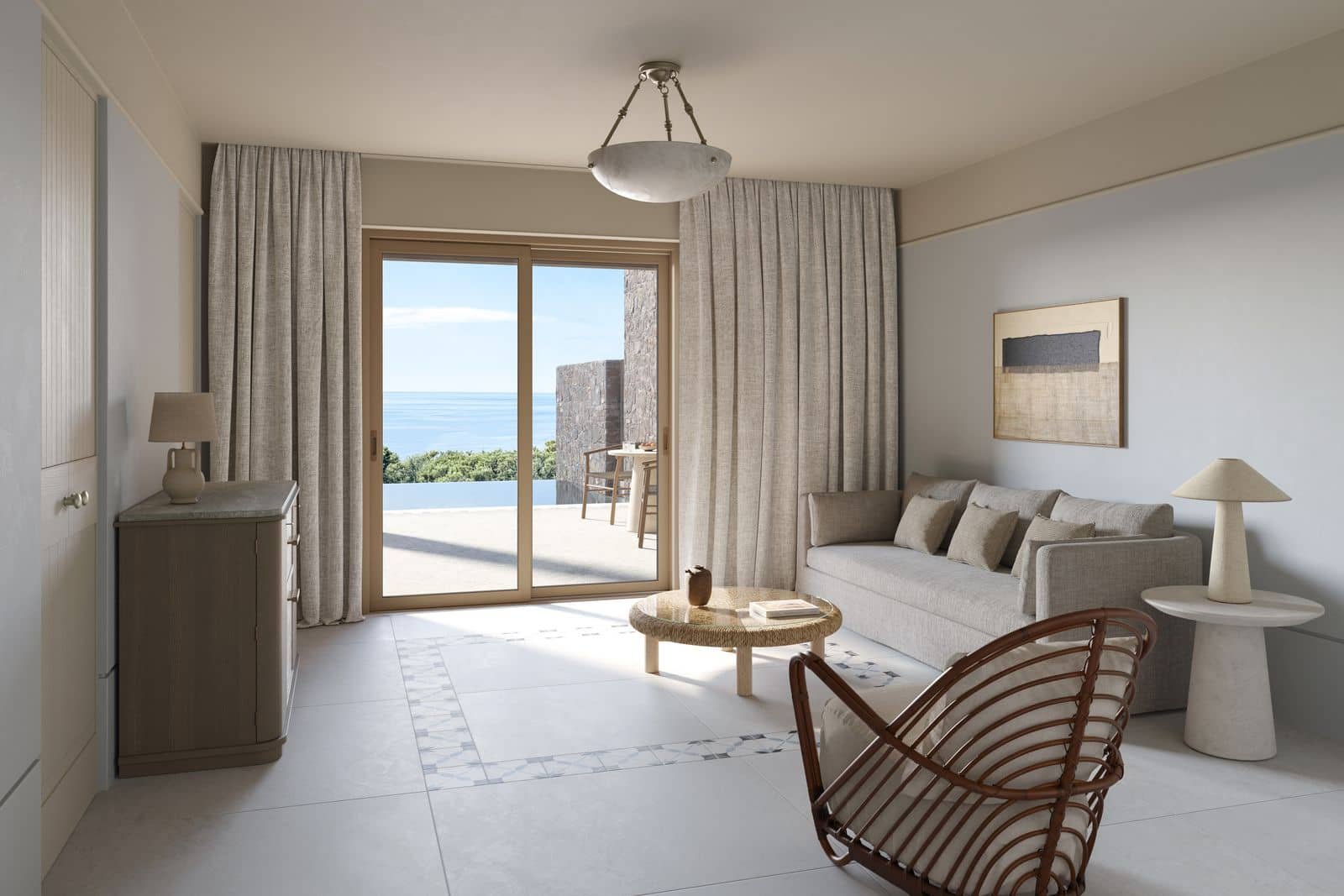
Stone, Light, and the Milos Proposition
Arriving in Milos already sets a particular mood. The ferry from Piraeus deposits you into Adamas, a port town built around a deep natural harbour that cuts into the island like a wound, the coloured volcanic cliffs enclosing the water on three sides. The island's geological drama, the same forces that produced the kaolin quarries, the obsidian outcrops, and the white-orange formations at Sarakiniko, creates a physical environment that makes ordinary hospitality feel insufficient. A property that reads against that backdrop has to work harder aesthetically than its counterparts on softer Cycladic terrain.
Eréma operates in that specific context. The name itself, meaning solitude or wilderness in Greek, is an architectural statement before a single room is described. Properties in Milos that have begun attracting a design-aware guest profile in recent seasons share a common strategy: they borrow the island's raw material palette, volcanic tuff, local stone, undressed plaster, and use restraint rather than ornament to signal quality. Eréma positions itself within that approach, drawing on the same vocabulary of quietness that defines the island's appeal against its louder Cycladic neighbours.
Design as a Response to Landscape
In the Greek islands, the relationship between architecture and terrain has always been functional before it was aesthetic. Cycladic whitewash originated as lime disinfectant; thick walls were thermal mass, not stylistic preference. The design language that contemporary properties inherit carries that history, and particularly coherent ones treat it seriously rather than decoratively.
Eréma's architectural identity follows the logic of subtraction rather than addition. The physical environment of Milos already provides the drama, the carved coastline, the light that turns ochre in late afternoon, the silence that distinguishes the island from Mykonos or Santorini. A property that competes with that landscape loses. One that frames it wins. This positions Eréma closer to the design philosophy you find at properties like Amanzoe in Porto Heli, where the architecture steps back from its setting rather than asserting itself against it, a model that has defined the more credible end of Greek luxury hospitality over the past decade.
The split in Greek island accommodation has become sharper since 2020. On one side: larger resort formats with pools tiered toward caldera or sea views, international group infrastructure, and a consistent if undifferentiated luxury standard. On the other: smaller, architecture-led properties with limited keys, stronger material identities, and a guest profile that arrives with a specific idea of what the island is for. Properties like Amoudi Villas in Oia, NOS Hotel and Villas in Faros, and Andronis Minois in Paros occupy the latter category across different islands. Eréma reads as Milos's contribution to that second cohort.
The Milos Moment, and Why It Matters for Accommodation
Milos has spent the better part of a decade building an identity distinct from the Santorini-Mykonos axis. Where those islands have commodified their views and their party infrastructures respectively, Milos has traded on geological specificity and relative scarcity. The beach count is notable, over seventy, most accessible only by boat, and the taverna tradition along the waterfront in Pollonia and Klima remains more grounded than comparable spots on adjacent islands.
That identity shift creates pressure on accommodation providers. Guests who choose Milos over Santorini are already making a statement about what kind of trip they want. They need a property that confirms rather than contradicts that choice. Four Seasons-standard infrastructure in Athens or a full resort format in Crete serves a different decision entirely. The Milos traveller, at this point in the island's visibility curve, tends to resist scale.
Eréma's positioning within that context makes practical sense. A property named for solitude, operating on an island that markets itself through quietness and natural drama, targets a guest who arrived with aligned expectations. That coherence between destination choice and property character is something the stronger properties in the Greek island space have learned to engineer deliberately. Comparable alignment is visible at Gundari in Petousis on Folegandros, another island that punches above its size through deliberate identity management.
Planning a Stay, Practical Considerations
For comparable Greek island base options at different price points and formats, properties like Acro Suites in Agia Pelagia, Aeifos Boutique Hotel in Santorini, Pegasus Suites in Fira, and Le Méridien Sissi in Crete offer different geometry for the same broad itinerary.
Comparable Venues
Comparable venues nearby, for context on price, style, and recognition.
| Venue | Cuisine | Price | Awards | Notes |
|---|---|---|---|---|
| ErémaThis venue — the venue you are viewing | Contemporary design-led retreat responding to volcanic landscape with minimalist architecture and sustainable practices targeting LEED Gold certification. | $$$$ | 5-Star | Not listed |
| Eréma | A luxury, design-forward all-suite island retreat that merges Cycladic minimalism with expansive sea views and private pools for every suite. | $$$$ | 5-Star | Provatas / southeastern coast |
| Anemolethe Suites Hotel Kimolos | Modern Cycladic minimalist suites with sea-view terraces | $$$ | 3-Star | Xilokeratia |
| White Pebble Suites | Cycladic-inspired boutique luxury with fluid interiors for island life | $$$$ | Not listed | Pollonia |
| Domes White Coast Milos | Contemporary minimalist response to Milos' dramatic geology; white cubist architecture echoing traditional Cycladic villages with refined modern comfort. | $$$$ | 1-Star | Mytakas |
| Noma Milos | Contemporary minimalist sanctuary inspired by Cycladic architecture and slow living philosophy | $$$ | 1-Star | Provatas |
Continue exploring
More in Milos
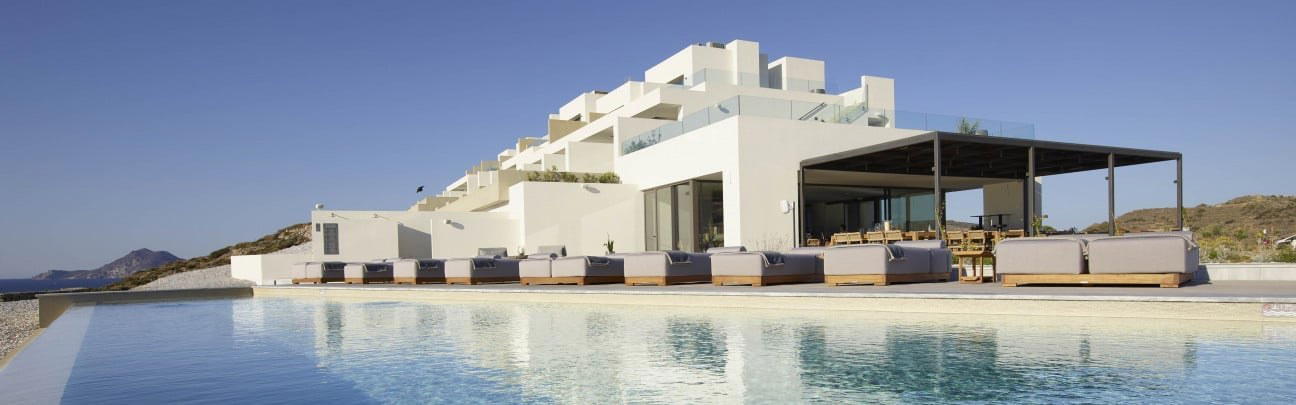
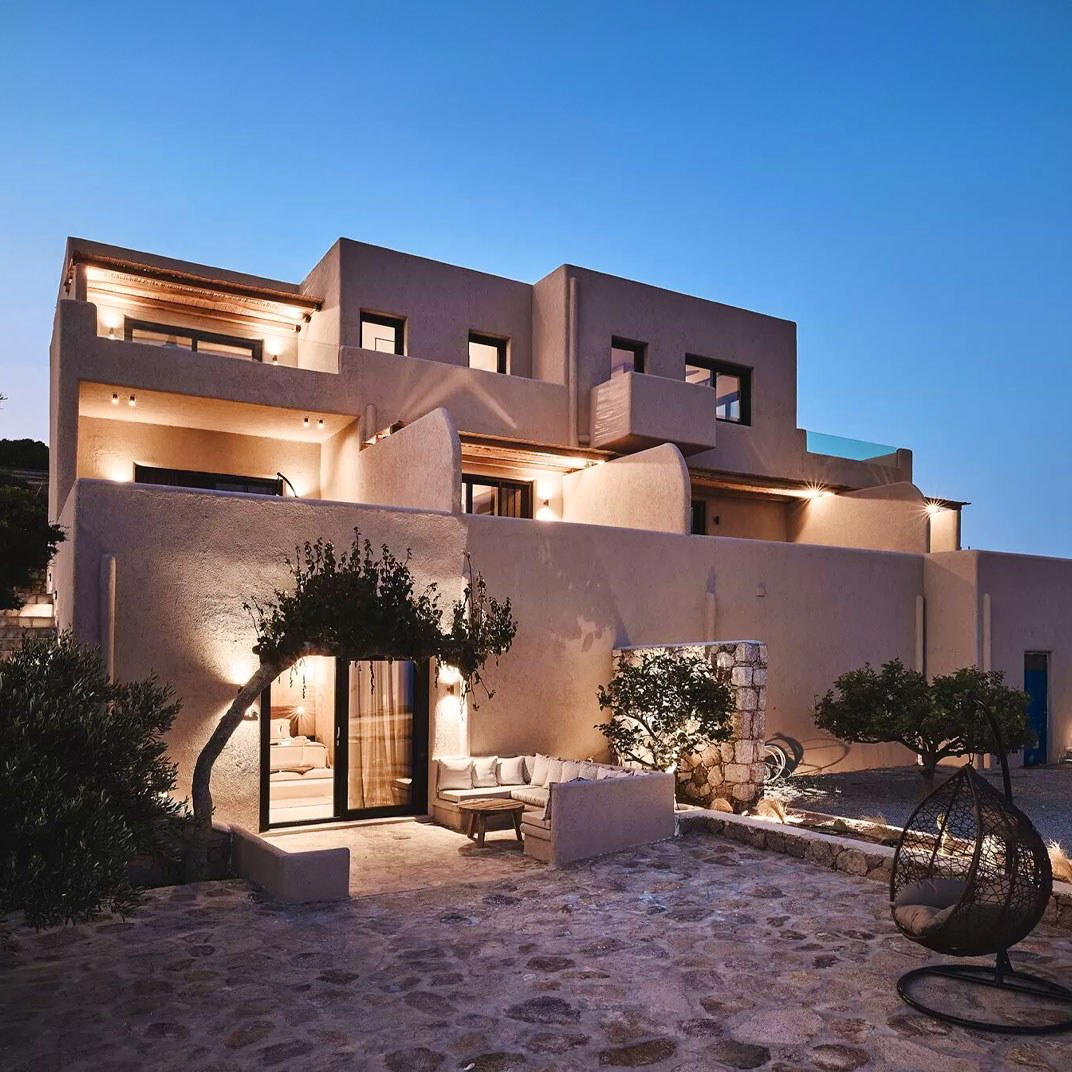
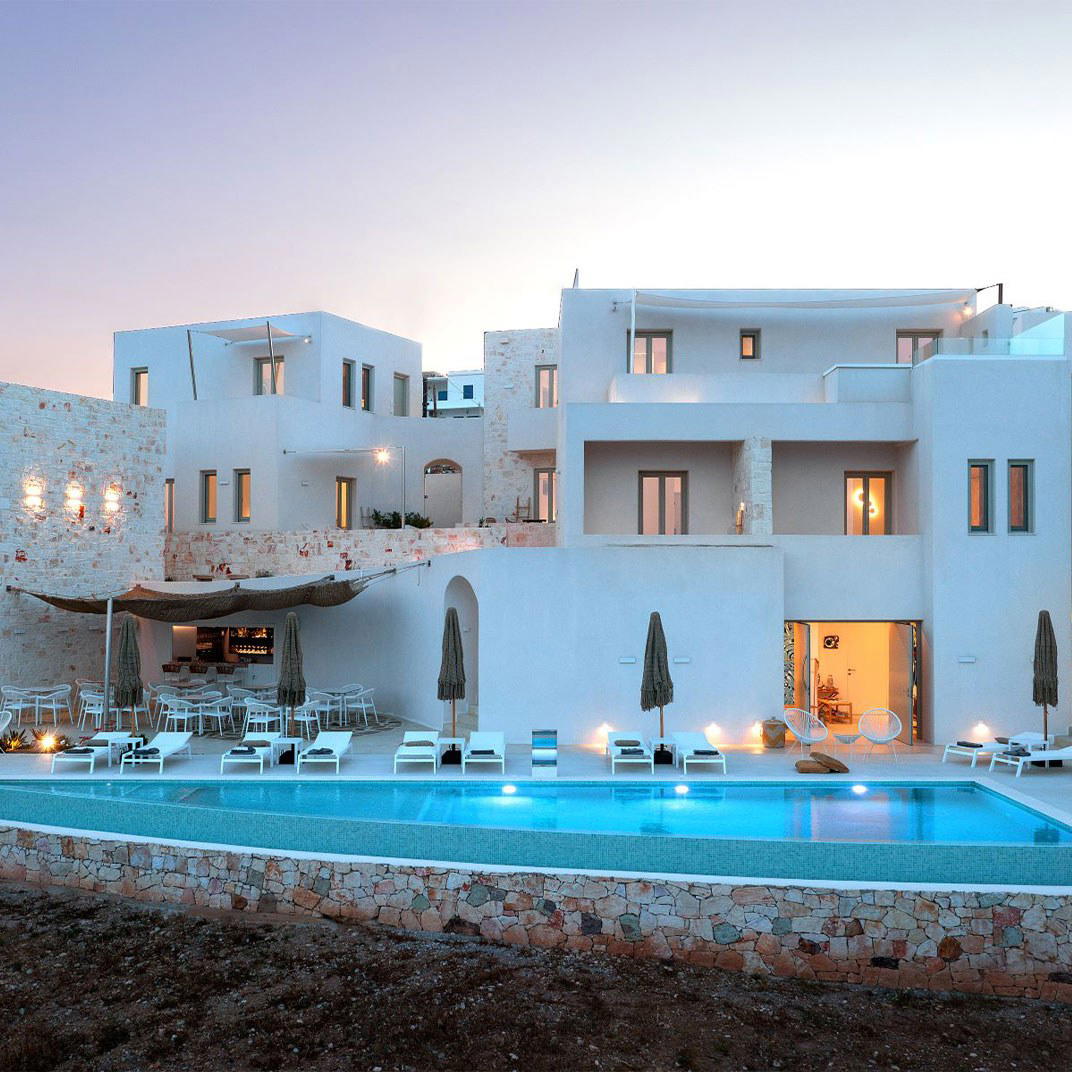
At a Glance
- Romantic
- Quiet
- Elegant
- Minimalist
- Scenic
- Honeymoon
- Romantic Getaway
- Wellness Retreat
- Anniversary
- Beachfront
- Infinity Pool
- Private Villa
- Destination Spa
- Panoramic View
- Private Dining
- Terrace
- Wi Fi
- Pool
- Spa
- Fitness Center
- Room Service
- Concierge
- Valet Parking
- Beach Access
- Waterfront
- Wi Fi
- Pool
- Spa
- Fitness Center
- Room Service
- Concierge
- Valet Parking
- Beach Access
Serene and contemporary with soft natural light, earth tones, and fluid transitions between interior spaces and the horizon; designed to evoke calm and openness.