Bolt Farm Treehouse

Perched in the cool mountain air of Whitwell, Tennessee, Bolt Farm Treehouse belongs to a small category of American wilderness stays where the architecture itself is the amenity. refined structures set among hardwood canopy deliver seclusion without sacrificing comfort, placing this property in the same conversation as the country's most considered nature-immersive retreats.
Pearl is the En Primeur Club membership app — saves, bookings, and concierge access live there. Same editors, same standards.
- Address
- 600 English Cove Rd, Whitwell, TN 37397
- Phone
- +1 423-556-3365
- Website
- boltfarmtreehouse.com
- Directions
- Get directions
 Saves & bookings on Pearl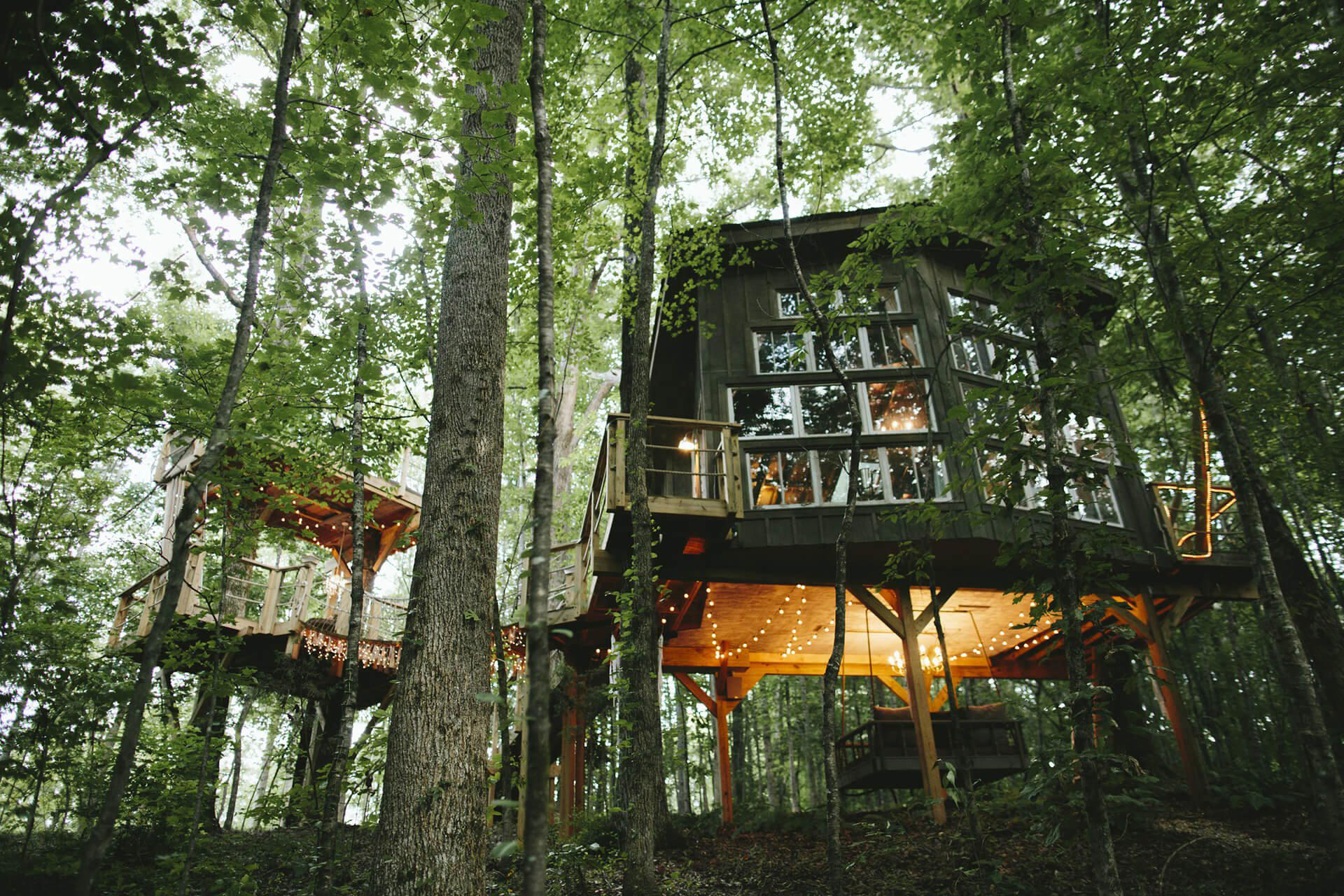
Treehouse Architecture as the American Wilderness Stay Grows Up
The treehouse resort category in the American South has matured considerably over the past decade. What began as a novelty format, platform beds above creek lines and rope bridges for dramatic effect, has evolved into a serious design discipline where structural engineering, material sourcing, and relationship to terrain now determine whether a property belongs in the conversation alongside properties like Post Ranch Inn in Big Sur or sits closer to a glamping compound with aspirations. Bolt Farm Treehouse, a 5-star hotel at 600 English Cove Rd in Whitwell, Tennessee, occupies the more considered end of that spectrum, where the physical structure is the primary argument for the stay.
Whitwell sits in Sequatchie Valley, a geological fold in the Cumberland Plateau where ridge lines run in parallel bands and hardwood forest fills the gaps. The terrain is not the dramatic red-rock exposure of a property like Amangiri in Canyon Point, nor the coastal softness of Little Palm Island Resort in Little Torch Key. It is denser, greener, and more enclosed, a forest environment that rewards a design approach oriented toward canopy integration rather than panoramic exposure.
How the Structures Engage the Canopy
In the treehouse resort format, the defining architectural question is always vertical: how far off the ground, and at what cost to structural integrity and guest comfort. Properties that answer this poorly produce structures that feel either precarious or, conversely, so reinforced with concrete footings and steel cable that the canopy connection becomes theatrical. The better examples, and Bolt Farm's treehouses fall into this group, balance genuine elevation with the kind of interior stability that allows the surrounding forest to register as ambiance rather than anxiety.
The English Cove setting means guests approach through a forested drive that prepares the visual register before arrival. The cool mountain air referenced in the property's own framing is not incidental: at elevation in the Cumberland Plateau, temperatures run measurably lower than the Tennessee valley floor, and that thermal difference shapes the experience across seasons. Spring brings the full hardwood leaf-out; autumn delivers the colour sequence that draws visitors to this part of the Appalachian chain from October onward; winter strips the canopy to reveal structure and long sightlines that summer conceals entirely. Each season produces a materially different property, which is an argument for return visits that a more climate-controlled hotel cannot make as honestly.
This seasonal variability places Bolt Farm in a peer conversation with properties whose design identity shifts with the calendar, such as Blackberry Farm in Walland, where the Tennessee landscape is similarly central to what the stay delivers across the year. Both properties operate in the same regional ecosystem, though Blackberry Farm pursues a farm-to-table culinary identity alongside its landscape credentials, while Bolt Farm's primary argument remains architectural and environmental.
The Design Logic of Seclusion
American wilderness hospitality has developed two dominant formats. The first is the lodge model: a central building with amenity concentration and satellite guest rooms, typified by properties like Sage Lodge in Pray or Amangani in Jackson Hole, where communal spaces carry significant weight in the overall experience. The second is the dispersed-unit model, where individual structures are separated enough that each guest encounters the property largely in private. Bolt Farm operates in the second format, and the dispersal is not merely spatial: when each structure sits within its own section of canopy, the acoustic and visual privacy between units becomes an architectural outcome, not just a planning decision.
This approach to seclusion carries a particular logic for couples, which the property's positioning makes explicit. The format has clear antecedents in the American boutique scene: Troutbeck in Amenia uses historic architecture and pastoral landscape to a similar relational end, and Bernardus Lodge in Carmel Valley builds seclusion through garden-enclosed casitas. What distinguishes the treehouse format is that the seclusion is vertical as well as horizontal: elevation from the forest floor changes the relationship to sound, light, and the surrounding canopy in ways that a ground-level cottage cannot replicate.
The American market for design-led wilderness stays has deepened considerably since 2018, with properties across the Mountain West, Pacific Coast, and Appalachian corridor raising the architectural standard for what guests expect from a nature-immersive property. Ambiente in Sedona sits at one end of this spectrum, with cantilevered structures that foreground dramatic desert geology. Alpine Falls Ranch in Superior represents the Montana ranch iteration. Canyon Ranch Tucson anchors the wellness-facility end of the category.
Bolt Farm's position in this comparable set is defined by its format specificity: it does not compete on amenity breadth or culinary programming in the way that SingleThread Farm Inn in Healdsburg does. Its argument is more focused, and more architectural: the structure, its relationship to the canopy, and the thermal and acoustic environment that relationship produces. For travellers whose primary criterion is that the built environment feels genuinely embedded in its landscape rather than placed beside it, that focus is a strength rather than a limitation.
Planning a Stay
Whitwell is accessible from Chattanooga, approximately 45 minutes south. The property address at 600 English Cove Rd places it outside the town centre, requiring a car for access and any off-property movement. Winter, for travellers comfortable with the starkness of a bare canopy, offers one structural read of the treehouses' relationship to the surrounding forest.
How It Stacks Up
Comparable venues nearby, for context on price, style, and recognition.
| Venue | Cuisine | Price | Awards | Notes |
|---|---|---|---|---|
| Bolt Farm TreehouseThis venue — the venue you are viewing | luxury treehouse retreat | $$$$ | 5-Star | Not listed |
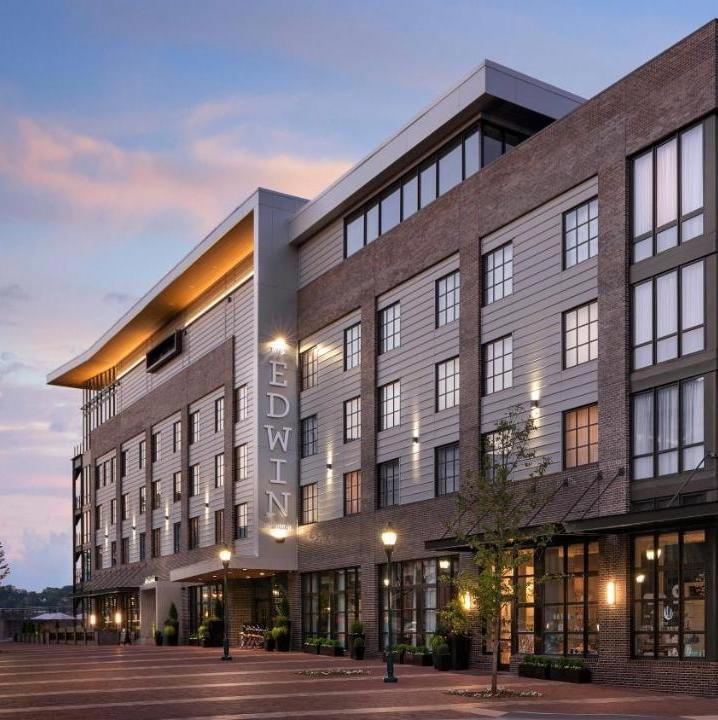
| The Edwin Hotel, Autograph Collection | luxury boutique hotel blending southern hospitality with contemporary design | $$$$ | 4-Star | Bluff View Arts District |
| Blackberry Mountain | rustic-chic mountain resort | $$$$ | 5-Star | Walland |
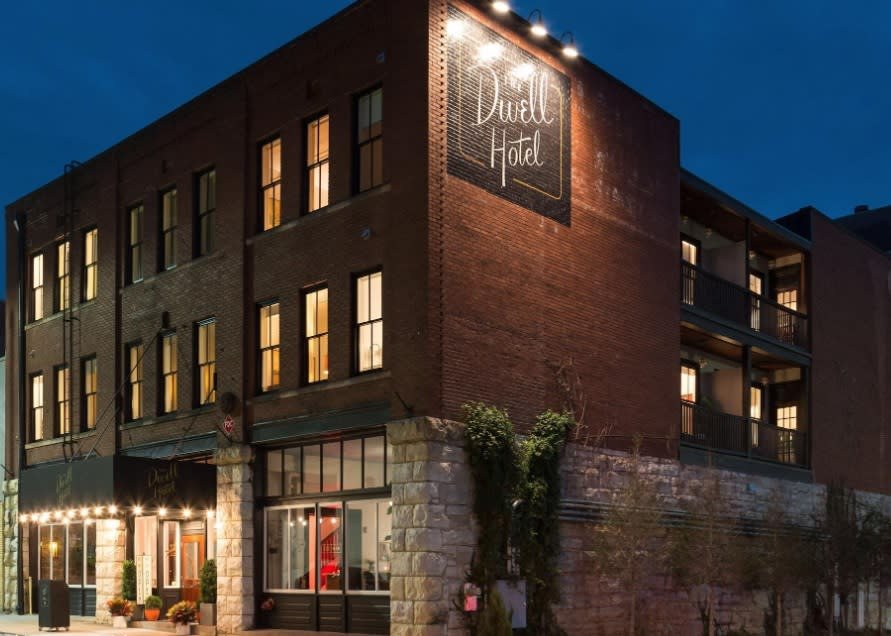
| The Dwell Hotel | Swanky mid-century modern boutique in historic 1909 building. | $$$ | 4-Star | downtown |
| Grand Hyatt Nashville | Modern luxury blending Music City culture with innovative design | $$$$ | 4-Star | Downtown |
| Conrad Nashville | Modern luxury tower with residential feel in mixed-use development | $$$$ | 4-Star | Music Row |
Recognition history
Dated appearances from independent guides and award organizations, with the underlying list record or original source where available.
Fodor's Most Incredible Hotels in the World
Fodor's

At a Glance
- Romantic
- Scenic
- Quiet
- Intimate
- Romantic Getaway
- Honeymoon
- Anniversary
- Weekend Escape
- Wellness Retreat
- Private Dining
- Panoramic View
- Design Destination
- Hot Tub
- Concierge
- Wi Fi
- Spa
- EV Charging
- Mountain
- Hot Tub
- Concierge
- Wi Fi
- Spa
- EV Charging
Secluded, romantic, and quiet, with panoramic mountaintop views and a private, nature-immersive atmosphere designed for couples to disconnect and reconnect.