Tokyo Music Bar
Tokyo Music Bar occupies a quietly unusual corner of Cuauhtémoc, where the bar culture of Mexico City meets an aesthetic drawn from mid-century Japanese listening rooms. The format pairs serious cocktail craft with curated vinyl playback, placing it in a specialist tier of Mexico City nightlife where the drink in your hand and the record on the turntable receive equal attention.
Pearl is the En Primeur Club membership app — saves, bookings, and concierge access live there. Same editors, same standards.
- Address
- Río Pánuco 132, Cuauhtémoc, 06500 Ciudad de México, CDMX, Mexico
- Phone
- +52 56 3035 4220
- Website
- edokobayashi.com
- Directions
- Get directions
 Saves & bookings on Pearl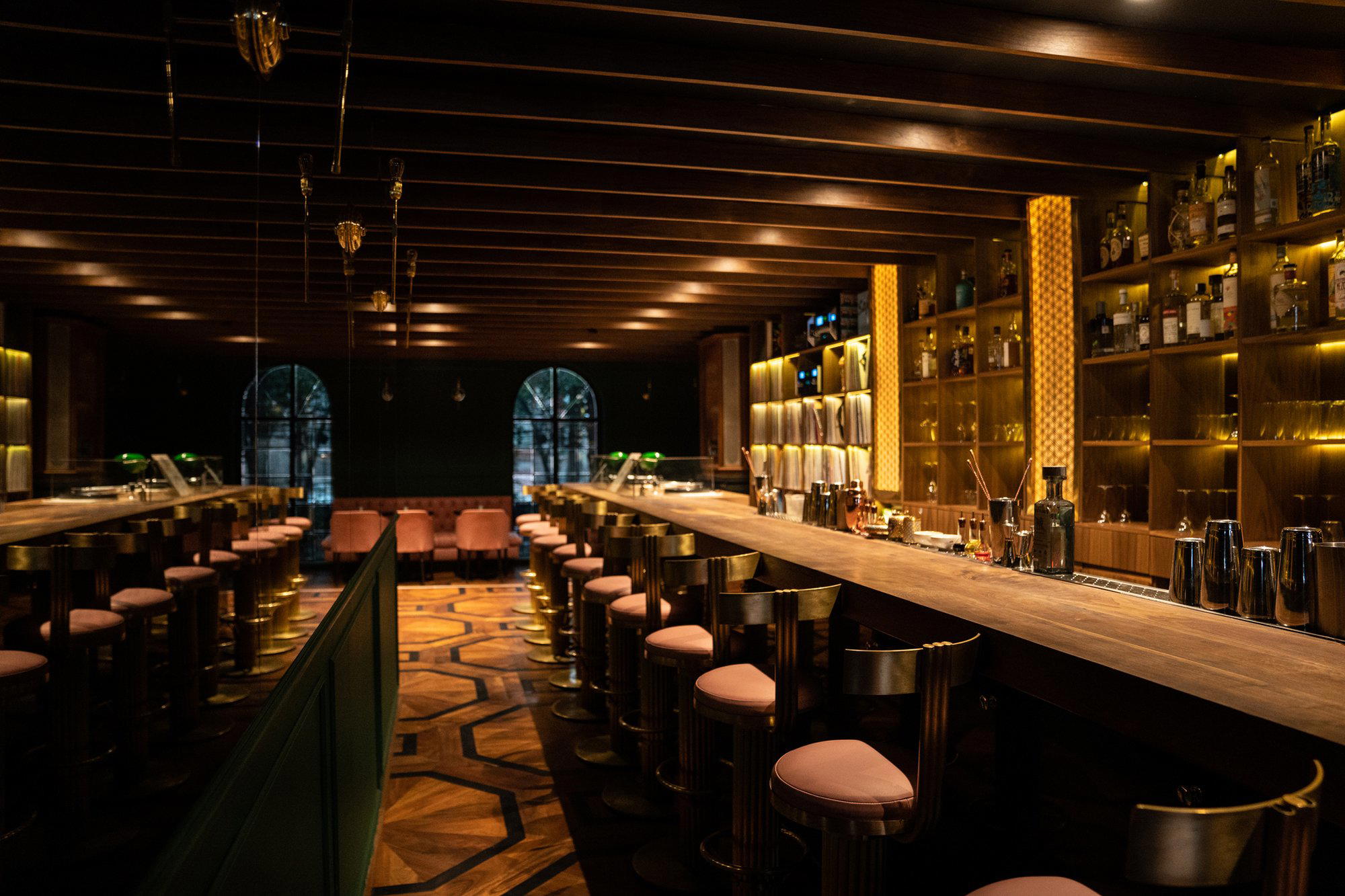
There is a particular kind of bar that refuses to compete on volume. Not the volume of music — though that is calibrated here with unusual care — but the volume of bodies, noise, and transactional speed that defines most of Mexico City's after-dark economy. Tokyo Music Bar, on Río Pánuco 132 in Cuauhtémoc, belongs to the quieter tier: a format where the room itself communicates intention before the first order is placed.
The address sits within Cuauhtémoc, one of the city's central delegaciones and home to a bar scene that has, over the past decade, diversified well beyond the cantina tradition. What was once a neighbourhood defined by office corridors and mid-century apartment blocks has absorbed a layer of specialist drinking rooms that draw on international reference points without abandoning local character. Tokyo Music Bar is among the more culturally specific of these, importing the logic of the Japanese kissaten and listening bar, spaces built around analog sound reproduction and deliberate slowness, into a Mexico City context.
The Listening Bar Format in Latin America
Japan's listening bar tradition emerged in the postwar decades as a response to cramped urban living. Record players were expensive, apartments were small, and the bar became the site where serious music consumption happened in a communal but hushed register. The format never fully exported itself until the 2010s, when a global vinyl revival gave it new relevance in cities from London to São Paulo. In Mexico City, the model has found receptive ground: a drinking public that is deeply invested in cultural specificity, and a bar scene sophisticated enough to support niche formats without requiring mass-market volume to survive.
What this means in practice is a room where the DJ or host controls the sound at a level that permits conversation without demanding it, where the selection of records carries editorial weight, and where the cocktail program is expected to hold up to scrutiny on its own terms. The listening bar is not a concept bar in the theatrical sense; it is closer to a editorial position on how an evening should be structured.
Among Mexico City's more recognised cocktail addresses, Baltra Bar, Bar Mauro, and Bijou Drinkery Room among them, Tokyo Music Bar occupies a different register. It sits closer to Brujas in its willingness to let a concept govern the room, though the cultural reference points are distinct.
Cuauhtémoc's Bar Character
Understanding where Tokyo Music Bar sits requires understanding the Cuauhtémoc bar moment more broadly. The delegación spans an enormous range of drinking formats: the divey pulquería, the serious mezcal room, the technically ambitious cocktail counter, and the international-concept import. What connects the better addresses in this tier is a commitment to specificity over generalism. The bars that have earned consistent attention here are not all-things venues; they are built around a legible point of view and a room that supports it.
Río Pánuco itself is a secondary street by the standards of the Roma and Condesa axes that dominate the city's cocktail conversation, which partly explains why a format as considered as a listening bar can exist here without being overwhelmed by foot traffic. The lower-profile location is functional: it allows the venue to control its own pace.
Mexico City in a Wider Mexican Bar Context
Mexico City's bar scene operates at a different scale and sophistication level than the rest of the country, though the gap has narrowed. El Gallo Altanero in Guadalajara and Bekeb in San Miguel de Allende represent the specialist tier in their respective cities; La Capilla in Tequila holds a specific cultural authority rooted in its history with the Paloma. In the beach and resort tier, Arca in Tulum, Aruba Day Drink in Tijuana, and Coco Bongo in Cancun operate in entirely different registers, oriented toward volume and spectacle rather than format discipline. Tokyo Music Bar's reference points are firmly in the capital's specialist cohort, and internationally its logic aligns more closely with something like Bar Leather Apron in Honolulu, a room where the atmosphere is as deliberately constructed as the drinks program, than with anything in the resort circuit.
What the Format Asks of You
Specialist format bars make a demand on the guest that generalist venues do not: you are expected to accept the room's terms. At a listening bar, this means surrendering the expectation of a DJ who takes requests, resisting the impulse to talk at full volume over the music, and allowing the pace of the evening to be set by the turntable rather than the table's energy. For guests accustomed to Mexico City's more permissive nightlife formats, this requires a small recalibration. For those who have spent time in Tokyo's actual listening bars, in Shinjuku or Shimokitazawa, where the tradition is deepest, the logic will feel immediately legible.
The cultural borrowing here is sincere rather than decorative. The name signals an aesthetic commitment that the format has to substantiate in practice. Bars in this tier succeed or fail on whether the room genuinely delivers the mood it promises, and whether the program behind the bar is strong enough to carry the evening once the novelty of the concept has settled into the ordinary pleasure of a well-made drink.
For a fuller orientation to the city's drinking and dining scene, the EP Club Mexico City guide maps the major neighbourhoods and the bar formats that define each.
Know Before You Go
- Address: Río Pánuco 132, Cuauhtémoc, 06500 Ciudad de México, CDMX, Mexico
- Neighbourhood: Cuauhtémoc, central, accessible by metro (Insurgentes or Cuauhtémoc stations)
- Format: Listening bar with cocktail program; vinyl-focused sound programming
- Reservations: Contact details not publicly confirmed; arrival during off-peak hours is advisable for specialist-format bars of this type
- Ideal time to visit: Mid-week evenings tend to preserve the listening bar atmosphere more consistently than weekend peak hours
- Dress: No confirmed dress code; the format and neighbourhood skew toward considered-casual rather than club attire
Standing Among Peers
| Venue | Awards |
|---|---|
| Tokyo Music BarThis venue — the venue you are viewing | This venue |
| Fifty Mils | World's 50 Best |
| Hanky Panky | World's 50 Best |
| Baltra Bar | World's 50 Best |
| Bar Mauro | World's 50 Best |
| Bijou Drinkery Room | World's 50 Best |
Continue exploring
More in Mexico City
Bars in Mexico City
Browse all →
Restaurants in Mexico City
Browse all →
At a Glance
Current opening hours
- Monday
- 7 PM–2 AM
- Tuesday
- 7 PM–2 AM
- Wednesday
- 7 PM–2 AM
- Thursday
- 7 PM–2 AM
- Friday
- 7 PM–2 AM
- Saturday
- 7 PM–2 AM
- Sunday
- 7 PM–12 AM
Hours can change for holidays and private events. Last verified .
Know Before You Go
- Getting there
- Río Pánuco 132, Cuauhtémoc, 06500 Ciudad de México, CDMX, Mexico