The Bourse Food Hall
A converted 19th-century stock exchange on Independence Mall, The Bourse Food Hall brings together a rotating cast of Philadelphia vendors under one ornate roof. The format suits grazers and groups navigating different appetites, with the historic architecture doing as much work as the food stalls themselves. Positioned steps from major Old City landmarks, it functions as both a practical lunch stop and a window into the city's current vendor scene.
Pearl is the En Primeur Club membership app — saves, bookings, and concierge access live there. Same editors, same standards.
- Address
- 111 S Independence Mall E, Philadelphia, PA 19106
- Website
- theboursephilly.com
- Directions
- Get directions
 Saves & bookings on Pearl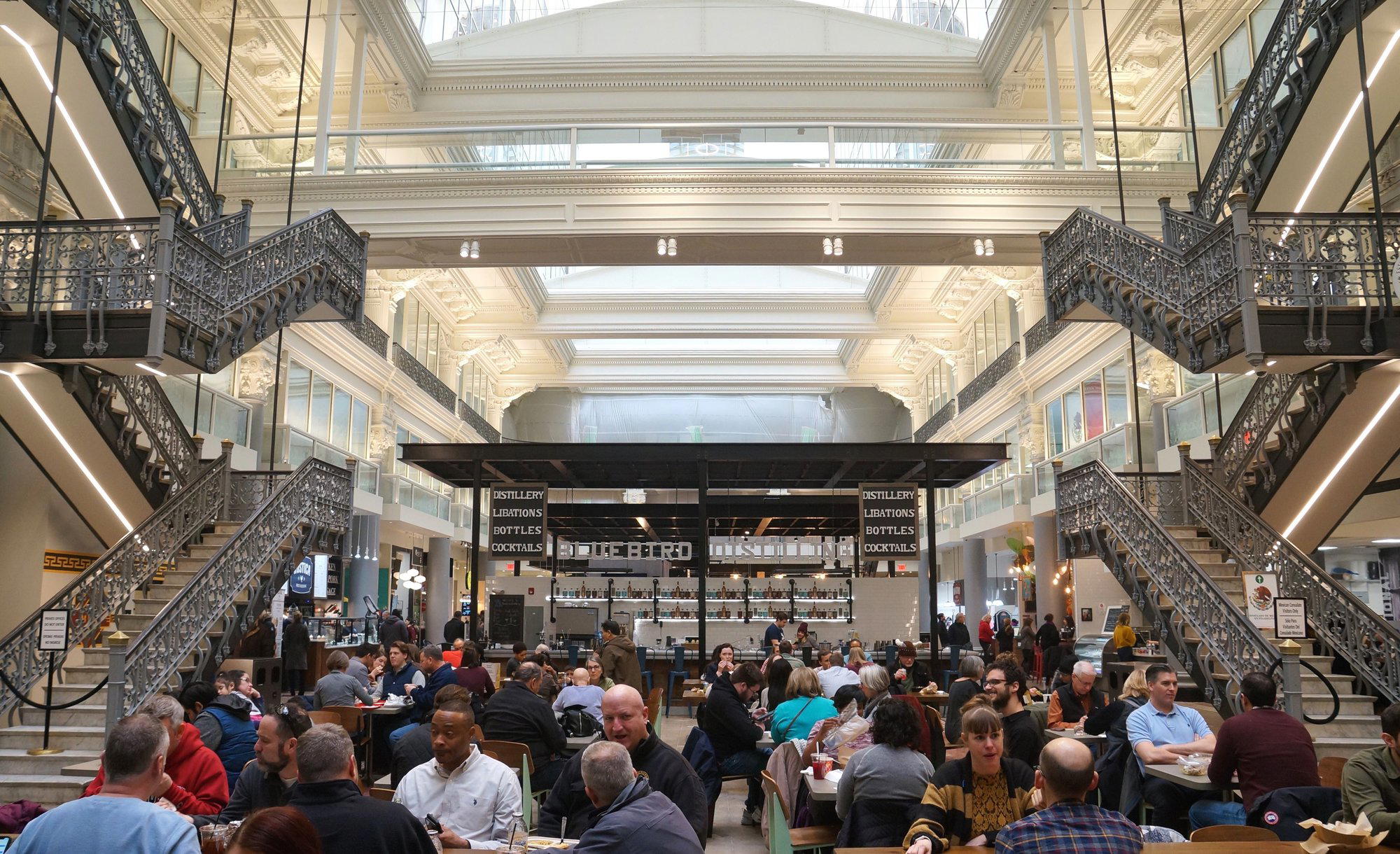
A Trading Floor Repurposed
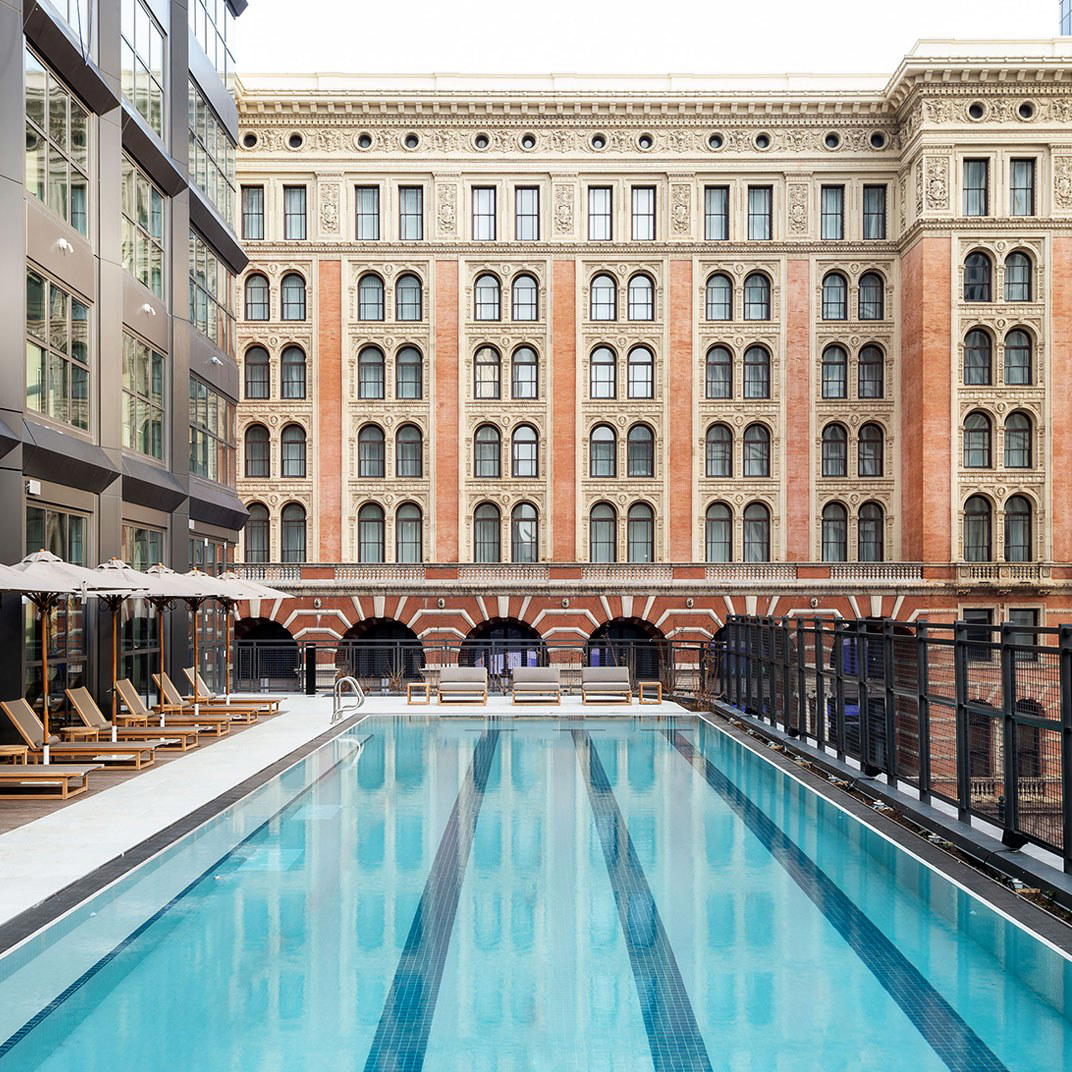
Philadelphia's Old City has always occupied an awkward middle ground in the city's dining conversation: historically significant, heavily trafficked by tourists, and yet not where the city's most serious food operators tend to set up. The Bourse, built in 1895 as the city's commodities and maritime exchange at 111 S Independence Mall E, is a case study in what happens when a grand civic building outlives its original function. The soaring Romanesque Revival interior, with its iron balconies and vaulted atrium, was repurposed as a food hall in a wave of American urban market conversions that accelerated through the 2010s. The building is the draw as much as the stalls inside it. It is a casual, walk-in-friendly food hall, with an average spend of about $25 per person.
The better operators have learned that the format works when the vendor mix is genuinely curated rather than simply filled, and when the physical space offers something that standalone restaurants cannot replicate. The Bourse leans on the latter: few lunch settings in Philadelphia deliver the same architectural drama without a reservation.
The Vendor Mix and What It Reflects
The stalls at The Bourse rotate and evolve. What the format consistently rewards is the kind of visit where a group splits up, each person orders from a different counter, and everyone eats at the same communal table. That is not a niche use case in American food halls, it is the core proposition, and The Bourse executes it within a setting that most comparable spaces in the city cannot match on atmosphere alone.
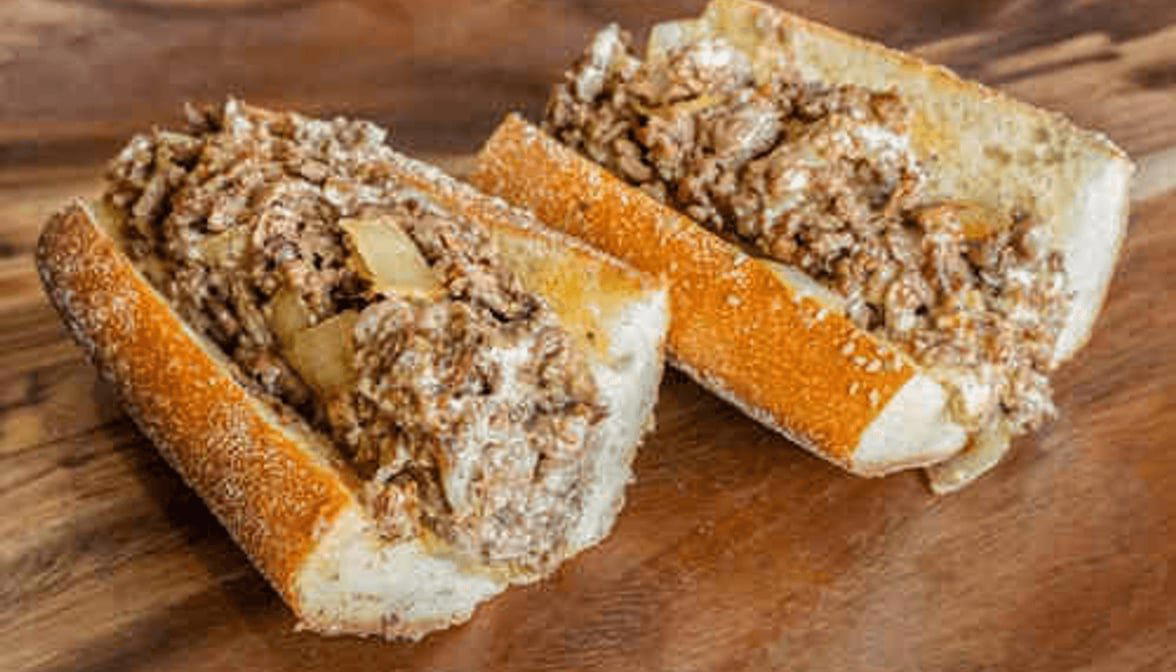
Philadelphia's vendor-driven food culture draws from a broader Mid-Atlantic tradition that takes the sandwich seriously, treats the cheesesteak as a civic institution rather than a tourist novelty, and has developed a credible independent coffee culture alongside a long-standing Italian market tradition in South Philly. Whether any given stall at The Bourse represents the sharpest end of those traditions at any given moment depends on who is operating when you visit. The format, by design, is less stable than a fixed restaurant program, which is both its appeal and its limitation.
Where Drinks Fit In
Philadelphia's bar culture has developed in a direction that rewards specificity. That context matters when considering what a food hall drinks offer is and is not designed to do.
Kumiko in Chicago has built its identity around Japanese technique and hyper-seasonal ingredients. Jewel of the South in New Orleans draws on deep historical research into the city's cocktail canon. Julep in Houston operates from a Southern spirits framework. Bar Leather Apron in Honolulu, Superbueno in New York City, ABV in San Francisco, and The Parlour in Frankfurt each represent the same principle applied in different cities: a drinks program built around a defined perspective rather than volume.
Old City Context
The Bourse sits in the densest concentration of American historical landmarks outside of Washington D.C. Independence Hall and the Liberty Bell Center are within a short walk. That proximity shapes the visitor profile significantly: a meaningful share of the foot traffic consists of people who are in Old City for the monuments and want a practical, accessible meal that does not require a reservation or a significant time commitment. The Bourse serves that need with more architectural substance than a food court and more flexibility than a full-service restaurant.
For Philadelphians, the calculation is different. The city's most discussed food corridors run through East Passyunk, Fishtown, and Rittenhouse, and the serious operators in those neighborhoods draw a different kind of diner. Old City dining has historically skewed toward volume rather than culinary ambition, though that assessment is always evolving. The Bourse fits its immediate context: a space built for throughput, anchored by a building that does more work than any single stall inside it.
Know Before You Go
- Address: 111 S Independence Mall E, Philadelphia, PA 19106
- Neighborhood: Old City, steps from Independence Hall and the Liberty Bell Center
- Format: Multi-vendor food hall with communal seating in a historic 19th-century exchange building
- Leading for: Groups with varied appetites, time-limited visitors in Old City, anyone who wants to eat inside one of Philadelphia's more impressive historic interiors
- What to verify: Vendor lineup changes over time, check current stalls before visiting if a specific cuisine type is the priority
- Drinks: For serious cocktail programming, plan a separate visit to one of Philadelphia's dedicated bar venues in Fishtown, Passyunk, or Center City
Price and Recognition
Comparable venues nearby, for context on price, style, and recognition.
| Venue | Cuisine | Price | Notes |
|---|---|---|---|
| The Bourse Food HallThis venue — the venue you are viewing | Old City, lounge | $$ | Not listed |
| Poison Heart | Not listed | $$ | West Poplar, cocktail_bar |
| Blue Corn Restaurant and Bar | Italian Market, pub | $$ | Not listed |
| Fitz on 4th | Not listed | $$ | Tattoo Alley, cocktail_bar |
| Monster Vegan | Gayborhood, lounge | $$ | Not listed |
| Vic Sushi Bar | Rittenhouse Square, Bar | $$ | Not listed |
Continue exploring
More in Philadelphia
Bars in Philadelphia
Browse all →
Restaurants in Philadelphia
Browse all →
At a Glance
- Modern
- Historic
- Industrial
- Lively
- Well Known
- Group Outing
- Casual Hangout
- After Work
- Private Event
- Historic Building
- Standalone
- Design Destination
- Communal Tables
- Outdoor Terrace
- Seated Bar
- Craft Cocktails
- Craft Beer
- Conventional Wine
- Street Scene
Historic, airy food hall atmosphere with a restored Beaux Arts setting and patio seating overlooking Independence Mall; current website notice indicates ongoing construction and closure.