Baan Sawan Thai Bistro
Baan Sawan Thai Bistro on Devine Street occupies a stretch of Columbia, South Carolina that has quietly accumulated some of the city's more interesting independent dining. The bistro format positions it between the casual strip-mall Thai familiar to most American cities and the more composed, ingredient-focused Thai that has emerged in larger metros over the past decade. For Columbia, it represents a distinct point on the dining spectrum.
Pearl is the En Primeur Club membership app — saves, bookings, and concierge access live there. Same editors, same standards.
- Address
- 2135 Devine St, Columbia, SC 29205
- Phone
- +1 803 252 8992
- Website
- baansawanthaibistro.com
- Directions
- Get directions
 Saves & bookings on Pearl
Devine Street and the Case for Neighborhood Thai
Devine Street in Columbia's Shandon neighborhood has developed a dining character that is specific to mid-sized Southern university cities: independent operators, modest storefronts, and a customer base that expects more than chain predictability without necessarily demanding tasting-menu formality. Baan Sawan Thai Bistro at 2135 Devine St fits that ecology. The word baan translates from Thai as home or house, and the bistro framing signals something intentional: this is not the lunch-buffet Thai model that dominated American strip malls for two decades, nor is it the high-concept Thai that has redefined the category in cities like New York and Chicago. It sits in the productive middle ground that increasingly defines how regional American cities engage with Southeast Asian cuisine.
That middle ground matters more than it might seem. Thai cuisine in the United States has undergone a gradual sorting over the past fifteen years. At one end, a clutch of destination-level restaurants in major metros, some with serious critical recognition, have repositioned Thai cooking as a vehicle for precision and regional specificity. At the other end, the buffet format persists, optimized for volume over nuance. The more interesting development has been the growth of a third tier: neighborhood bistros in mid-sized cities that operate with genuine kitchen focus, drawing on Thai culinary tradition without the performance apparatus of the destination tier. Columbia's dining scene, documented in our full Columbia restaurants guide, reflects exactly this pattern.
The Bar Program in Context
The editorial angle that matters most at a Thai bistro in a Southern college-city neighborhood is not the kitchen alone. It is the bar, and specifically what the bar signals about a restaurant's ambitions and its understanding of its own customer. Thai cuisine presents particular challenges and opportunities for a drinks program. The flavor architecture of the food, built around fish sauce salinity, lime acidity, galangal aromatics, and chili heat, does not pair straightforwardly with a standard American bar list. The operators who solve this problem well tend to think about the bar the way they think about the kitchen: as a craft discipline with its own internal logic.
In cities with more developed cocktail cultures, this problem has produced some genuinely interesting work. Kumiko in Chicago applies Japanese hospitality principles and technical precision to its drinks in a way that rewards patience and attention. Bar Leather Apron in Honolulu applies a similar discipline in a Pacific context. Jewel of the South in New Orleans draws on deep local cocktail tradition to give its program a sense of place. What these programs share is a bartender or bar team that treats the craft as a genuine area of expertise rather than a support function for the kitchen. The question worth asking at any neighborhood bistro is whether the bar has been given that same standing.
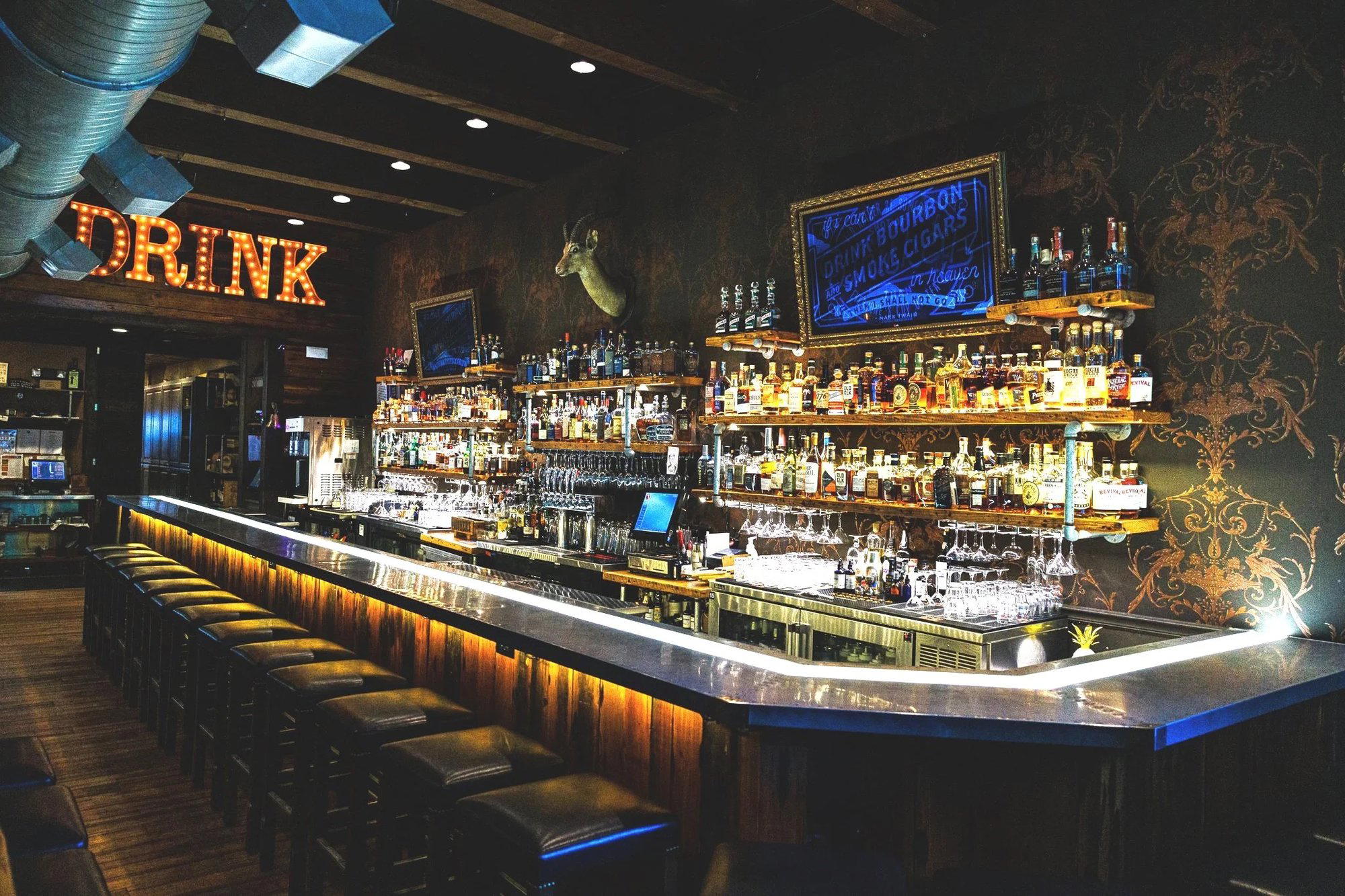
Columbia's own bar scene offers useful comparison. Barred Owl Butcher & Table operates a spirits-forward program that takes its cue from the kitchen's butcher-and-produce ethos. Bourbon positions itself around American whiskey with a depth of selection that rewards the engaged drinker. Bierkeller Brewing Company works the German-style lager and ale tradition with a specificity that distinguishes it from generic craft-beer formats. And Booches holds a different kind of authority as a long-running neighborhood institution. Each of these operations has a defined point of view. The bar programs worth noting in any city are those that can articulate a similar clarity.
At Baan Sawan, the bistro format suggests a drinks list calibrated to complement the food rather than operate independently. Whether that means Thai-inspired cocktails built around lemongrass or tamarind, a tight selection of Asian lagers and wines chosen for acidity, or a spirit selection weighted toward things that work with heat and citrus, the most successful version of this kind of program is one where the person behind the bar understands the menu deeply enough to make real recommendations. That kind of hospitality, the bartender or server who knows why a certain drink works with a certain dish, is the actual craft on display at the neighborhood bistro level. Compared to destination-program bars like Superbueno in New York City, Julep in Houston, or ABV in San Francisco, the neighborhood bistro bar operates with fewer resources but not necessarily less intention. The bar at The Parlour in Frankfurt demonstrates how a tightly scoped program can carry a room without the scale of a full cocktail-destination operation.
Thai Bistro Dining in the Southern University City
The university city context shapes what a restaurant like Baan Sawan is actually doing. Columbia is home to the University of South Carolina, which means the Devine Street corridor serves a population that skews toward the curious and cost-conscious but is not indifferent to quality. This demographic has historically supported Thai restaurants in American college towns at a higher rate than the general population, partly because of the flavor-to-value ratio Thai cuisine offers at the neighborhood level. The bistro format, which implies tablecloths-optional and a mid-range price point, fits that context well.
What distinguishes the better operators in this tier is a commitment to the underlying ingredients and techniques rather than a simplified interpretation of the cuisine. Thai cooking draws on a set of fresh aromatics, fermented condiments, and regional preparations that do not simplify cleanly without losing something. The restaurants that hold their position in a neighborhood over years tend to be those that resist that simplification, at least in their core dishes.
Planning a Visit
Baan Sawan is located at 2135 Devine St in Columbia's Shandon area, a walkable neighborhood with street parking available along Devine and the surrounding residential streets. The Devine Street corridor is compact enough that a meal here can anchor a broader evening that includes drinks at neighboring operations. For travelers arriving from outside Columbia, the address sits a short drive from downtown and the USC campus. Booking details and current hours are best confirmed directly with the restaurant before visiting, as these can shift seasonally for independent operators of this type. Dress is relaxed in keeping with the neighborhood bistro format.
Continue exploring
More in Columbia
Bars in Columbia
Browse all →
Restaurants in Columbia
Browse all →
Hotels in Columbia
Browse all →
At a Glance
- Cozy
- Intimate
- Rustic
- Date Night
- Casual Hangout
- Standalone
- Seated Bar
- Counter Only
Current opening hours
- Monday
- Closed
- Tuesday
- Closed
- Wednesday
- Closed
- Thursday
- Closed
- Friday
- 5–8 PM
- Saturday
- 5–8 PM
- Sunday
- Closed
Hours can change for holidays and private events. Last verified .
Cozy and charming intimate atmosphere in a small historic house setting.
Know Before You Go
- Getting there
- 2135 Devine St, Columbia, SC 29205