Where the Dock Ends and the Fjord Begins Nusfjord is the kind of fishing village that makes architectural historians and travel photographers arrive in the same season. The cluster of ochre and red boathouses at the water's edge in Ramberg represents one of Norway's best-preserved nineteenth-century fishing settlements, and it is against this backdrop that Aurora matbar operates, on a dock extension that places guests literally over the water. Before any drink arrives, the environment is already doing considerable work: the cold clarity of Lofoten light, the creak of timber underfoot, the smell of salt and distant kelp. Few mat bars in northern Norway frame the act of sitting down quite so deliberately. That physical positioning is not incidental. In Norwegian coastal dining culture, the boundary between the indoors and the sea has always been porous, boats once docked where guests now sit, and bars and mat bars that occupy these transitional spaces are drawing on a long tradition of treating the waterfront as both workplace and gathering place. Aurora matbar belongs to that lineage, but it does so on a stretch of coastline where the scenery operates at a scale that most Norwegian harbour towns can't match. The Lofoten archipelago sits above the Arctic Circle, and the quality of light here, whether the long summer evenings or the blue dusk of winter, gives outdoor drinking a different register than it holds further south. The Mat Bar Format in Arctic Norway The Norwegian mat bar occupies a position between a wine bar and a small plates restaurant, and it has become one of the more resilient formats in the country's drinking culture over the past decade. Where Oslo's bar scene, led by venues like Himkok in Oslo and increasingly sophisticated natural wine operations, has moved toward technical programmes and international ingredient sourcing, the mat bar format outside the capital tends to draw more explicitly on regional produce and a shorter, more focused offering. The northern tier of Norwegian bars, including Vinsmak in Tromsø and LystPå in Bodø, reflects this regional orientation: the glass matters, but so does what it sits beside on the table. Aurora matbar operates within that northern tradition. The setting at Nusfjord places it at some distance from the larger bar scenes of Bodø and Tromsø, which means the programme here functions for a different audience, visitors to the Lofoten islands who are not primarily bar tourists but for whom a drink in the right place, at the right moment, can anchor an entire trip. That context shapes what a programme like this needs to deliver: less about trend-setting and more about specificity of place. Drinks Against the Fjord The editorial angle on any bar operating in this kind of environment points back to the same question: does the programme match the setting, or does the setting do all the work? In venues along Norway's western bar corridor, from Dråpen Vinbar in Bergen to Blomster og Vin in Trondheim and northward, the most coherent operations are the ones where the drinks list reads as a considered response to where you are, not a generic wine or cocktail selection that could have been assembled anywhere. For a bar on a working-heritage dock in Lofoten, that coherence tends to manifest in sourcing: producers from northern Norway and the wider Nordic region, perhaps a short spirits selection that acknowledges the aquavit tradition running through this coastline for centuries. Aquavit, the caraway-forward spirit that has anchored Scandinavian drinking culture since at least the fifteenth century, is the obvious reference point for any bar operating this far north, and the most interesting programmes in the region use it as a starting point rather than a concession to nostalgia. Paired with local seafood plates, the Lofoten cod and the Arctic char that run through nearly every serious kitchen in the archipelago, a well-positioned aquavit or aquavit-adjacent serve becomes less a regional cliché and more an accurate document of place. The broader Norwegian bar scene has seen considerable development in low-intervention wine, with venues like Norvald Vinbar in Stavanger, The Red Dot Wine Bar in Kristiansand, and Vino Bar Ålesund in Ålesund building programmes around this category. At a mat bar on the water's edge in Ramberg, a tight natural wine selection alongside regional spirits would fit both the format and the setting, and would place the operation in dialogue with what is happening across Norwegian bar culture without requiring the depth of a dedicated wine bar. For comparison, consider how Køl Bar & Bistro in Molde and POUR - by Signe in Tjøme handle the bar-bistro crossover: the food and drink are in dialogue, neither subordinated to the other. The Lofoten Context Bars operating in remote or highly scenic destinations face a structural challenge that their urban counterparts don't. The scenery generates footfall that has nothing to do with the programme, which can reduce the pressure on quality, or, in the hands of operators who understand the moment they're in, it can raise the standard of what needs to be delivered to justify the setting. The leading waterfront bars in the Norwegian system are the ones that treat the view as a responsibility rather than a free pass. Lofoten's tourism season concentrates heavily in summer, when the midnight sun extends drinking and dining outdoors well past any reasonable hour, and in winter, when northern lights draw a different, more patient traveller. Both seasons create distinct demands on a programme and on a room, or, in this case, a dock. For reference on how bars at a similar remove from urban centres handle this: Café La Trova in Miami demonstrates how a bar with a specific cultural identity can draw a committed audience even outside the most concentrated dining districts. The principle applies across geographies: programme coherence travels further than setting alone. For anyone building an itinerary around Lofoten's food and drink, our full Ramberg restaurants guide maps the wider options across the archipelago. Planning Your Visit Aurora matbar sits within the Nusfjord settlement at Ramberg, accessed via the E10 road that runs the length of the Lofoten archipelago. Nusfjord itself is a short detour from the main road and functions partly as a heritage site, which means the dock area where the bar operates can draw visitors throughout the day. The Lofoten islands are most accessible by the Harstad/Narvik Airport at Evenes or by ferry connections from Bodø, with the drive to Ramberg taking approximately two hours from Evenes. Given the outdoor dock setting and the latitude, timing a visit to either the summer midnight-sun period or the winter aurora season will determine the character of the experience as much as anything on the menu. Frequently Asked Questions Is Aurora matbar more formal or casual?The dock setting at Nusfjord places this firmly in the casual register. Ramberg is a small coastal town without a formal dining culture at scale, and a mat bar on an outdoor dock extension operates without the dress expectations or reservation formality you would find at an award-recognised urban restaurant. Come as you are, dressed for the weather.What should I drink at Aurora matbar? The Norwegian aquavit tradition runs deep along this coastline, and any programme that engages with it seriously will reflect where you are more accurately than an imported spirits selection.What's the standout thing about Aurora matbar?The location is the primary draw: a dock extension over the water at Nusfjord, one of Norway's most architecturally significant fishing villages.Can I walk in to Aurora matbar? Nusfjord attracts significant visitor numbers in peak Lofoten season, so arriving early in the evening during summer or shoulder season gives you the leading chance of securing a spot on the dock.Does Aurora matbar operate year-round, and how does the season affect the experience? Operationally, the outdoor dock format at this latitude means the experience shifts substantially between summer, when the midnight sun makes outdoor drinking viable past midnight, and the winter aurora season, when the northern lights can appear over the fjord from the same vantage point. Both periods draw travellers to Lofoten for different reasons, and the bar's position at the water's edge in Nusfjord makes it a relevant stop in either season for visitors already in the archipelago.

Pearl is the En Primeur Club membership app, where members save venues, book tables and use the concierge.
Where the Dock Ends and the Fjord Begins
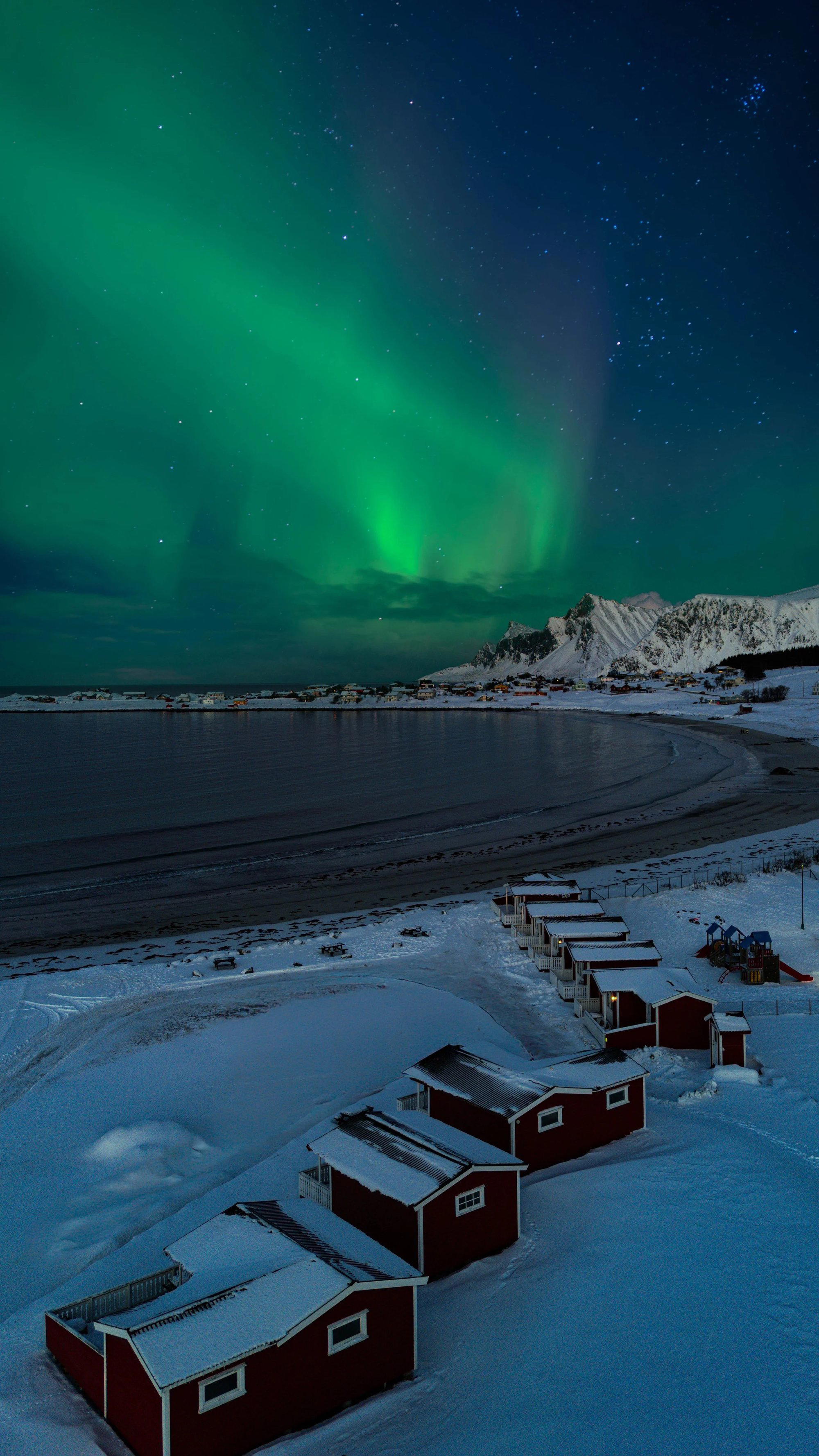
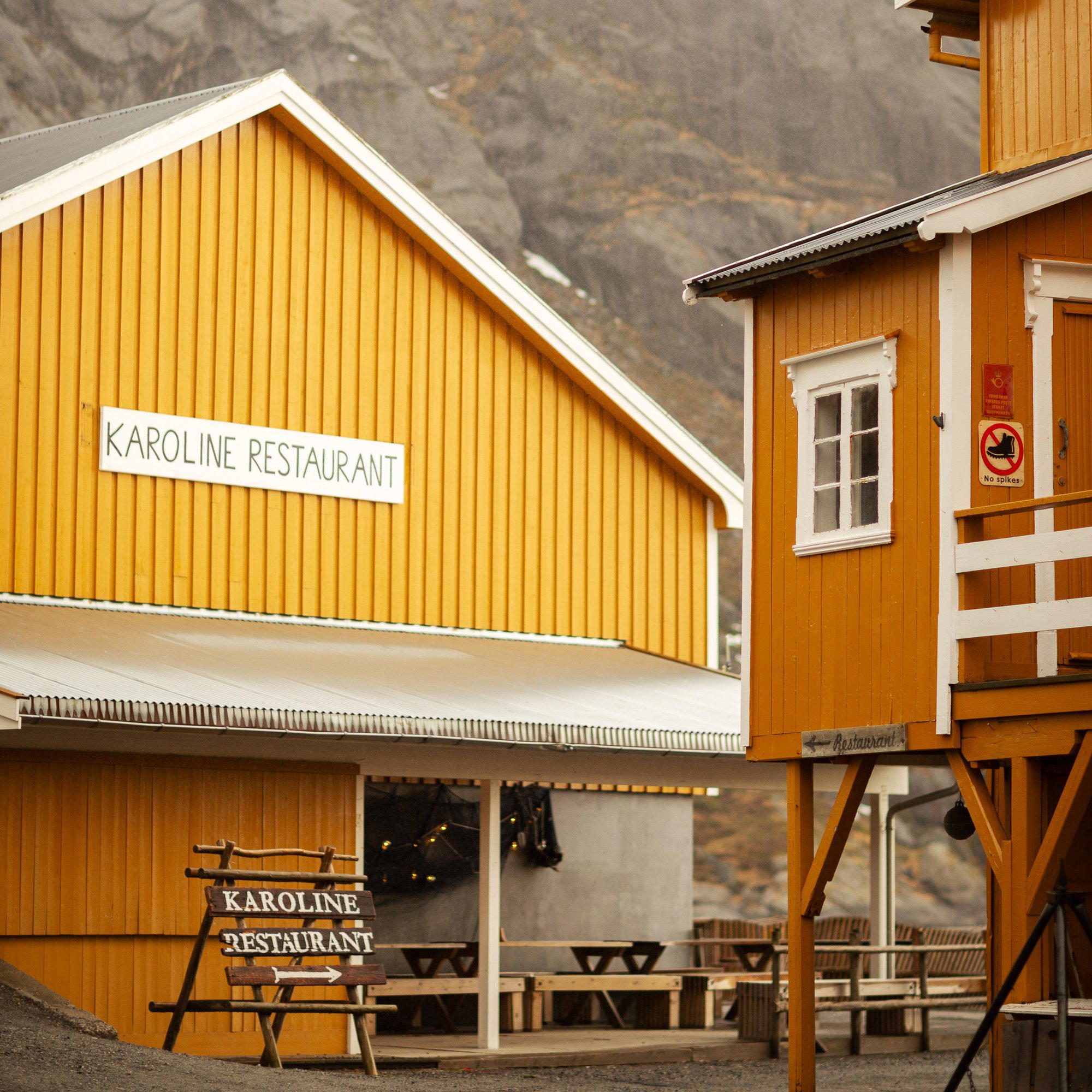
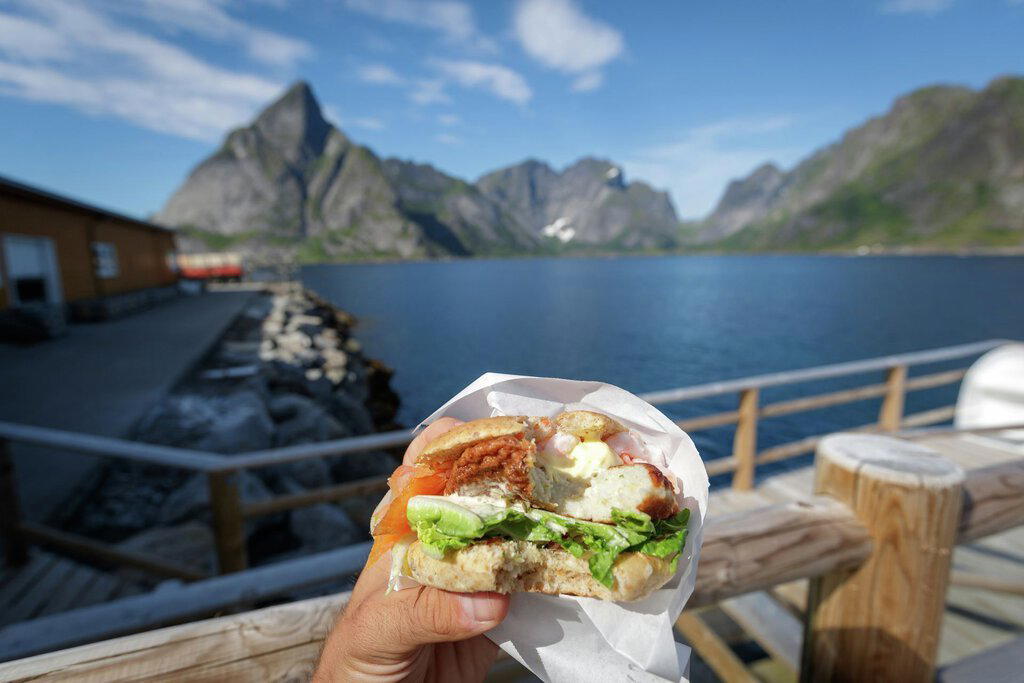
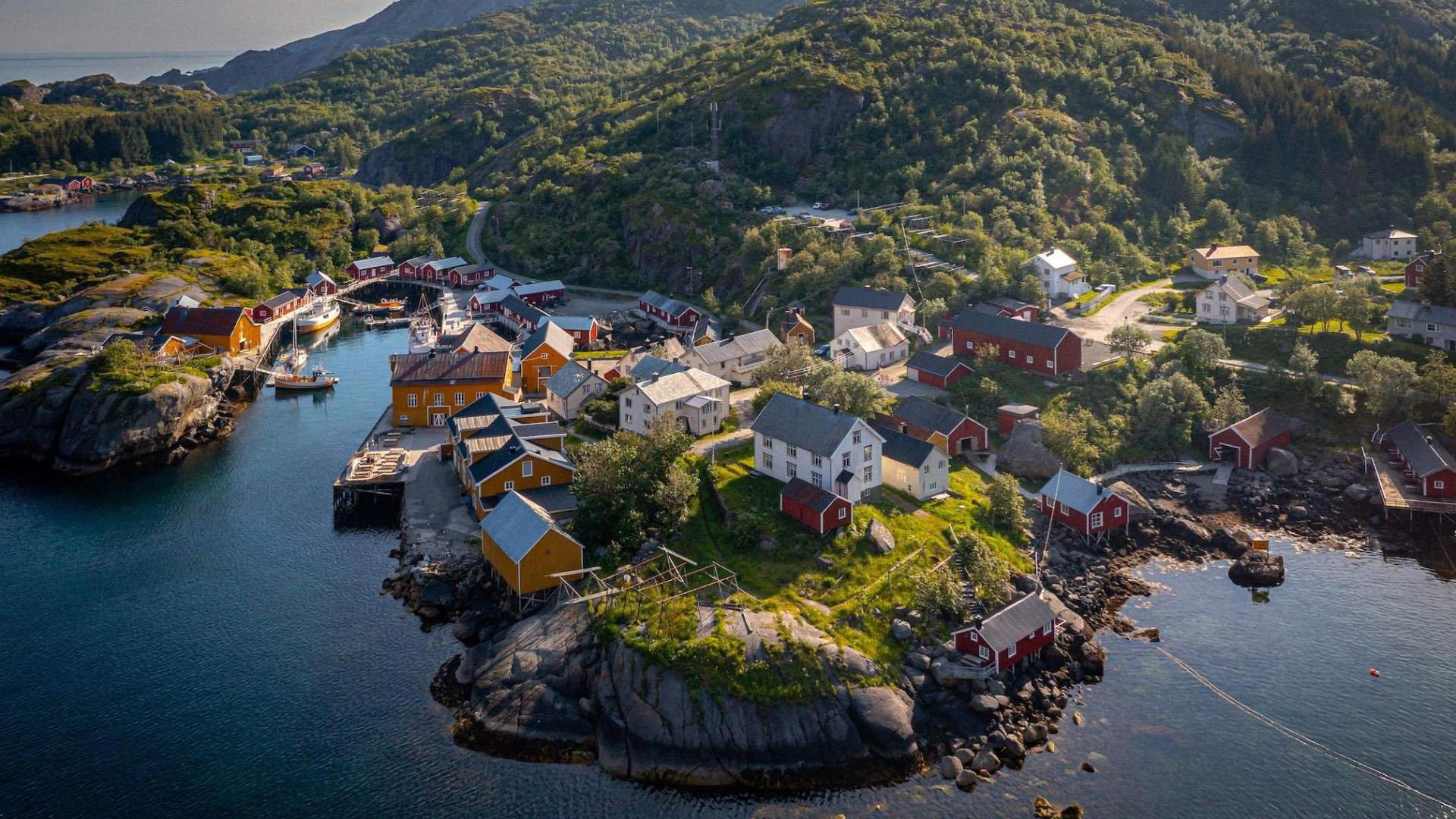
Nusfjord is the kind of fishing village that makes architectural historians and travel photographers arrive in the same season. The cluster of ochre and red boathouses at the water's edge in Ramberg represents one of Norway's best-preserved nineteenth-century fishing settlements, and it is against this backdrop that Aurora matbar operates, on a dock extension that places guests literally over the water. Before any drink arrives, the environment is already doing considerable work: the cold clarity of Lofoten light, the creak of timber underfoot, the smell of salt and distant kelp. Few mat bars in northern Norway frame the act of sitting down quite so deliberately.
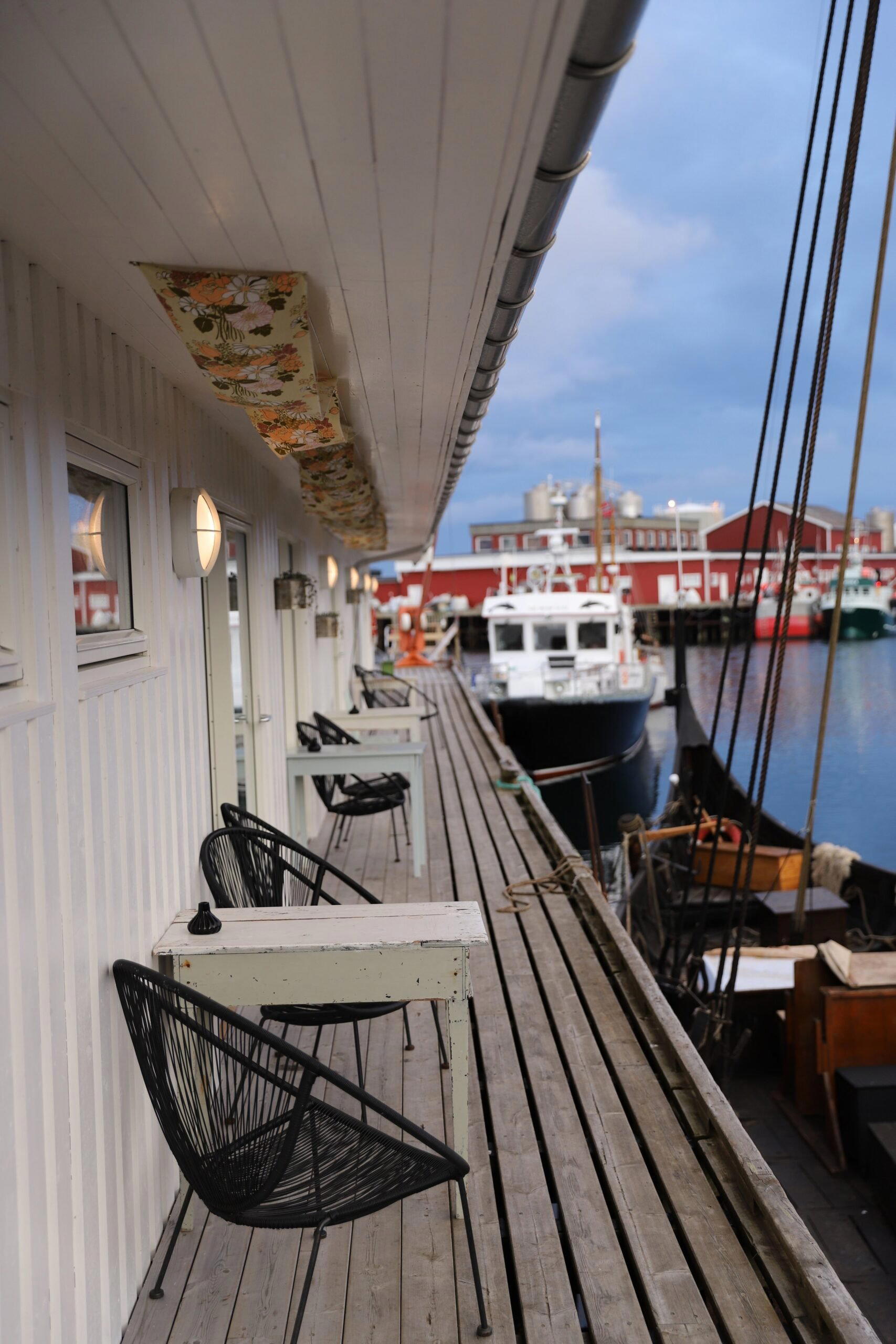
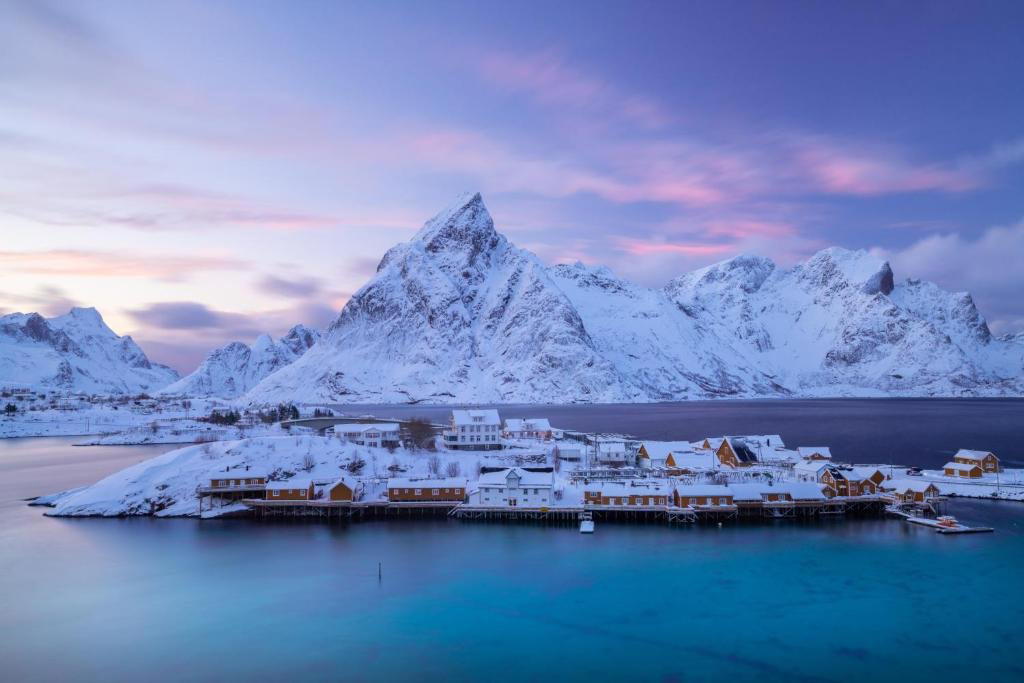
That physical positioning is not incidental. In Norwegian coastal dining culture, the boundary between the indoors and the sea has always been porous, boats once docked where guests now sit, and bars and mat bars that occupy these transitional spaces are drawing on a long tradition of treating the waterfront as both workplace and gathering place. Aurora matbar belongs to that lineage, but it does so on a stretch of coastline where the scenery operates at a scale that most Norwegian harbour towns can't match. The Lofoten archipelago sits above the Arctic Circle, and the quality of light here, whether the long summer evenings or the blue dusk of winter, gives outdoor drinking a different register than it holds further south.
The Mat Bar Format in Arctic Norway
The Norwegian mat bar occupies a position between a wine bar and a small plates restaurant, and it has become one of the more resilient formats in the country's drinking culture over the past decade. Where Oslo's bar scene, led by venues like Himkok in Oslo and increasingly sophisticated natural wine operations, has moved toward technical programmes and international ingredient sourcing, the mat bar format outside the capital tends to draw more explicitly on regional produce and a shorter, more focused offering. The northern tier of Norwegian bars, including Vinsmak in Tromsø and LystPå in Bodø, reflects this regional orientation: the glass matters, but so does what it sits beside on the table.
Aurora matbar operates within that northern tradition. The setting at Nusfjord places it at some distance from the larger bar scenes of Bodø and Tromsø, which means the programme here functions for a different audience, visitors to the Lofoten islands who are not primarily bar tourists but for whom a drink in the right place, at the right moment, can anchor an entire trip. That context shapes what a programme like this needs to deliver: less about trend-setting and more about specificity of place.
Drinks Against the Fjord
The editorial angle on any bar operating in this kind of environment points back to the same question: does the programme match the setting, or does the setting do all the work? In venues along Norway's western bar corridor, from Dråpen Vinbar in Bergen to Blomster og Vin in Trondheim and northward, the most coherent operations are the ones where the drinks list reads as a considered response to where you are, not a generic wine or cocktail selection that could have been assembled anywhere.
For a bar on a working-heritage dock in Lofoten, that coherence tends to manifest in sourcing: producers from northern Norway and the wider Nordic region, perhaps a short spirits selection that acknowledges the aquavit tradition running through this coastline for centuries. Aquavit, the caraway-forward spirit that has anchored Scandinavian drinking culture since at least the fifteenth century, is the obvious reference point for any bar operating this far north, and the most interesting programmes in the region use it as a starting point rather than a concession to nostalgia. Paired with local seafood plates, the Lofoten cod and the Arctic char that run through nearly every serious kitchen in the archipelago, a well-positioned aquavit or aquavit-adjacent serve becomes less a regional cliché and more an accurate document of place.
The broader Norwegian bar scene has seen considerable development in low-intervention wine, with venues like Norvald Vinbar in Stavanger, The Red Dot Wine Bar in Kristiansand, and Vino Bar Ålesund in Ålesund building programmes around this category. At a mat bar on the water's edge in Ramberg, a tight natural wine selection alongside regional spirits would fit both the format and the setting, and would place the operation in dialogue with what is happening across Norwegian bar culture without requiring the depth of a dedicated wine bar. For comparison, consider how Køl Bar & Bistro in Molde and POUR - by Signe in Tjøme handle the bar-bistro crossover: the food and drink are in dialogue, neither subordinated to the other.
The Lofoten Context
Bars operating in remote or highly scenic destinations face a structural challenge that their urban counterparts don't. The scenery generates footfall that has nothing to do with the programme, which can reduce the pressure on quality, or, in the hands of operators who understand the moment they're in, it can raise the standard of what needs to be delivered to justify the setting. The leading waterfront bars in the Norwegian system are the ones that treat the view as a responsibility rather than a free pass. Lofoten's tourism season concentrates heavily in summer, when the midnight sun extends drinking and dining outdoors well past any reasonable hour, and in winter, when northern lights draw a different, more patient traveller. Both seasons create distinct demands on a programme and on a room, or, in this case, a dock.
For reference on how bars at a similar remove from urban centres handle this: Café La Trova in Miami demonstrates how a bar with a specific cultural identity can draw a committed audience even outside the most concentrated dining districts. The principle applies across geographies: programme coherence travels further than setting alone.
For anyone building an itinerary around Lofoten's food and drink, our full Ramberg restaurants guide maps the wider options across the archipelago.
Planning Your Visit
Aurora matbar sits within the Nusfjord settlement at Ramberg, accessed via the E10 road that runs the length of the Lofoten archipelago. Nusfjord itself is a short detour from the main road and functions partly as a heritage site, which means the dock area where the bar operates can draw visitors throughout the day. The Lofoten islands are most accessible by the Harstad/Narvik Airport at Evenes or by ferry connections from Bodø, with the drive to Ramberg taking approximately two hours from Evenes. Given the outdoor dock setting and the latitude, timing a visit to either the summer midnight-sun period or the winter aurora season will determine the character of the experience as much as anything on the menu.
Continue exploring
More in Ramberg
Details
- Cozy
- Intimate
- Scenic
- Rustic
- Casual Hangout
- Date Night
- Waterfront
- Live Music
- Lounge Seating
- Waterfront
Current opening hours
- Monday
- 12 PM–12 AM
- Tuesday
- 12 PM–12 AM
- Wednesday
- 12 PM–12 AM
- Thursday
- 12 PM–12 AM
- Friday
- 12 PM–12 AM
- Saturday
- 12 PM–12 AM
- Sunday
- 12 PM–12 AM
Hours can change for holidays and private events. Hours as of .
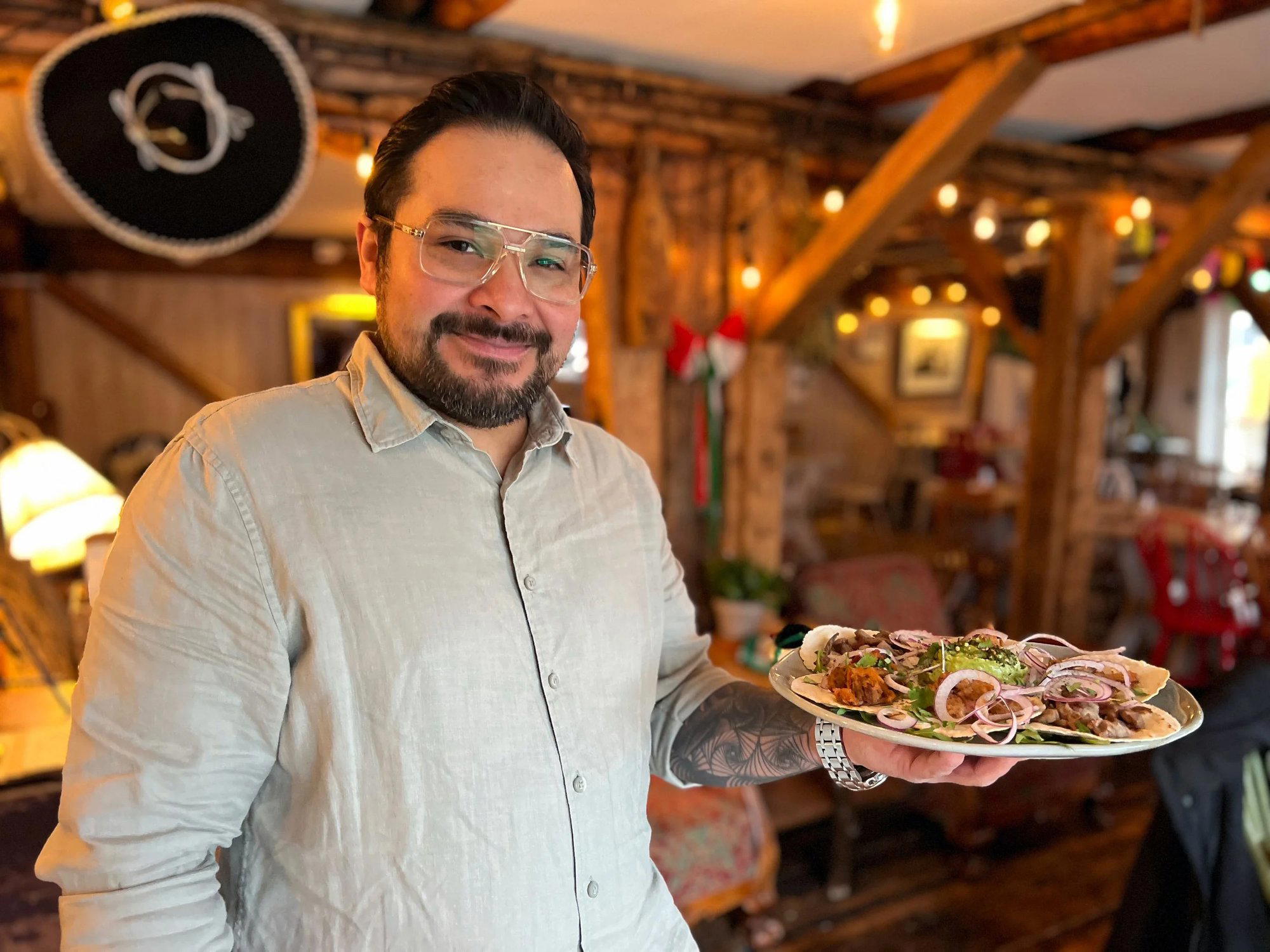
Warm and personal wooden-walled space with weathered ocean views creating a distinctive inside-outside feel by the sea.