Alis Roof Top Bar
Above the Canary Skyline: The Rooftop Drinking Tradition in Las Palmas Rooftop bars occupy a specific cultural register in Spanish island cities. They are not merely places to drink; they are the point at which the urban fabric and the Atlantic light negotiate with each other at the end of the day. In Las Palmas de Gran Canaria, that tradition is anchored by a handful of addresses that combine architectural position with a serious approach to what goes in the glass. Alis Roof Leading Bar, situated at the top of the Hotel Santa Catalina on Calle León y Castillo, sits within that select tier. The hotel itself is one of the most historically significant addresses on the island, a belle époque property that has hosted everyone from Winston Churchill to the Spanish royal family across its decades of operation. The rooftop inherits that gravity without being weighed down by it. The Approach and the View Arriving at Hotel Santa Catalina already signals that you are not walking into a casual setup. The building's period architecture, set within Parque Doramas, frames the ascent before a single drink is poured. Once on the roof terrace, the perspective shifts dramatically: the city spreads out toward the port and the dunes beyond, with the Atlantic as the constant backdrop. The quality of the light in Las Palmas is not incidental here. The Canary Islands sit at a latitude where evening light holds longer and warmer than on the Spanish mainland, and a rooftop position maximises that effect. The window between golden hour and full dark is the prime booking target, and those arriving in that window will find both the setting and the atmosphere at their most compelling. For context on what a well-positioned bar scene looks like elsewhere in Spain, GU San Sebastián in San Sebastián demonstrates how the right physical address anchors a bar's identity in its city. The Cocktail Programme: Technique Meets Atlantic Setting Spanish bar culture has shifted considerably over the past decade. The generation of programmes that built reputations around volume and speed has given way, in the better rooms, to something more considered: sourced spirits, house-made modifiers, and a willingness to let technique show without theatrical excess. Salmon Guru in Madrid represents that shift at its most visible, and Boadas in Barcelona offers the longer historical arc of what a serious Spanish bar programme can look like across generations. Alis Roof Leading Bar operates within this broader Spanish cocktail maturation, and its position atop a landmark hotel places certain expectations on the glass. A rooftop bar attached to a property of this standing typically programmes toward spirits-led cocktails rather than house-special novelty, with a list that rewards the guest who knows what to order rather than relying entirely on presentation alone. The Atlantic context is relevant to the drink selection. The Canary Islands have their own spirits tradition, and bars at this level increasingly draw on local rum production and island botanicals rather than defaulting entirely to imported reference points. Comparable thinking is visible in how Somos Raro in València and Vertical Cervantes in Málaga have each developed identities rooted in regional product. Atmosphere and Clientele Hotel rooftop bars in historically significant properties tend to attract a particular social cross-section: long-stay guests mixing with local professionals and occasional tourists who have done enough research to find their way past the lobby. The energy at Alis tilts toward composed rather than frenetic. This is not a venue built around volume or nightclub adjacency. The architectural setting enforces a certain register; it is difficult to be rowdy on a terrace surrounded by period ironwork and Atlantic views without it feeling incongruous. That means the atmosphere tends toward the end of a long day rather than the start of a long night, with conversation carrying more easily than it would at a louder venue. For a sense of how the higher-energy Spanish rooftop format plays out differently, Ovejas Negras Tapas in Seville offers a useful contrast in tone. Las Palmas de Gran Canaria in Context Las Palmas tends to be overlooked in discussions of Spanish bar culture, which defaults quickly to Madrid, Barcelona, and the Basque Country. That is a misreading of the city. With a population of around 380,000 and a year-round temperate climate that makes outdoor drinking viable across all twelve months, Las Palmas supports a more sustained bar culture than its reputation in northern European travel media would suggest. The city's position as the main port stop for Atlantic crossings has historically exposed it to a wider range of influences than comparably sized Spanish provincial cities. That accumulated cosmopolitanism shows in the better bar programmes, which tend to reference a broader spirit map than the mainland average. For a broader orientation to what the city offers, our full Las Palmas de Gran Canaria restaurants guide covers the full range across price points and cuisines. The rooftop bar format specifically suits Las Palmas in a way it does not always suit colder Spanish cities. The climate makes outdoor seating a practical proposition almost every evening of the year, which means the terrace at Alis is not a seasonal novelty but a genuine anchor for the venue's identity. Bars in similar climatic positions, such as Idilio Cocina y Vino in Palma de Mallorca, have built their programmes around exactly this year-round accessibility. Elsewhere, Casa Lin in Avilés, La Plaça in Folgueroles, and Bar Stick in Errenteria each represent how Spanish bar culture adapts to its geographic and climatic specifics. For a transatlantic comparison, Café La Trova in Miami shows how Caribbean-adjacent drinking cultures share certain atmospheric DNA with the Canary Islands, not by accident given the historical migration patterns between the archipelago and the Americas. Planning Your Visit Alis Roof Leading Bar is accessed through the Hotel Santa Catalina at Calle León y Castillo 227, in the Ciudad Jardín district of Las Palmas. The hotel's location within Parque Doramas puts it slightly removed from the beach-adjacent tourist concentration of Las Canteras, which means the crowd skews less transient and more deliberate. Current hours, reservation requirements, and pricing are best confirmed directly with the hotel, as rooftop programming at hotel venues can shift seasonally. The strongest argument for building your visit around the golden hour window holds regardless of specific opening times: the combination of late Atlantic light, the park canopy below, and a well-made drink at height represents what the city does at its most composed. Frequently Asked Questions Is Alis Roof Leading Bar more low-key or high-energy?The bar sits at the composed end of the Las Palmas rooftop spectrum. Its position within the Hotel Santa Catalina, a historic property operating at the higher end of the city's hospitality tier, shapes the atmosphere toward a settled, conversation-friendly environment rather than a nightlife-adjacent one. Expect a clientele that has chosen the address deliberately rather than arrived by proximity.What drink is Alis Roof Leading Bar famous for? As a hotel rooftop bar in the Canary Islands, the programming logic points toward spirits-led cocktails with potential reference to local rum and island botanicals, but specific menu details should be confirmed directly with the venue. The bar's position within a landmark hotel suggests the list will reward guests who engage with it rather than defaulting to off-menu requests.What is Alis Roof Leading Bar known for?Alis is primarily known for its position atop the Hotel Santa Catalina, one of Las Palmas de Gran Canaria's most historically significant hotel addresses. The rooftop terrace offers clear views toward the Atlantic and across the city, making it a reference point for sundowner visits in a city whose temperate climate supports outdoor drinking year-round. The setting carries more confirmed identity than any specific programme detail currently in the public record.Is Alis Roof Leading Bar reservation-only? Rooftop bars attached to landmark hotels in Las Palmas typically operate a mix of walk-in and reserved capacity, with the terrace filling quickly during peak golden hour windows. Contacting the Hotel Santa Catalina directly is the reliable route to securing a specific time slot, particularly if visiting during high season or on weekends.Is Alis Roof Leading Bar suitable for a special occasion visit in Las Palmas?The setting within the Hotel Santa Catalina, a property with documented historical significance in Gran Canaria's hospitality record, gives the rooftop a degree of occasion weight that most standalone bars in the city cannot replicate. The Atlantic horizon, the period architecture below, and the relative composure of the atmosphere make it a natural choice for a deliberate evening rather than a casual stop. Confirming reservations and dress expectations directly with the hotel in advance is advisable for group or occasion bookings.

Pearl is the En Primeur Club membership app — saves, bookings, and concierge access live there. Same editors, same standards.
- Address
- Hotel Santa Catalina, a Royal Hideaway Hotel, C. León y Castillo, 227, 35005 Las Palmas de Gran Canaria, Las Palmas, Spain
- Phone
- +34 928 24 30 44
- Hours
- Mon–Tue ClosedWed–Sun 5:30 PM–1 AM
- Website
- barcelo.com
- Directions
- Get directions
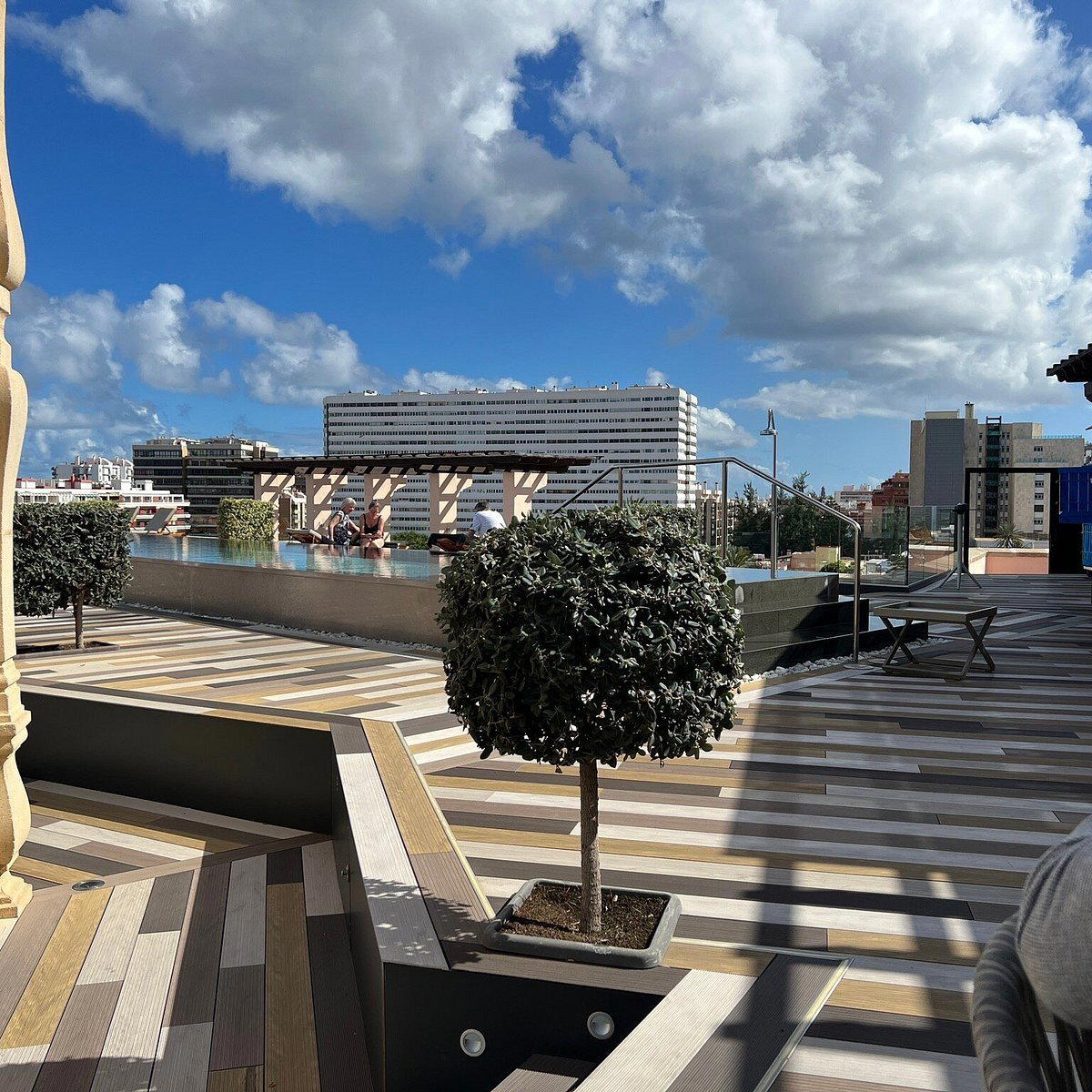
Above the Canary Skyline: The Rooftop Drinking Tradition in Las Palmas
Rooftop bars occupy a specific cultural register in Spanish island cities. They are not merely places to drink; they are the point at which the urban fabric and the Atlantic light negotiate with each other at the end of the day. In Las Palmas de Gran Canaria, that tradition is anchored by a handful of addresses that combine architectural position with a serious approach to what goes in the glass. Alis Roof Leading Bar, situated at the top of the Hotel Santa Catalina on Calle León y Castillo, sits within that select tier. The hotel itself is one of the most historically significant addresses on the island, a belle époque property that has hosted everyone from Winston Churchill to the Spanish royal family across its decades of operation. The rooftop inherits that gravity without being weighed down by it.
The Approach and the View
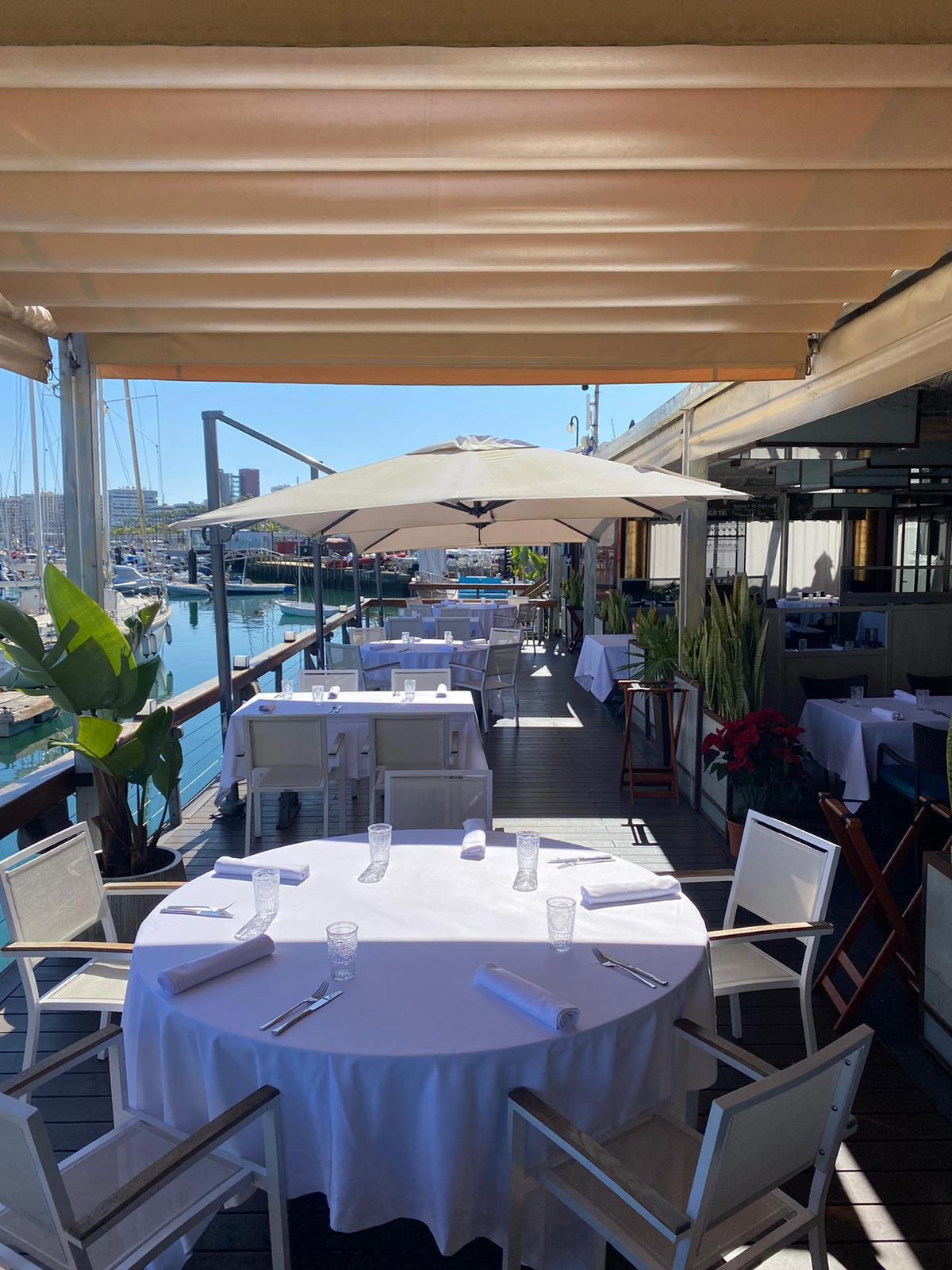
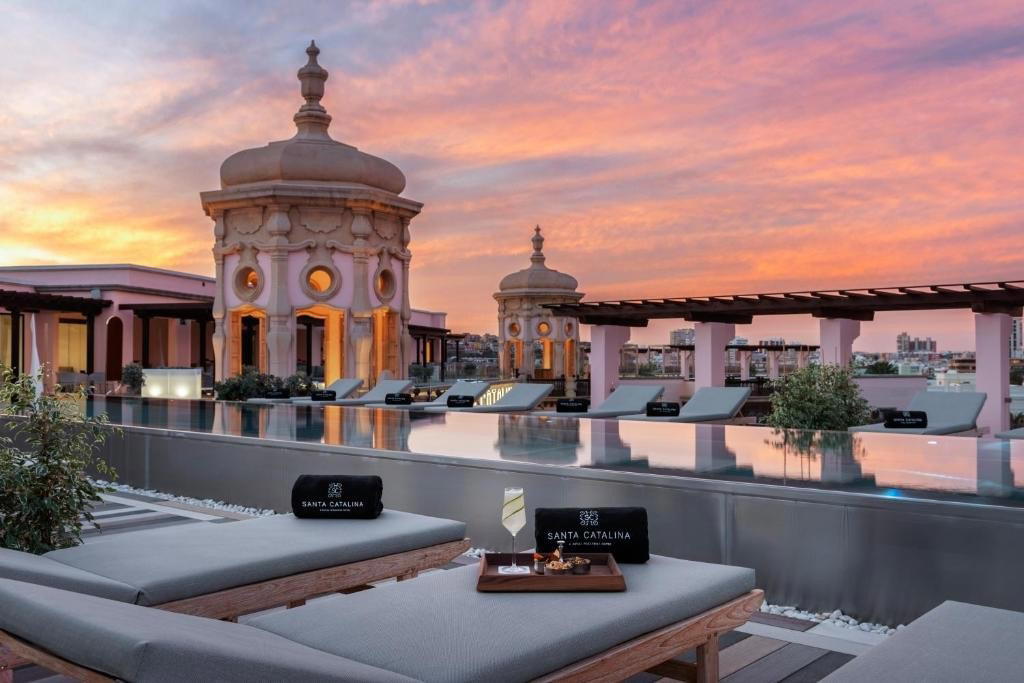
Arriving at Hotel Santa Catalina already signals that you are not walking into a casual setup. The building's period architecture, set within Parque Doramas, frames the ascent before a single drink is poured. Once on the roof terrace, the perspective shifts dramatically: the city spreads out toward the port and the dunes beyond, with the Atlantic as the constant backdrop. The quality of the light in Las Palmas is not incidental here. The Canary Islands sit at a latitude where evening light holds longer and warmer than on the Spanish mainland, and a rooftop position maximises that effect. The window between golden hour and full dark is the prime booking target, and those arriving in that window will find both the setting and the atmosphere at their most compelling. For context on what a well-positioned bar scene looks like elsewhere in Spain, GU San Sebastián in San Sebastián demonstrates how the right physical address anchors a bar's identity in its city.
The Cocktail Programme: Technique Meets Atlantic Setting
Spanish bar culture has shifted considerably over the past decade. The generation of programmes that built reputations around volume and speed has given way, in the better rooms, to something more considered: sourced spirits, house-made modifiers, and a willingness to let technique show without theatrical excess. Salmon Guru in Madrid represents that shift at its most visible, and Boadas in Barcelona offers the longer historical arc of what a serious Spanish bar programme can look like across generations. Alis Roof Leading Bar operates within this broader Spanish cocktail maturation, and its position atop a landmark hotel places certain expectations on the glass. A rooftop bar attached to a property of this standing typically programmes toward spirits-led cocktails rather than house-special novelty, with a list that rewards the guest who knows what to order rather than relying entirely on presentation alone.
The Atlantic context is relevant to the drink selection. The Canary Islands have their own spirits tradition, and bars at this level increasingly draw on local rum production and island botanicals rather than defaulting entirely to imported reference points. Comparable thinking is visible in how Somos Raro in València and Vertical Cervantes in Málaga have each developed identities rooted in regional product.
Atmosphere and Clientele
Hotel rooftop bars in historically significant properties tend to attract a particular social cross-section: long-stay guests mixing with local professionals and occasional tourists who have done enough research to find their way past the lobby. The energy at Alis tilts toward composed rather than frenetic. This is not a venue built around volume or nightclub adjacency. The architectural setting enforces a certain register; it is difficult to be rowdy on a terrace surrounded by period ironwork and Atlantic views without it feeling incongruous. That means the atmosphere tends toward the end of a long day rather than the start of a long night, with conversation carrying more easily than it would at a louder venue. For a sense of how the higher-energy Spanish rooftop format plays out differently, Ovejas Negras Tapas in Seville offers a useful contrast in tone.
Las Palmas de Gran Canaria in Context
Las Palmas tends to be overlooked in discussions of Spanish bar culture, which defaults quickly to Madrid, Barcelona, and the Basque Country. That is a misreading of the city. With a population of around 380,000 and a year-round temperate climate that makes outdoor drinking viable across all twelve months, Las Palmas supports a more sustained bar culture than its reputation in northern European travel media would suggest. The city's position as the main port stop for Atlantic crossings has historically exposed it to a wider range of influences than comparably sized Spanish provincial cities. That accumulated cosmopolitanism shows in the better bar programmes, which tend to reference a broader spirit map than the mainland average. For a broader orientation to what the city offers, our full Las Palmas de Gran Canaria restaurants guide covers the full range across price points and cuisines.
The rooftop bar format specifically suits Las Palmas in a way it does not always suit colder Spanish cities. The climate makes outdoor seating a practical proposition almost every evening of the year, which means the terrace at Alis is not a seasonal novelty but a genuine anchor for the venue's identity. Bars in similar climatic positions, such as Idilio Cocina y Vino in Palma de Mallorca, have built their programmes around exactly this year-round accessibility. Elsewhere, Casa Lin in Avilés, La Plaça in Folgueroles, and Bar Stick in Errenteria each represent how Spanish bar culture adapts to its geographic and climatic specifics. For a transatlantic comparison, Café La Trova in Miami shows how Caribbean-adjacent drinking cultures share certain atmospheric DNA with the Canary Islands, not by accident given the historical migration patterns between the archipelago and the Americas.
Planning Your Visit
Alis Roof Leading Bar is accessed through the Hotel Santa Catalina at Calle León y Castillo 227, in the Ciudad Jardín district of Las Palmas. The hotel's location within Parque Doramas puts it slightly removed from the beach-adjacent tourist concentration of Las Canteras, which means the crowd skews less transient and more deliberate. Current hours, reservation requirements, and pricing are best confirmed directly with the hotel, as rooftop programming at hotel venues can shift seasonally. The strongest argument for building your visit around the golden hour window holds regardless of specific opening times: the combination of late Atlantic light, the park canopy below, and a well-made drink at height represents what the city does at its most composed.
Continue exploring
More in Las Palmas de Gran Canaria
Bars in Las Palmas de Gran Canaria
Browse all →
Restaurants in Las Palmas de Gran Canaria
Browse all →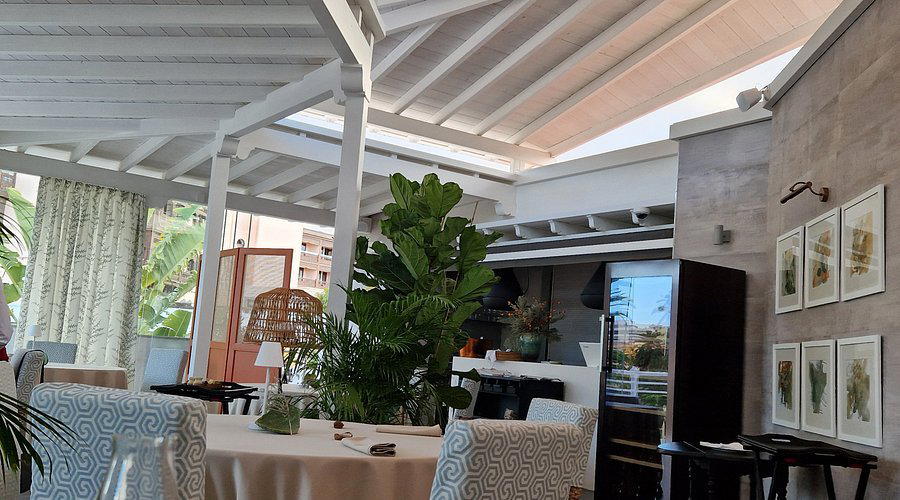
Details
- Elegant
- Sophisticated
- Scenic
- Trendy
- Intimate
- Date Night
- Special Occasion
- Late Night
- Rooftop
- Live Music
- Panoramic View
- Hotel Bar
- Lounge Seating
- Outdoor Terrace
- Craft Cocktails
- Classic Cocktails
- Skyline
- Waterfront
Current opening hours
- Monday
- Closed
- Tuesday
- Closed
- Wednesday
- 5:30 PM–1 AM
- Thursday
- 5:30 PM–1 AM
- Friday
- 5:30 PM–1 AM
- Saturday
- 5:30 PM–1 AM
- Sunday
- 5:30 PM–1 AM
Hours can change for holidays and private events. Last verified .
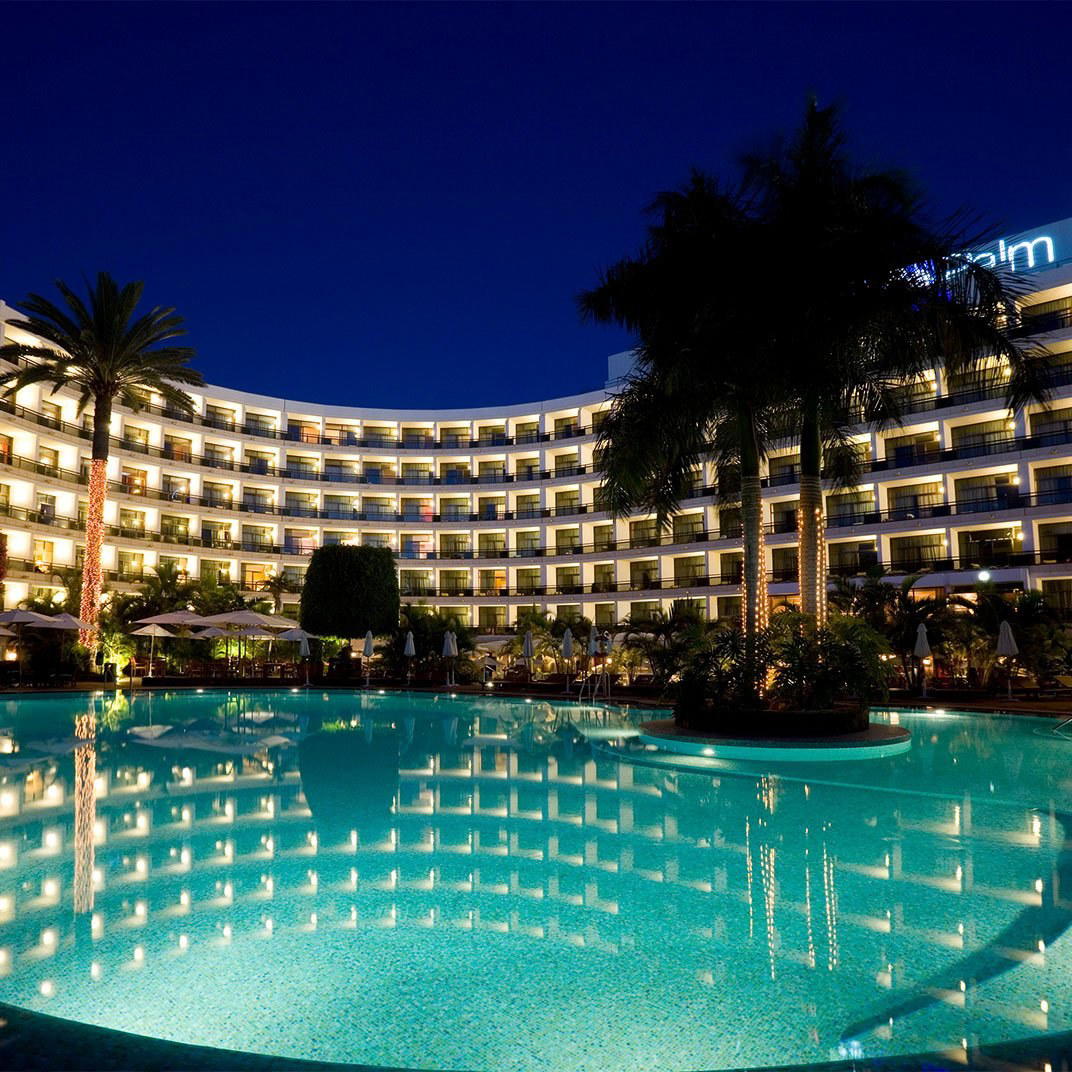
Serene, upscale rooftop oasis with glittering infinity pool, lounge furniture, and glittering city lights during sunset.