
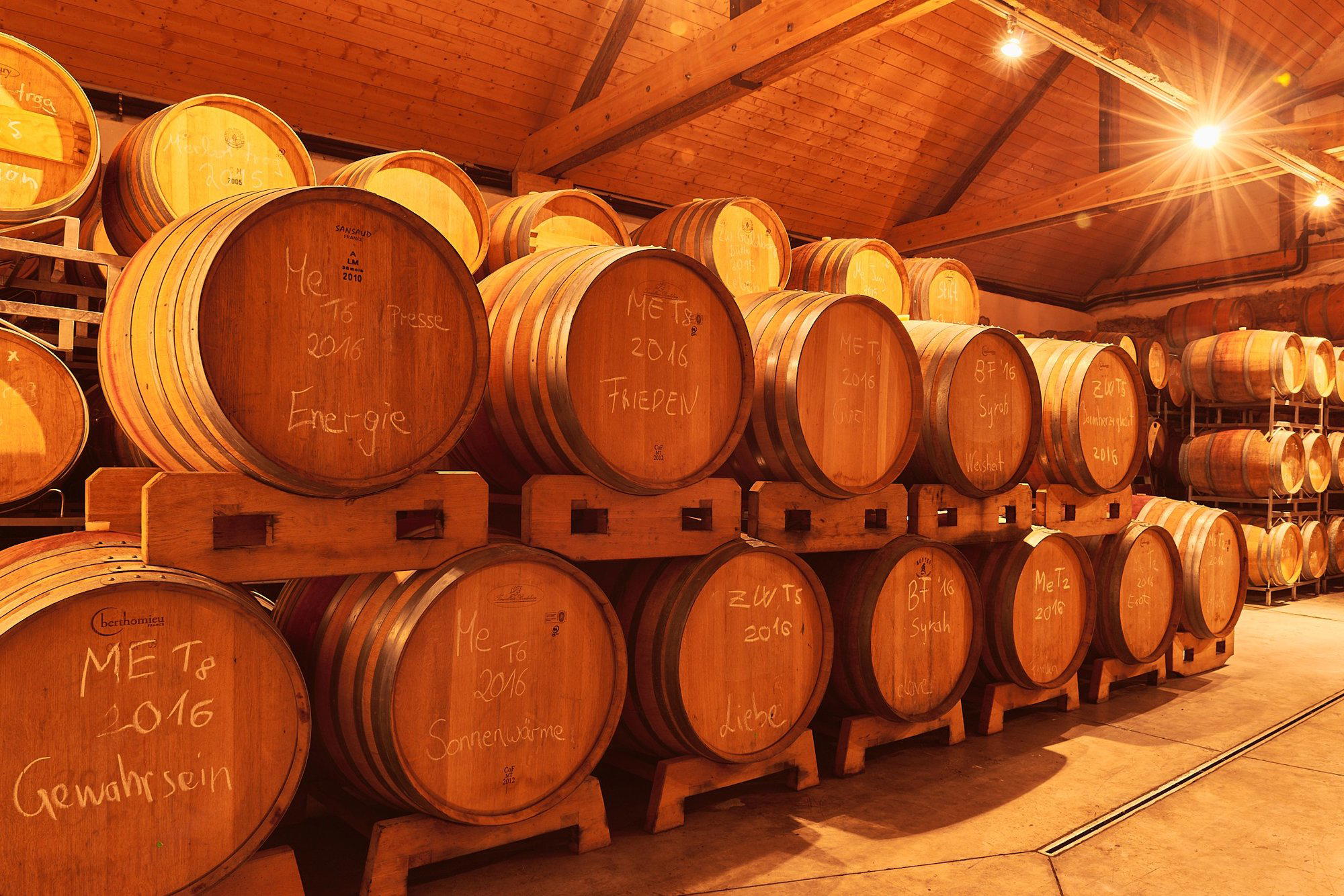
Winzerkellerei Hermann is a quiet Austrian winery framed by site-specific thinking rather than spectacle. Its identity rests on Grüner Veltliner, Riesling, named Kremstal vineyard sources, sustainable vineyard work without herbicides, and a cellar split between stainless-steel whites and selectively barrel-aged reds.
Pearl is the En Primeur Club membership app — saves, bookings, and concierge access live there. Same editors, same standards.
- Address
- Purbach, Leithaberg, Burgenland, Österreich
 Saves & bookings on Pearl
Winzerkellerei Hermann in Purbach is best described with restraint. What can be stated with confidence is narrower and more useful: this is a traditional, detail-oriented winery associated with the Kremstal, with a near-natural production ethos and a cellar style that emphasizes clarity, depth, and origin expression.
That makes the address a better fit for readers who value quietness over spectacle. The mood is classic, cozy, and understated, with the kind of hidden-gem character that asks to be approached on its own terms. Rather than treating it as a venue defined by novelty or by a checklist of amenities, it is safer and more accurate to understand Winzerkellerei Hermann as a wine-focused stop whose appeal rests on tradition, careful production, and a calm sense of place.
Kremstal detail, not cellar theatre, defines the tasting
A reliable way to frame Winzerkellerei Hermann is through its stated relationship to Kremstal wine culture and origin expression. The description points toward a cellar style concerned with clarity and depth, which is a more grounded claim than any unsupported list of grape varieties, vineyard parcels, bottle names, or formal tasting formats. If you are planning around the venue, the key expectation should be a serious winery context rather than a highly staged hospitality experience.
That distinction matters. Many wine-country visits are marketed with elaborate promises: exclusive tastings, named rooms, fixed formats, special menus, or detailed cellar rituals. None of those specifics should be assumed here unless confirmed directly by the venue. The dependable information is simpler: the winery is traditional, careful, and quiet in tone, with a production outlook described as near-natural and with wines framed around origin expression.
For travelers, that suggests a slower kind of visit. The value is not in chasing a public ranking or a dramatic architectural story, but in giving attention to the winery’s style: classic rather than flashy, detail-led rather than loud, and rooted in a sense of place. Readers who enjoy wine as a conversation about origin, production choices, and restraint will likely find that framing more useful than a fabricated list of features.
Sustainable farming gives the wines their editorial logic
The production language is limited but meaningful. The winery is described as having a near-natural production ethos. That should not be expanded into technical claims about specific farming inputs, certifications, vineyard sizes, cellar vessels, or winemaking methods. Still, the phrase does give a legitimate way to understand the venue: the winery’s identity is connected to a low-key, careful approach rather than to industrial scale or hospitality theatre.
Near-natural production, when paired with an emphasis on clarity, depth, and origin expression, gives the profile its editorial logic. The point is not to claim more than is known. It is to recognize that the language consistently points in the same direction: a traditional winery that values detail, quietness, and a clear connection between place and glass. That is enough to distinguish the venue without inventing awards, scores, or highly specific tasting-room promises.
The price level is listed as $$, which places it in a moderate bracket. The safest expectation is a wine-focused, understated stop in Purbach rather than a venue defined by additional services.
How to place it in a Purbach wine itinerary
In a Purbach itinerary, the winery makes sense when the day is organized around calm and close attention. It is not necessary to load the plan with unsupported claims about private tastings, fixed appointments, specific grape lineups, or named vineyard sites. Instead, place it as a traditional winery with a detail-oriented character and a near-natural production outlook.
If you are comparing it with other dining or drinking options in Purbach, keep the comparison broad. Other local stops may be better suited to a meal, a casual drink, or a more social outing, while the winery is most honestly presented as a quiet winery choice. The useful contrast is purpose, not status: choose it when you want a classic, cozy, origin-minded wine setting rather than a louder or more elaborate experience.
Because the profile is intentionally lean, strong planning advice is practical and conservative. Confirm current visiting details directly with the winery before making the trip, especially if timing, group size, or a specific tasting experience matters. What is clear from the record is the overall identity: Purbach, $$ pricing, traditional detail, near-natural production, and a cellar style concerned with clarity, depth, and origin expression.
Recognition history
Dated appearances from independent guides and award organizations, with the underlying list record or original source where available.
Falstaff Winery - Listed
Falstaff
Continue exploring
More in Purbach
At a Glance
- Classic
- Quiet
- Cozy
- Solo Exploration
- Special Occasion
- Wine Education
- Historic Building
- Private Tasting
- Sustainable
- Vineyard
- Kremstal DAC
- Grüner Veltliner
- Riesling
- Chardonnay
- Sauvignon Blanc
- Gelber Muskateller
- Blauer Zweigelt
- St. Laurent
- Merlot
- Still White
- Still Red
- Private Tasting
A traditional, detail-oriented winery in the Kremstal with a near-natural production ethos and a cellar style that emphasizes clarity, depth, and origin expression.