Weingut Leitgeb

Falstaff Winery - Listed
Weingut Leitgeb is a Bad Gleichenberg winery where the Buschenschank tradition, guesthouse model, and Vulkanland Steiermark DAC identity sit in the same frame. The draw is terroir rather than spectacle: sandy-sandstone soils, Katzianerberg site language, Styrian white varieties, and a sparkling-wine thread with Austrian competition recognition.

Pearl is the En Primeur Club membership app, where members save venues, book tables and use the concierge.

Approaching a Styrian Buschenschank changes the tempo of a wine visit. The cues are not marble counters or choreographed cellar theatre, but vineyard air, terrace rhythm, and the directness of a producer pouring wines close to where they are made. In Bad Gleichenberg, that format matters because wine culture in the Steirisches Vulkanland is built as much around staying, eating, and buying from the estate as it is around tasting through a flight. Weingut Leitgeb belongs to that tradition: winery, Buschenschank, and guesthouse are treated as a single hospitality system rather than separate businesses.
The better way to read the estate is through place. Katzianerberg gives the property its local anchor, while Vulkanland Steiermark DAC gives the bottles a regional frame. Sand and sandstone soils are specifically tied to the site, and the portfolio leans into the local grammar: Welschriesling, Weißburgunder, Chardonnay, Sauvignon Blanc, Gelber Muskateller, Grauburgunder, Zweigelt, Rheinriesling, Ruländer, rosé, Junker Weiß, and DAC bottlings. This is not a producer trying to speak in an international accent first. The appeal is in how the region’s aromatic whites, site names, and cellar choices sit together.
Katzianerberg wines built around soil, DAC language, and Styrian variety
Vulkanland Styria often rewards drinkers who pay attention to nuance rather than volume. Its identity is less about a single trophy grape than a set of aromatic and textural possibilities: Muskateller for perfume, Sauvignon Blanc for regional energy, Weißburgunder and Chardonnay for structure, and Welschriesling for freshness. Leitgeb’s range reflects that spread, with local DAC references and named sites such as Katzianer, Steinberg, Forsthof, and Meißl giving the wines a more precise origin map than varietal labeling alone.
The cellar story has one unusually concrete signal: Matthäus Leitgeb jun. is associated with maturation in large-format wood and, in some cases, cork closure. In a region where aromatic clarity can be the obvious selling point, large wood changes the conversation. It suggests wines aimed at shape and development rather than simple fruit brightness, particularly for varieties such as Chardonnay, Weißburgunder, and Grauburgunder. The point is not oak display; the more interesting reading is that site and texture are being given room to register.
Sparkling wine adds another layer. The estate’s named sparkling program includes Inspektorperle, Muskateller Frizzante, Chardonnay Sekt Austria g.U. and a Chardonnay reserve with 18 months of aging. The Chardonnay sparkling wine has reached Landesfinalist status, and the newer Chardonnay-Sekt reserve was again a finalist in 2025. That recognition places the sparkling thread inside Austria’s serious regional competition circuit, not merely as a casual add-on to the still-wine list. For drinkers tracing Vulkanland beyond still Sauvignon Blanc and Muskateller, this is the more revealing part of the portfolio.
The Buschenschank format keeps the wine tied to the table
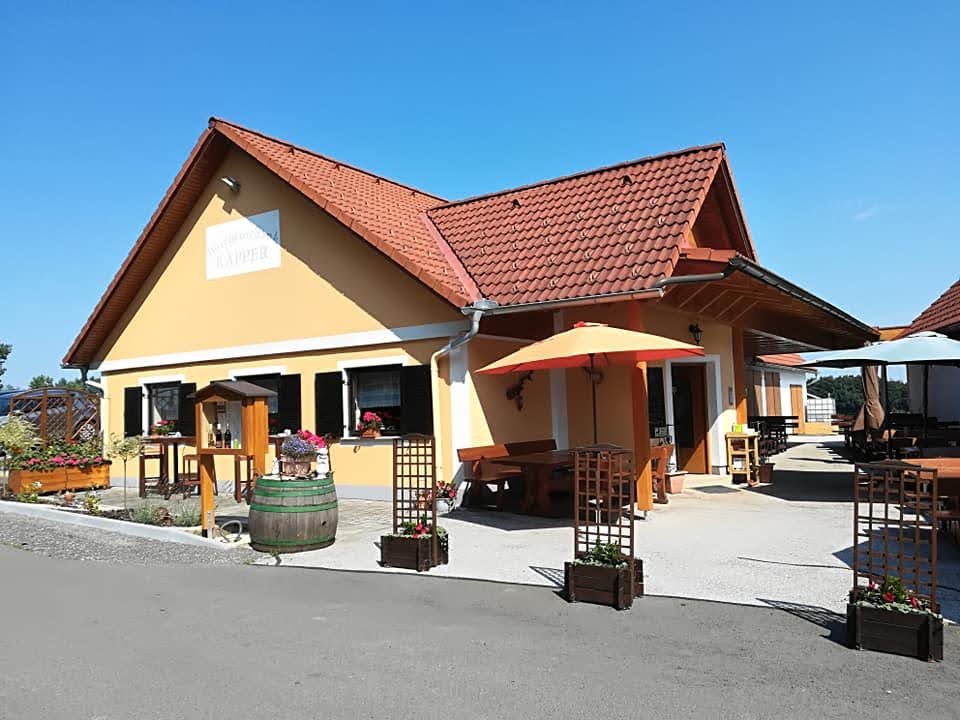
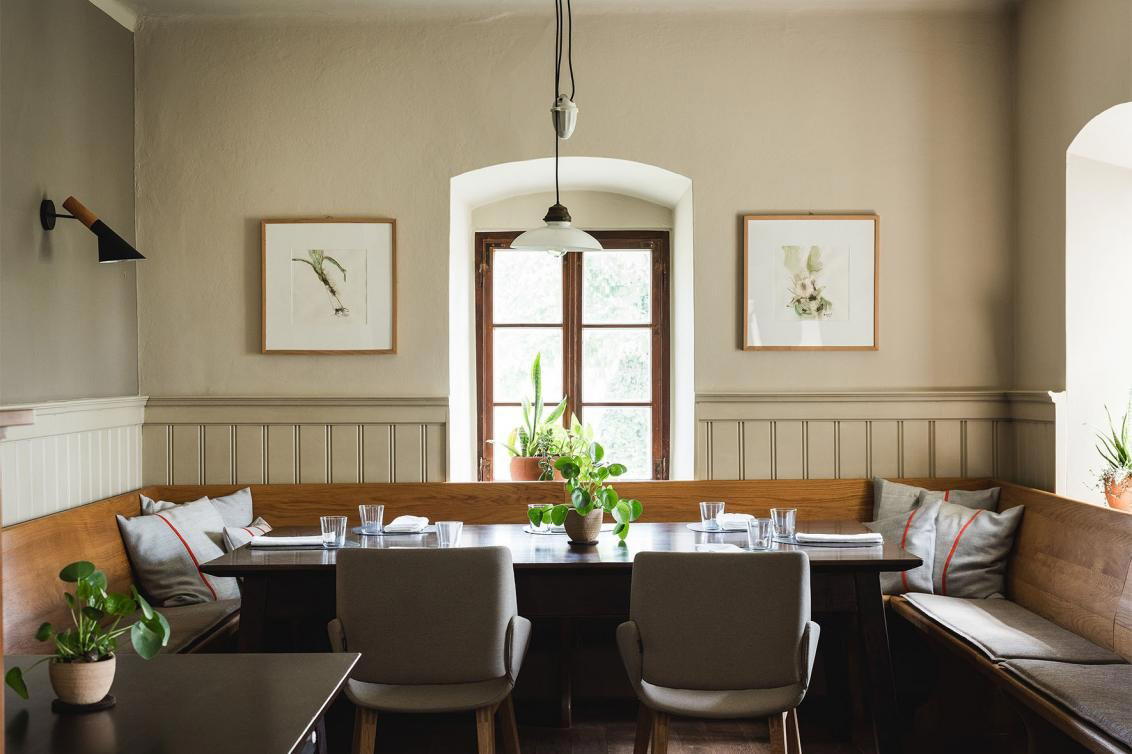
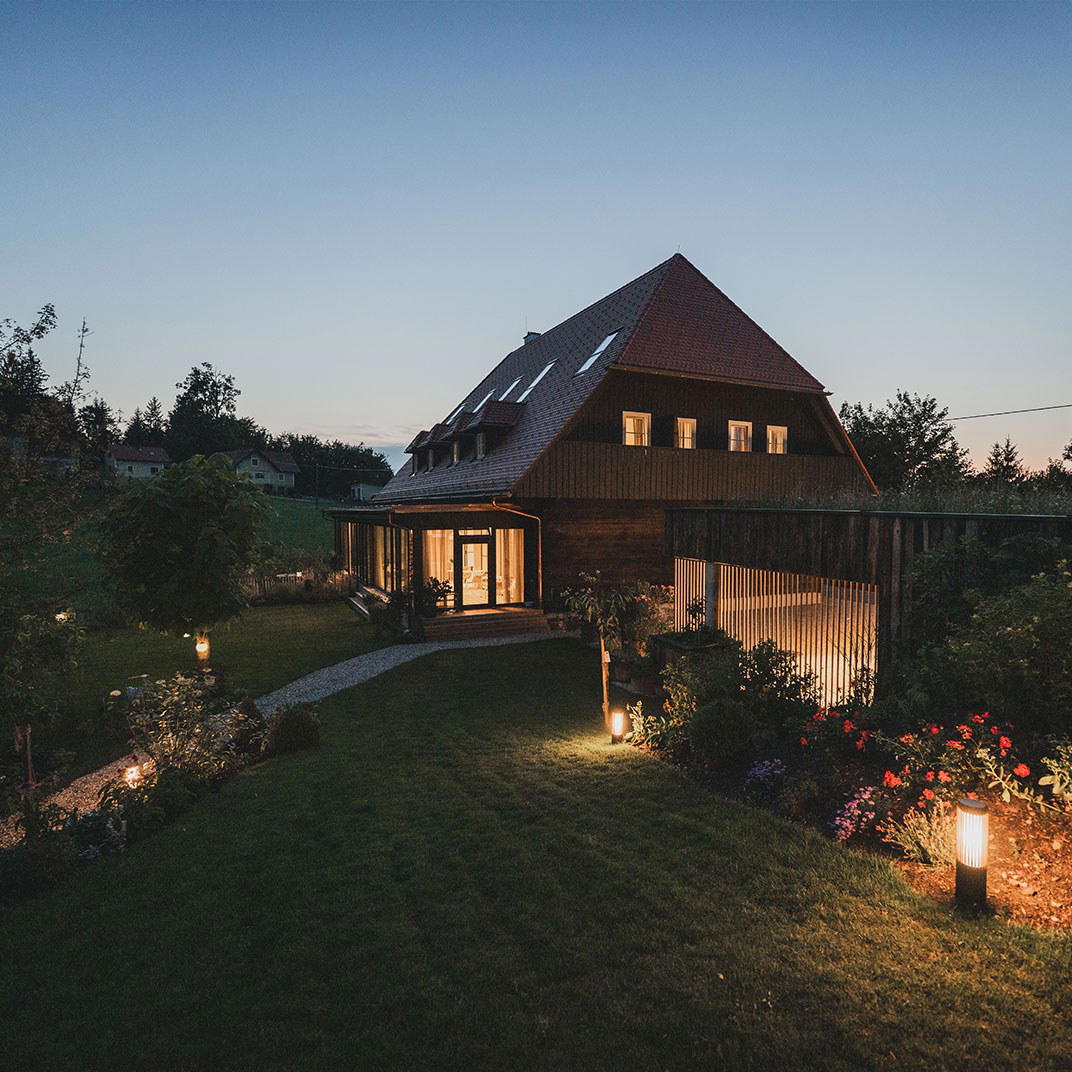
A Buschenschank is a cultural form, not just a tasting room with food. In Styria, it usually turns the producer’s property into a seasonal meeting point where estate wines, cold plates, regional ingredients, and local habit overlap. Leitgeb’s version is framed by a rustic, family-run atmosphere, outdoor seating, a garden and terrace setting, and a conversational noise level. The format suits groups, families, and wine drinkers who prefer context over ceremony.
That matters editorially because the estate’s hospitality model changes how the wines are understood. A bottle poured in a retail setting can feel interchangeable; the same bottle poured on a wine-country property, with vineyard views and direct estate service, becomes part of a regional economy. The guesthouse element extends that logic. Overnight accommodation turns a tasting stop into a slower encounter with Bad Gleichenberg’s wine culture, especially for visitors using the town as a base for the Vulkanland route.
The experience is low-pressure rather than high-gloss. The price level sits in the moderate bracket, dress is casual, and the visit style is walk-in friendly. Accessibility is also part of the practical character: wheelchair access and a step-free entrance are listed, and the children’s playground broadens the audience beyond collectors and trade drinkers. Those details are not decorative; they explain why the place fits the Buschenschank tradition so cleanly. It is wine culture designed to be used by locals and travelers, not only observed.
How to place Leitgeb within a Bad Gleichenberg wine itinerary
Bad Gleichenberg is not a city built around grand tasting-room spectacle. Its appeal is cumulative: small producers, hillside settings, direct sales, and the rhythm of rural hospitality. Leitgeb’s open allocation status, ab-hof sales model, wine education angle, and small production scale make it a strong fit for visitors who want to understand Vulkanland Styria through estate contact rather than restaurant lists alone. The producer has also been associated with AWC Vienna, Finalist Steirische Landessieger, and Vinaria recognition, which gives the portfolio a useful trust signal without turning the visit into an awards checklist.
Nearby wine-country research can also include Buschenschank Seidl and Weinbau Wurzinger, while wider Austrian and international producer browsing runs from »der Steiner« Hans Steiner in Podersdorf am See, ®walzer in Gneixendorf Bei Krems, 1516 Brewing Company Distillery in Vienna, A-Nobis Sektkellerei in Zurndorf, Abfindungsbrennerei Franz in Leithaprodersdorf, Achs-Wendelin Weine in Gols, & Handwein in Mannheim, and 00 Wines in Carlton.
The editorial case for Leitgeb is strongest for drinkers who want terroir made legible without a formal lecture. The sandy-sandstone site reference, Vulkanland DAC structure, named vineyard language, large-wood maturation, and serious sparkling-wine work all point in the same direction: this is a Buschenschank-era estate experience where the land is not an abstract selling line, but the organizing principle of the glass.
Recognition history
Dated appearances from independent guides and award organizations, with the underlying list record or original source where available.
Falstaff Winery - Listed
Falstaff
Continue exploring
More in Bad Gleichenberg
Wineries in Bad Gleichenberg
All wineries in Bad Gleichenberg →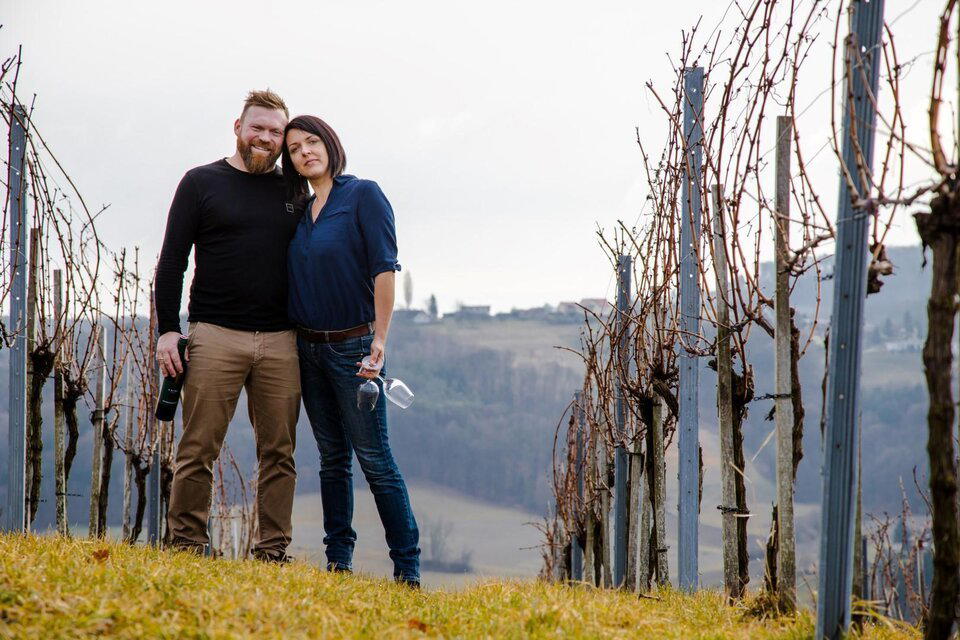
Bars in Bad Gleichenberg
Browse all →
Details
- Rustic
- Scenic
- Cozy
- Classic
- Family
- Group Outing
- Wine Education
- Special Occasion
- Estate Grounds
- Garden
- Terrace
- Sustainable
- Vineyard
- Mountain
- Welschriesling
- Weißburgunder
- Chardonnay
- Sauvignon Blanc
- Gelber Muskateller
- Still White
- Still Rosé
- Sparkling
- Wine Tasting
- Buschenschank Dining
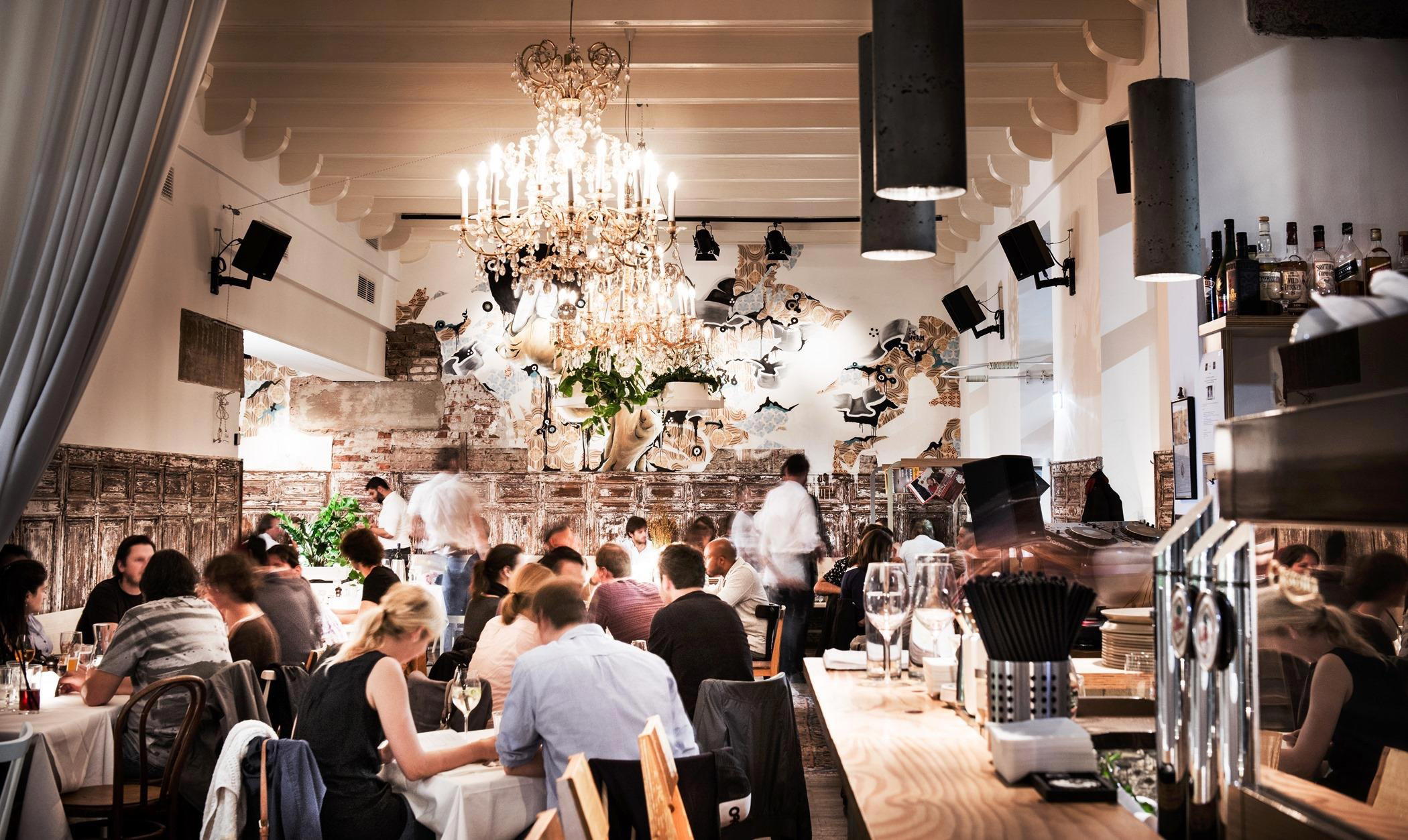
Rustic Buschenschank atmosphere with a family-run, wine-country setting on the Katzianerberg in the Steirisches Vulkanland.