
Weingut Lütz fits the Mosel model where wine tourism is inseparable from slope, river and village rhythm. The Pünderich estate works around Riesling, steep-site viticulture, a wine room for tastings and on-site holiday stays, making it stronger as a slow wine-country base than as a formal destination tasting room.
Pearl is the En Primeur Club membership app — saves, bookings, and concierge access live there. Same editors, same standards.
- Address
- Pünderich, Moselle, Rhineland-Palatinate, Deutschland
 Saves & bookings on Pearl
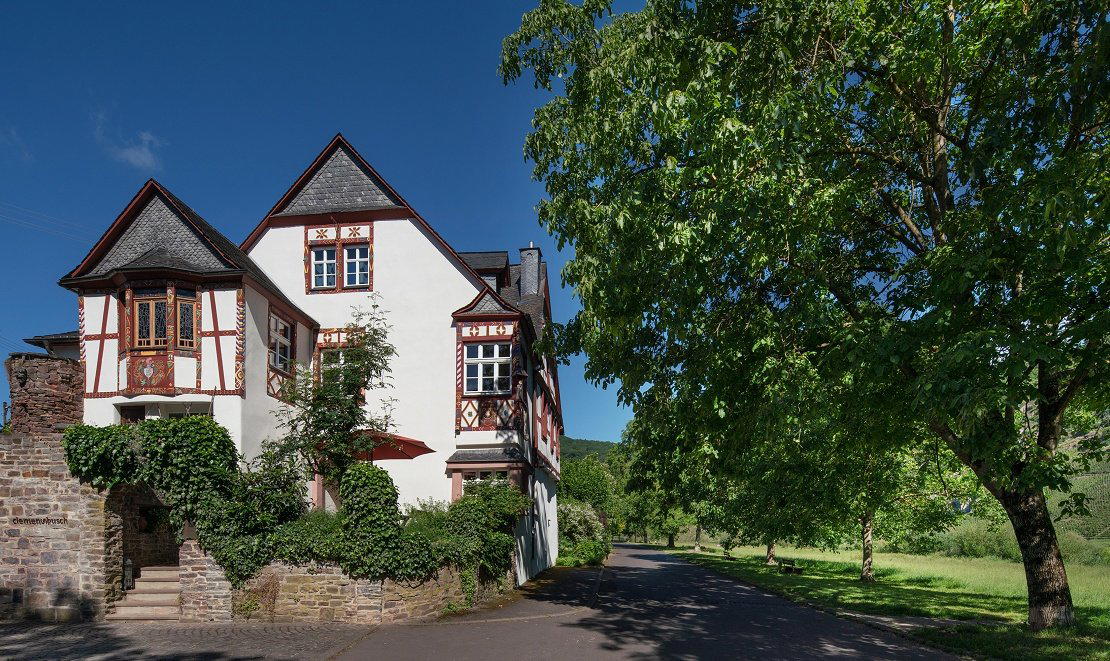
Weingut Lütz in Pünderich is best understood as a quiet Mosel wine-estate stop rather than as a formal restaurant or high-production tasting venue. The picture is deliberately simple: a scenic village-and-vineyard setting, a relaxed atmosphere, and an emphasis on rest, tasting, and holiday stays. That makes the estate useful for travellers who want the Mosel at a slower pace, with the surrounding village and slopes doing much of the work that a more staged venue might try to create indoors.
The appeal is not built on a confirmed chef, dining room, tasting menu, award record, or elaborate hospitality format. Those details are not part of the profile and should not be assumed. What can be said with confidence is that Weingut Lütz sits in the quieter register of Mosel travel: cozy, rustic, scenic, and low-key. For visitors who prefer a hidden-gem feeling over a polished destination performance, that may be exactly the point.
A quiet Mosel wine-estate atmosphere
The strongest feature of Weingut Lütz is its setting. Pünderich is a Mosel village where the surrounding vineyard landscape is central to the experience, and the estate’s profile fits that context. Rather than positioning itself around a formal dining-room identity, the property is associated with rest, wine tasting, and holiday stays. In practical terms, that means expectations should be calibrated toward a relaxed wine-estate visit, not a restaurant reservation with a defined culinary program.
This distinction matters. Many travellers search for wineries and wine estates as though they all operate in the same way: scheduled flights, full menus, sharply defined service styles, and extensive visitor infrastructure. The information for the winery does not support those assumptions. It supports a more modest and atmospheric read: a scenic, quiet place in Pünderich where the wine-estate setting is the reason to visit.
That quieter identity is also what gives the venue its editorial value. A Mosel trip is often strongest when it is not over-planned around spectacle. A stay or tasting in a village-and-vineyard setting can be compelling precisely because the surroundings remain visible and unforced. The winery belongs in that kind of itinerary: restful, local in mood, and better suited to slow travel than to a checklist-style tour.
What, and what is not
Because the confirmed data for the winery is limited, it is important not to overstate the venue. The price category is listed as $$, but beyond that, precise costs or package details should be checked directly with the estate before planning.
The same caution applies to food and beverage expectations. The profile supports wine-estate tasting as part of the site’s identity, but it does not confirm a detailed drinks program, a formal restaurant, a lunch service, or a specific menu. Travellers should therefore treat the winery as a relaxed Mosel estate experience first, not as a dining venue with guaranteed meal service.
That does not make the listing less useful. It simply changes how it should be read. The reliable reasons to consider the winery are the Pünderich setting, the scenic village-and-vineyard atmosphere, the quiet rustic mood, and the estate’s orientation toward rest, tasting, and holiday stays. Those are enough to place it on a Mosel itinerary for the right kind of traveller, provided the practical details are confirmed before arrival.
How to place it in a Mosel itinerary
The winery works well for visitors who want Pünderich to feel like more than a brief stop. The estate’s character points toward lingering: taking in the village, using the vineyard landscape as part of the experience, and treating the visit as part of a slower Mosel rhythm. It is less suited to travellers looking for a highly structured culinary destination or a venue with many confirmed amenities.
For planning, the safest approach is to contact the estate directly about current tasting availability, holiday-stay arrangements, opening patterns, and any food or service details. What remains steady is the general character: quiet, scenic, cozy, rustic, and closely tied to its Pünderich setting.
Within the local context, other dining or wine options in Pünderich can be considered generically as part of a broader stay, but the winery should not be evaluated as though it were competing on restaurant format or formal accolades. Its role is simpler: a relaxed Mosel wine-estate address for travellers who value atmosphere, village scale, and a scenic vineyard setting over ceremony.
The editorial read is therefore restrained but positive. The winery is a $$ venue in Pünderich with a calm, hidden-gem feel and a emphasis on rest, tasting, and holiday stays. For the right visitor, that modesty is not a limitation; it is the reason to go.
Recognition history
Dated appearances from independent guides and award organizations, with the underlying list record or original source where available.
Falstaff Winery - Listed
Falstaff
Continue exploring
More in Pünderich
At a Glance
- Scenic
- Quiet
- Cozy
- Rustic
- Family
- Group Outing
- Wine Education
- Solo Exploration
- Romantic Getaway
- Private Tasting
- Vineyard Tour
- Estate Grounds
- Panoramic View
- Sustainable
- Vineyard
- Waterfront
- Mosel
- Riesling
- Still White
- Walk In Tasting
- Private Tasting
Quiet, relaxed Mosel wine-estate atmosphere with a scenic village-and-vineyard setting; the site emphasizes rest, tasting, and holiday stays rather than a formal dining room.